The name comes from rope. This is where the once ran, those long narrow stretches where ropemakers paced backwards for metres while they twisted their strands together, and when the city eventually grew over the top of them the word simply stuck around.
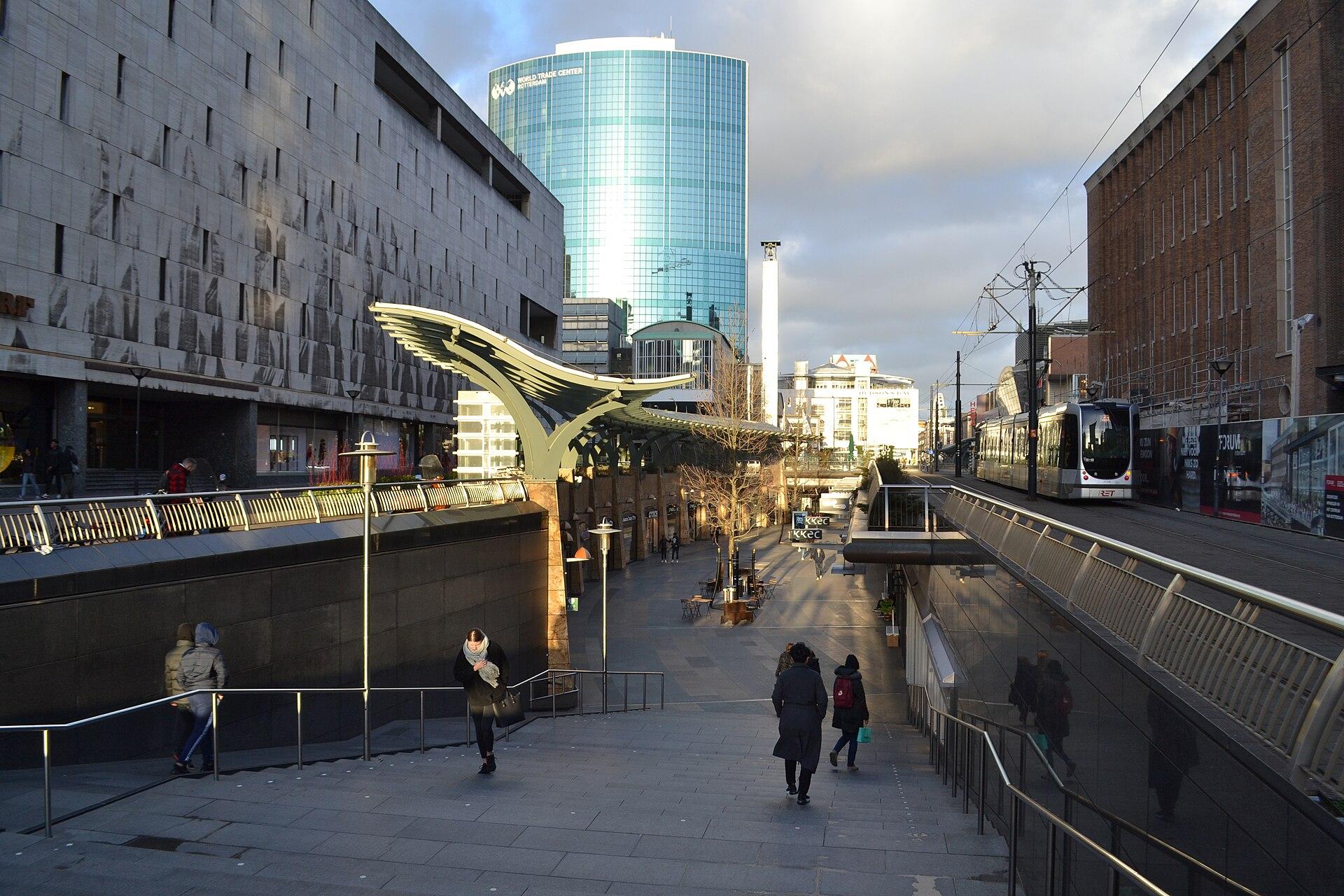
What and built here in 1953 was something nobody had tried before: a shopping street with no cars, low two-storey blocks, canopies to keep the rain off and deliveries tucked away along service lanes out of sight. Shopping turned into a stroll instead of a dash across traffic. Within a few years you could find delegations from Coventry, Stockholm and West Berlin standing among the shop windows, working out how it was done, and from the sixties onwards just about every European city of any size ended up with a pedestrian zone of its own.
Above the shops you can see how deliberate that low scale really is. The residential towers sit further back with their narrow ends facing the street, so light slips through between them and you keep a view of the sky, something an ordinary shopping street rarely manages.
The canopies have been replaced over the years, but the proportions of the street are still exactly those of 1953.
When we reach the end of the Lijnbaan and turn right onto the , a little further along we come to a department store with a facade covered in hexagons.
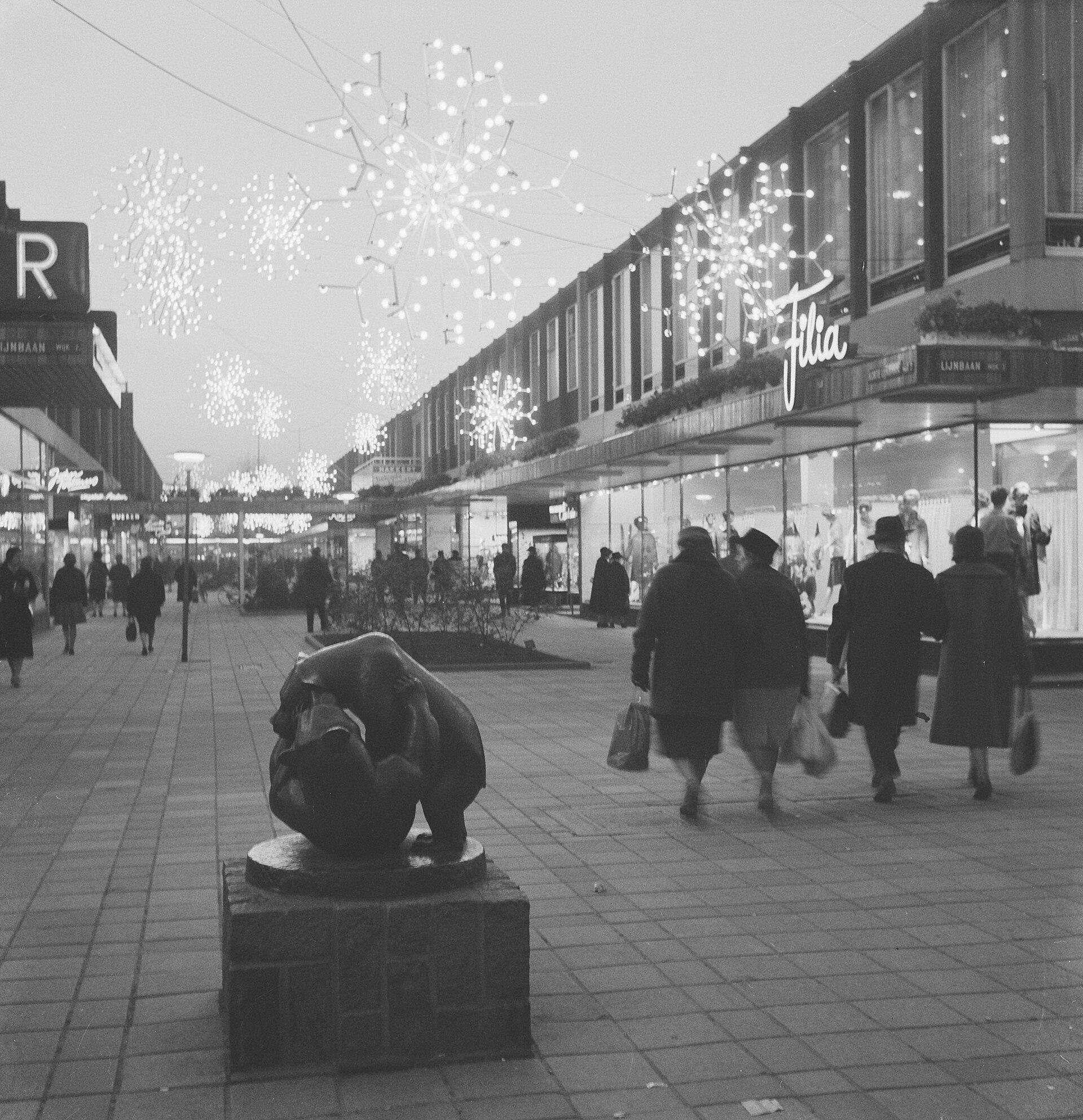
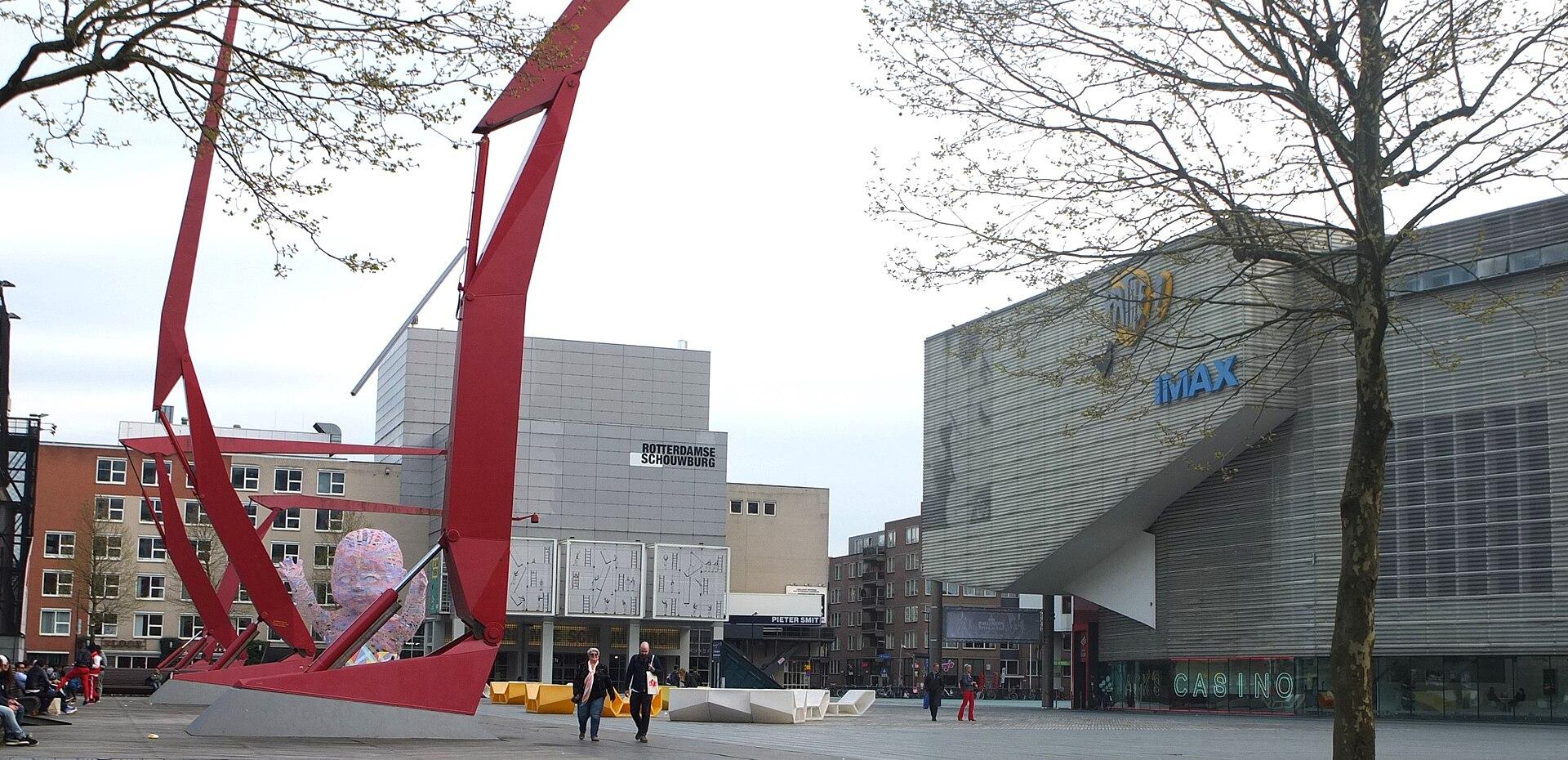
Sources. Story: Rijksdienst voor het Cultureel Erfgoed, national monuments register; Het Nieuwe Instituut; Stadsarchief Rotterdam Photos: Photo 1: Jack de Nijs / Anefo, 1961, Nationaal Archief, CC0. Photo 2: Kris Roderburg, 2007, Beeldbank Rijksdienst voor het Cultureel Erfgoed, CC BY-SA 4.0