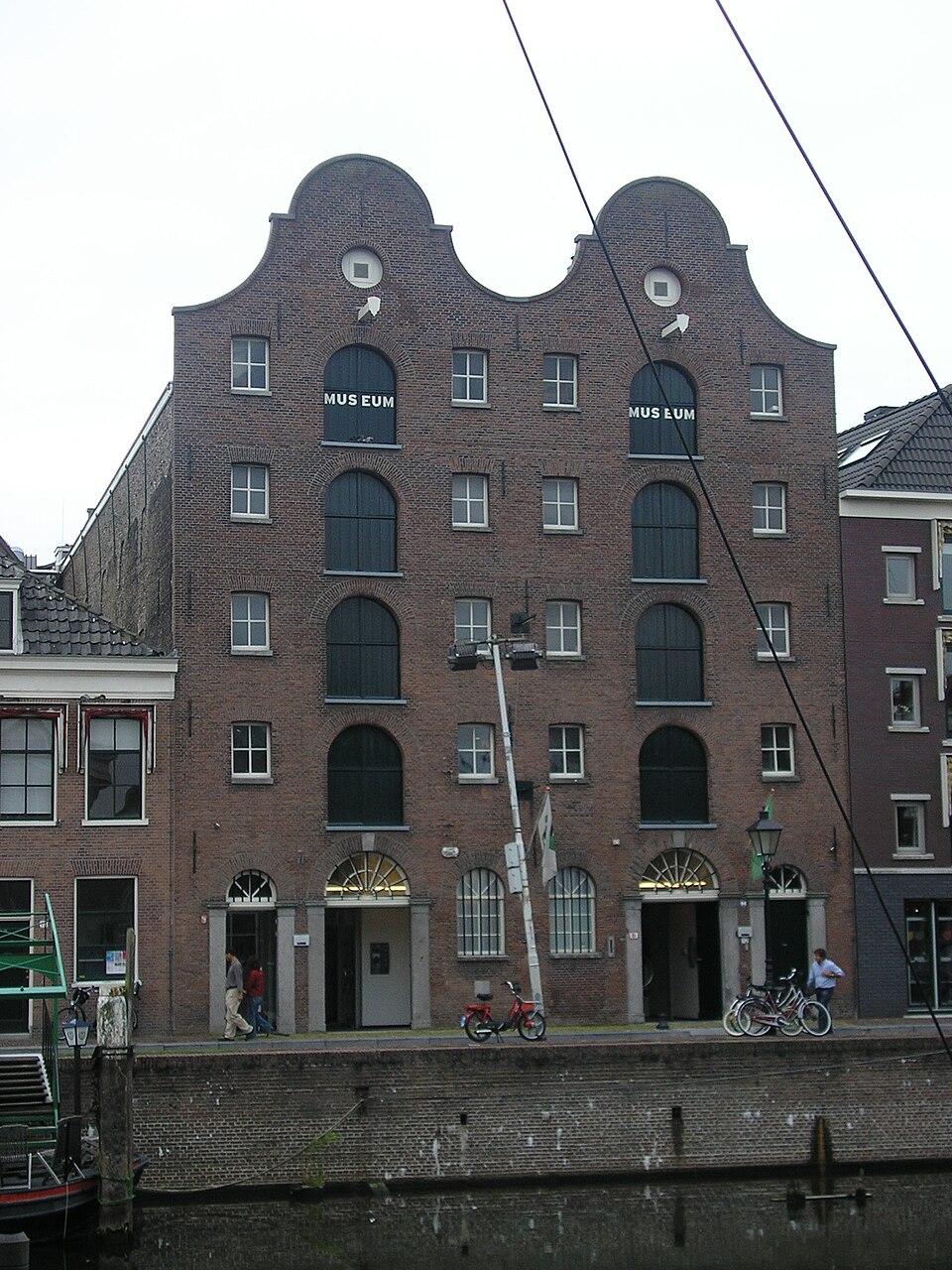
The warehouses along this quay still have their hoisting beams, and below them you can see the hatches through which the barrels were brought inside. This was a place of work rather than a place to live, and the proportions of the facades are those of trade.
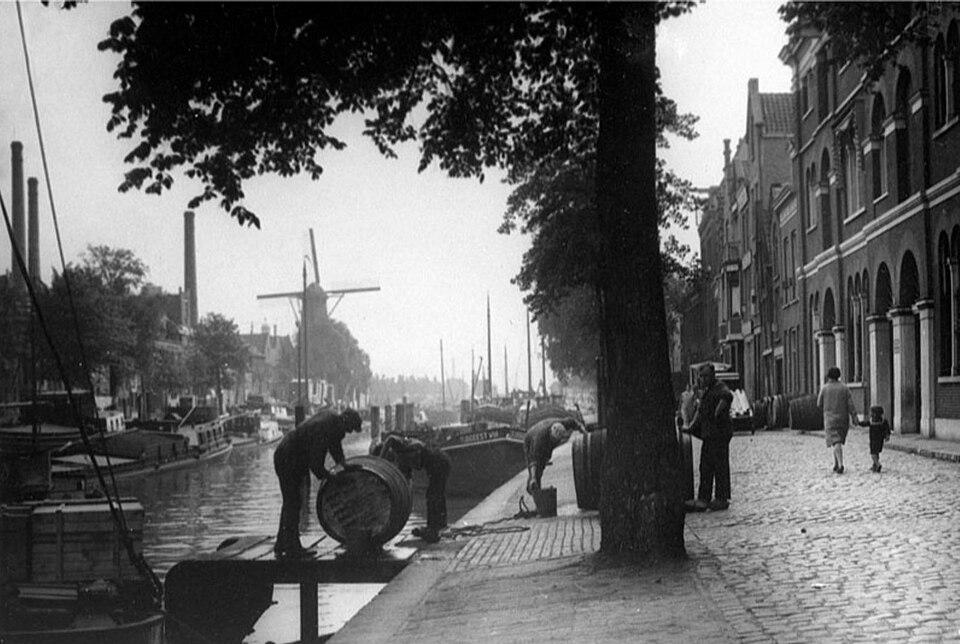
lived off whatever came through the lock. Beer from went out onto the water, herring came in, and from the seventeenth century onwards whalers set sail from here and boiled down their blubber oil nearby. Later it was that drove everything. In the distilleries along the Voorhaven, grain was fermented and distilled, and the mill at the southern end ground the malt they needed for it.
The long row of buildings with the name Henkes on them was the distillery that stayed the biggest employer here for generations, built between 1850 and 1867. At its peak Delfshaven counted thirty-one distilleries, in a little town you can walk across in fifteen minutes.
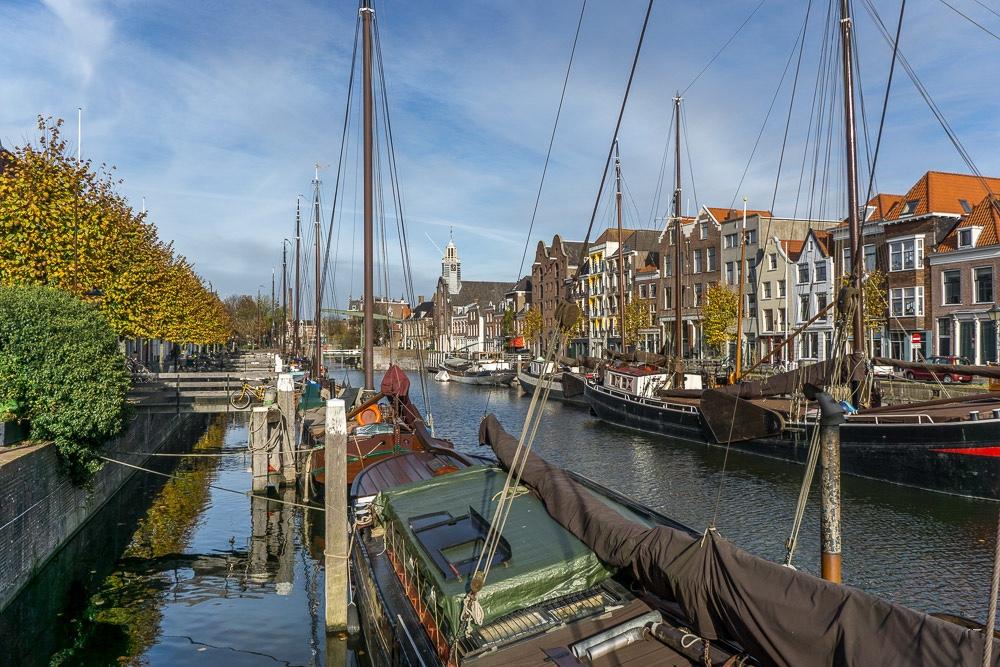
The harbour itself was cut off bit by bit. In 1836 the lock to the Achterhaven was closed, in the nineteen-twenties the new Coolhaven rerouted the through traffic, and in 1966 the damming of the Schiemond took away the last direct link to the river. It was precisely that closing off that kept this quay the way it was.
At the southern end of the Voorhaven stands the mill that ground the malt, and that is where we are heading now.
Sources. Story: Historisch Delfshaven; Stadsarchief Rotterdam; Canon van Nederland Photos: Photo: Leo Luijten, via Wikimedia Commons, CC BY 2.0