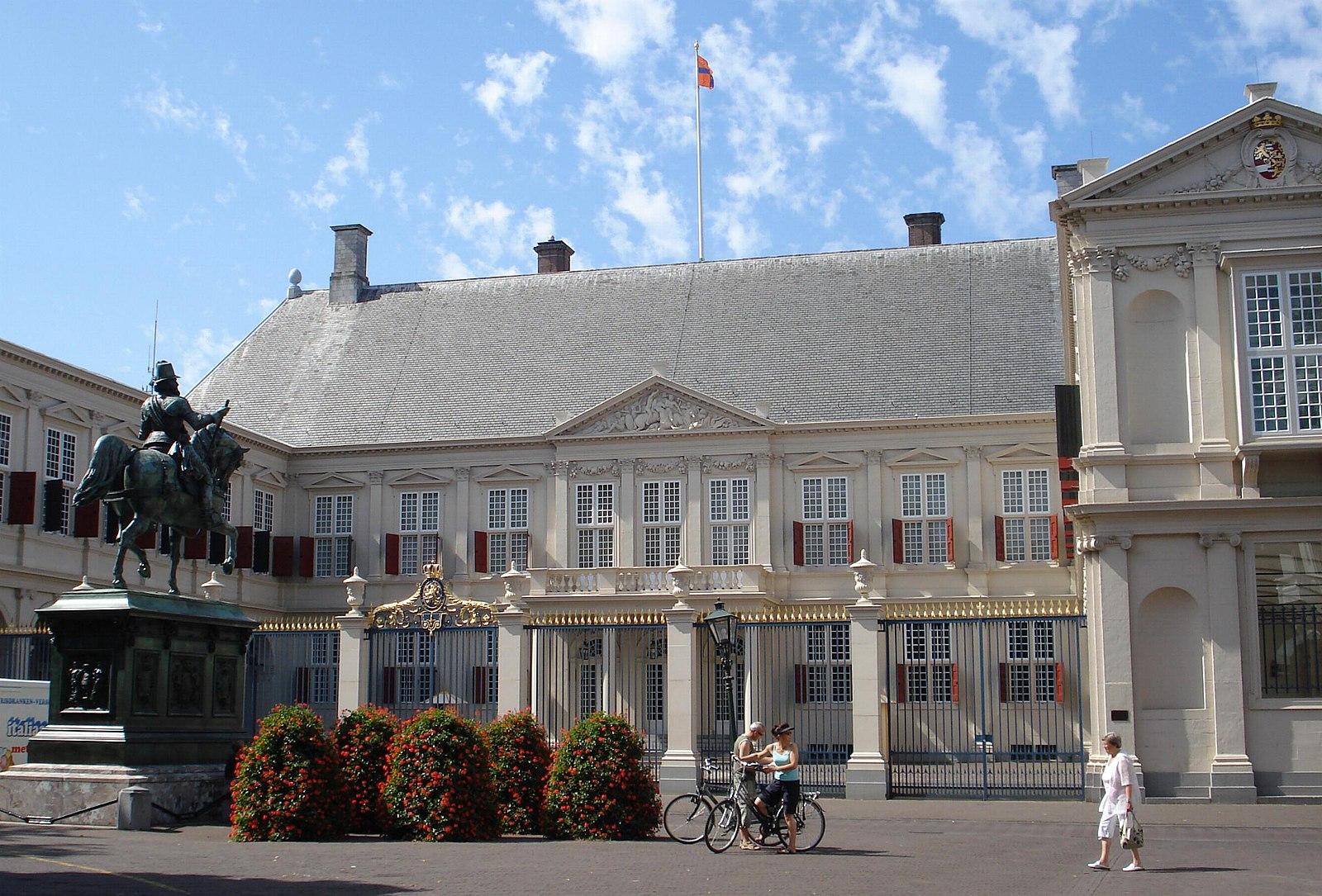
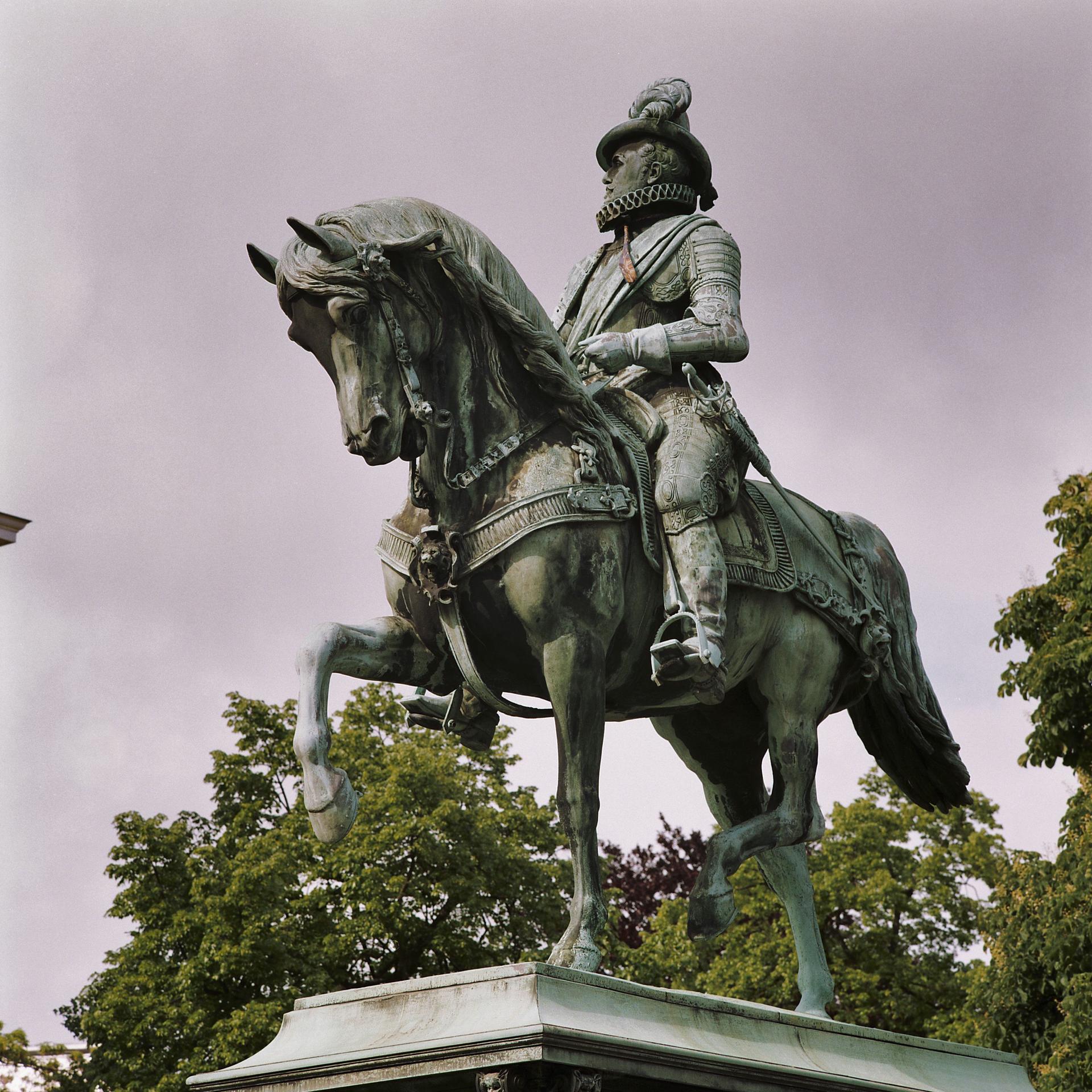
The equestrian statue in front of shows Willem van Oranje, born in Dillenburg in 1533 and raised at the court in Brussels. He was Catholic, politically able, and for years a loyal servant of the Spanish crown.
That changed as tightened his grip on the Low Countries and stepped up the persecution of Protestants. In 1564 Willem told the that no ruler holds authority over what his subjects believe in private. Philip ignored him, which turned out to matter.
From then on Willem supplied the with what it lacked: money, alliances between quarrelling provinces, and an argument that rulers answer to something beyond themselves. Philip put a price on his head. In 1584 shot him in Delft.
His descendants still live behind this palace, and the is written in his voice, which leaves the Netherlands with one of the few anthems sung from the point of view of a dead nobleman.
Sources. Story: Geschiedenis van Zuid-Holland; Nationaal Archief; Haags Gemeentearchief. Maker en onthullingsjaar van het ruiterstandbeeld aan het Noordeinde nog te verifieren. Photos: Public Domain