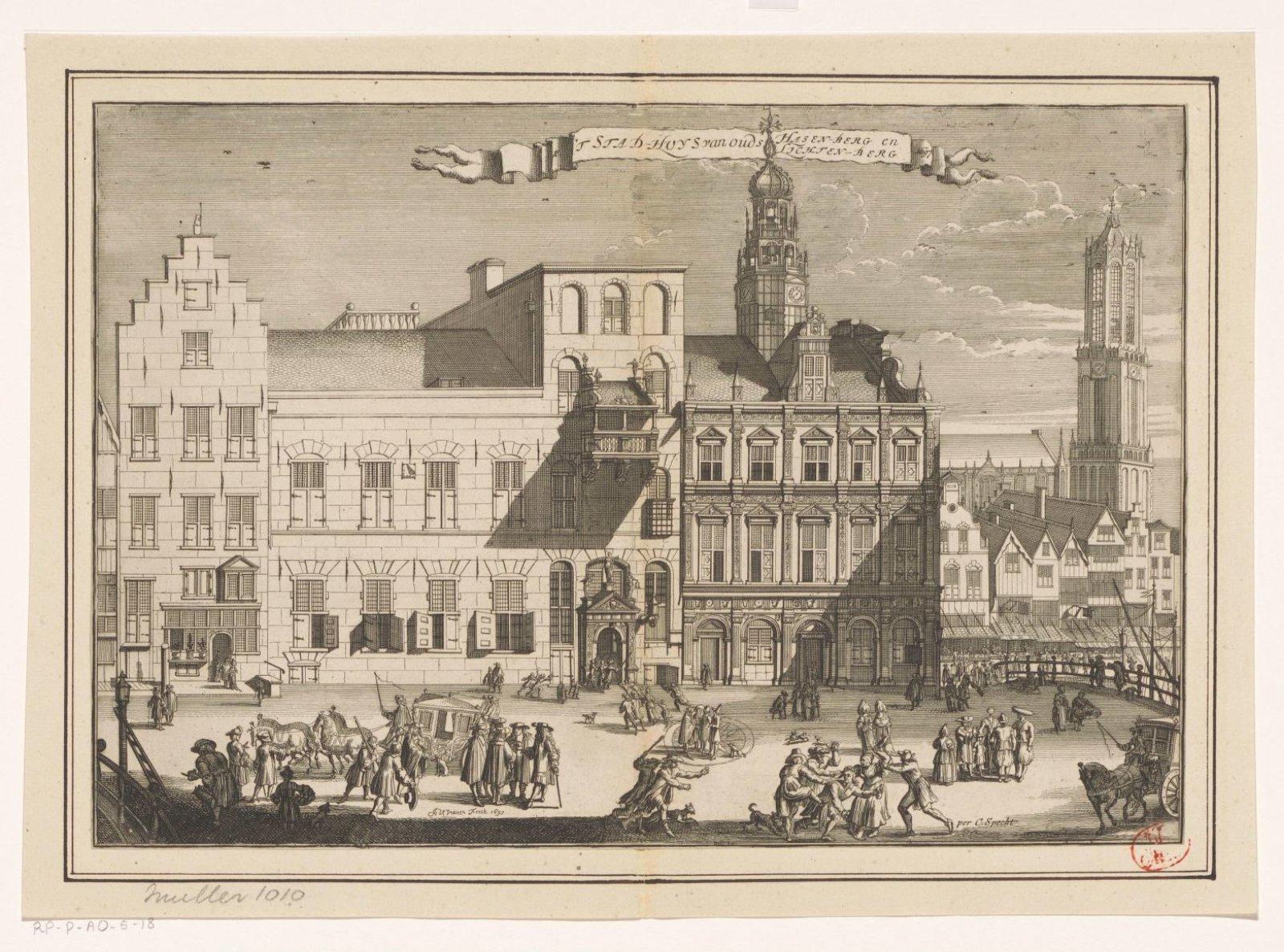
What you are looking at is a stack rather than a building. The city hall of Utrecht grew out of a row of private houses that the city swallowed one by one over the centuries.
Around 1500 they stood here side by side: Leeuwenstein, Nijenborg, the Gulden Arent, Little Lichtenberg, Great Lichtenberg and Hasenberg. The judges of the city had sat in that last house since 1343, and for a long time that was all. Only after had claimed the government of Utrecht were the houses made fit for the entire city council, and Hasenberg was given a renaissance front while its neighbours kept their medieval faces.
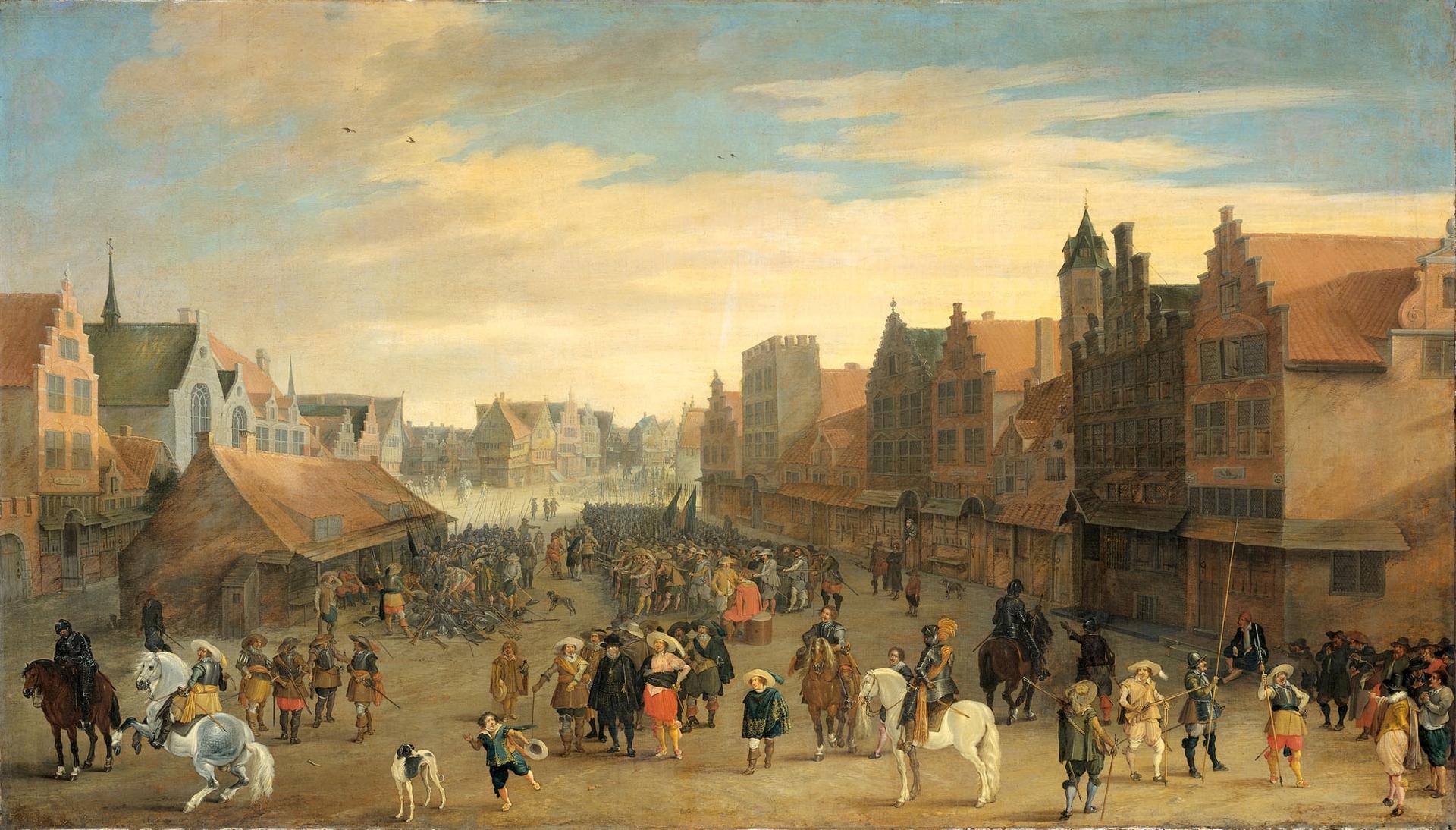
Whatever concerned the city was read out from here. The you will hear about at was announced on this spot, and a year later the ban on Catholic worship was read out from the same steps.
Around 1830 Lichtenberg and Hasenberg came down for a new city hall, which was too small within twenty years and was extended twice more. During the rebuilding around the year two thousand the architect deliberately made the old layering visible again.
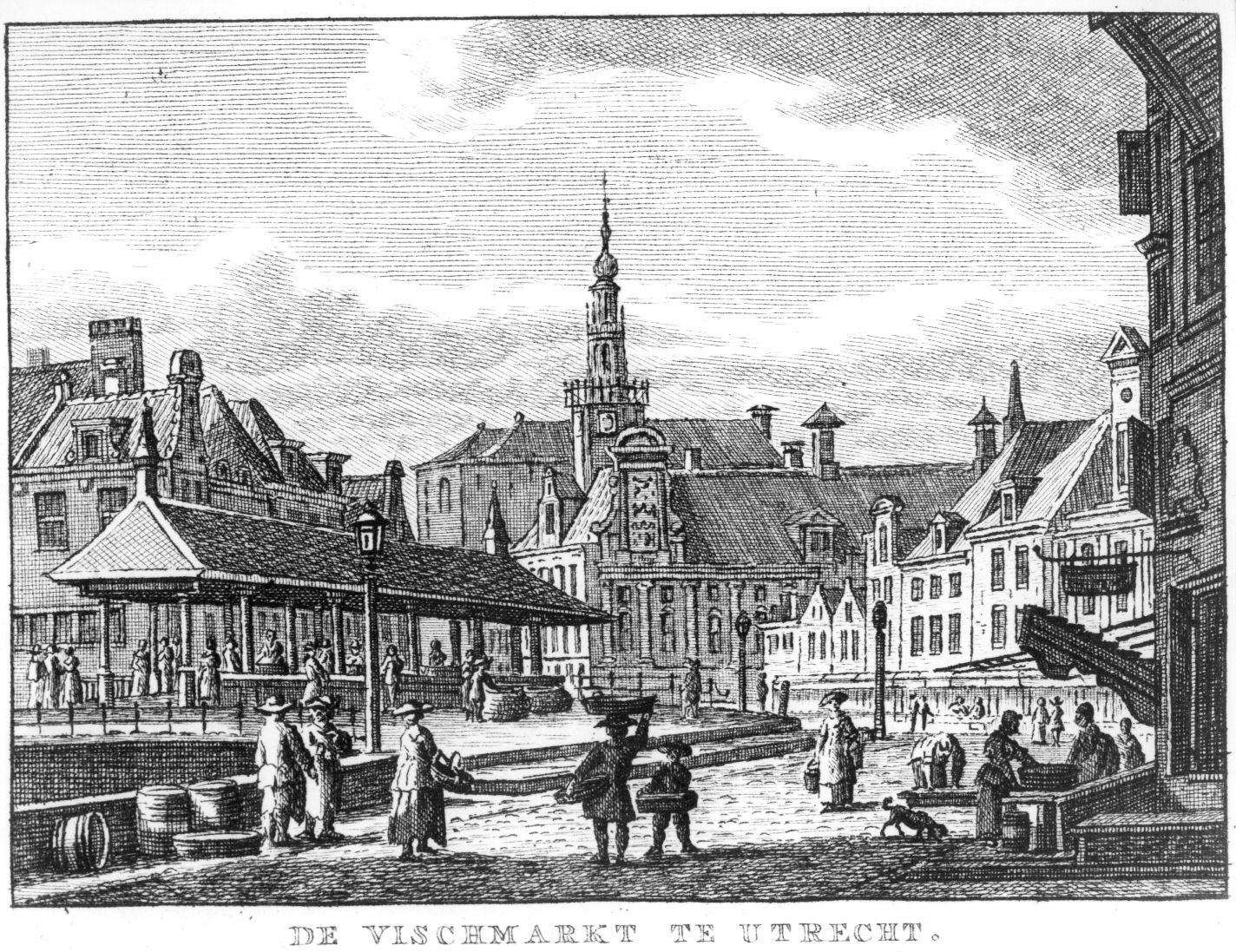
We walk a short way further, to the Vismarkt.
Sources. Story: Gemeente Utrecht (geschiedenis van het stadhuis); Erfgoed gemeente Utrecht, publieksbrochure Gevels Utrechts stadhuis en Basisrapportage Archeologie 166 Photos: Jan van Vianen, Gezicht op het oude stadhuis van Utrecht, 1697, object number RP-P-AO-5-18, Rijksmuseum Amsterdam, public domain