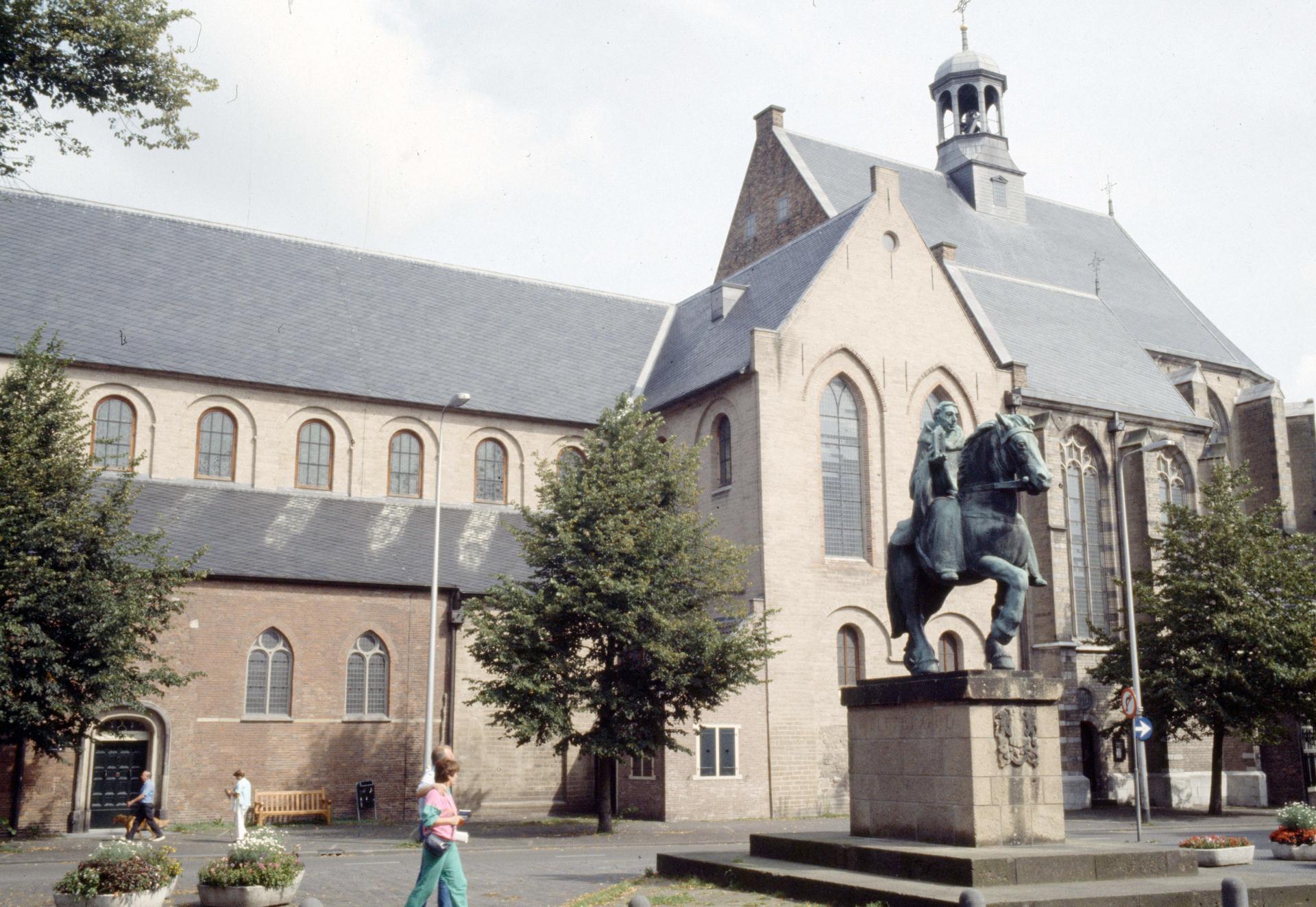
He sits on a horse in full regalia, and he was not welcome here at all.
Willibrord came over from England around the year seven hundred with one assignment: convert the . That was no easy mission. The region was pagan, the Frisians had no use whatsoever for a new god, and the Frisian king drove the missionaries out and had their churches pulled down whenever he got the chance. Willibrord had to flee and could only return once Radboud was dead. Half a century later his successor would be beaten to death near Dokkum for exactly the same reason.
He settled in the remains of the and had two churches built there, on the spot you will pass shortly. That made this city the religious heart of the Low Countries, and it stayed that way for centuries. The bishops who came after him held so much power here that they ruled not only the faith but the land.
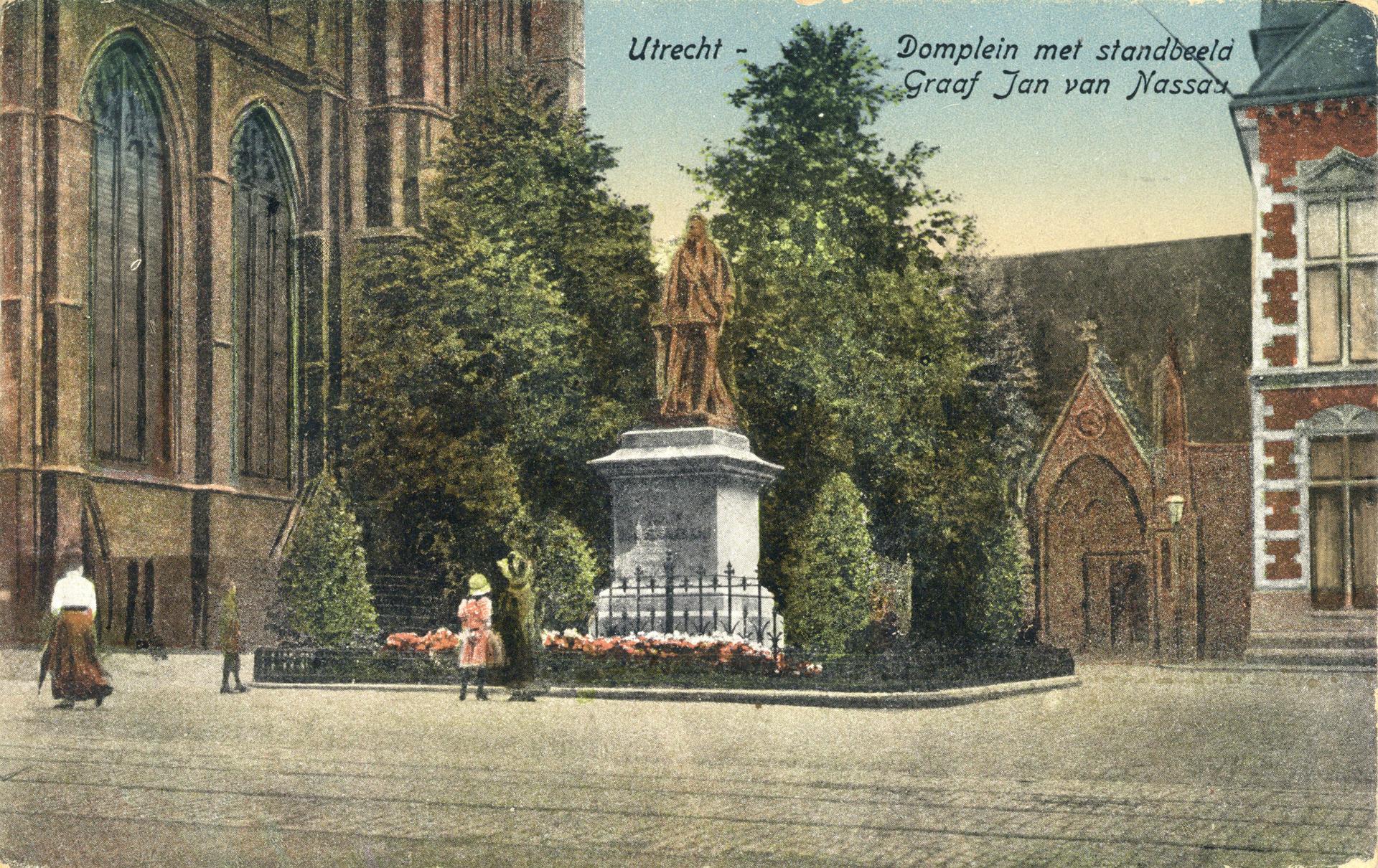
Take a moment to look at the statue itself. It was unveiled in November 1947, a year and a half after the liberation. A city just out of the war, short of everything, chose to spend money on a monument to the man who founded it.
What he left behind returns at the next two stops, because Dom Square only exists because Willibrord settled here.
We now walk along the Domstraat to Dom Square.
Sources. Story: Het Utrechts Archief. Tweede bron nog toe te voegen voor koning Radboud en Bonifatius. Photos: Het Utrechts Archief