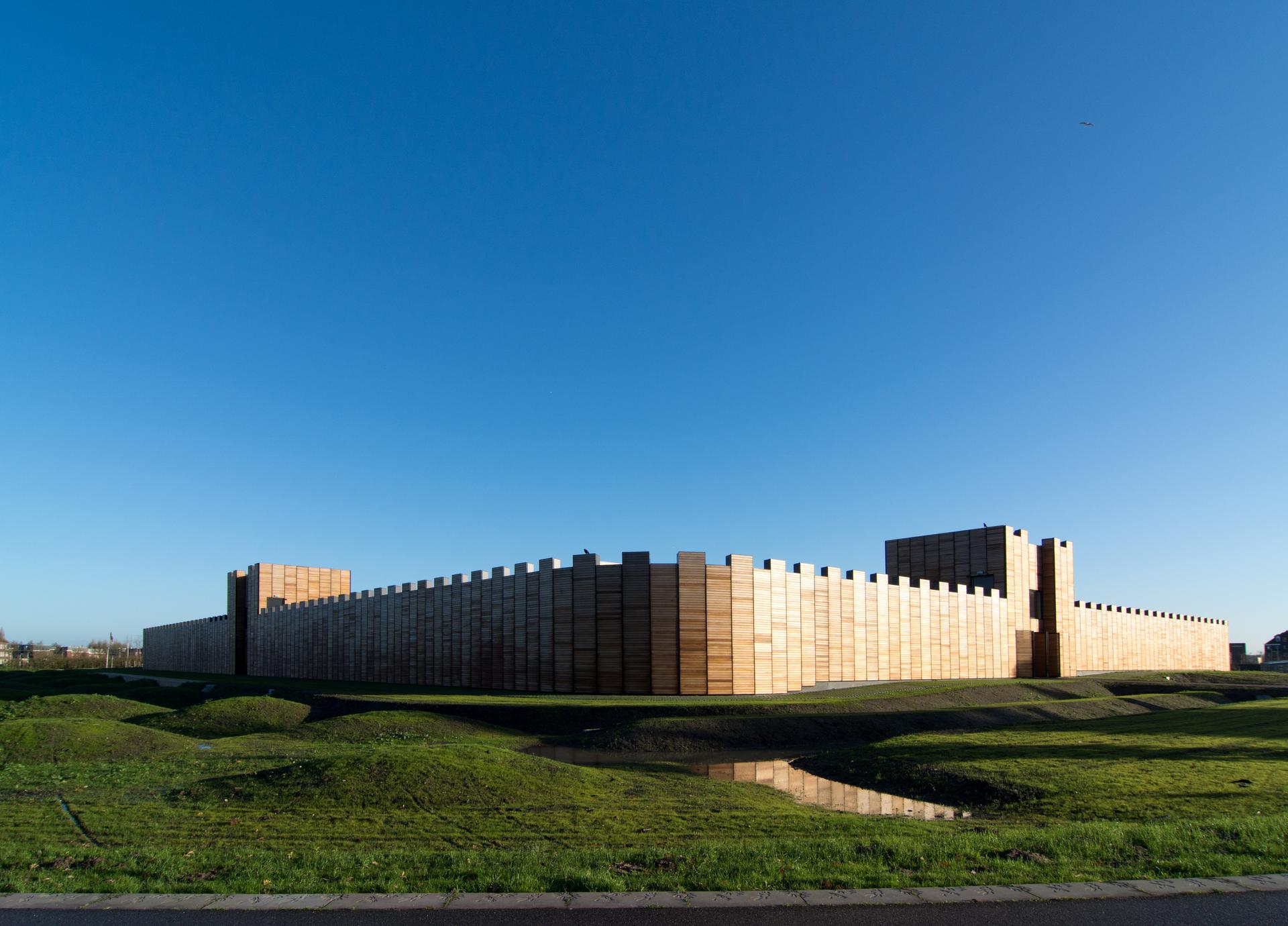
On a single day in 1997, the entire Roman frontier surfaced at : the road, the riverbed and a ship.
Archaeologists were excavating a stretch of the road in what was then the new district of . While pumping away groundwater they hit a piece of timber, which turned out to be the start of a twenty-five metre cargo vessel. It was named De Meern 1.
The ship went down around the year 190, fully in service, probably after a navigation error in a winding side branch of the Rhine. The crew left everything behind: tools, cargo gear, personal belongings. The mud preserved the lot. It is the most complete Roman river ship found anywhere in north-western Europe.
It was lifted in 2003, and roughly ten years of conservation followed. It now lies inside the walls of Castellum Hoge Woerd, a modern building that follows the outline of the Roman fort that really did stand here. More ships lie in the soil of Leidsche Rijn, deliberately left where they are.
What the fort itself was called, nobody knows. Its Roman name has never been recovered.
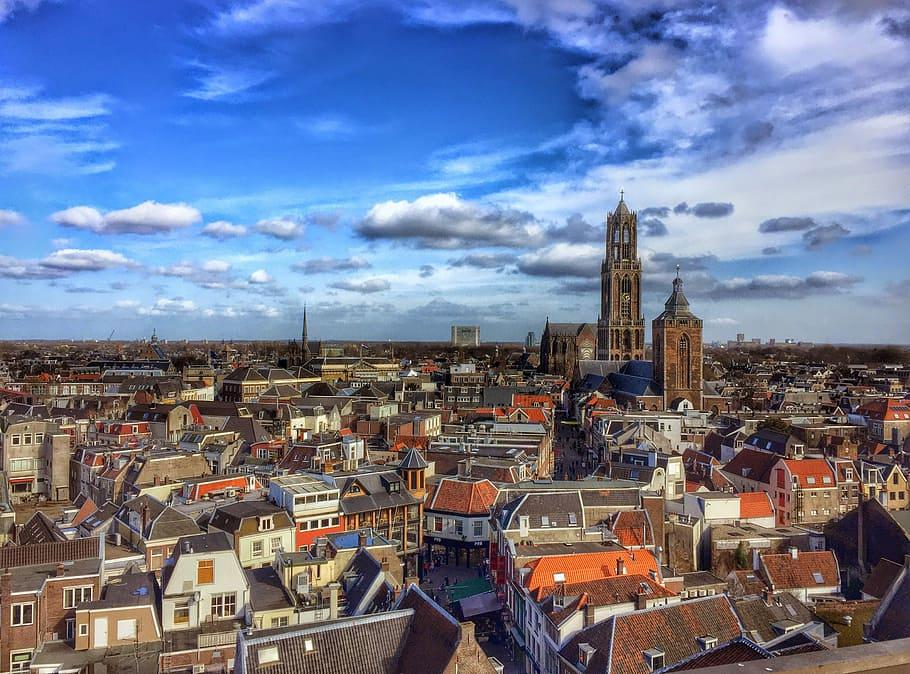
Utrecht began as a Roman border post. One of our walking routes through the city shows you what came after.
Sources. Story: Museum Hoge Woerd on the ship De Meern 1 and the limes; Historiek on the 1997 discovery and the building of the museum; Romeinen.nl on Utrecht-Leidsche Rijn and the castellum whose Roman name is unknown; Cultural Heritage Agency of the Netherlands on the 2003 lifting and the conservation. Photos: Source photo: Door Cornutus - Eigen werk, CC BY-SA 4.0, https://commons.wikimedia.org/w/index.php?curid=45425369