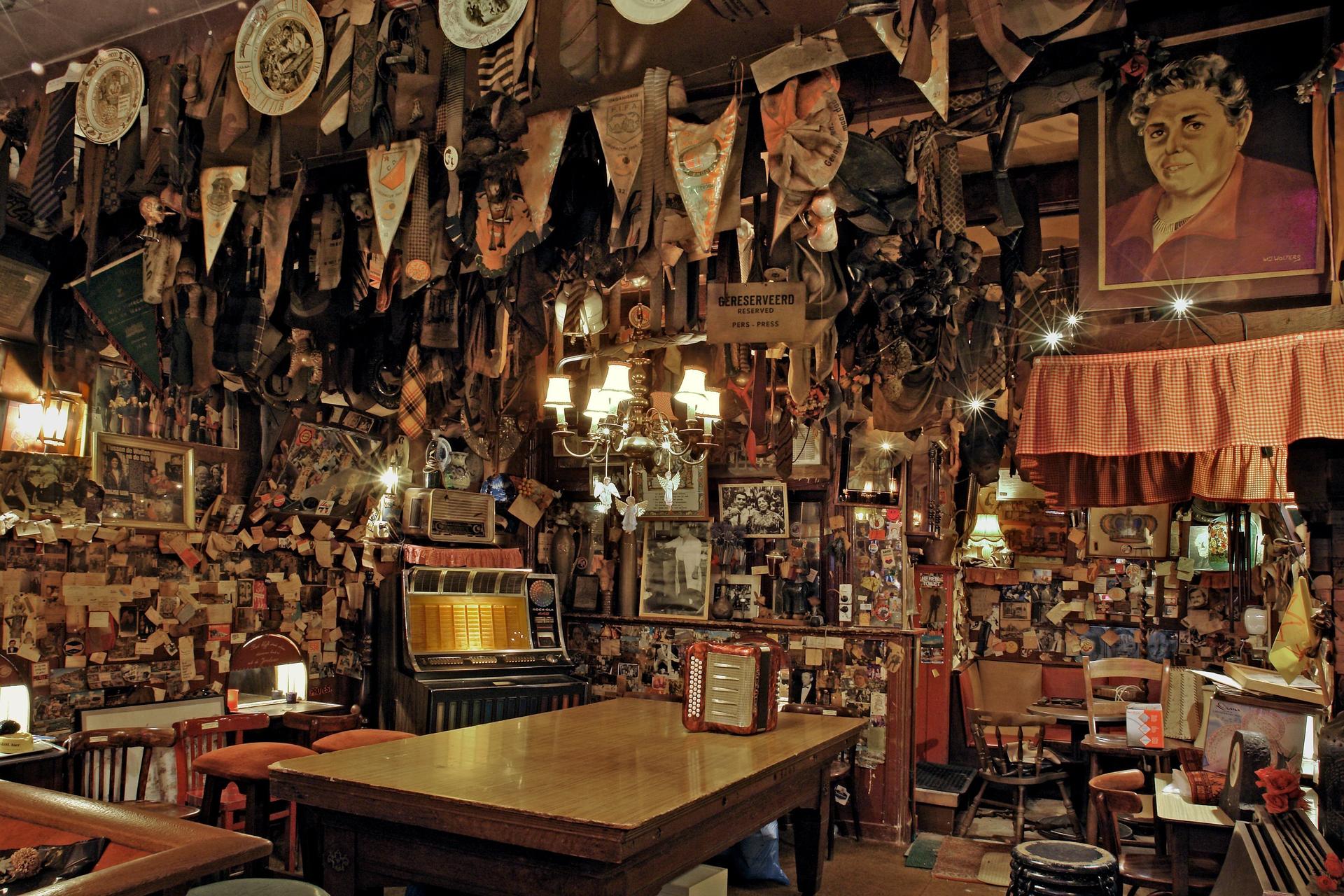
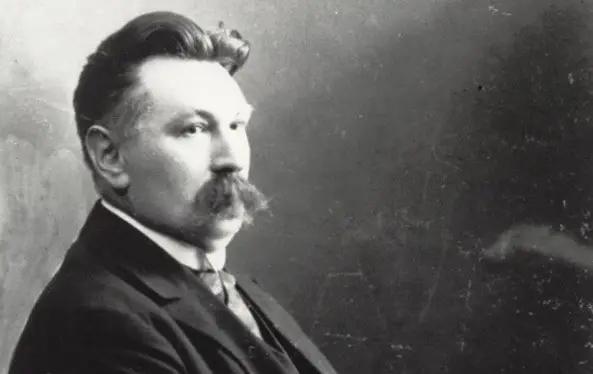
Bet van Beeren was the eldest of fourteen children from the district and worked in a factory until she fell out with her boss. In 1927, at twenty-five, she took over her uncle's bar here at Zeedijk 63, which was then called Amstelstroom. She renamed it 't Mandje, the little basket, after the basket her mother carried her meals in every day.
Bet loved women and made no secret of it, at a time when most Dutch people considered homosexuality an illness. Sailors, sex workers, artists and above all gay men and lesbians stood side by side at her bar. Kissing was forbidden, a house rule of her own, apart from the Oranjebals on the , when men danced with men and women with women. The entertainer said about those evenings that it was allowed nowhere and never, and that at Bet's it was allowed and possible and nobody found it strange.
Through the window you can see the cut-off ties of visitors still hanging from the ceiling, a habit from her day that the bar has kept up. When Bet died in 1967 she lay in state for three days on the billiard table of her own bar, after which her sister Greet closed the door in 1982 and preserved everything inside it, until a niece opened the place again in 2008.
We walk back down the Zeedijk towards Centraal Station and turn left into the Warmoesstraat, carrying on until number 90.
Sources. Story: Canon van Amsterdam, window 36, Amsterdam City Archives; Atria, biography of Bet van Beeren; Oneindig Noord-Holland, Café 't Mandje Photos: Stadsarchief Amsterdam