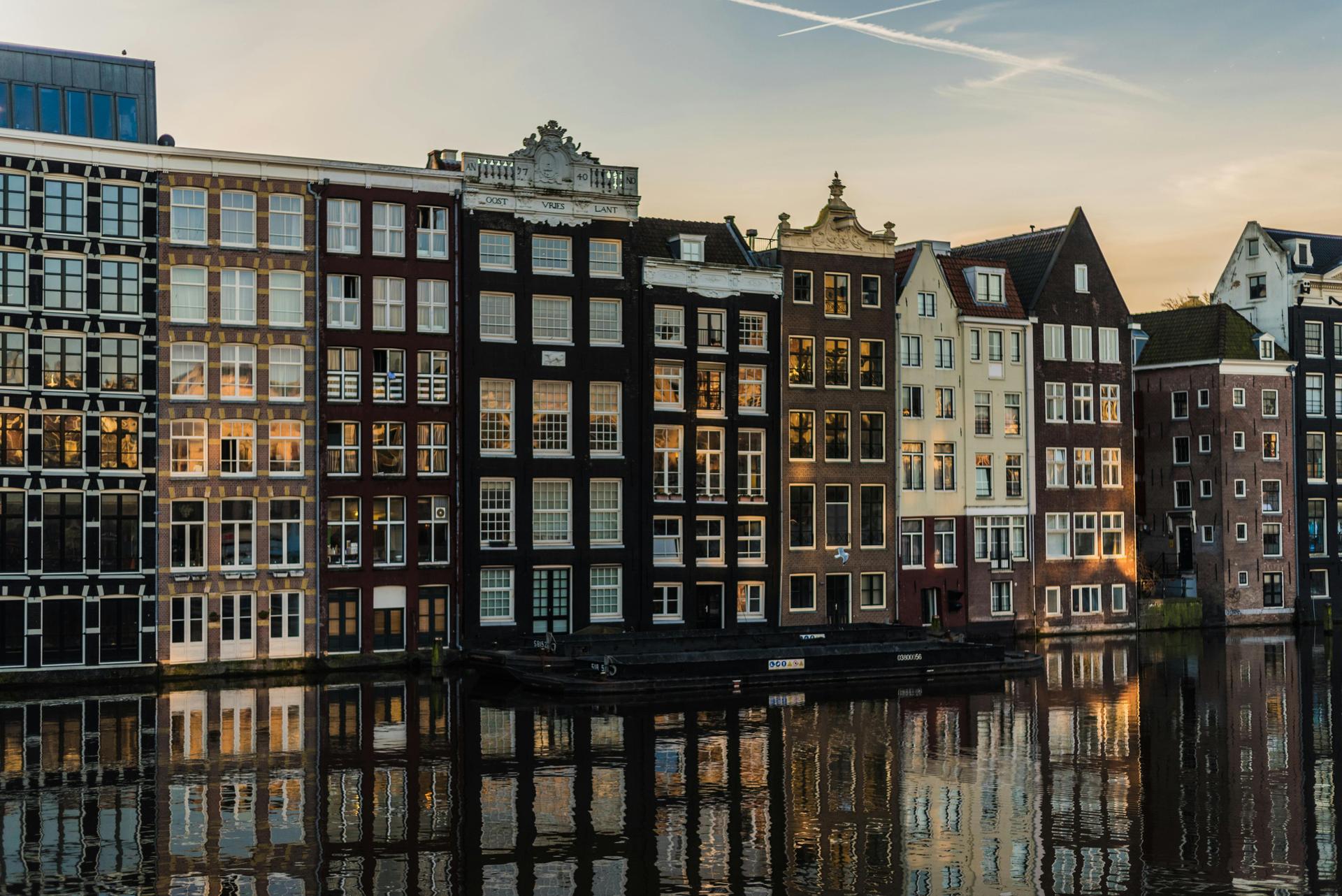
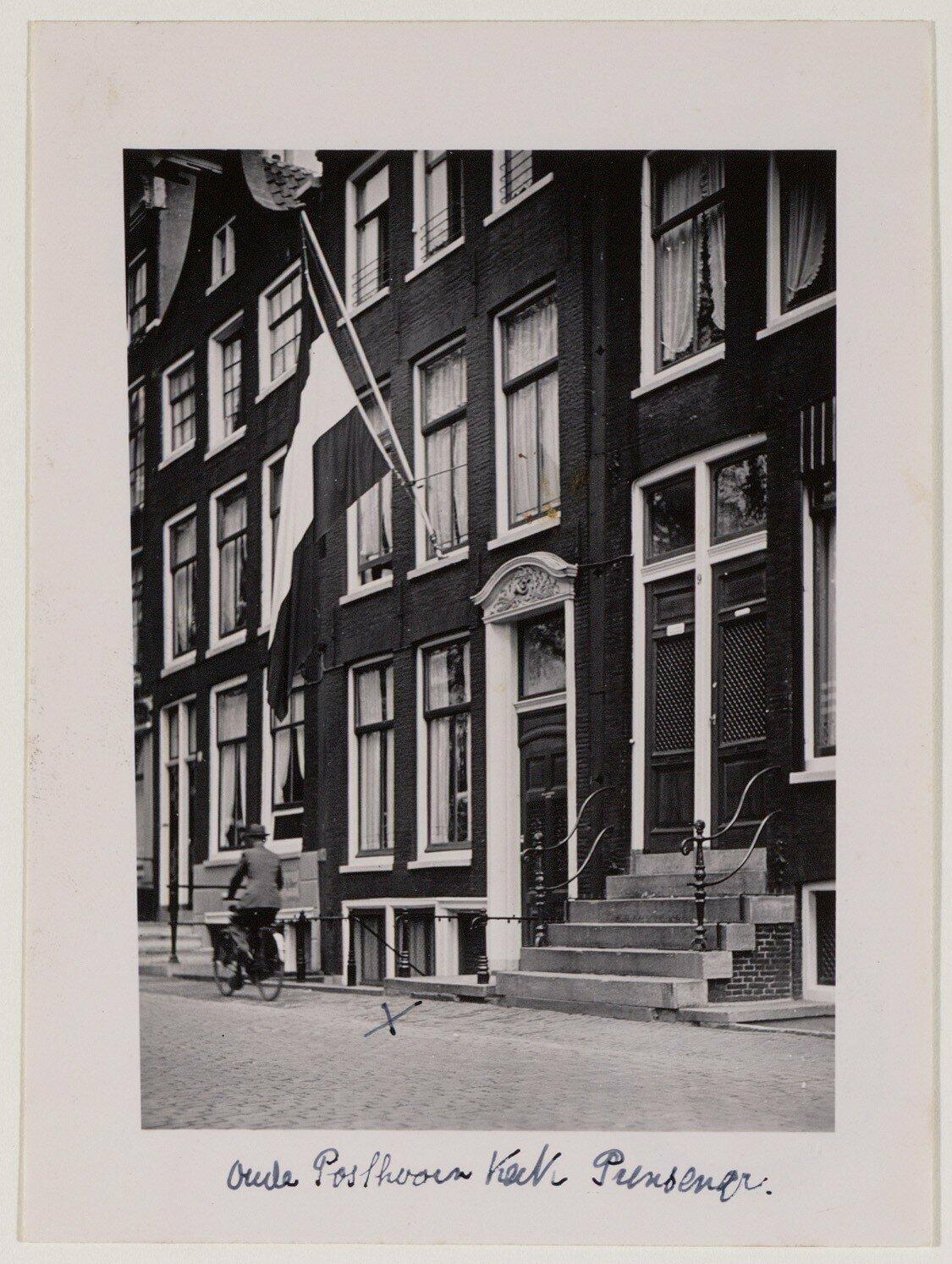
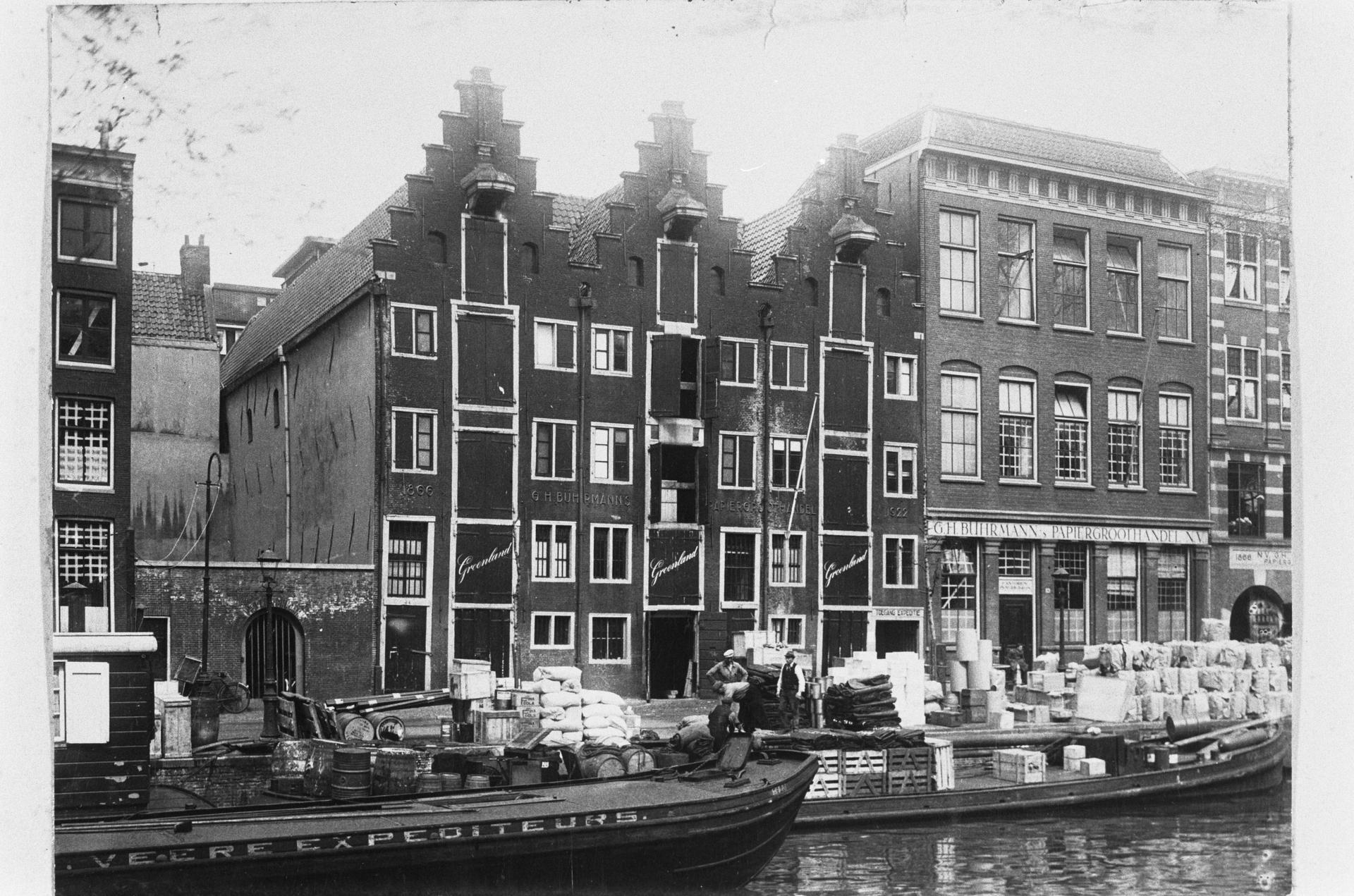
Keizersgracht 40 to 44 are three warehouses from 1620 with and decorated brickwork, which is rare, because a warehouse usually got the plainest front its owner could get away with. They are known as the Greenland warehouses, after the waters around and Greenland where the Amsterdam fleet hunted whales.
What came in here was , rendered from whale blubber. The cellars hold brick tanks built to store it, and a single one of them took up to fifty thousand litres. Under the pavement where you stand lay a supply that could keep a town in light for months.
Train oil burned in lamps, went into soap and candles and greased machinery, and demand for it kept the whaling fleet sailing for two centuries. The boiling was done well outside the built-up city, because the smell was unbearable in a residential street. Storage was allowed on this smart canal, safely tucked away below ground.
People live above those cellars now, since the warehouses were converted into flats, with the hoisting beams still in place. The trade itself drained away in the nineteenth century, as the whales in the north ran out and oil began to come from elsewhere.
Sources. Story: Amsterdam City Archives; Wikipedia, Groenlandse pakhuizen Photos: Stadsarchief Amsterdam