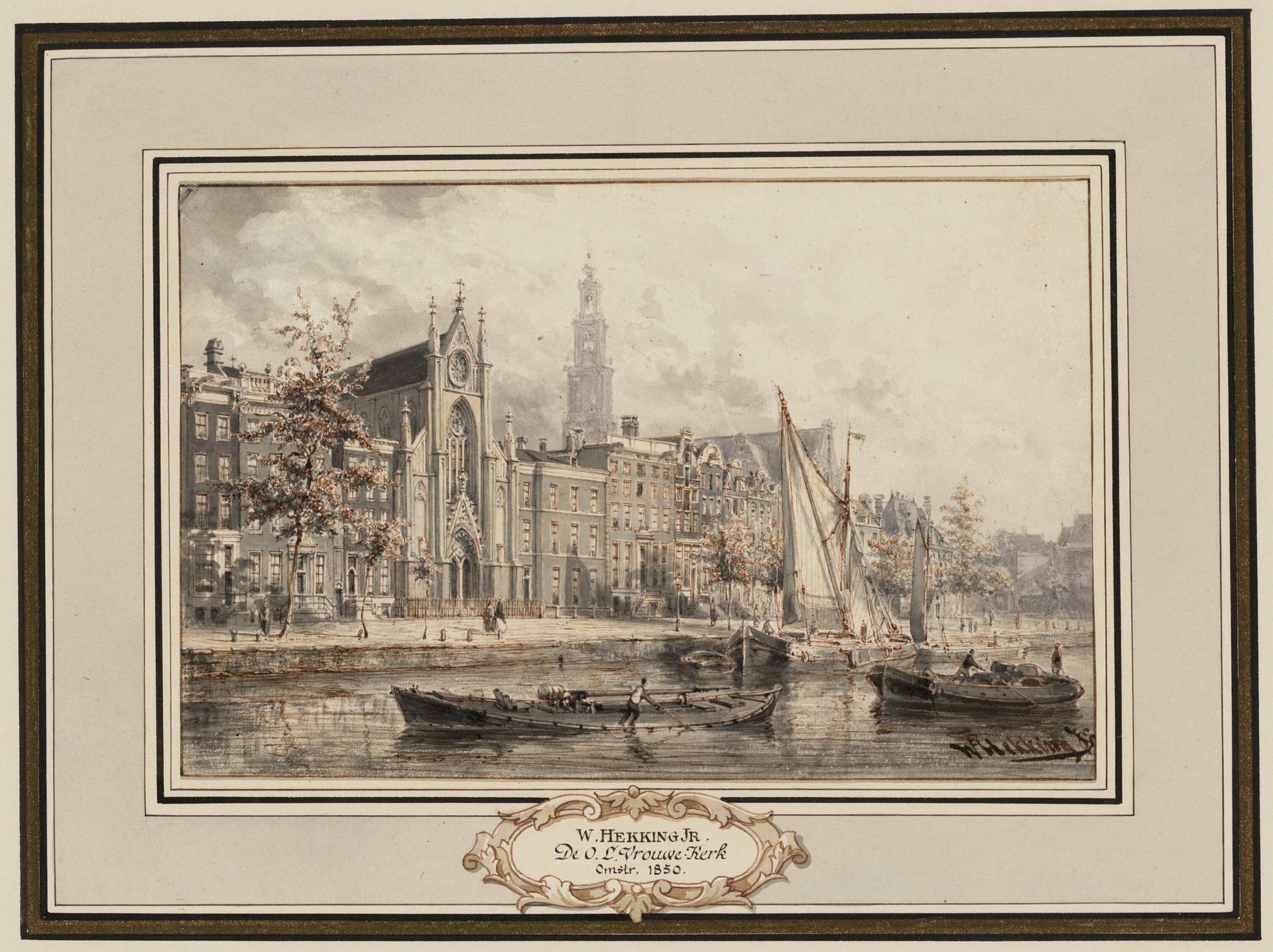
Behind this front on the stands a church that twice gave a home to people who lacked one elsewhere. , the same architect who designed De Duif a little further along, built the Onze-Lieve-Vrouwekerk here in 1854, this time in neo-Gothic style, shortly after Catholics were allowed to build openly again.
After the war the number of Catholic churchgoers in the old centre fell away, while a new community arrived. from the Middle East, who came to the Netherlands from the nineteen sixties onwards, took the building into use. The liturgy here has been sung in Aramaic ever since, the language spoken in that region in the time of Jesus.
The building is shared, as the Surinamese Catholic community gathers here as well. Inside, the old statues and paintings stand alongside the icons of its newer users, so you see two traditions in one room.
Sources. Story: Wikipedia, Onze-Lieve-Vrouwekerk (Amsterdam). https://nl.wikipedia.org/wiki/Onze-Lieve-Vrouwekerk_(Amsterdam) Stadsarchief Amsterdam, Keizersgracht 220. https://archief.amsterdam Photos: Stadsarchief Amsterdam