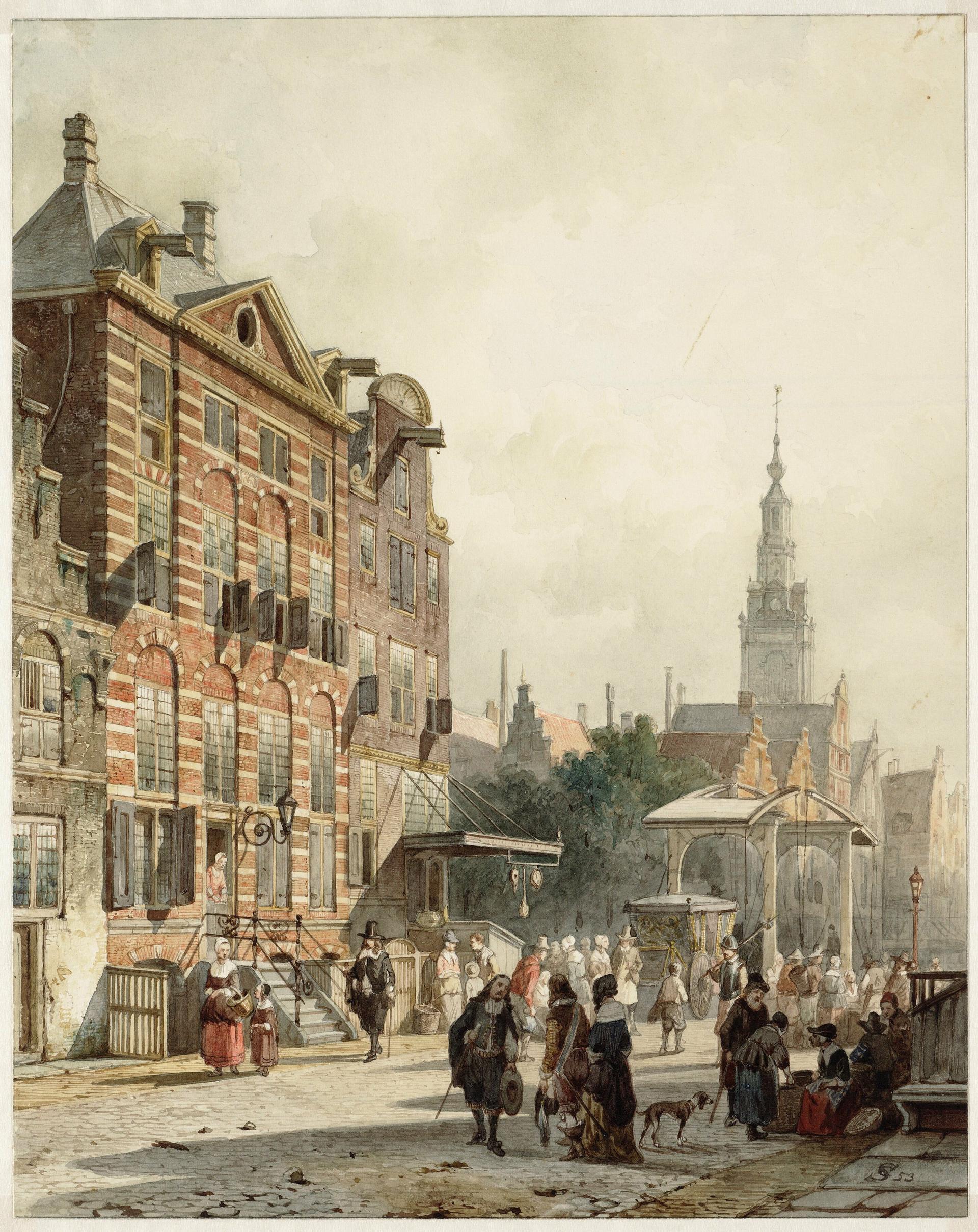
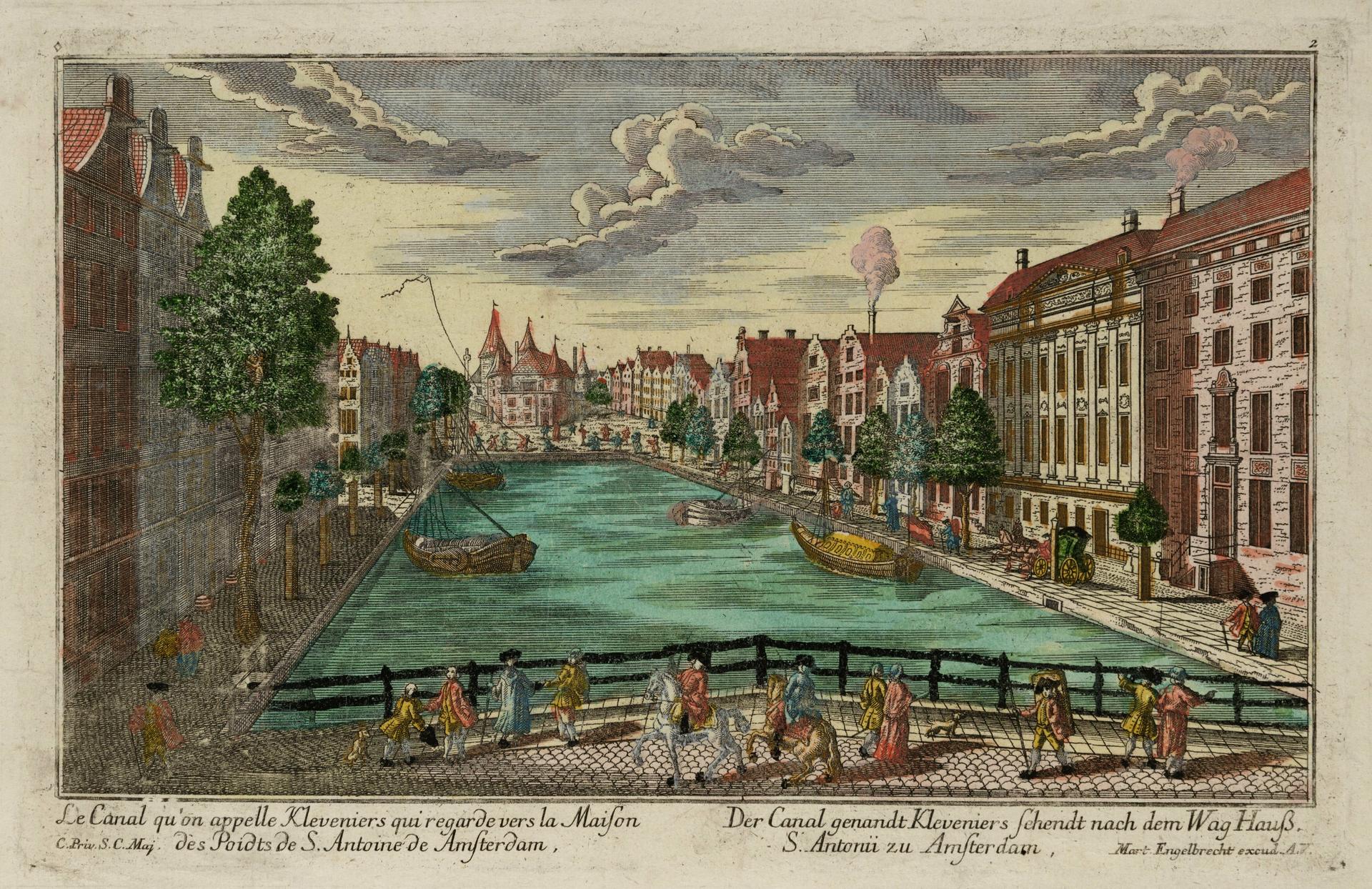
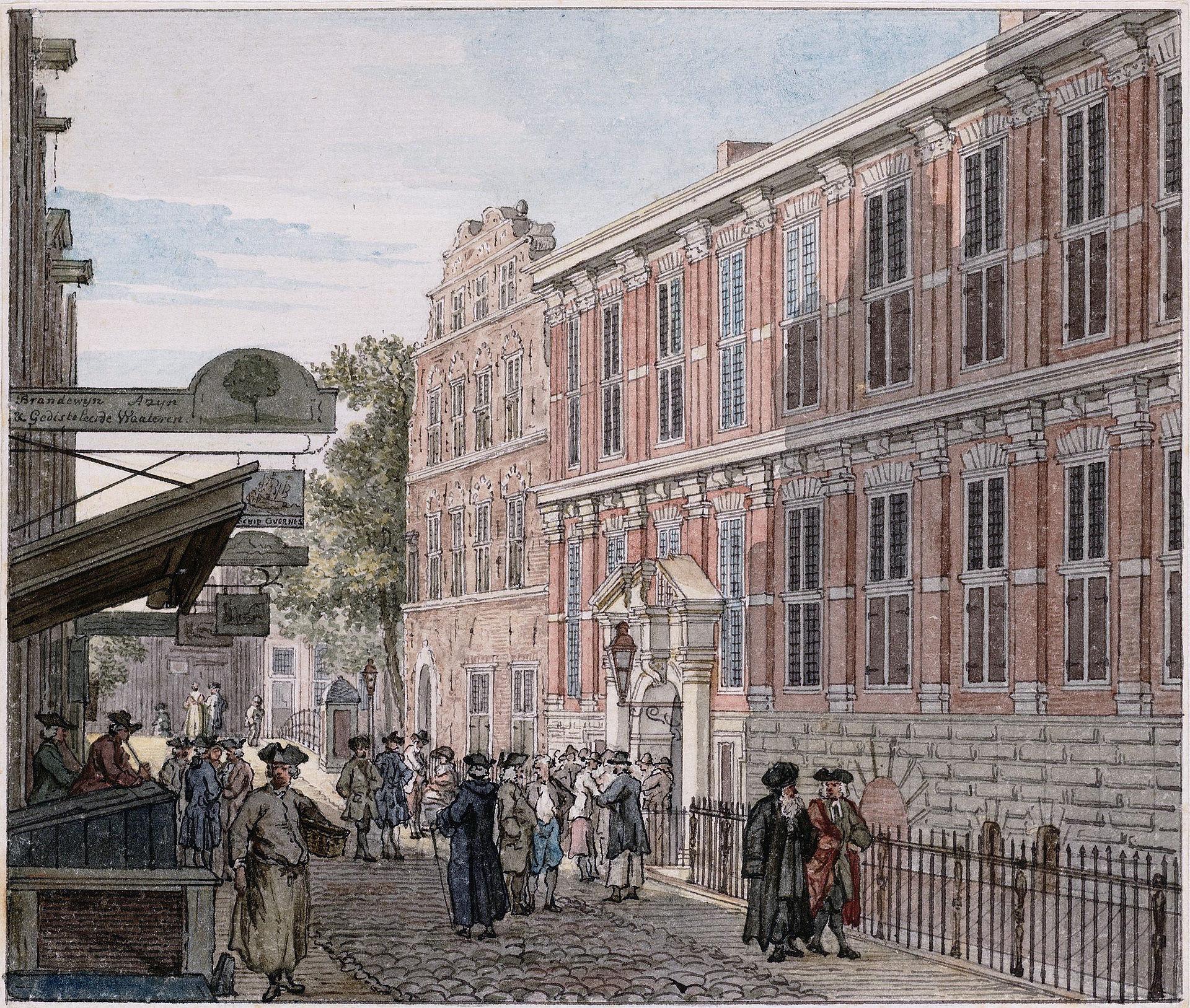
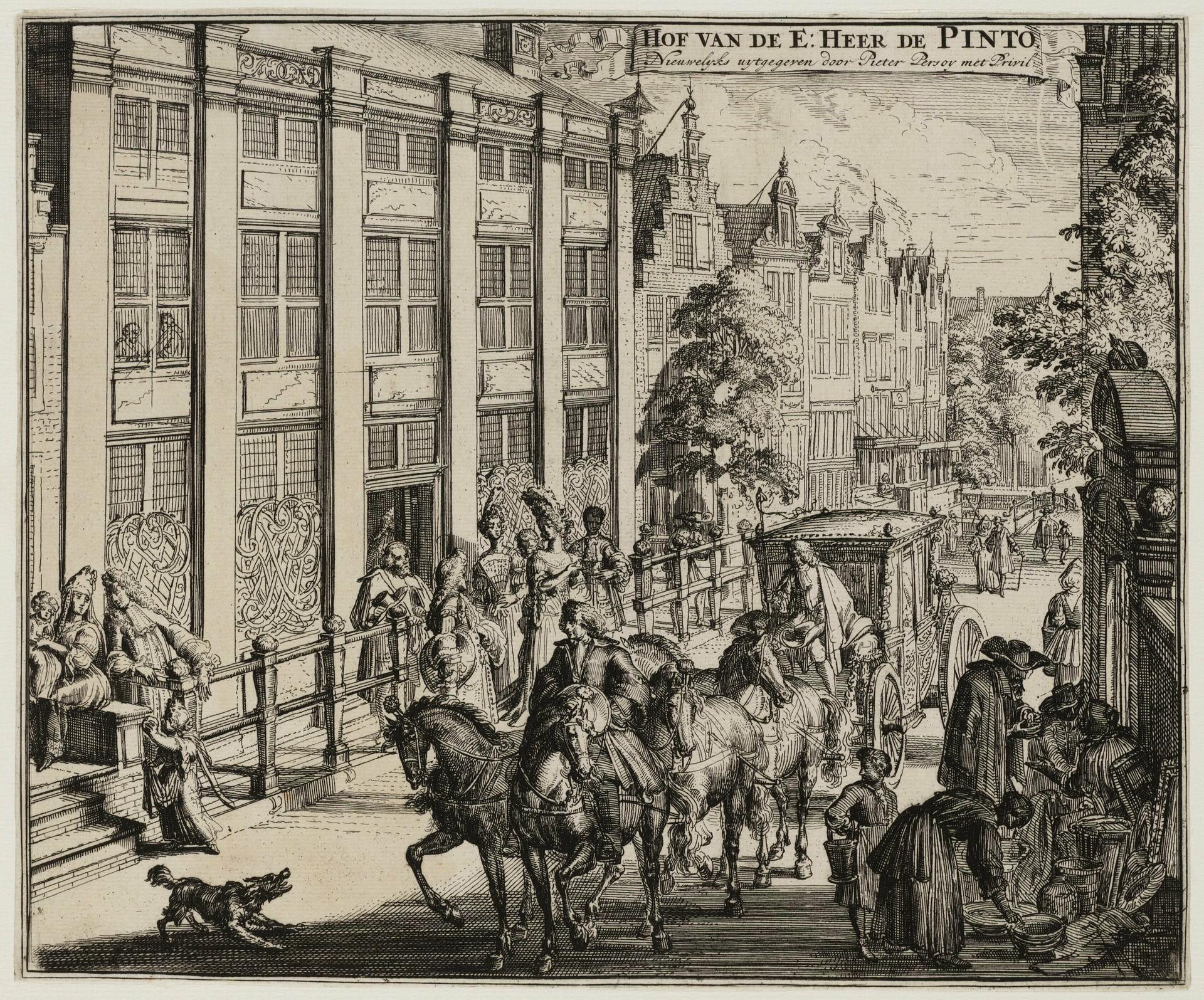
One façade on the Sint Antoniesbreestraat looks as though it belongs on a canal: broad, built of sandstone, with the air of a merchant's house on what is really an ordinary shopping street. The house went up around 1605, and in 1651 bought it from Jan Jansz Carel, one of the first directors of the . The De Pintos were Portuguese Jews whose family had left Iberia to escape the , and in Amsterdam they grew into merchants and bankers of the first rank, the of the seventeenth century.
Their wealth became a neighbourhood legend, with people whispering that the walls inside were lined with gold ducats, and when the city rose in 1696 against a new tax on funerals the crowd came through this door and plundered the place.
Three centuries later it came close to vanishing after all, because a four-lane road was planned straight through the district. This house became the symbol of the resistance to it, and that fight was won: the road never arrived, the metro did.
Inside you will now find an exchange library you can simply walk into, with the painted ceilings of the restoration above the reading tables.
Sources. Story: Erfgoedregister Amsterdam, Stadsherstel Amsterdam, Ons Amsterdam Photos: Our sincere thanks to the Amsterdam City Archives for kindly providing these photographs.