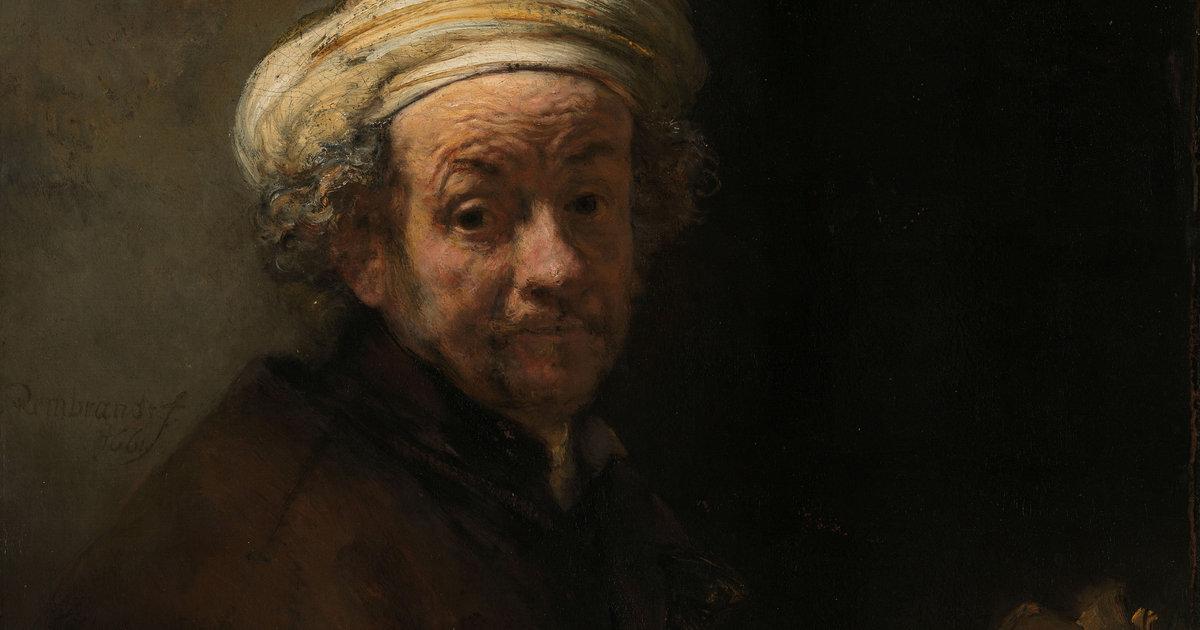
Rembrandt Harmenszoon van Rijn was born in Leiden in 1606, the son of a miller, and he had yet to turn twenty-five when Amsterdam took him in. The city was full of merchants who wanted themselves recorded for good, and he could paint a face the way nobody else could: half in the light, half in the dark, as though you had just caught someone out.
The 1630s were his best years. He married , niece of the art dealer whose house he lodged in, took commission after commission and ran a studio full of pupils. In 1642 he delivered . In that same year Saskia died, twenty-nine years old, shortly after the birth of their son .
Then came the slide, and Rembrandt lent it a hand. His affair with , the nurse who had looked after Titus, ended in a court case and in her confinement to a house of correction in Gouda, which he helped to arrange. With , who came to live with him afterwards, he had a daughter and a visit from the church council. When the creditors arrived, Hendrickje and Titus set up an art dealership with Rembrandt as their employee, keeping his work clear of the bankruptcy.
Both of them died before he did. He died on 4 October 1669 and was buried in the , in a rented grave. When the rent ran out the remains were cleared away, so the most famous painter in the country lies somewhere under that church floor with the exact spot long since lost.
Sources. Story: Rijksmuseum; Museum Het Rembrandthuis; Amsterdam City Archives; RKD, Netherlands Institute for Art History Photos: Public domain