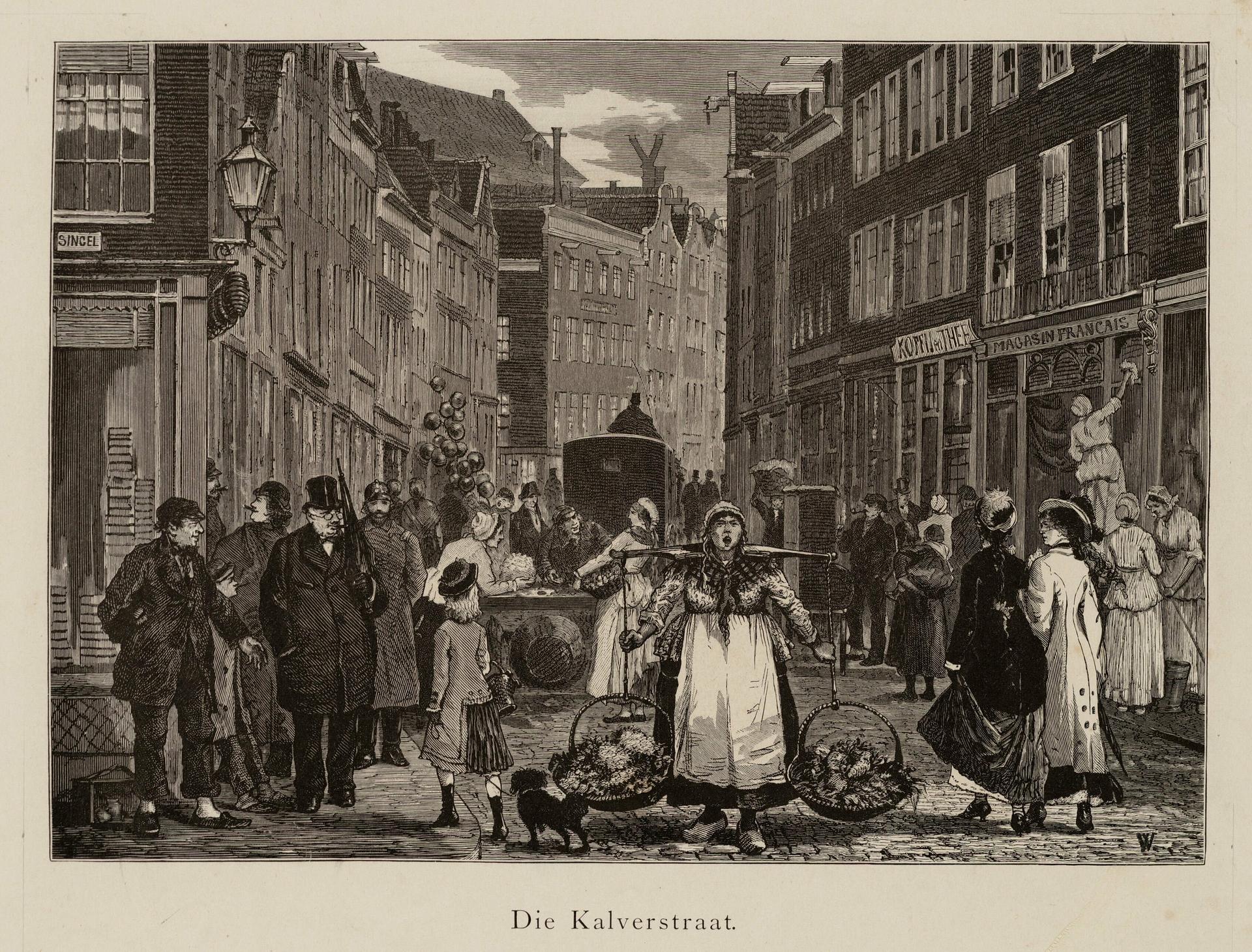
For a medieval town, a miracle was the best thing that could happen. Pilgrims arrived with money, and that money brought churches, inns and standing. Around 1345 Amsterdam was a trading settlement of a few thousand souls living off fish and beer, and pilgrims took their routes elsewhere. That changed in a house that stood on this spot.
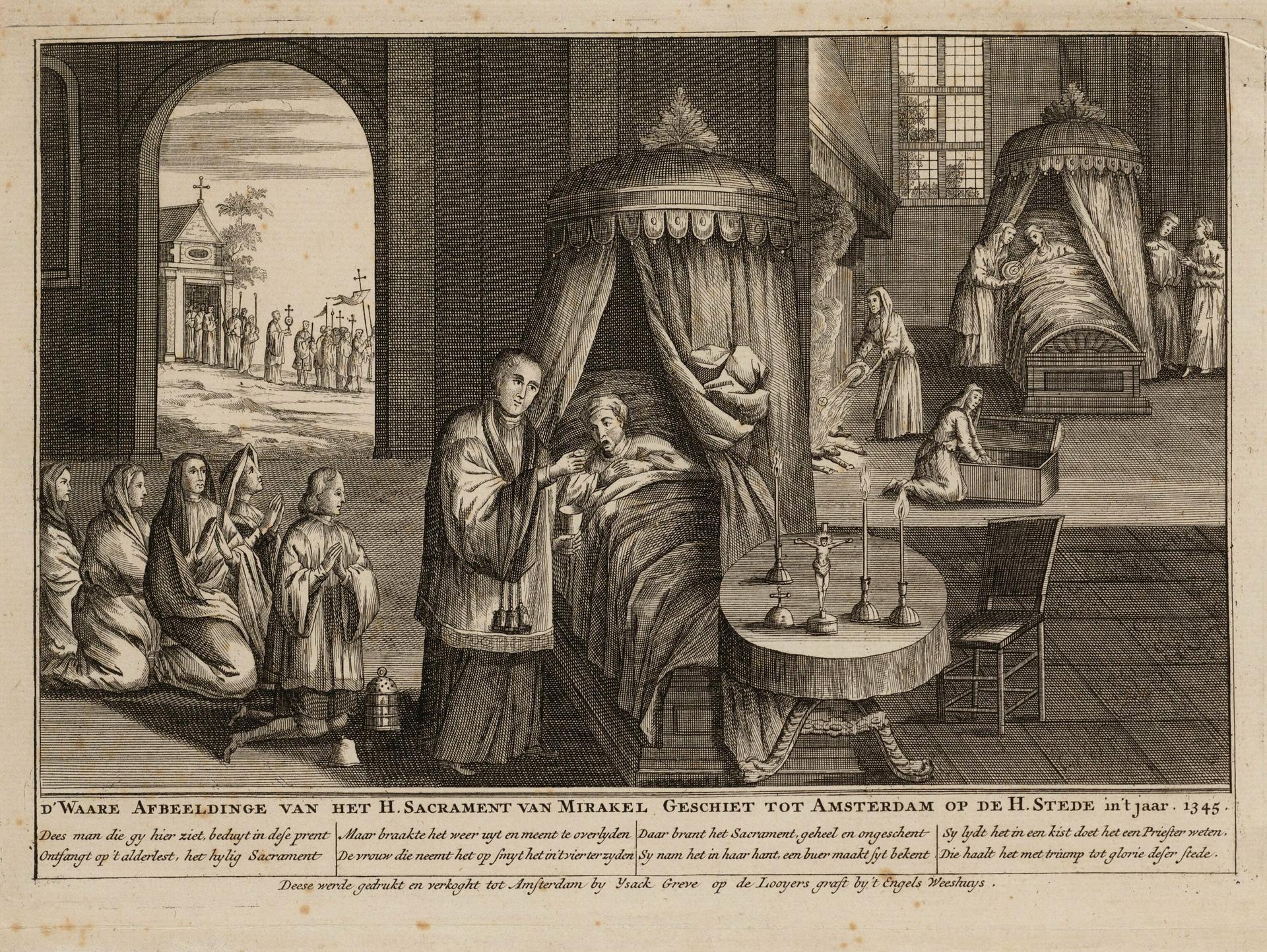
It turns on the , the piece of bread that becomes the body of Christ in the Catholic mass and was therefore handled with the greatest care. Ysbrant Dommer, who lay dying, was given one and brought it back up shortly afterwards. His household threw what he had been sick into the hearth. The next morning the host lay untouched among the ashes. It was carried to the , and the day after it lay here again. That happened three times.
A year later the bishop of Utrecht declared it a miracle and the rose on this spot. Pilgrims came from across Europe, among them , who recovered after his visit and granted the city his imperial crown. That crown has sat on the and in the city arms ever since.
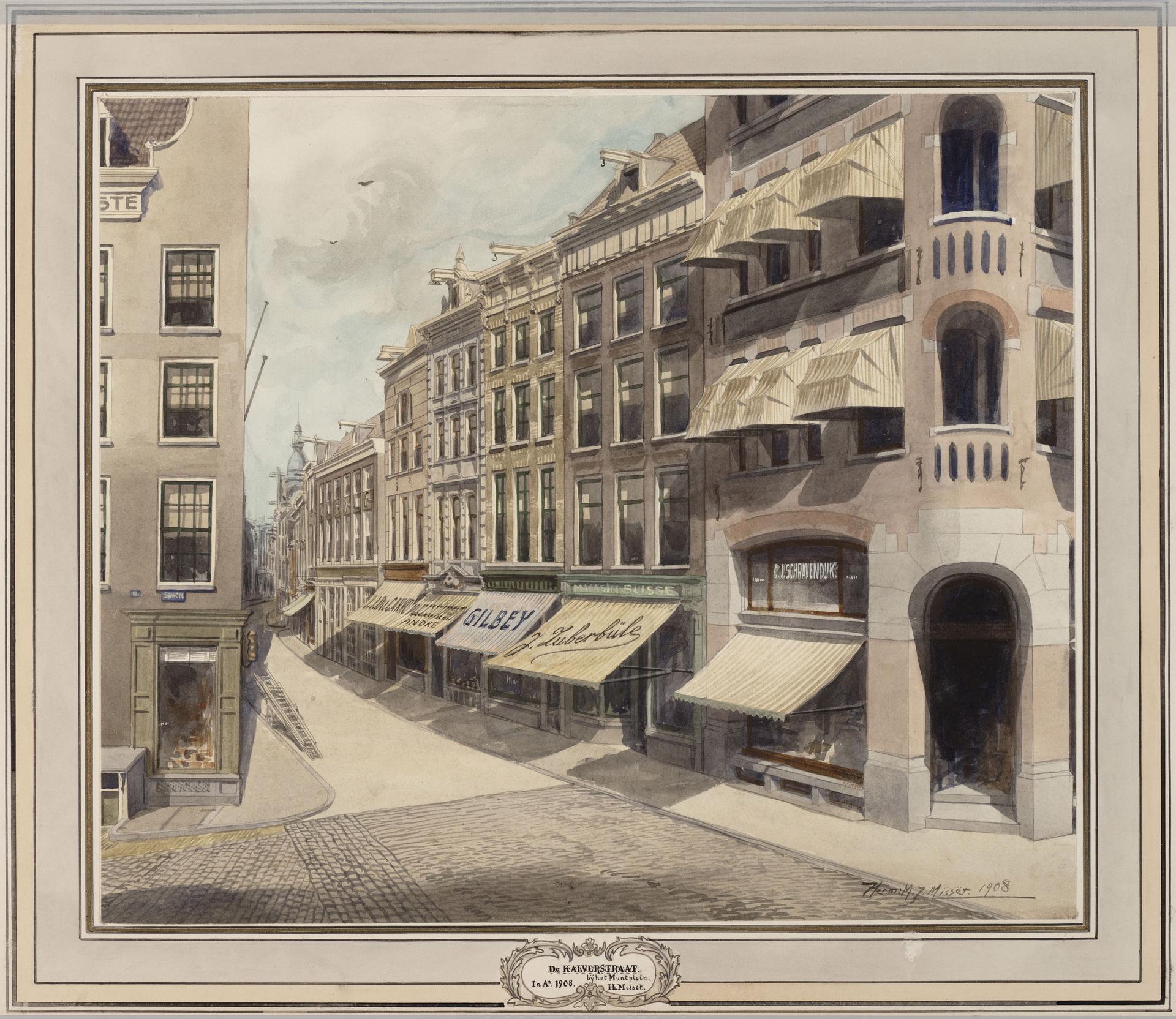
The chapel disappeared in 1908 and the column beside you holds the place. Every March thousands of people still walk past here at night in silence, in the .
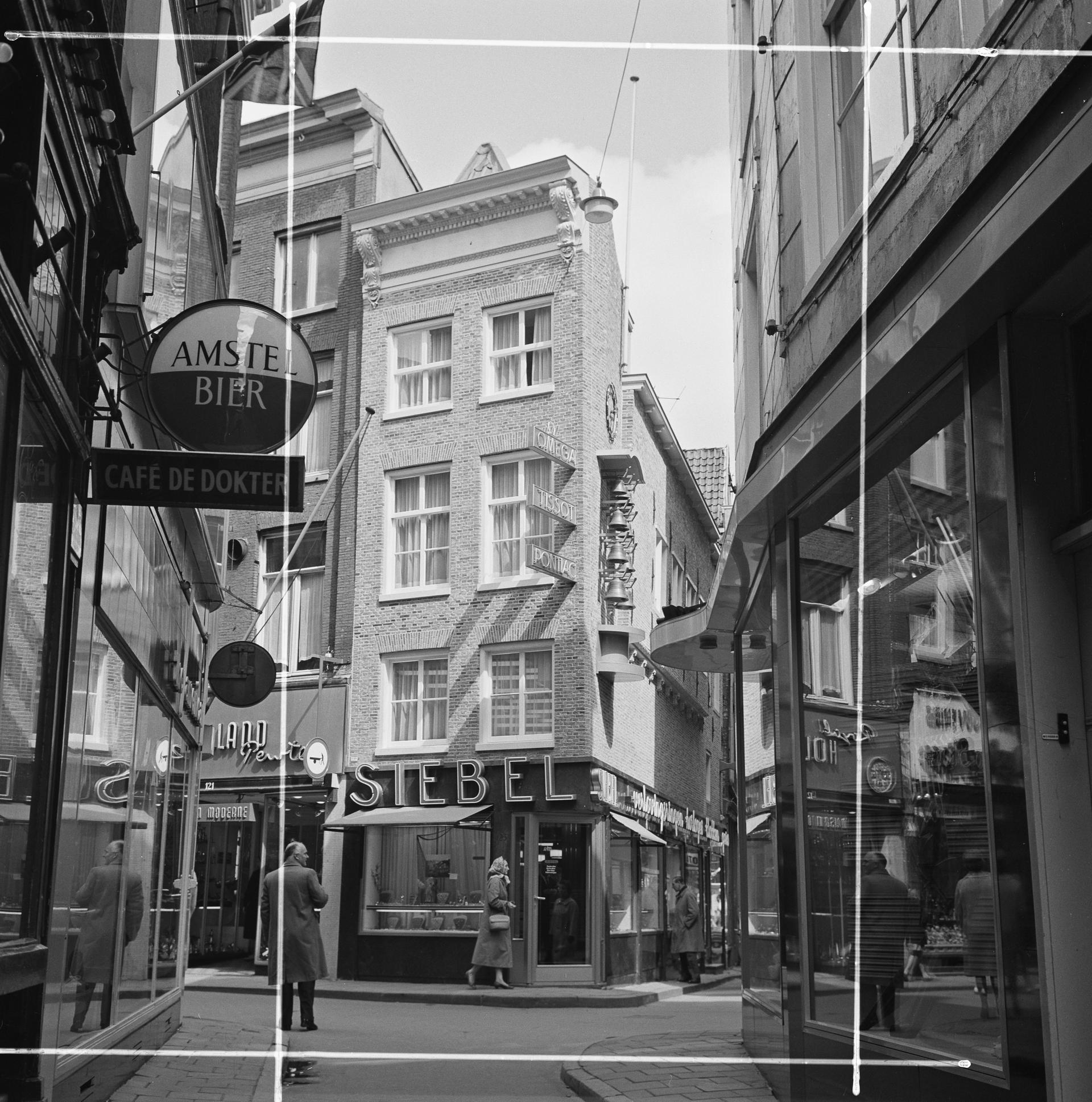
We cross to the Kalverstraat and follow it south towards the Spui.
Sources. Story: Stadsarchief Amsterdam, the Amsterdam Museum and the Gezelschap van de Stille Omgang on the Miracle of 1345 and the Holy Stead Photos: Stadsarchief Amsterdam, with photographs by Martin Alberts