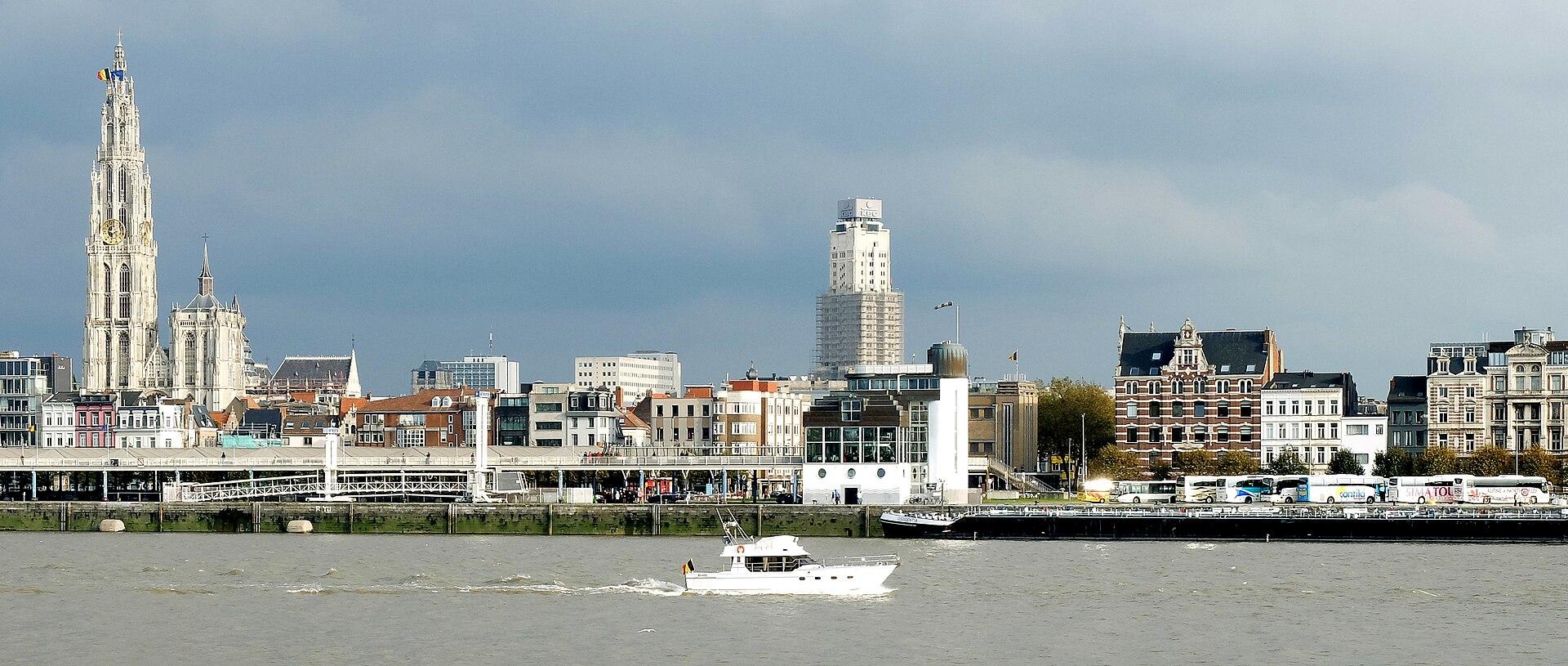
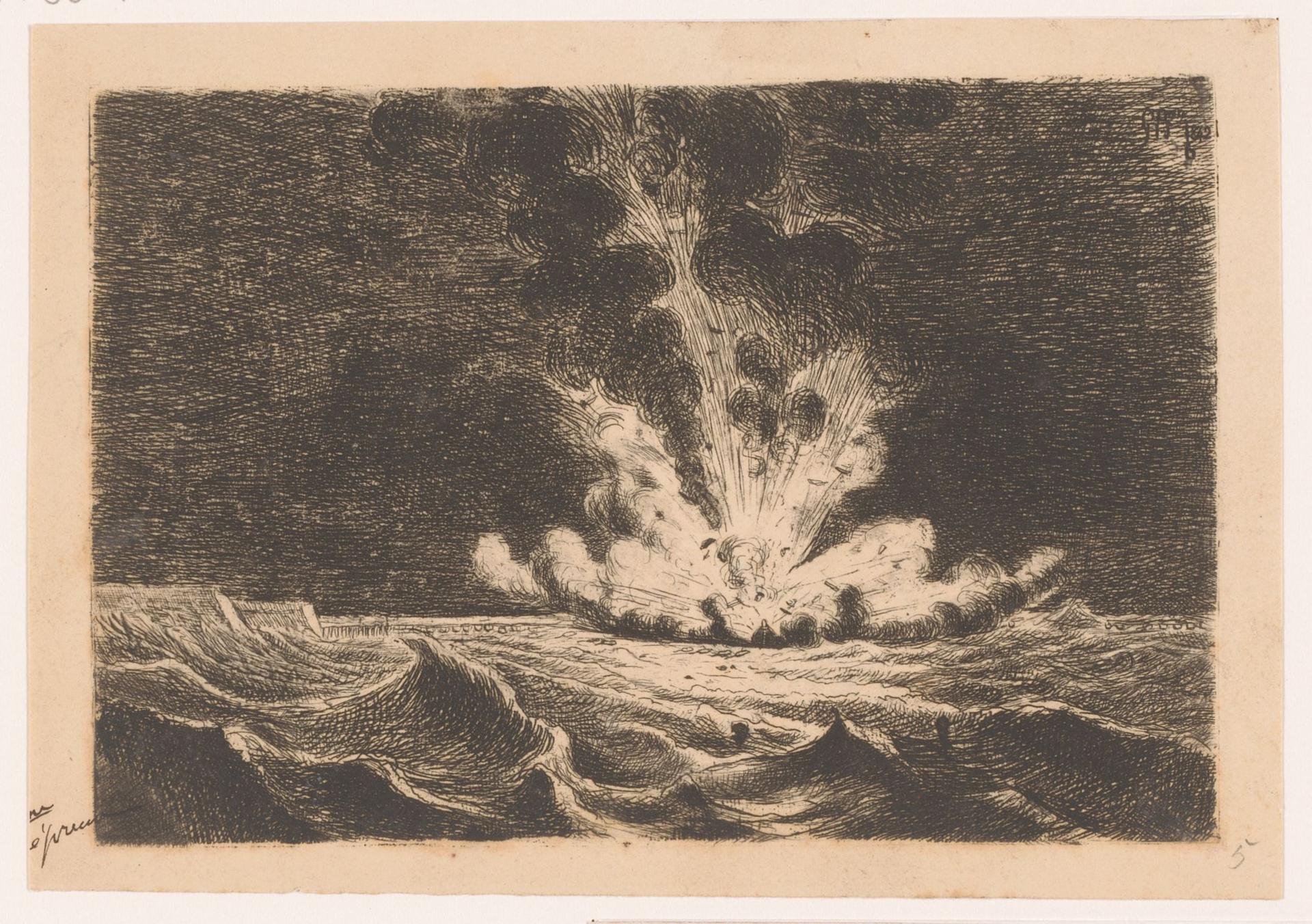
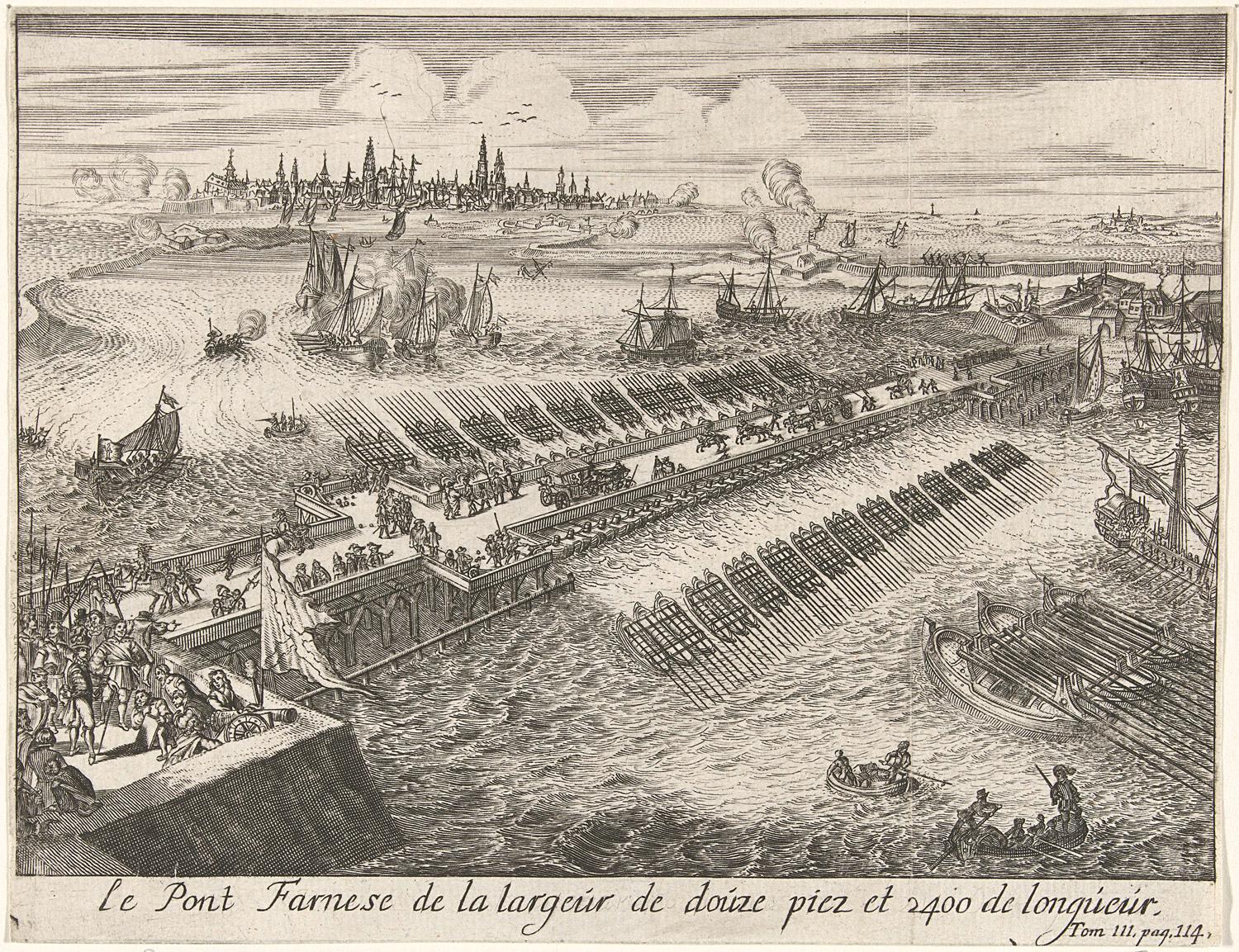
On the night of 4 to 5 April 1585, this river glowed orange. Some ten kilometres downstream, past the bend you can see curving off to the north from here, stood the biggest bridge anyone in the had ever built: eight hundred metres of ships and piles laid straight across the , built by , the Spanish commander, to cut Antwerp off from the sea. As long as that bridge held, not a single grain reached the city.
Antwerp answered with an idea from , an Italian engineer who lived and worked in the city. He turned two ships into floating bombs, each with a brick chamber in the hold packed with gunpowder, sealed under gravestones and scrap metal, and fitted with a clock as a fuse. He named them Fortuin and Hoop, Fortune and Hope.
The Fortuin ran aground, but the Hoop drifted all the way to the bridge and blew up there with a blast you could hear for kilometres. Two hundred metres of bridge vanished, around eight hundred Spanish soldiers died, and Farnese himself was knocked flat by the shockwave.
It could have been the turning point, if only the agreed signal had ever reached the city. The Antwerp fleet stayed put, and within two weeks Farnese had his bridge repaired.
We keep to the quay and walk north, toward the .
Sources. Photos: Rijksmuseum, Parma's bridge near Antwerp blown up by a fire ship (RP-P-1909-2725), public domain, via Wikimedia Commons.