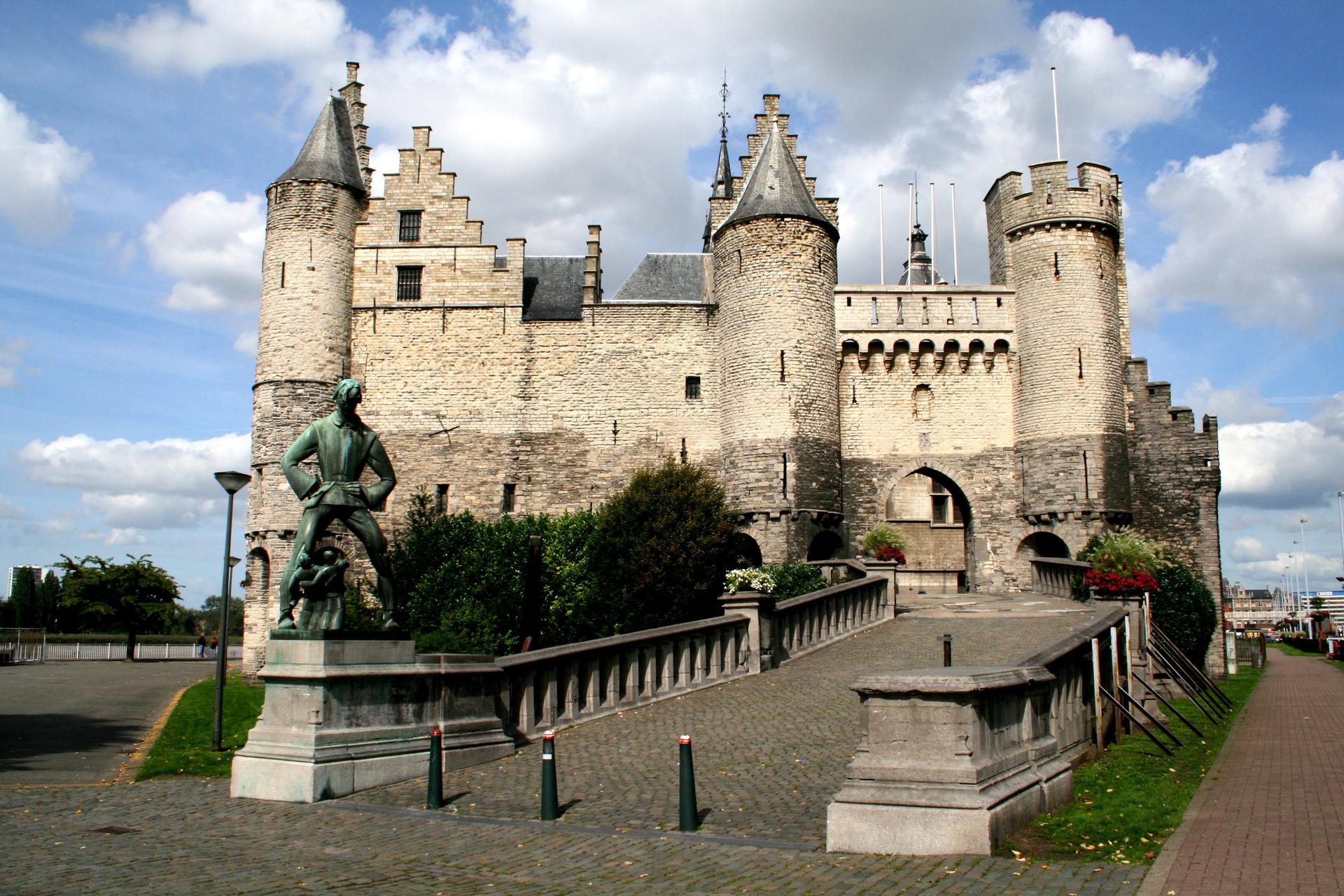
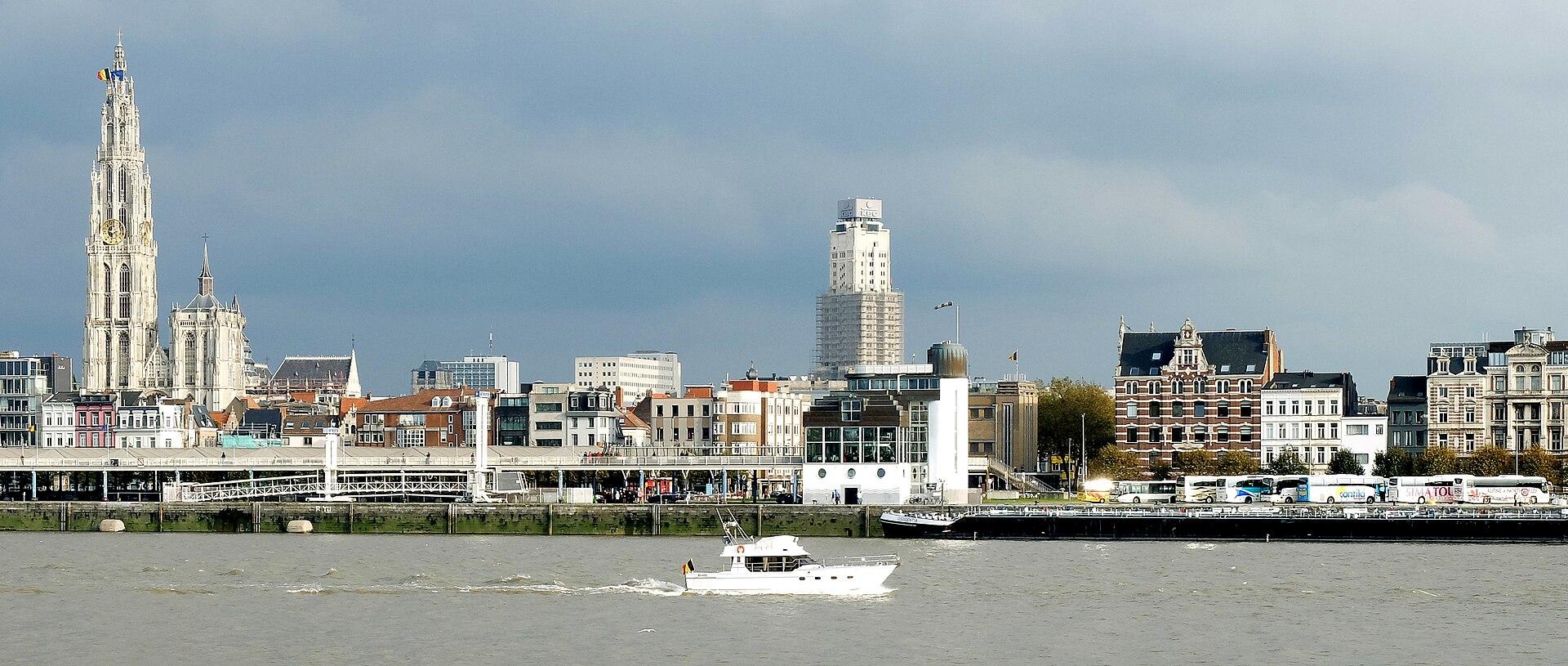
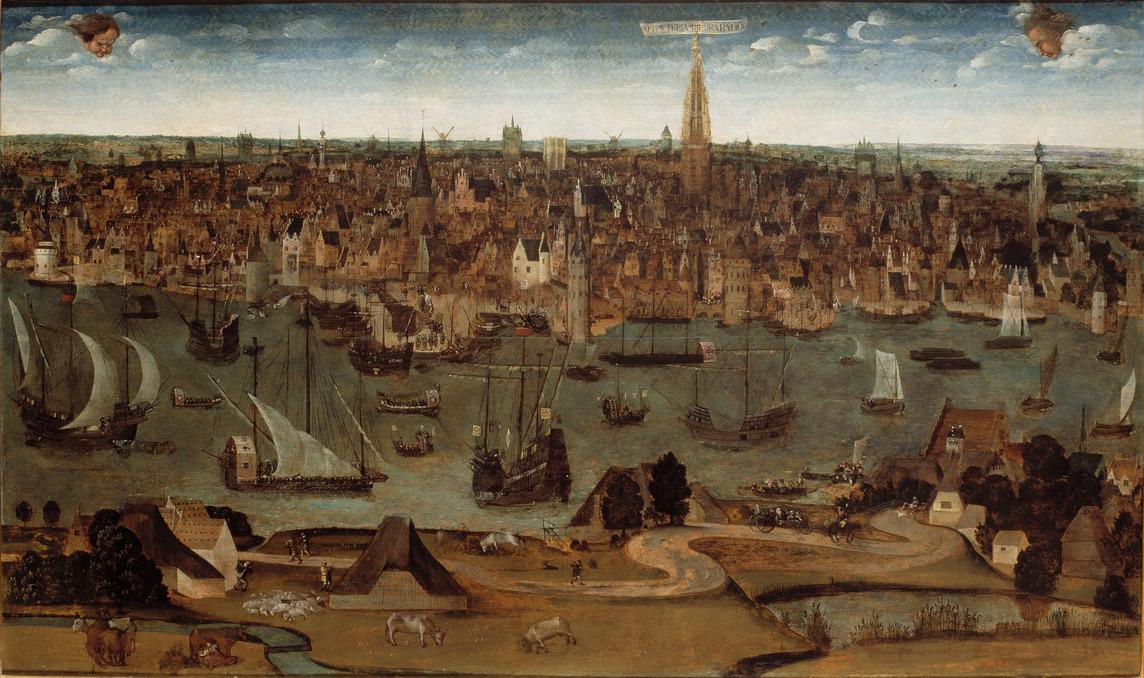
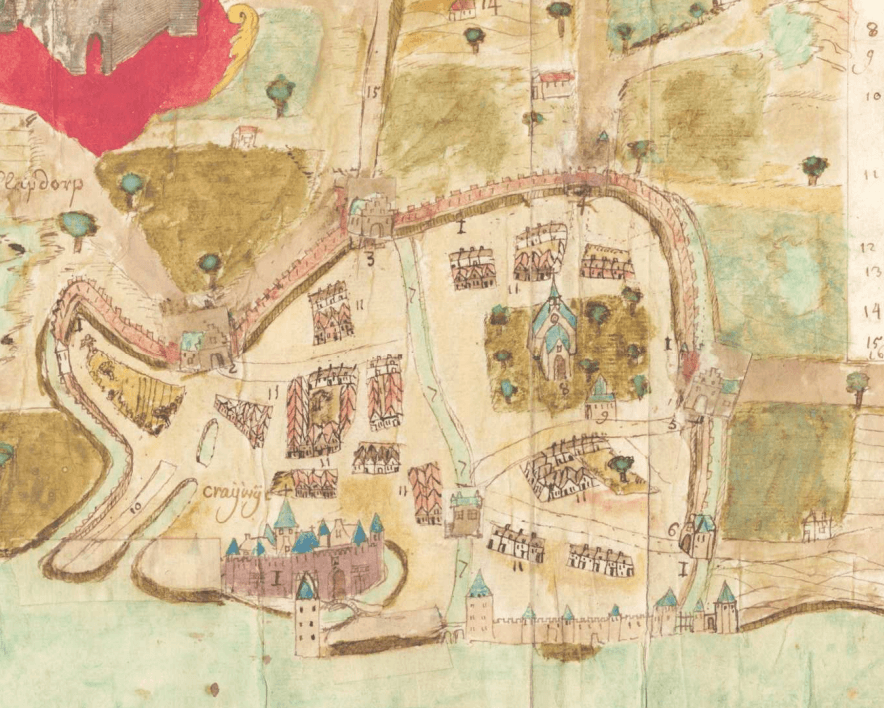
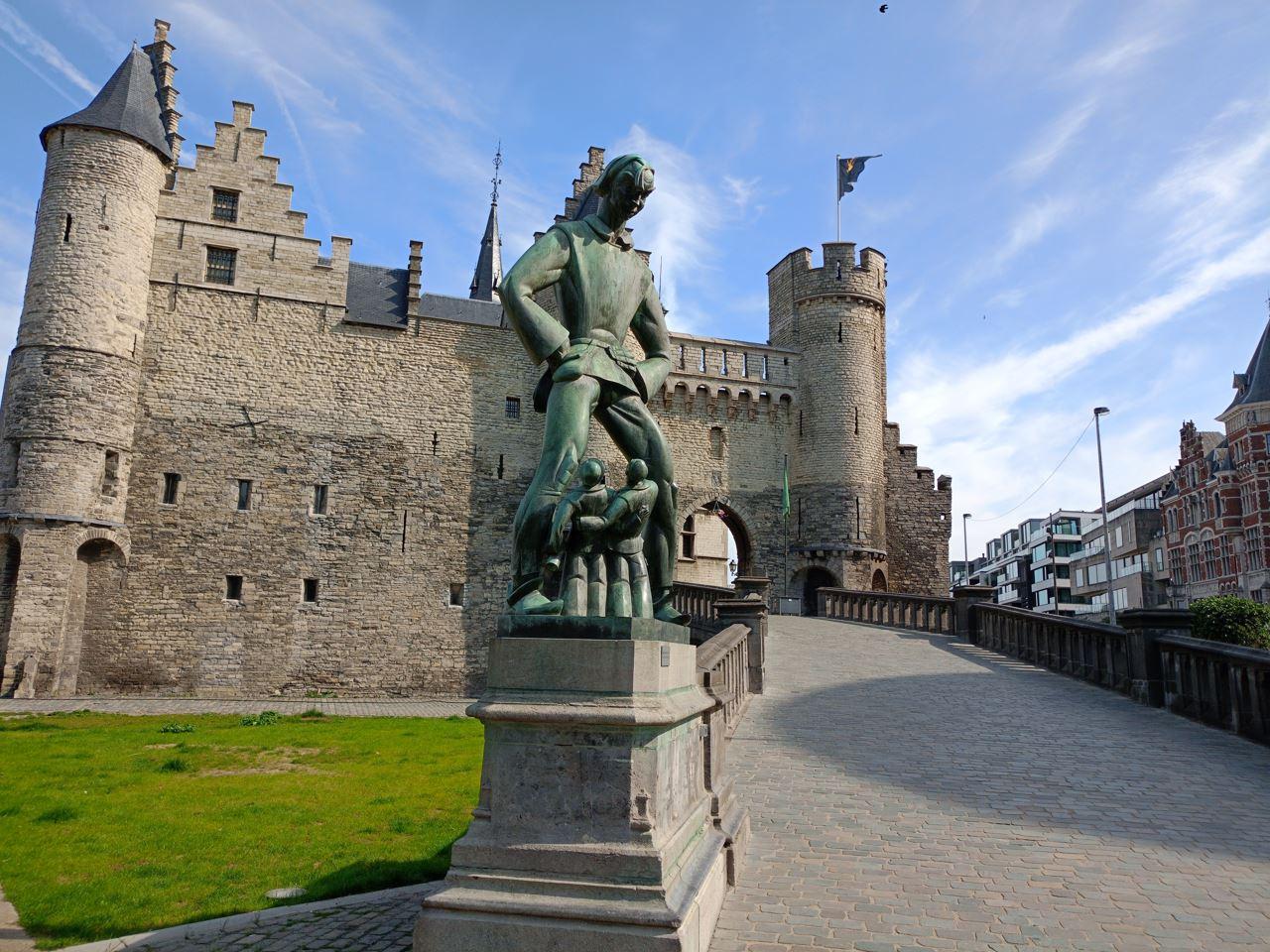
You're now standing in front of the oldest walls in Antwerp. started as a fortification on the river Scheldt, grew under Emperor Charles the Fifth into a stronghold with a prison, and later served as a warehouse before it became a museum.
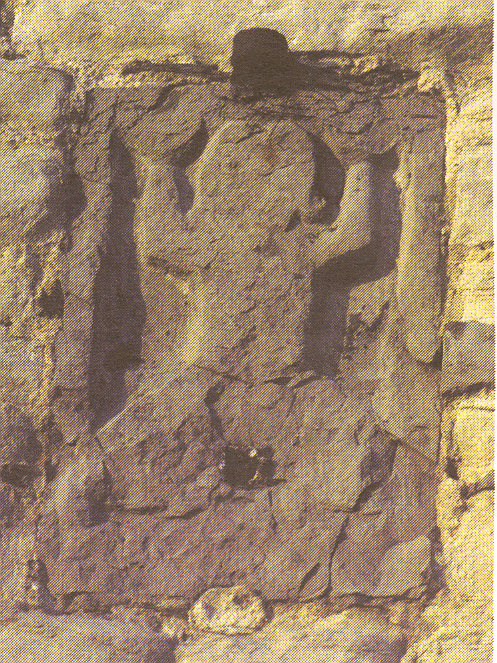
Above the gate, a tiny figure is carved into the stone, barely bigger than a hand. That's Semini, a relief from the second century, which makes him older than almost everything around here. Women who wanted a child would leave offerings beside him and touch the stone, and people from Antwerp still call themselves Semini's children.
In 1587, shortly after the Spanish retook the city, the clergy took offence at the figure's very explicit manhood and had it mutilated. So what you see is whatever was left of the god, just enough to work out what once stood here.
The belief survived. Since 1986 there's been a committee that holds a celebration at this gate every year in honour of Semini.
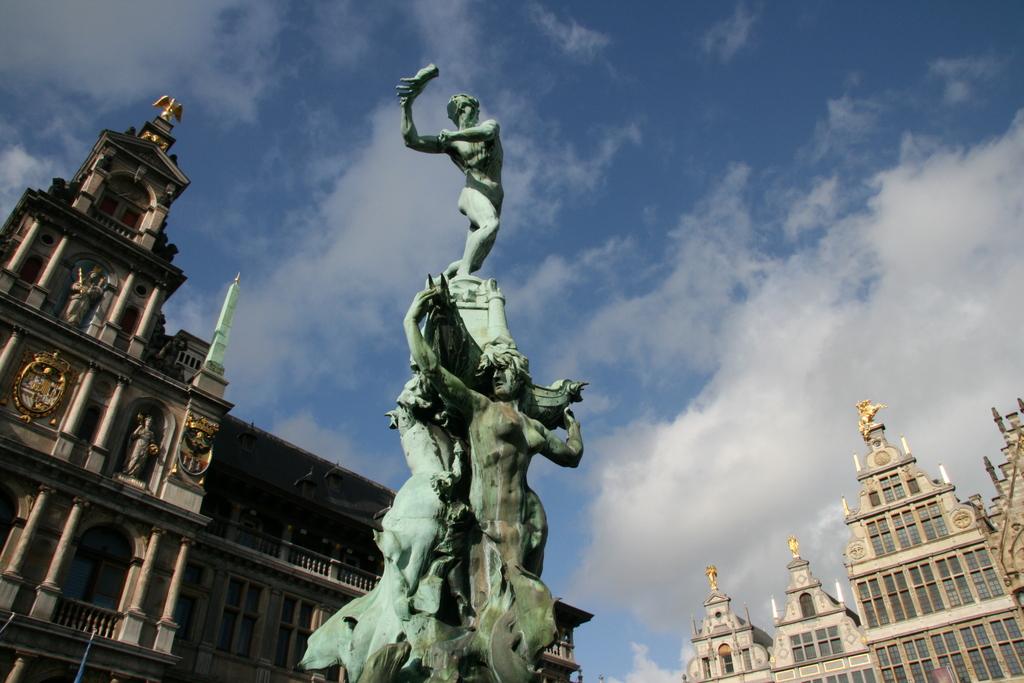
From here we walk along the quay and into the Suikerrui, toward the square where the city hall stands.

Sources. Story: https://www.hmdb.org/m.asp?m=263914 https://nl.wikipedia.org/wiki/Het_Steen https://www.livius.org/articles/place/antwerp Photos: Herman Wauters, De Semini-Saga, CC BY, via Wikimedia Commons