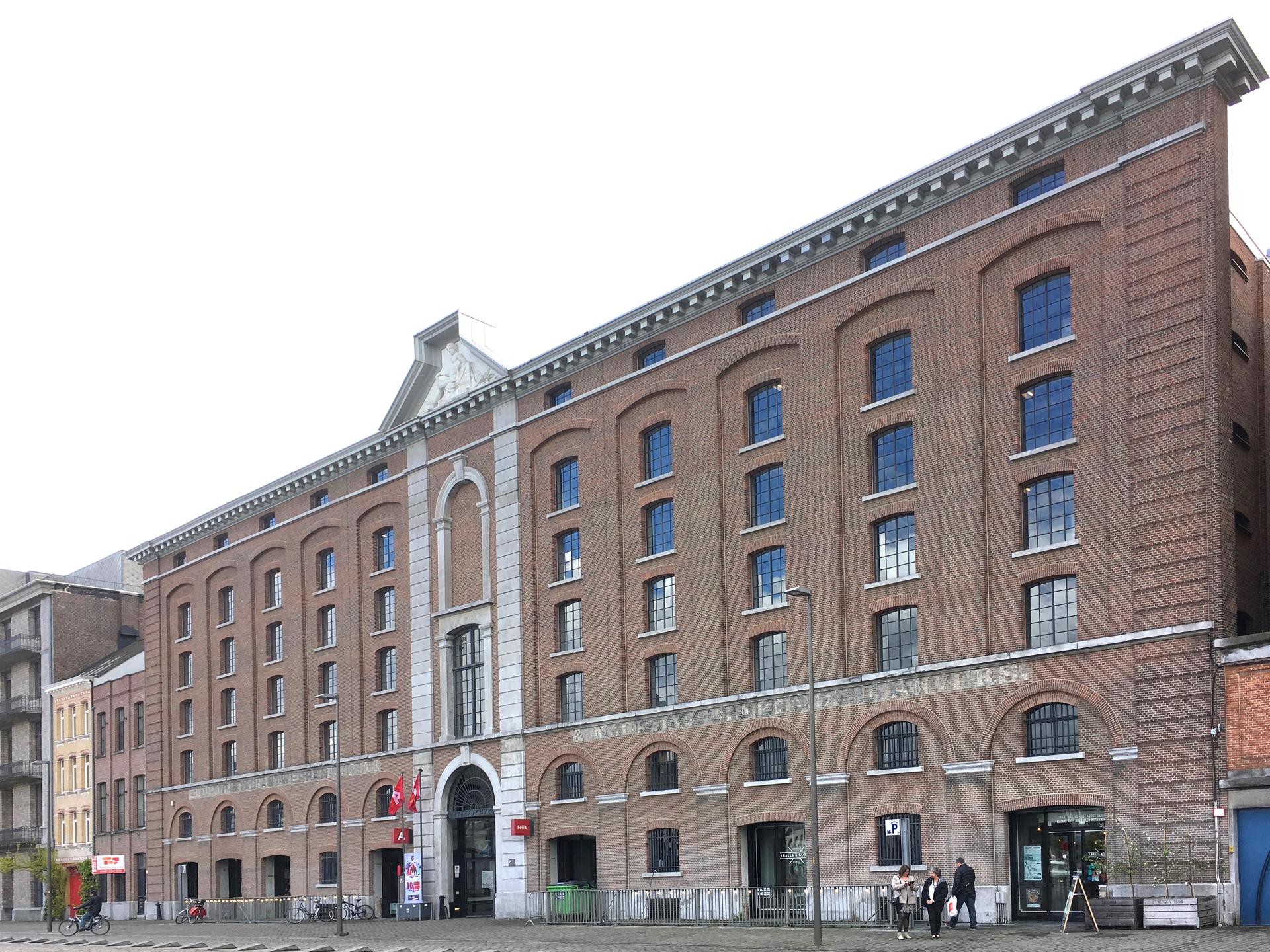
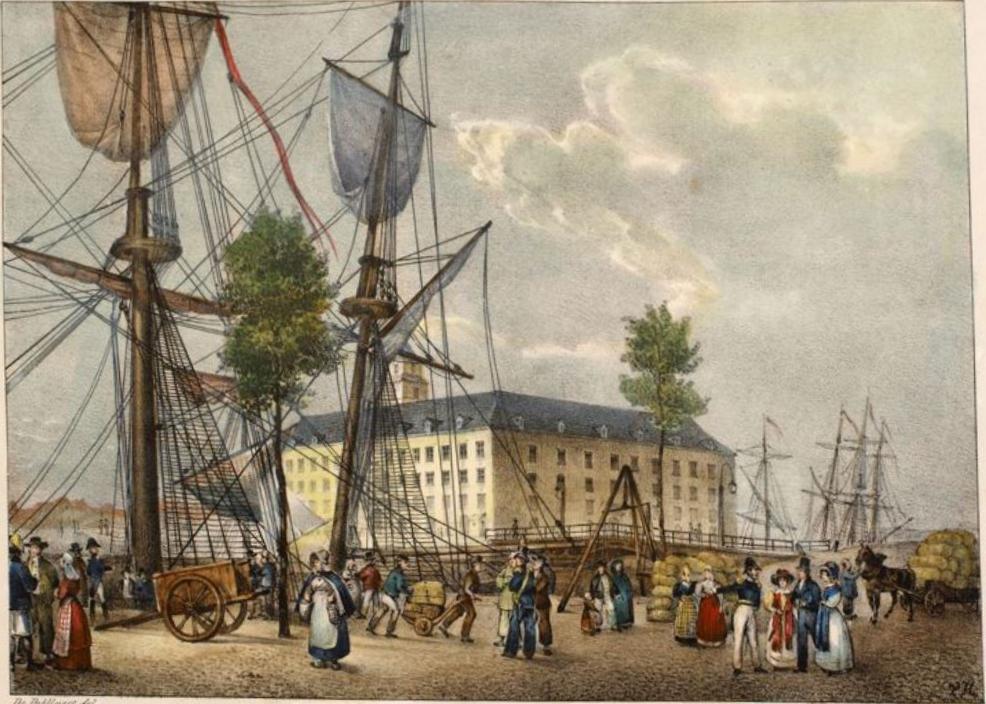
We are standing at the site where the impressive Oostershuis once stood. In the picture, you see an image of this monumental building, which for centuries served as the heart of the German Hanseatic trade in Antwerp.
In the sixteenth century, Antwerp became one of Europe’s most important commercial hubs. Although the city was not an official member of the Hanseatic League, it played an indispensable role. German merchants settled here, brought their goods, and used the Oostershuis as an office, storage facility, and meeting place. It was here that contracts were signed, prices set, and news about shipping and trade exchanged.
Antwerp acted as a link between Northern and Southern Europe: grain and timber arrived from the Baltic Sea, while luxury goods and spices from the Mediterranean passed through this city.
From 1568 onwards, wars and sieges weakened this network. Yet the memory of this era remained alive – the Oostershuis symbolized the time when Antwerp, without formal membership, was still a vital hub in the Hanseatic network.
Sources. Story: ['Source Story: Oostershuis – Wikipedia NL', 'Source Story: Hanzehandel in Antwerpen – lokale historische archieven'] Photos: Source Photo: unknown, probably working in Bremen, Public domain, via Wikimedia Commons