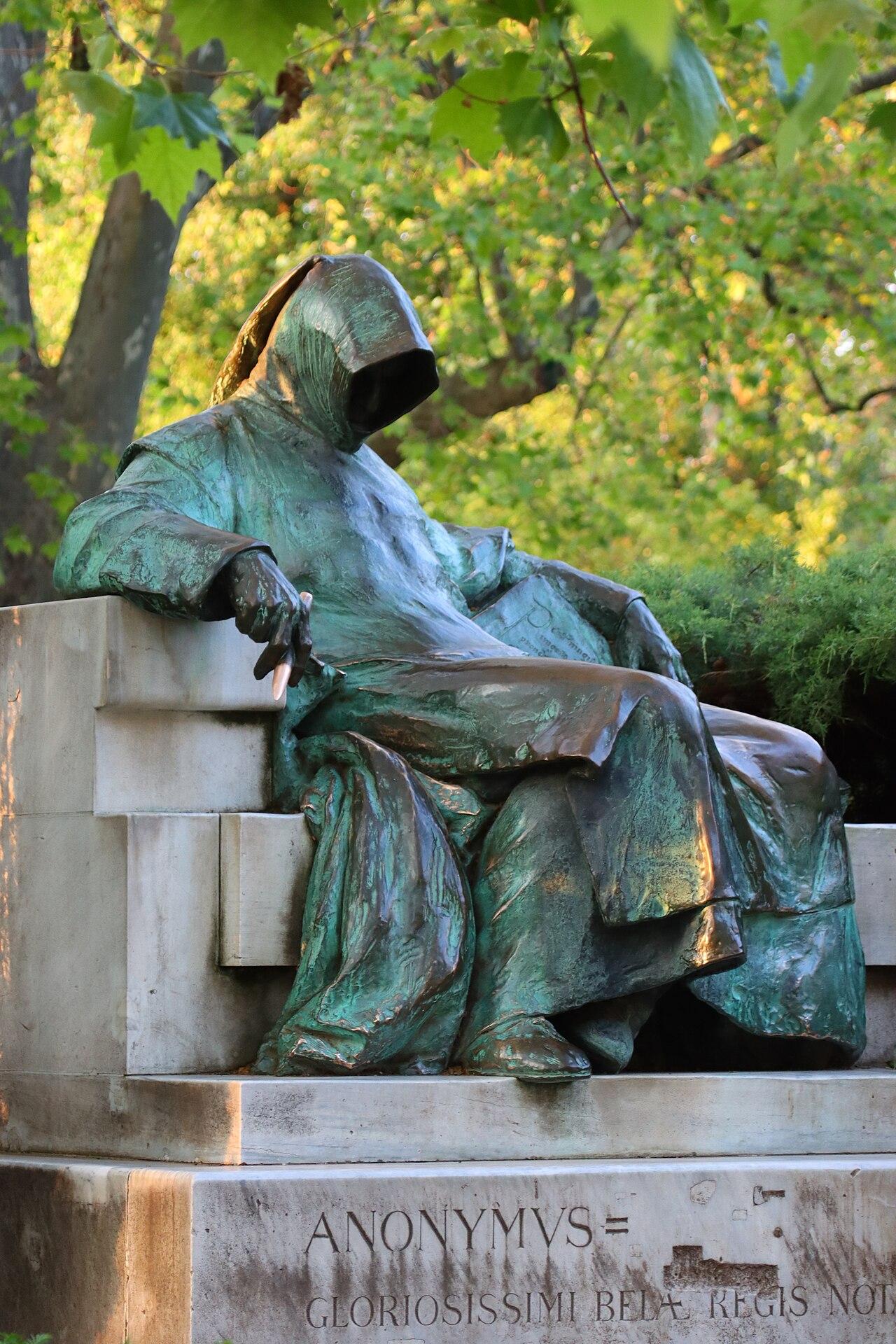
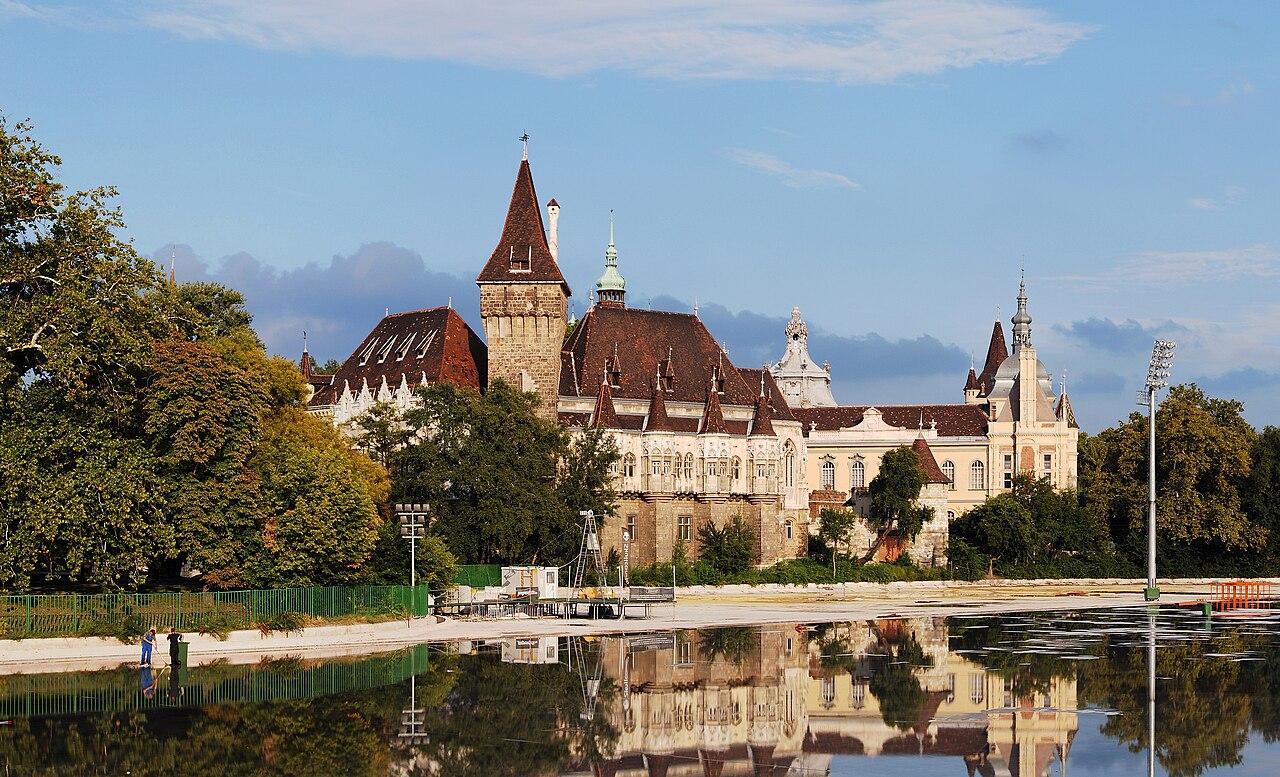
On a stone bench in the inner courtyard sits a bronze monk, his hood pulled so far forward that his face vanishes completely into shadow. In his right hand he holds a pen, in his left the , the chronicle that around the year twelve hundred first recorded how the Hungarians took possession of this land. The writer called himself only P., known as magister, and beyond that we know little more than that he was a notary to a King Béla.
When , the emperor who ruled over Hungary, gave ten statues to Budapest in the autumn of 1897, this was the trickiest of the lot, because how do you portray someone who has no face. Prime Minister found only the twenty-six-year-old willing to try. His faceless design split the jury exactly down the middle, after which Bánffy decided a face had to be added after all. Ligeti obeyed and modelled it on the bearded naturalist . At the next meeting the committee chose the first design anyway, and he had to destroy the version with the face.
Since the unveiling on 8 November 1903 visitors have rubbed the pen because it is said to bring luck, and writers who get stuck apparently make a point of stopping by. The nib gleams from it.
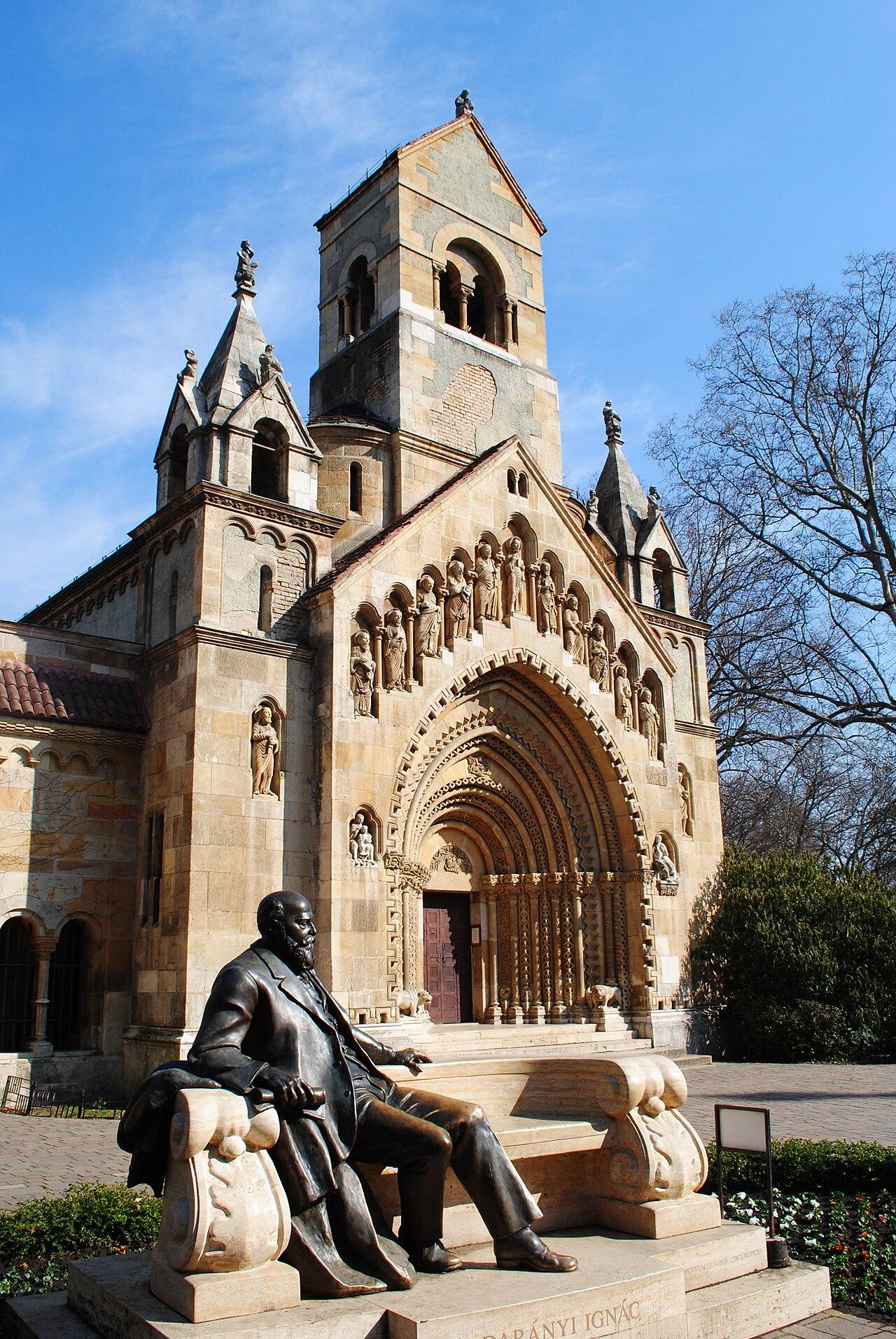
We follow the wall north, towards the little church with the heavy stone portal.
Sources. Story: Zuglói Lapok Online on Ferenc József's donation in 1897 and the unveiling of the statue on 8 November 1903; Dívány and We Love Budapest on the jury vote, the face modelled on Ottó Herman and the legend of the pen; kozterkep.hu on Ligeti Miklós and the statue in Vajdahunyad Castle Photos: OrionNimrod, public domain, via Wikimedia Commons; Gesta Hungarorum, public domain, via Wikimedia Commons