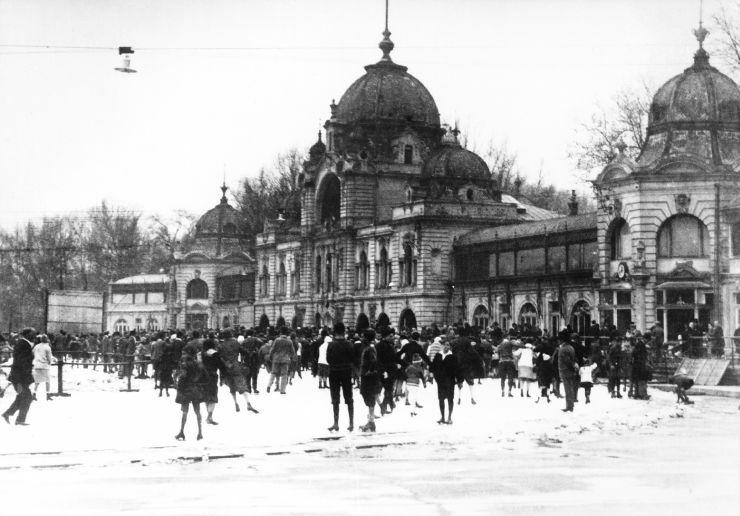
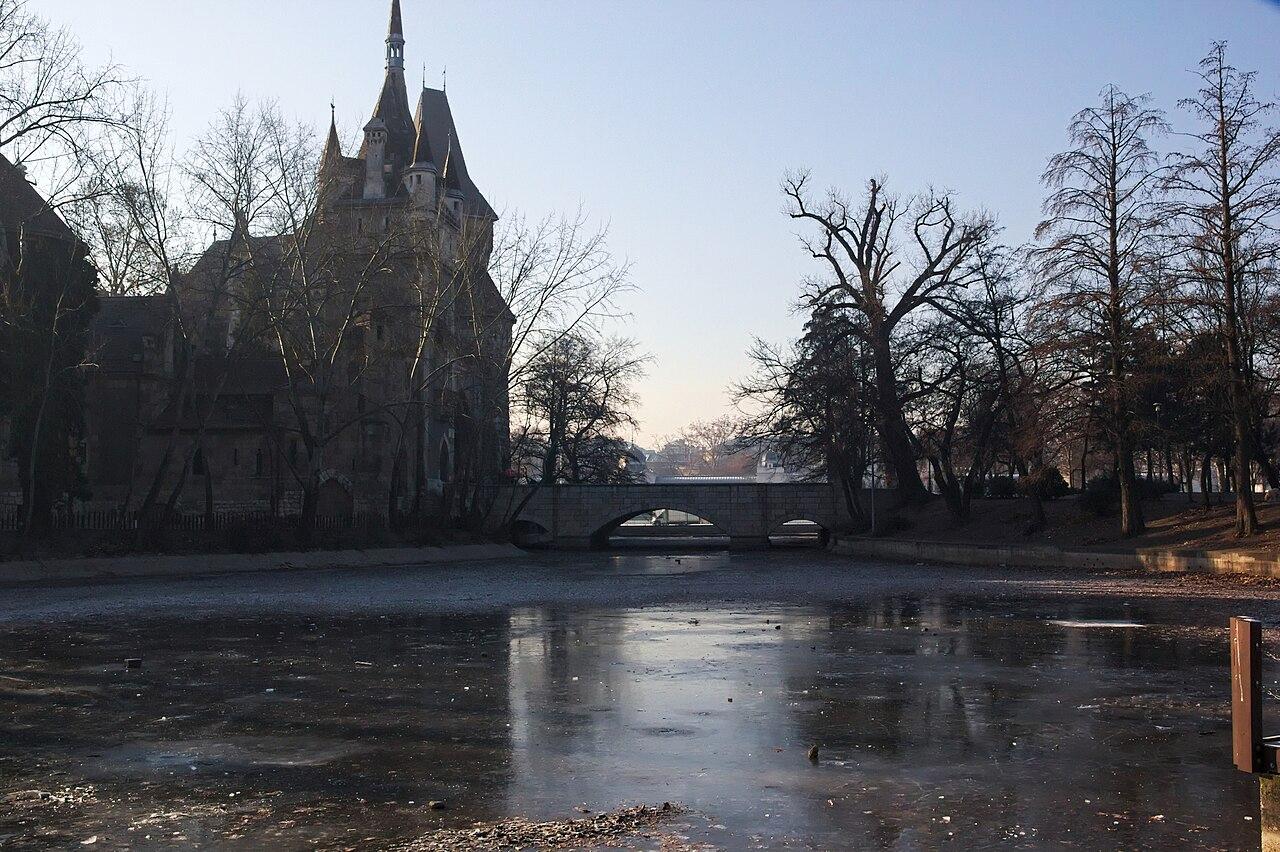
The water in front of you was dug around 1810, when this marshy patch outside the city was turned into a park, and by the 1830s the people of were already skating on it. In January 1870 officially opened the rink of the skating club here, which got through those first winters with a wooden hut on the bank. The hut burned down, , one of Hungary's great architects, built a stone hall in its place, and as the millennium celebrations approached that too was torn down.
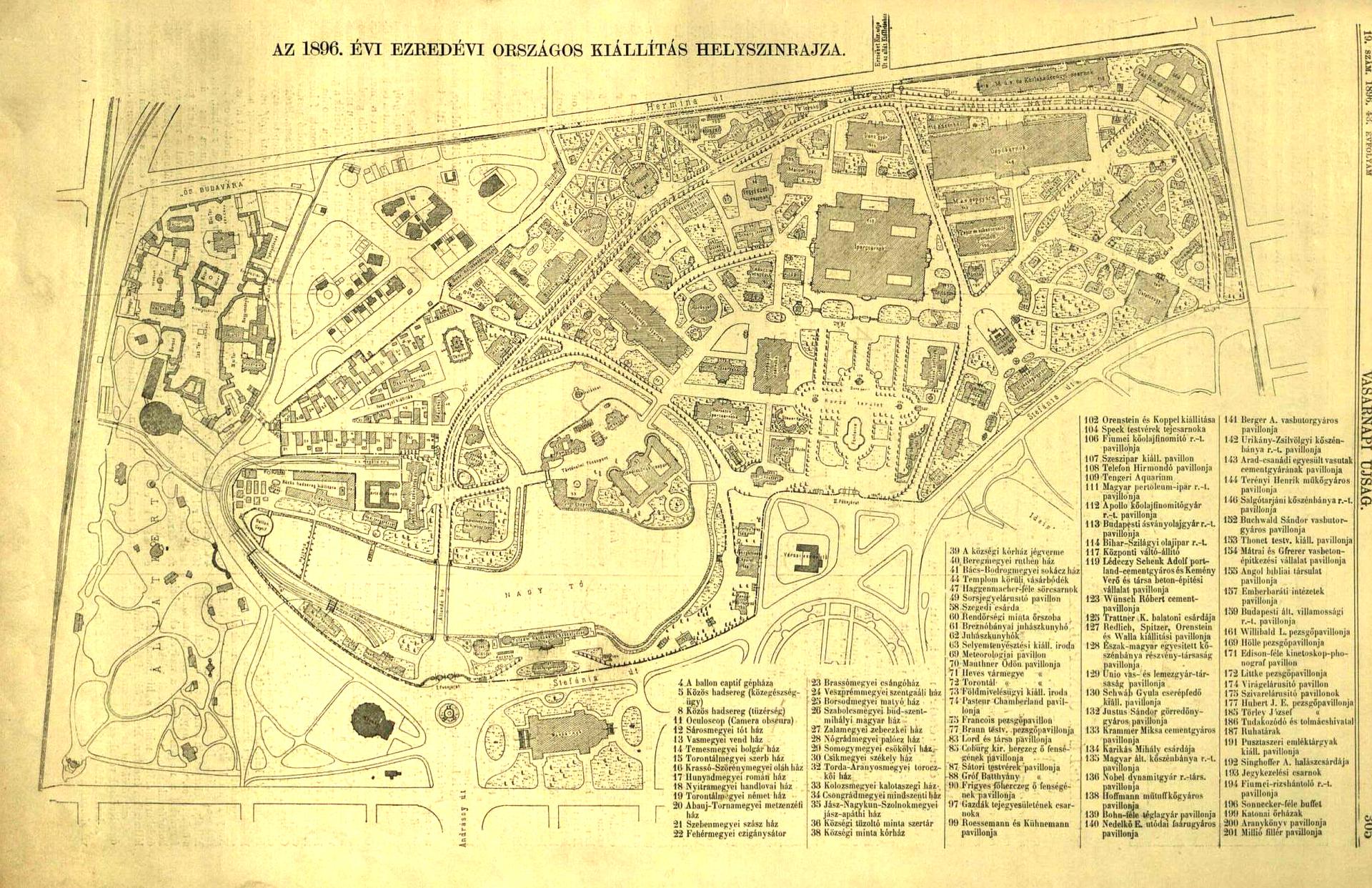
What you see now dates from 1895: the neo-Baroque skating hall by Imre Francsek, built while the pond took on its present shape, both finished just in time for the exhibition. In the summer of 1896 rowing boats floated here, and out in the middle of the water stood a pavilion on stilts showing the oldest Hungarian crafts: fishing, hunting, gathering honey.
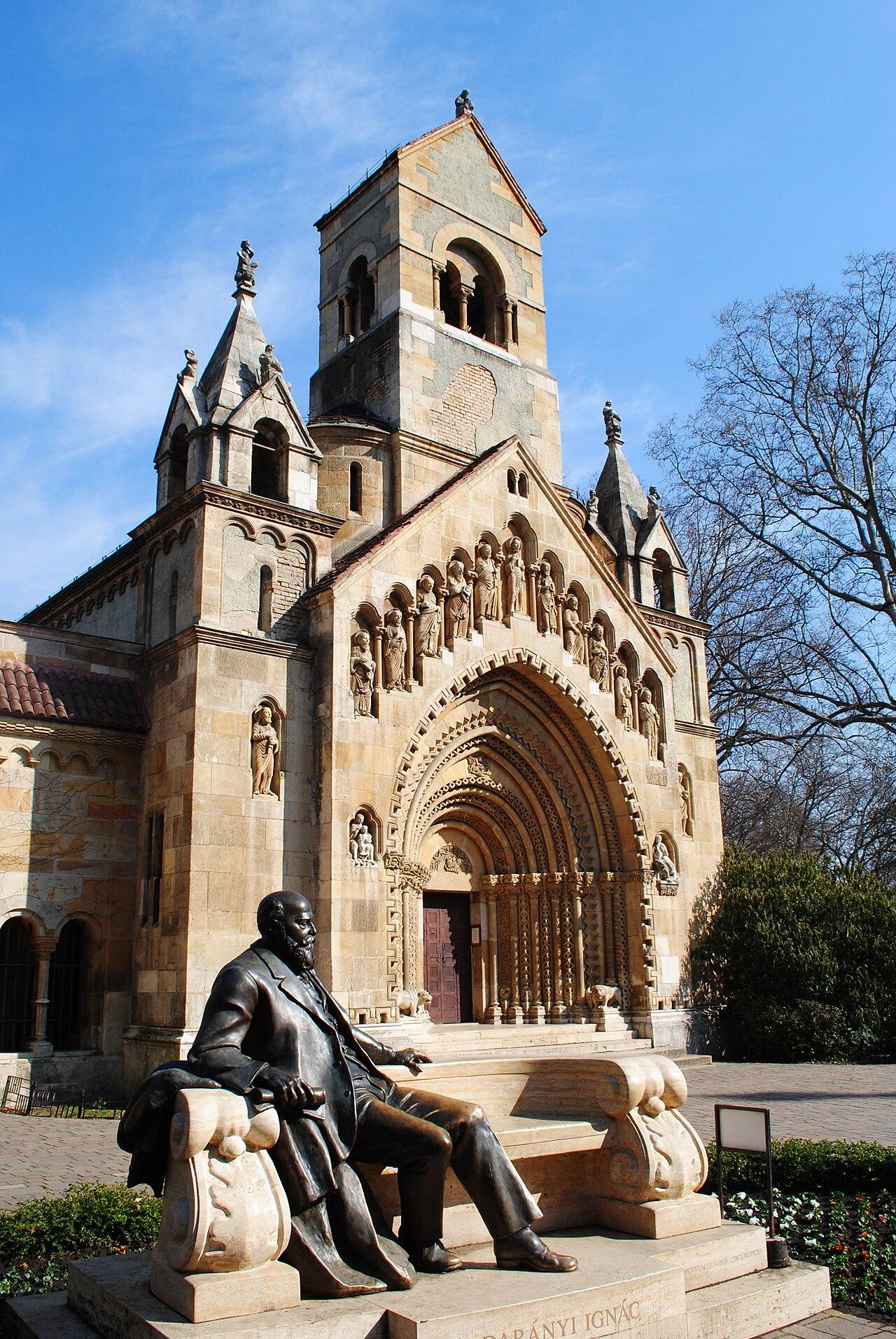
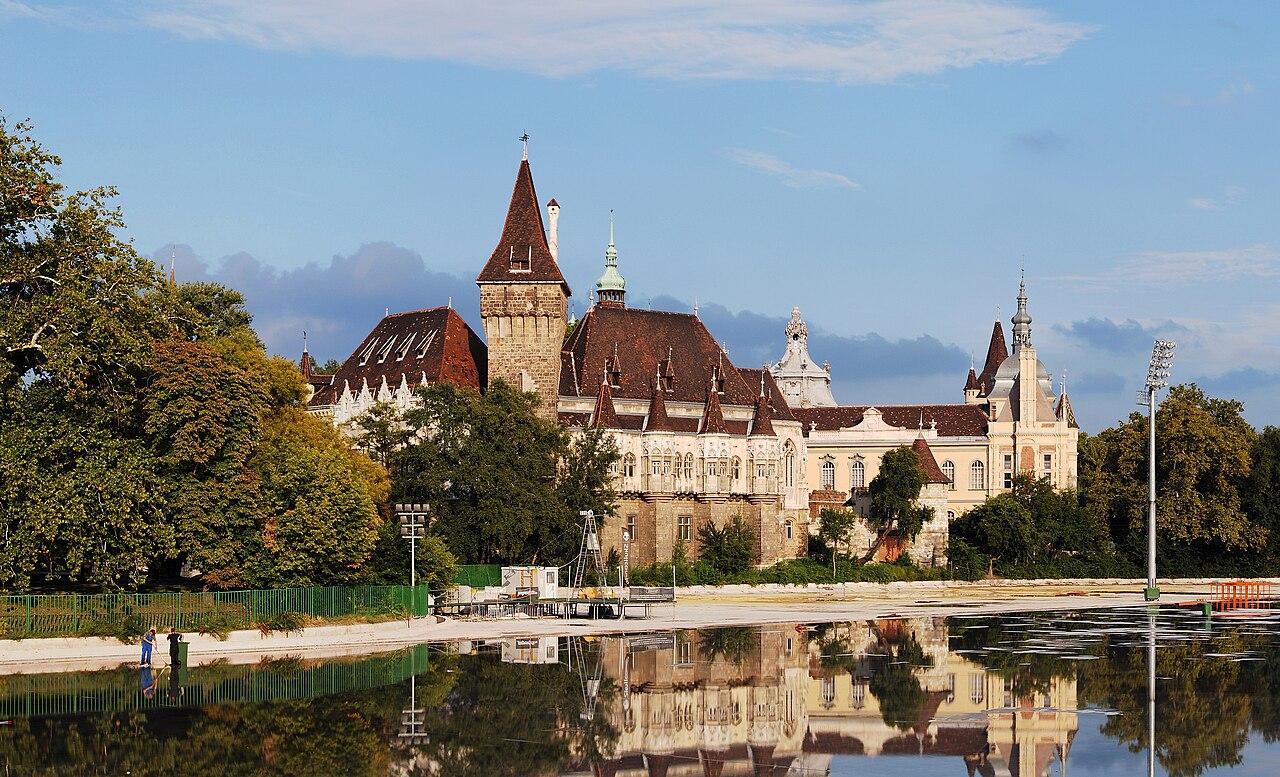
Artificial ice only arrived in 1926, the second rink in Europe after Vienna, and at almost six thousand square metres it was immediately the biggest. It still is, and in winter thousands of people are out on the ice here at once, with the towers of in the background.
We follow the bank towards those towers and cross the bridge onto the island.
Sources. Story: Pestbuda on the construction history of the korcsolyacsarnok and the laying of the artificial ice in 1926; budapestcity.org on Lechner Ödön and Imre Francsek; hu.wikipedia on the creation of the Városliget and the pond Photos: Unknown photographer, public domain, via Wikimedia Commons; FOTO:FORTEPAN / Budapest Főváros Levéltára, CC BY-SA 3.0, via Wikimedia Commons