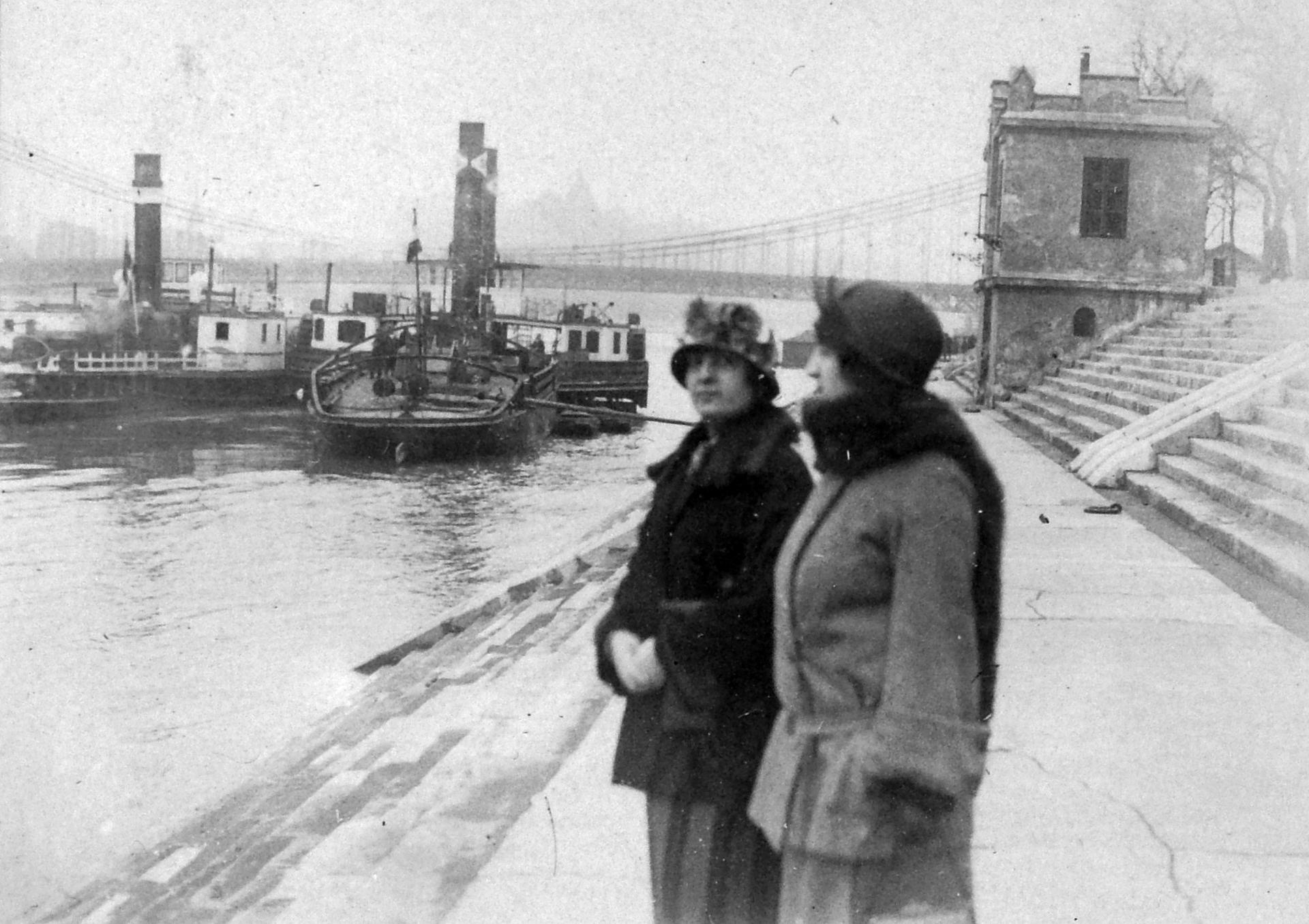
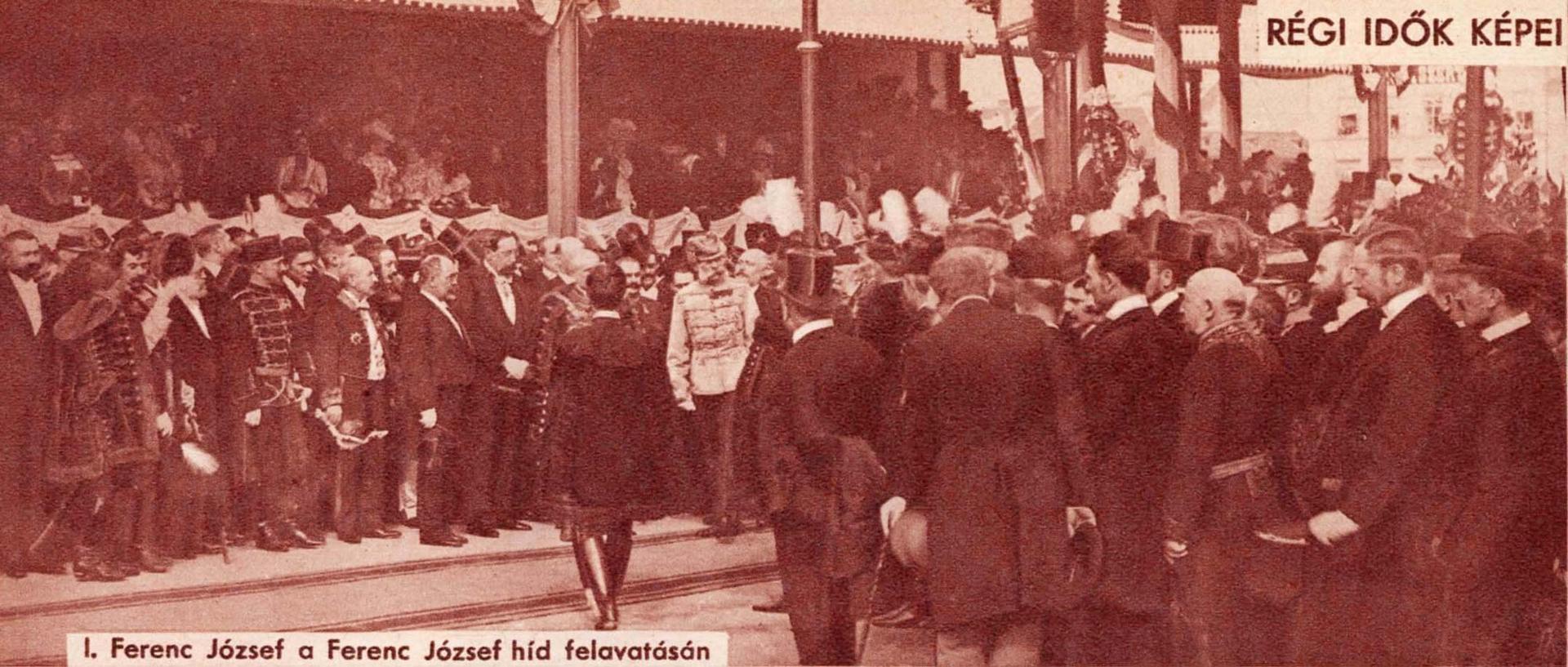
When it opened, this bridge was named after the emperor, because on the fourth of October 1896 drove in the final rivet himself, and that one was made of silver. It wasn't quite as hands-on as it sounds: according to the newspapers that week, the minister asked him to push the rivet into place with the press rather than hammer it in.
The bridge was finished in time for the millennium celebrations of 1896, designed by , and at three hundred and thirty metres it's the shortest crossing in the city centre. The four masts are topped with bronze birds, the mythical birds of prey that, according to the old stories, led the Hungarians to their homeland.
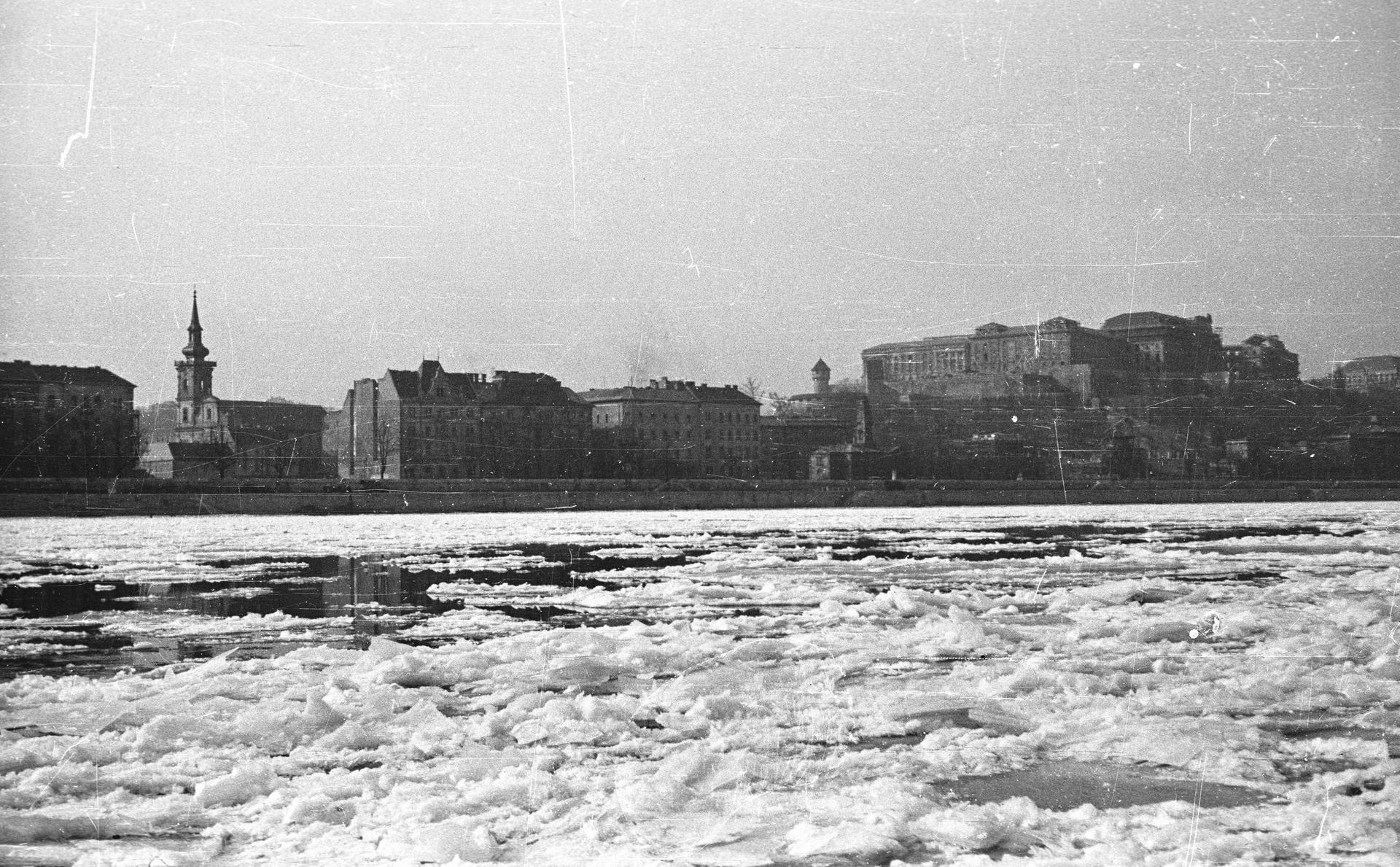
On the sixteenth of January 1945 this structure ended up in the water too. Since more of it was left standing than of any other blown-up bridge in the city, it was the first to return, on the twentieth of August 1946, and by then it no longer carried the emperor's name but one meaning liberty.
We walk on to the end of the bridge and head down to the square at the foot of the hill.
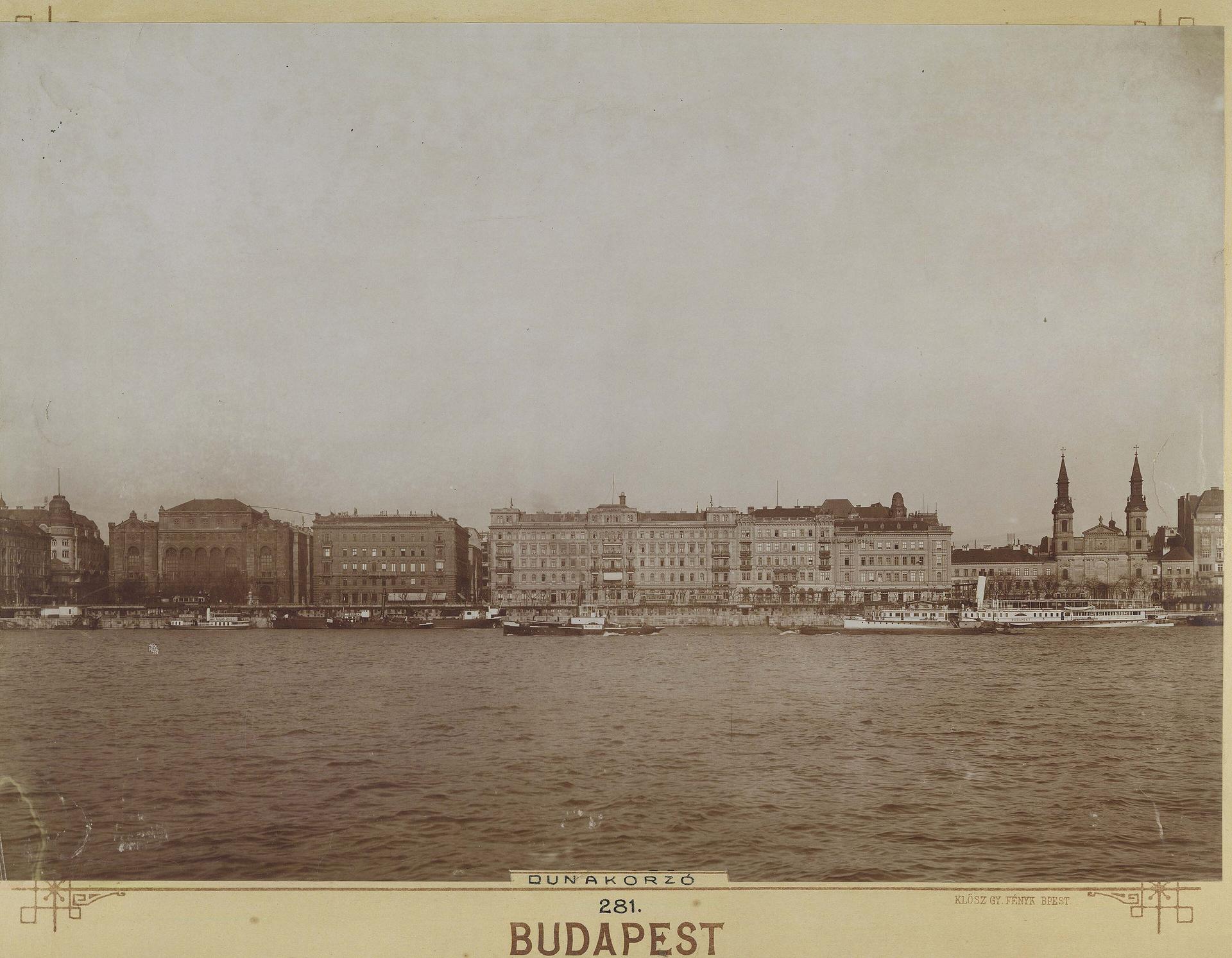
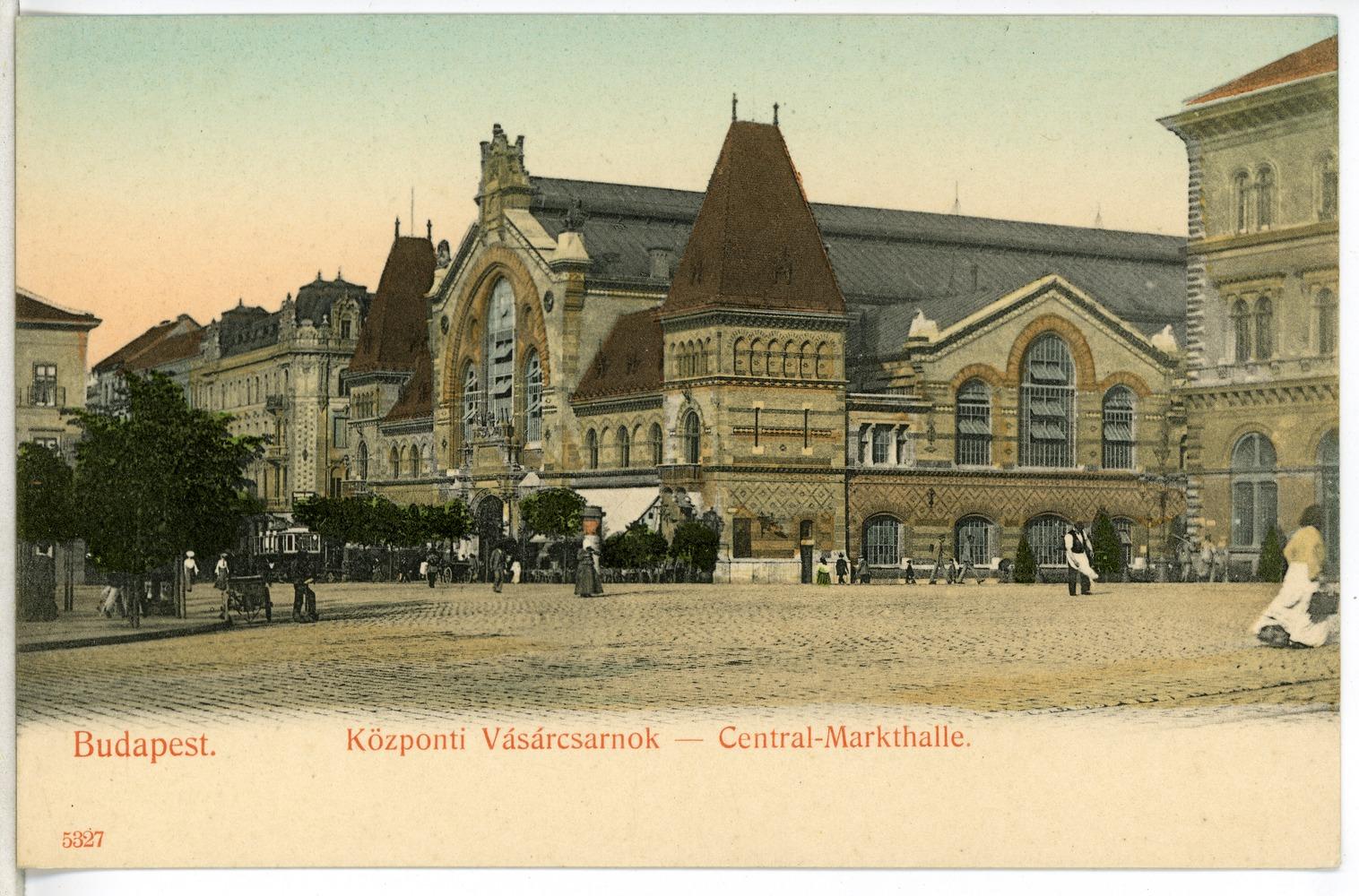
Sources. Story: Budapest Főváros Levéltára, hidak.bparchiv.hu, dossier Szabadság híd; Magyar Nemzet, 125 éves a Szabadság híd, with the eyewitness account of the inauguration. Photos: I. Ferenc József a Ferenc József híd felavatásán, 1896, public domain via Wikimedia Commons; Brück & Sohn Kunstverlag Meissen, Ferencz József híd, 1908, CC0 via Wikimedia Commons.