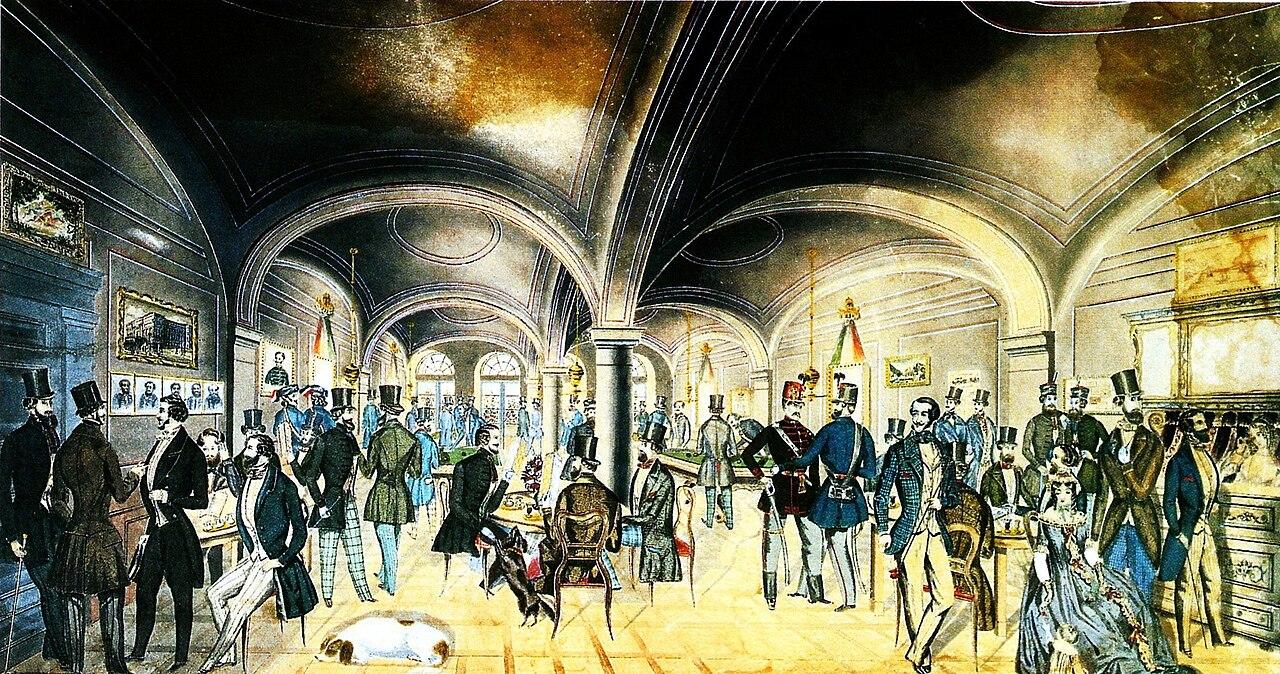
You're standing in an alley barely a hundred metres long, between Városház utca and Sándor utca. Look for the memorial plaque on the corner, because that's about all that's left of the café. The block of houses that held it on the ground floor was flattened in 1913.
Carl Pillvax came from Austria and learned the coffee trade in Vienna. Working as a waiter on a Danube steamboat, he met a Hungarian woman, followed her to and married her, and for the occasion he turned his surname into the Hungarian Pilvax. In August 1842 he took over the café in this alley, and at the request of his wife Teréz the name Café Renaissance disappeared from the facade. The young poets and law students of Pest gathered around a round marble table they called the table of public opinion, and from 1844 Petőfi had breakfast here almost every day, since breakfast came with the coffee.
On the evening of 14 March 1848, word arrived by boat that a revolution had broken out in Vienna. The next morning the young radicals of March gathered here, drew up their , and Petőfi recited the for the first time. He renamed the café on the spot to the Hall of Freedom.
Pilvax himself poured nothing that morning, because he had leased the place two years earlier to János Fillinger, who left the sign hanging just as it was. After the , the place carried on as Café Herrengasse, after the German name of the street.
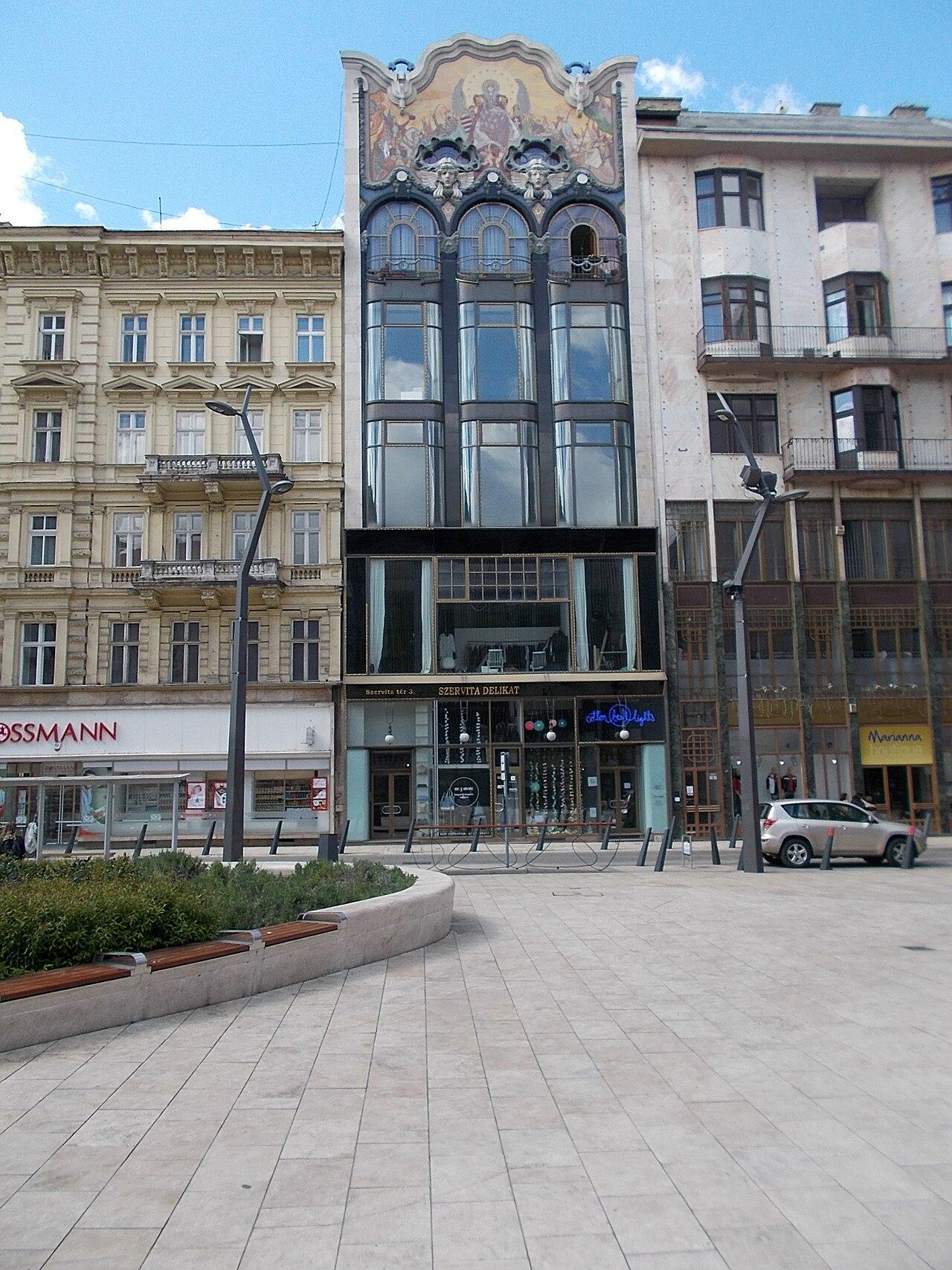
We walk to the end of the alley toward Petőfi Sándor utca and follow it until we reach Szervita tér.
Sources. Story: hu.wikipedia (Pilvax) and We Love Budapest on the takeover in August 1842, the original name Café Renaissance, the renaming at the request of Giergl Teréz, the lease to Fillinger János in 1846, the name Café Herrengasse after 1849 and the demolition of the block of houses in 1913; Juratus (ELTE) and Kultúra.hu on the table of public opinion and the news from Vienna of 14 March 1848; the diary of Petőfi Sándor of 15 March 1848 on the recitation of the National Song Photos: Preiszler József, public domain, via Wikimedia Commons; unknown artist, 1848, public domain, via Wikimedia Commons