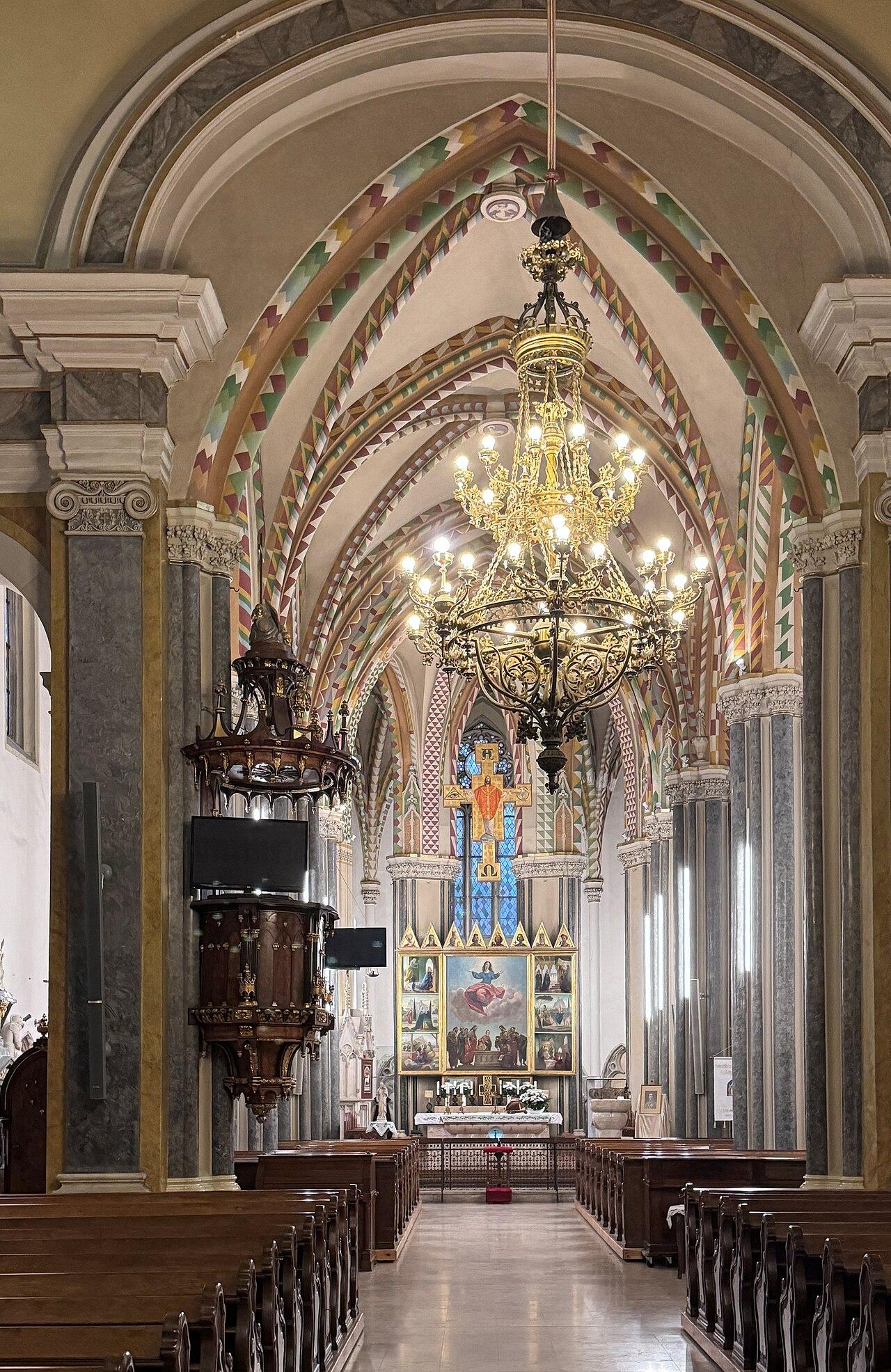
From the outside you'll notice two towers and a facade where almost every century has left its mark. This is the oldest building in , and it holds just about every architectural style the city has ever seen.
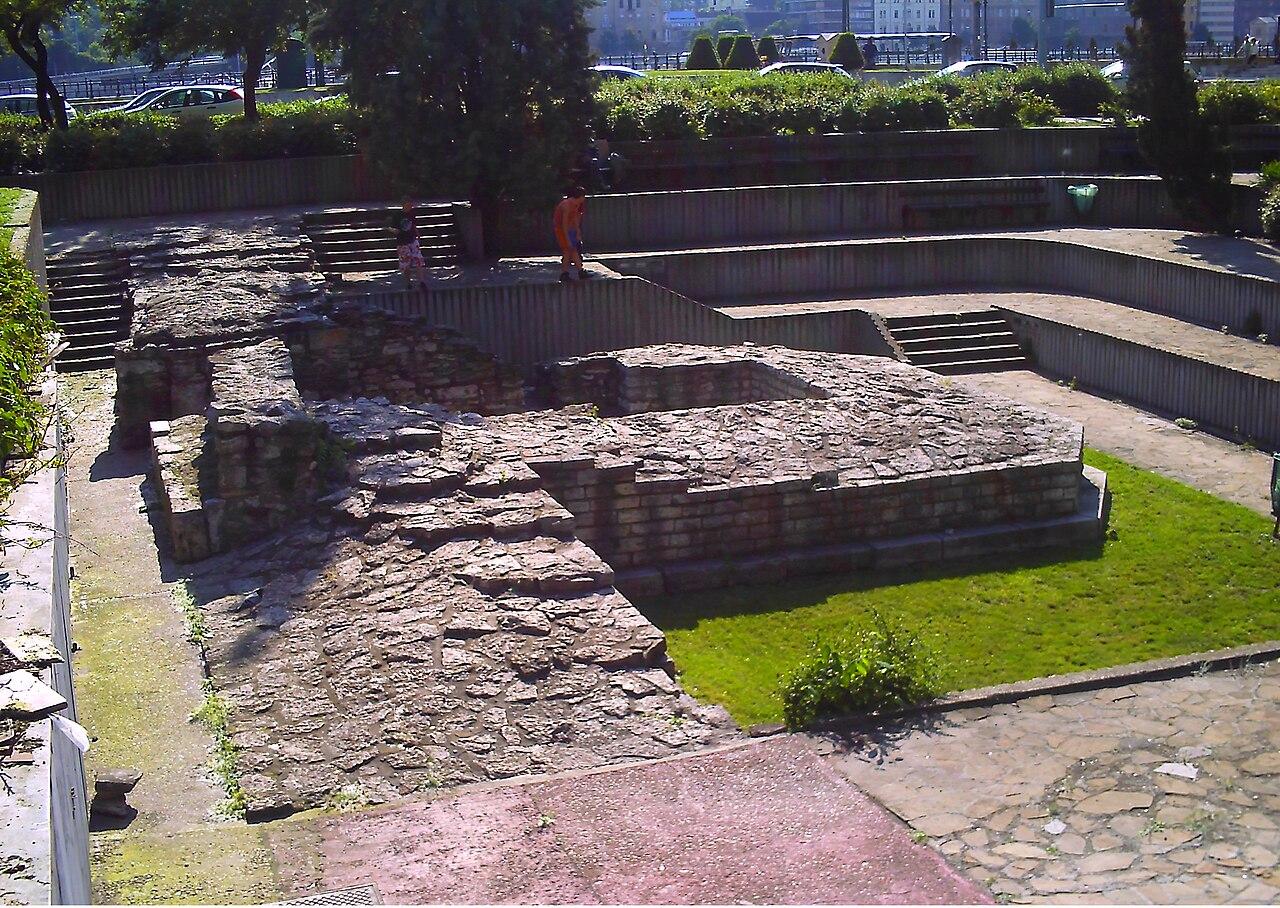
The first church rose in the eleventh century on the southeast corner of the Roman fort, built from the stones of that very fort. , one of Hungary's earliest and most revered churchmen, was buried here for a time. In the fourteenth and fifteenth centuries the whole thing was reworked into a Gothic church, and the southern tower still holds the largest intact Romanesque wall in Budapest.
The reason to step inside hangs on the south wall of the choir. During the half the church lay in ruins, and the Ottomans used only the choir, as a mosque. For that they carved a prayer niche into it, a , oriented toward Mecca, and it's still there, a few metres from the high altar. After the Turks left, the ruined nave was rebuilt in Baroque style from donations. Excavations in 2014 and 2015 uncovered the foundations from the age of the beneath that nave, with the Roman masonry below them, and those now lie under glass too. Going inside costs nothing, outside of services.
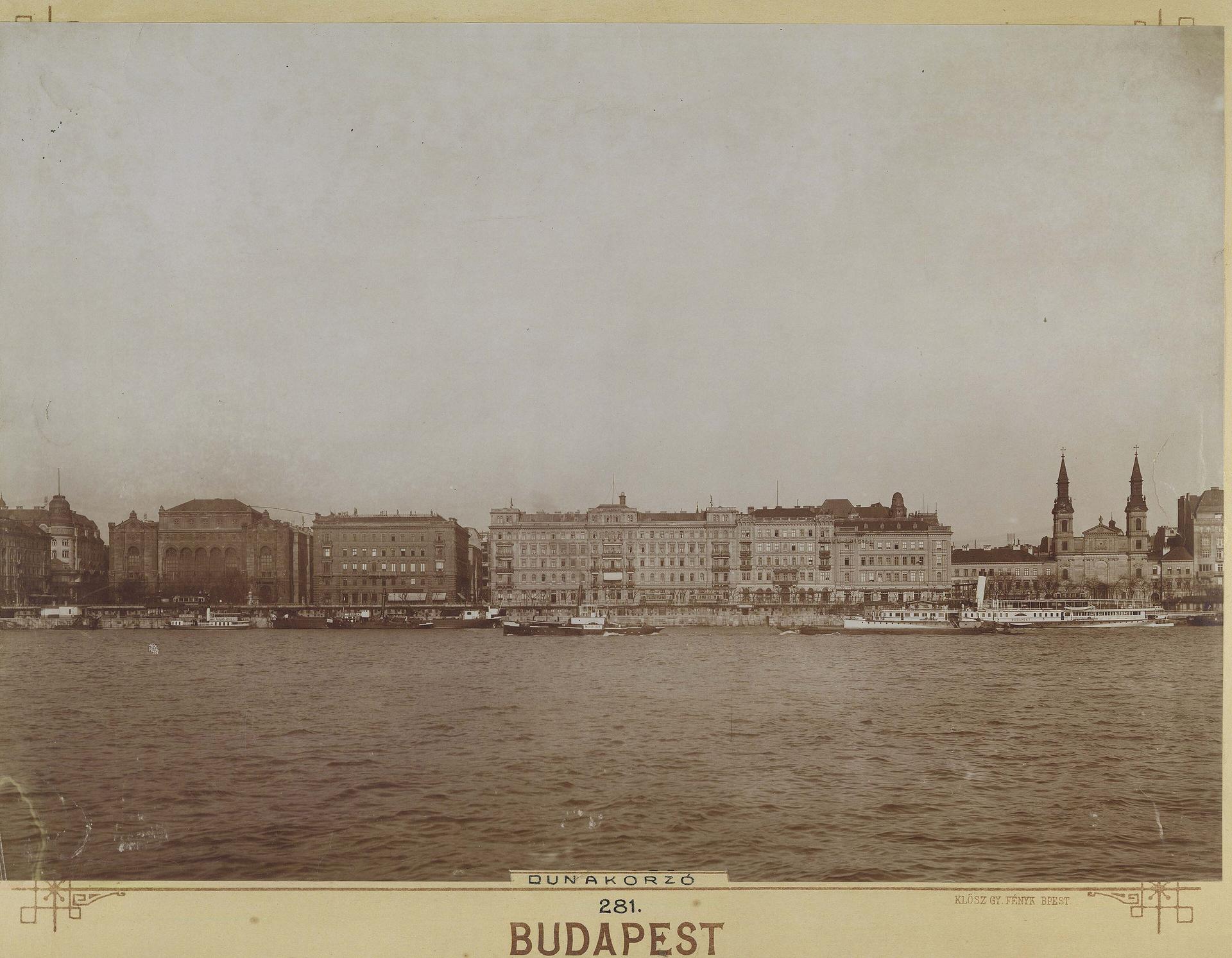
We head back out and follow the riverside north, toward Petőfi tér.
Sources. Story: Belvárosi Nagyboldogasszony-főplébánia (miserend.hu) on the foundations on the Roman fort, the Romanesque wall in the southern tower, the use of the choir as a mosque and the mihrab in the south wall; Várlexikon on the church from the time of Stephen, the temporary burial of Bishop Gellért, the Gothic rebuilding and the 2014 and 2015 excavation in the nave; hu.wikipedia (Contra-Aquincum) on the corner tower of the fort beneath the choir and the reuse of the Roman stones; Induljelegyuton.hu on the underground passage, the Roman wall heating and the research of Kálmán Lux in the 1930s Photos: Interior: Dguendel, CC BY 4.0, via Wikimedia Commons. Mihrab: Yelkrokoyade, CC BY-SA 3.0, via Wikimedia Commons