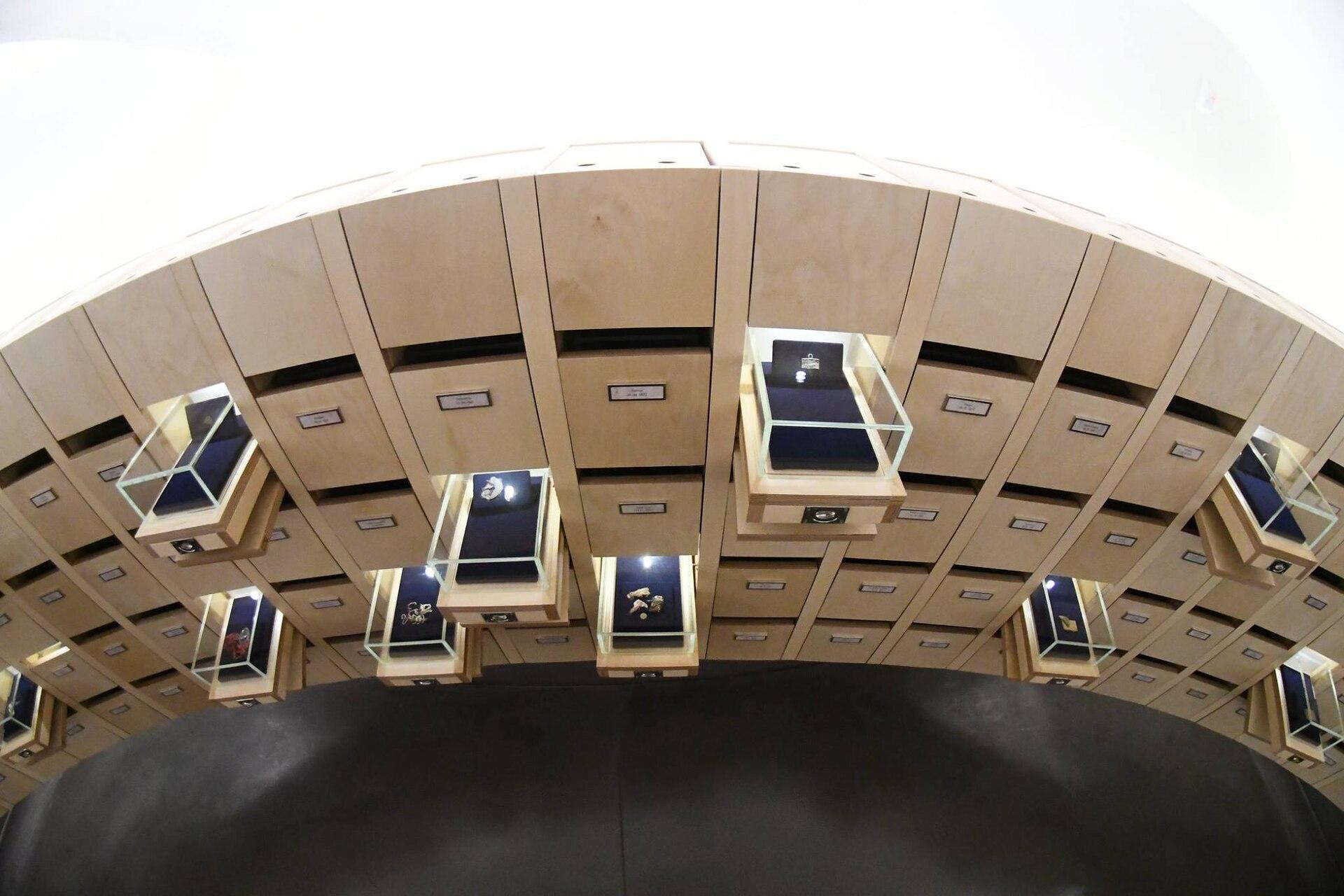
Inside, a whole wall is lined with small objects behind glass: half coins, ribbons, beads, scraps of embroidered cloth, each carrying a number that leads back to a child in the registers. The photo with this story shows a handful of them, and you can see at once how one half of a coin was meant to fit the other.
This archive runs right into the twentieth century and counts among the best preserved in Europe. The figures beside it weigh heavy: in the busiest years more than a thousand children were taken in, and in the eighteenth century especially a large share never reached their first birthday. The infants were sent to out in the countryside, paid by the child, and the more babies a nurse took on at once the smaller the chance that any one of them got enough milk.
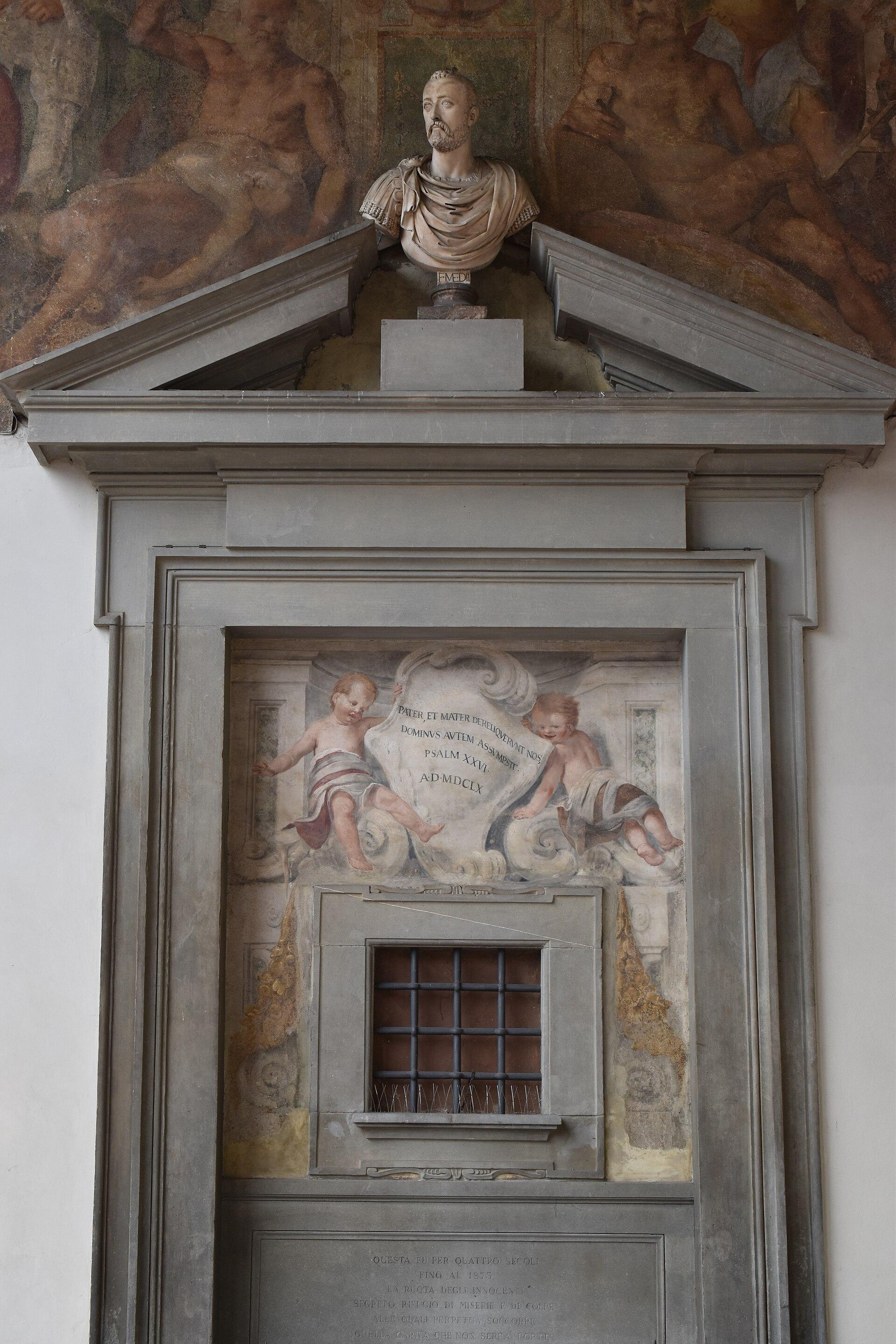
Those who made it grew up in the house. Girls learned weaving and sewing and received a from the institution when they married, while boys were apprenticed to a trade at nine or ten. The surnames , Nocentini and Degli Innocenti are still common across Tuscany, and nearly all of them trace back to this house.
You need a ticket for the museum, and the rooftop terrace looks out over the dome.
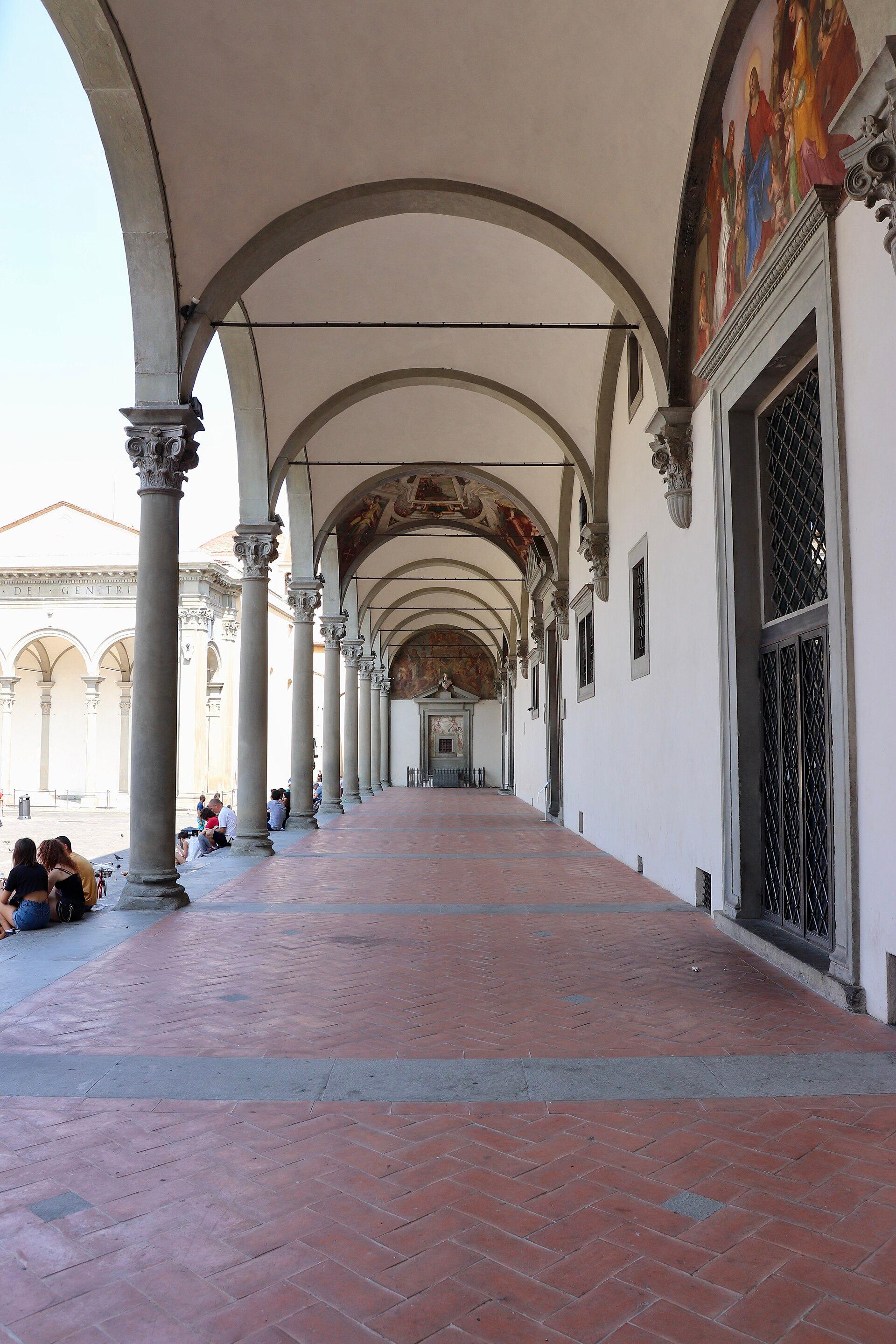
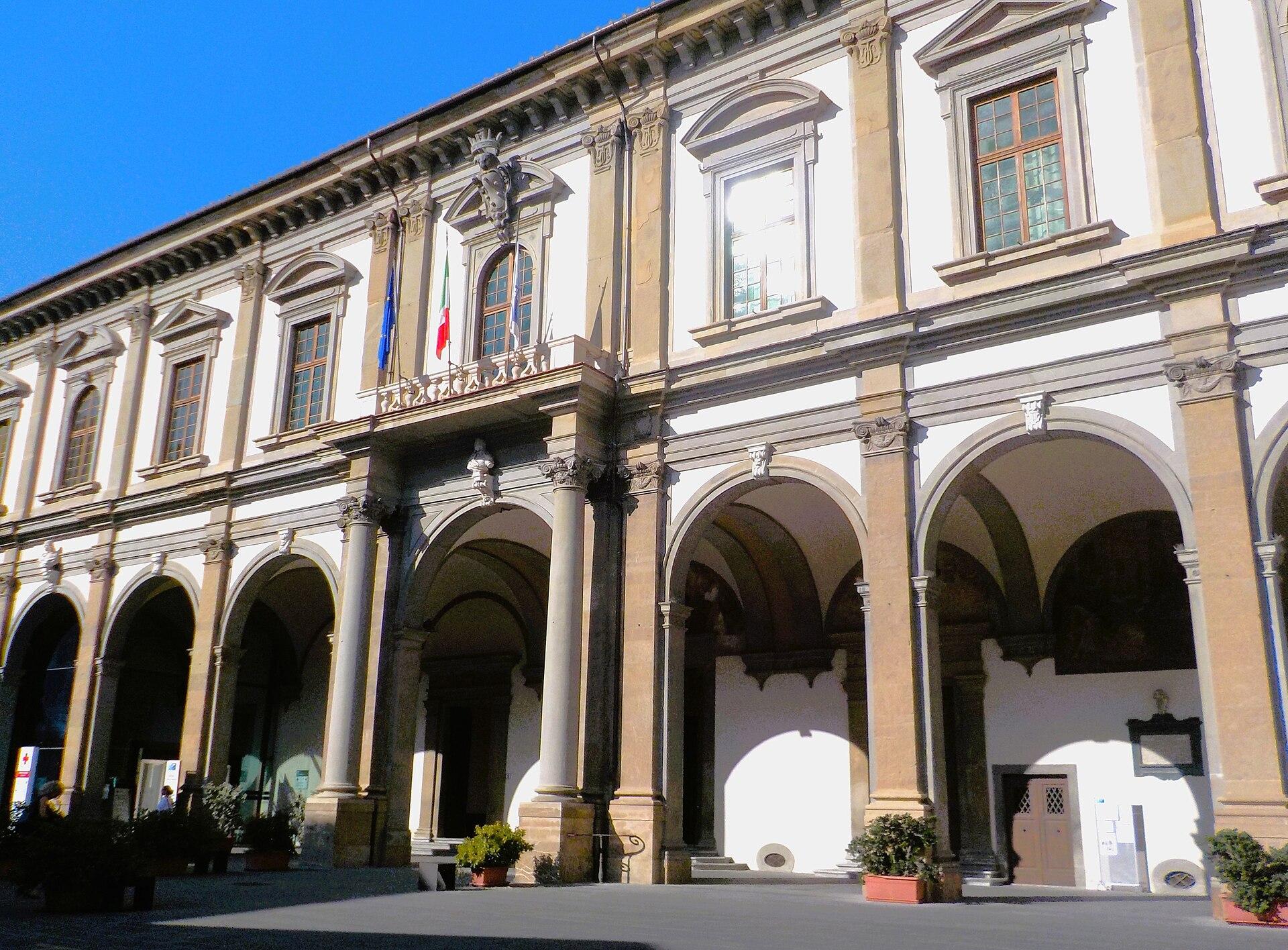
Via della Colonna runs south, and after a few minutes the entrance to the old hospital lies on your left.
Sources. Story: Museo degli Innocenti, Firenze (archivio storico, balie e affidamenti); Archivio Storico degli Innocenti (registri e cognomi degli esposti) Photos: Museo degli Innocenti, Florence, identifying tokens of the foundlings, via Wikimedia Commons, public domain