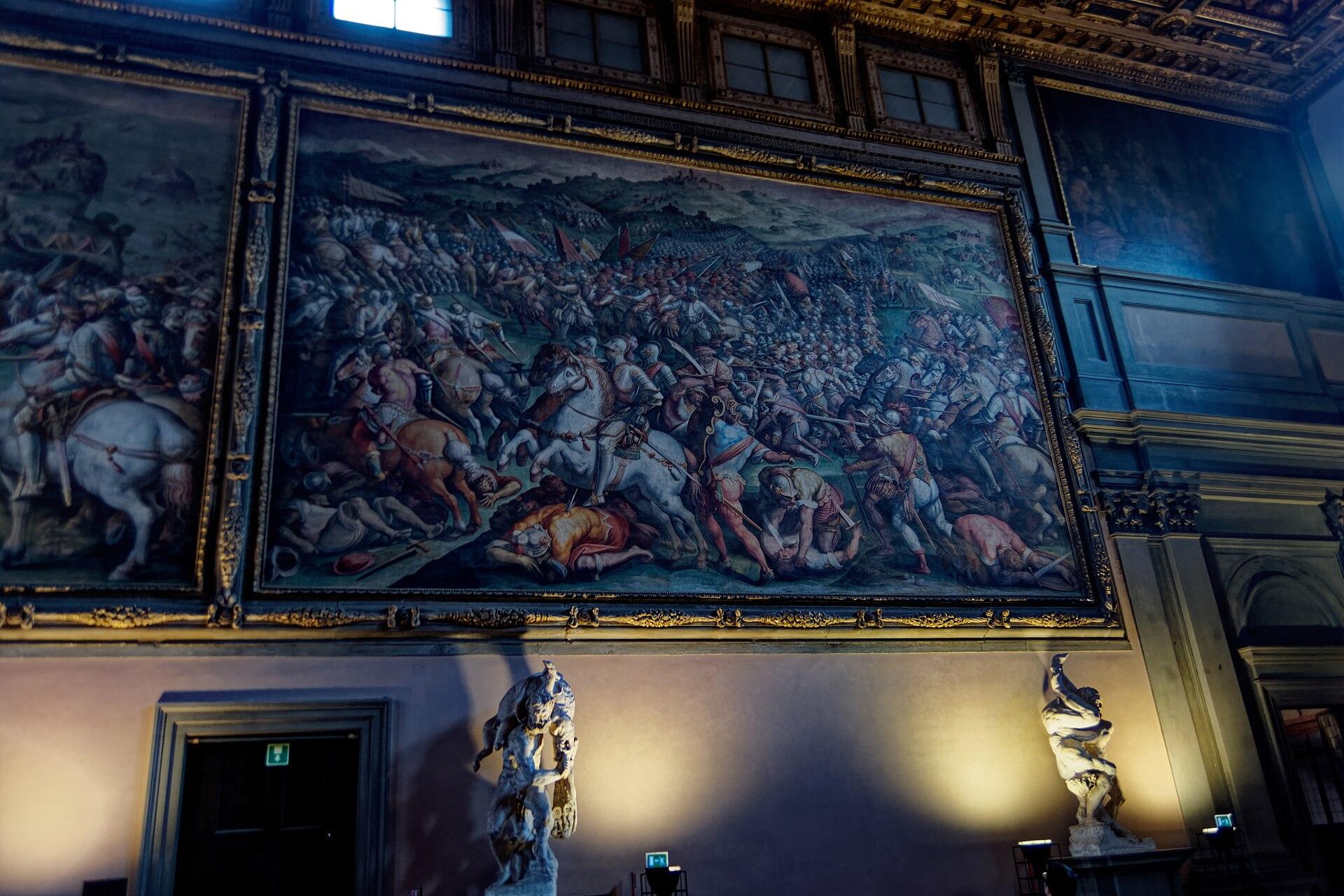
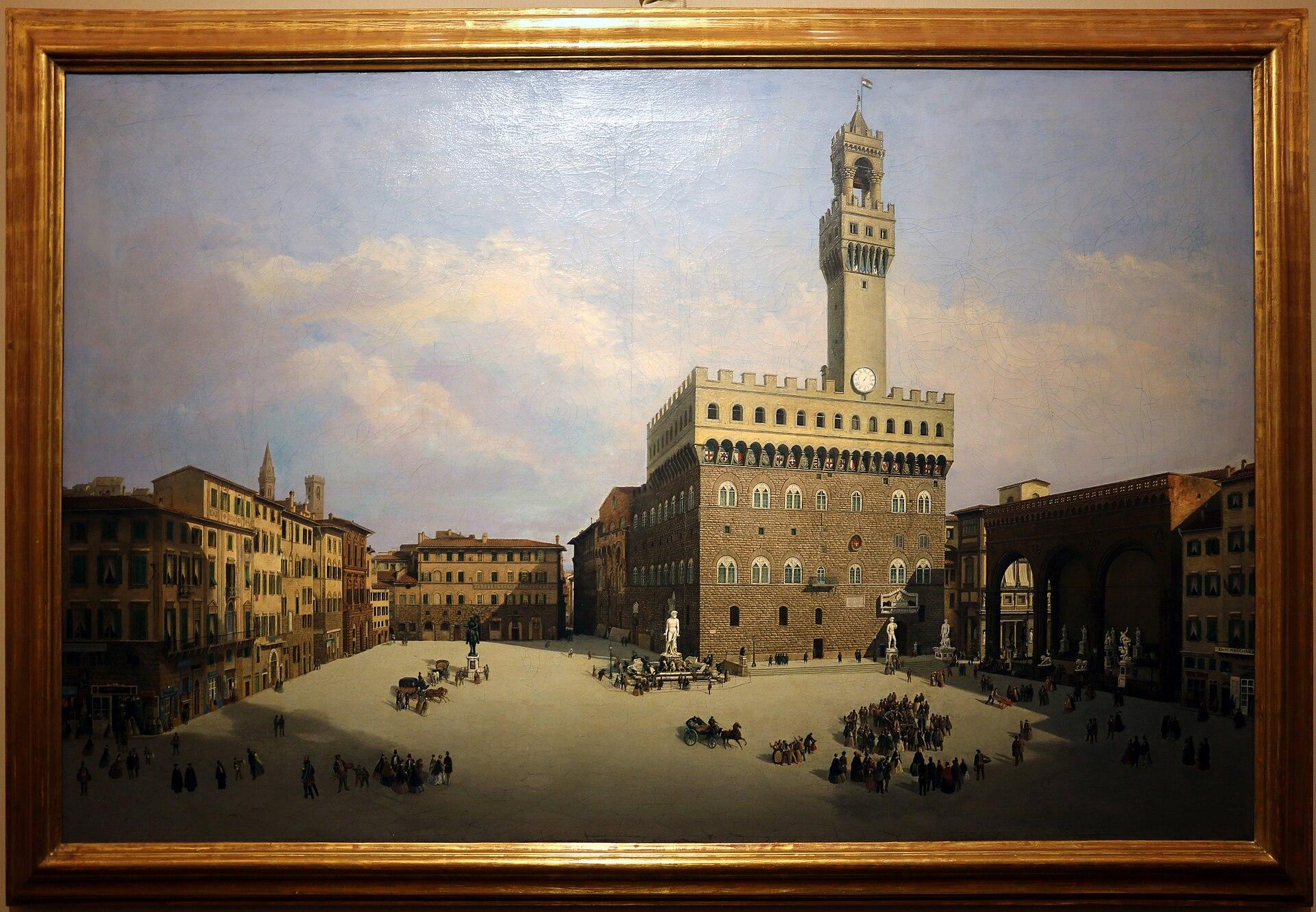
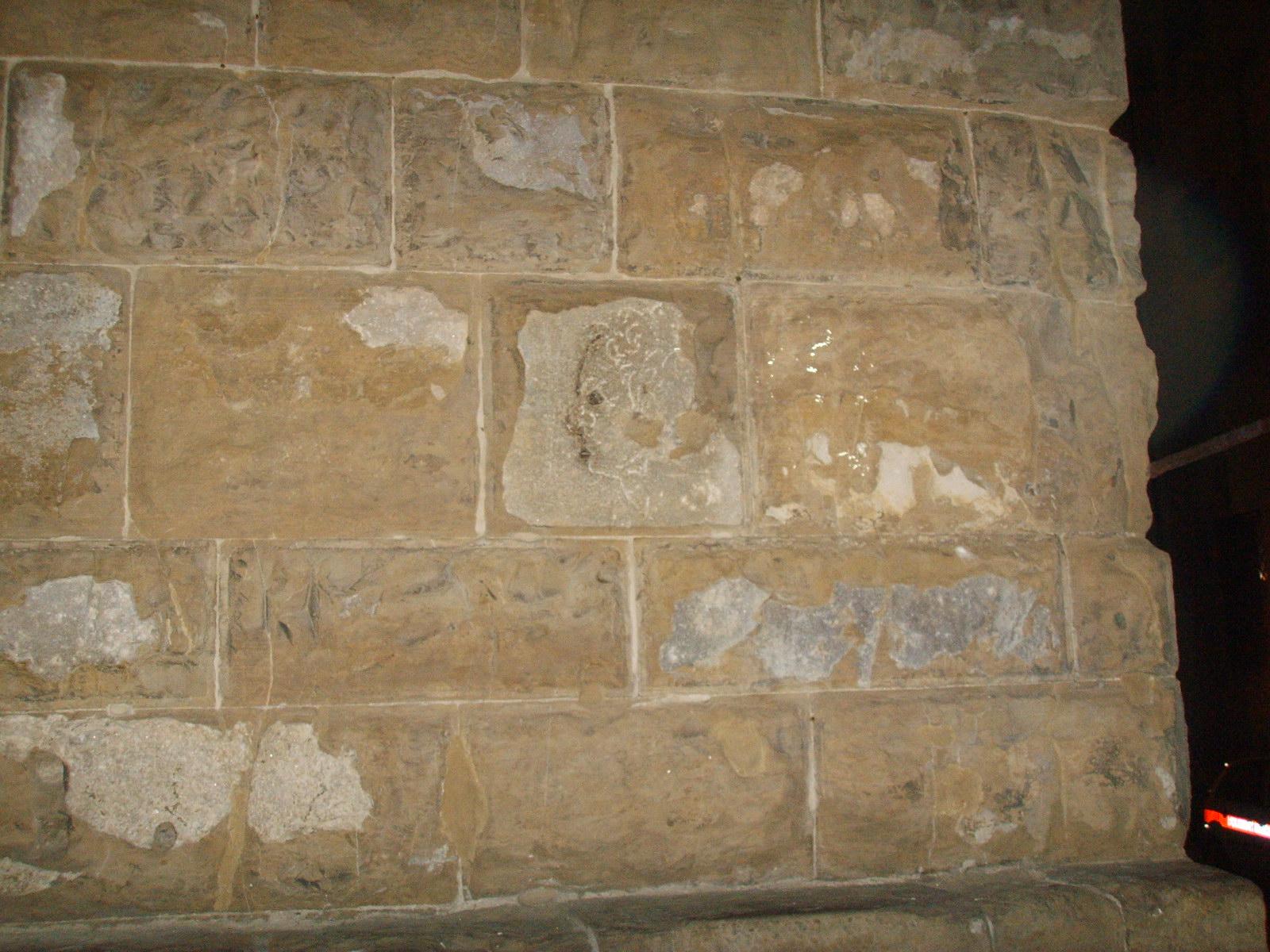
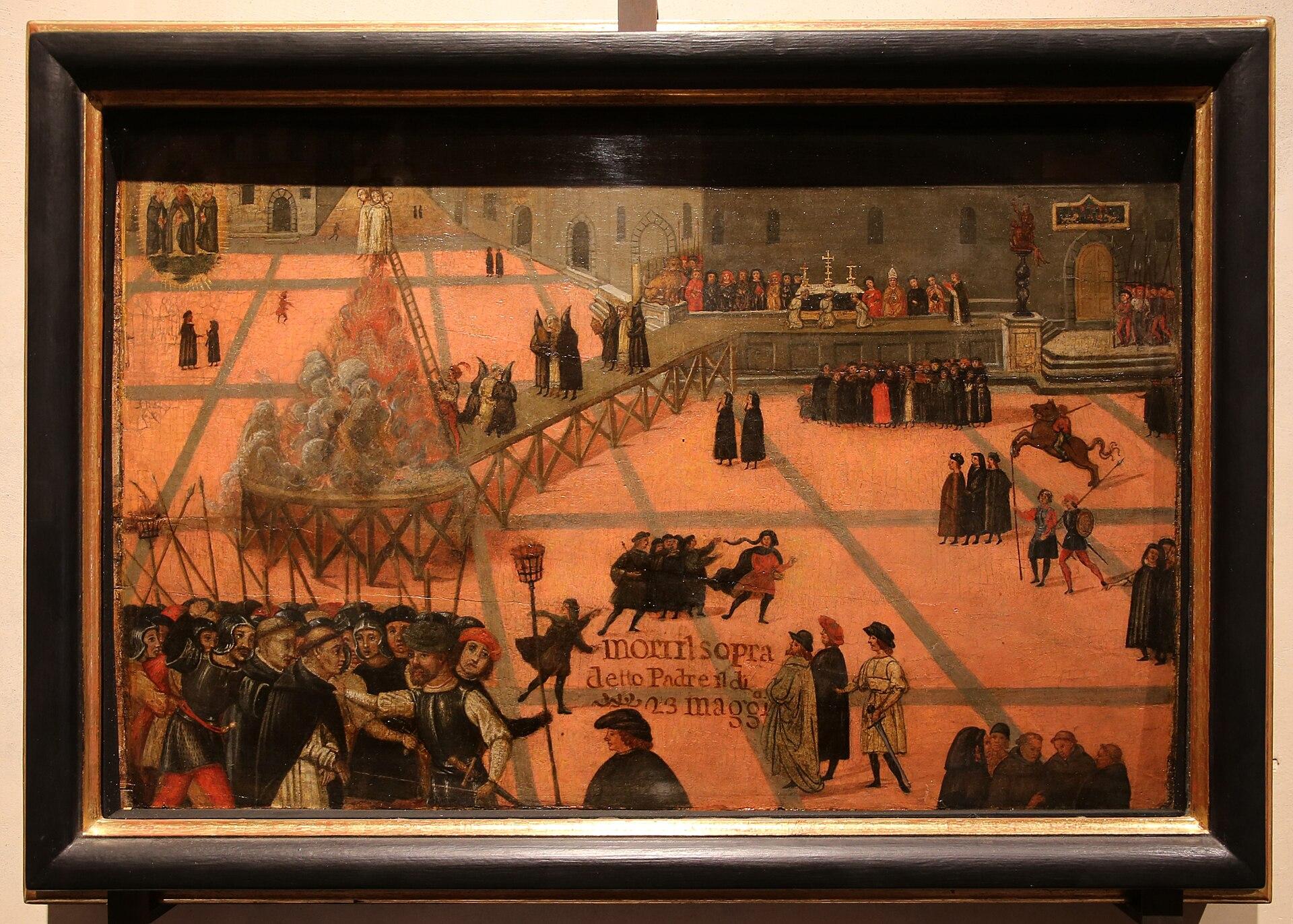
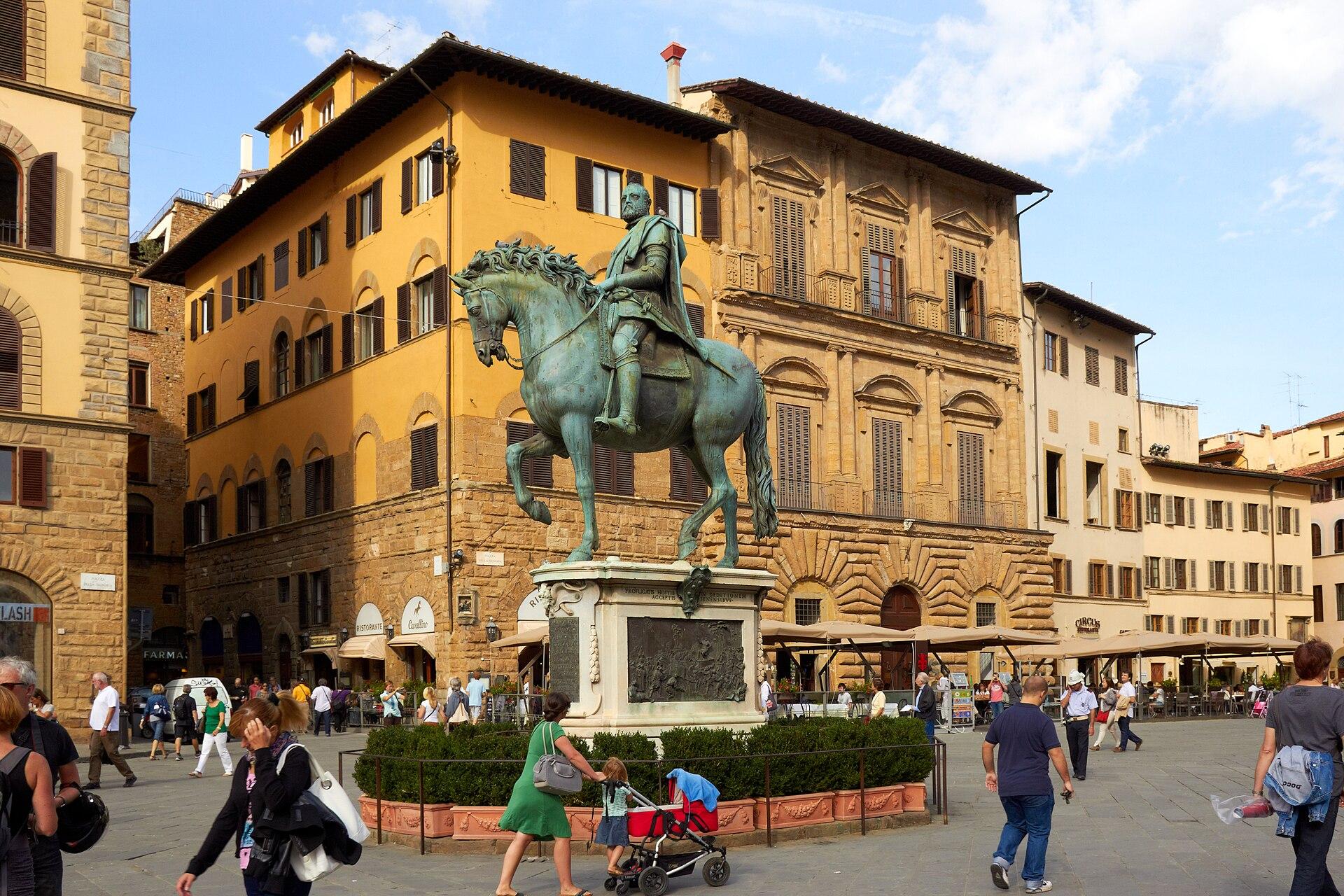
The town hall you're standing in front of became a private residence under . He moved the court inside, and the upper floor gained a wing that belonged to his wife.
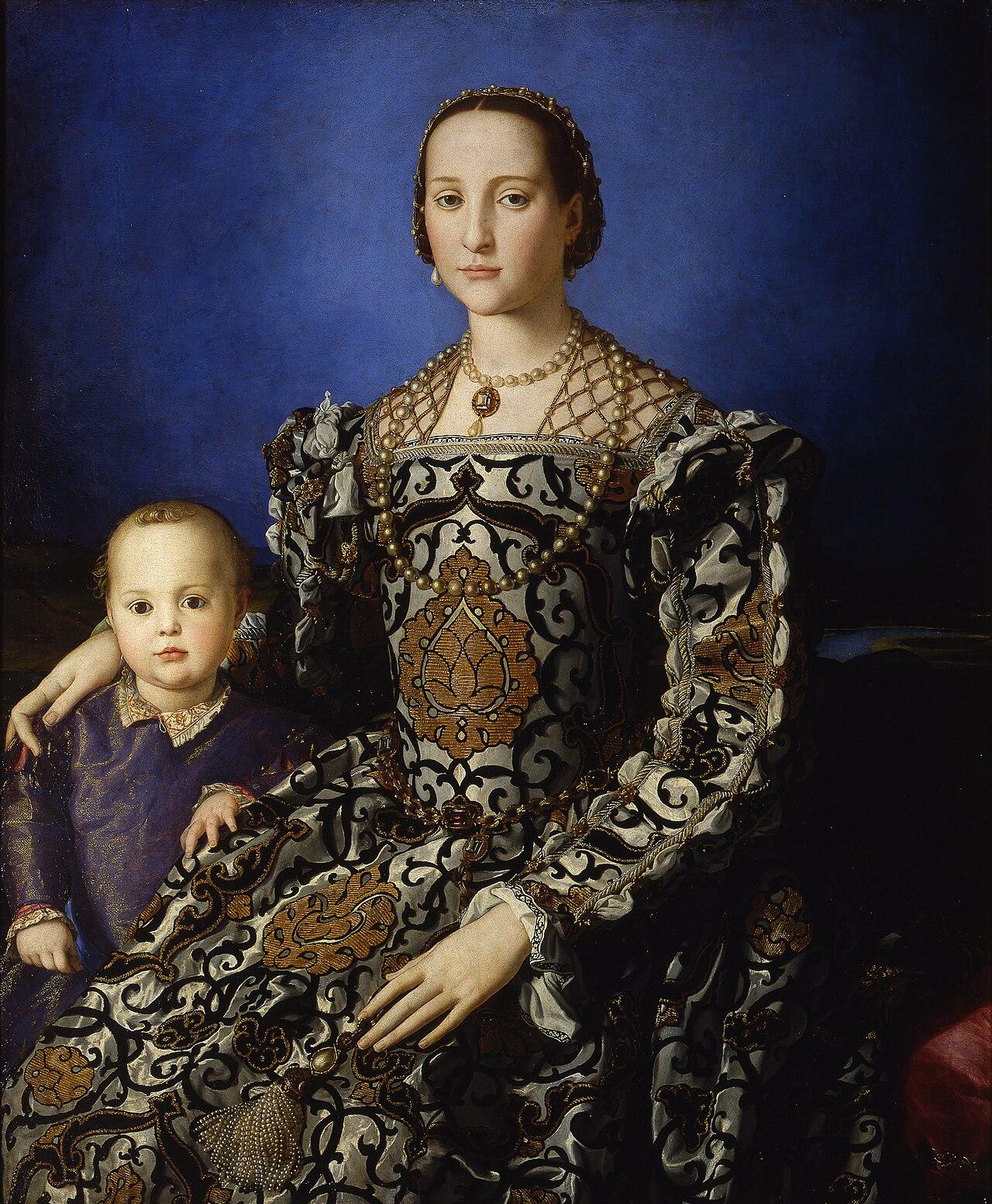
came from Naples, the daughter of the Spanish viceroy, and married Cosimo in 1539. Her dowry filled an empty treasury, and her father gave the backing of Spain, which handed the young duchy a place in Europe overnight.
She turned out to be a businesswoman too. Eleonora bought land, farms and grain stocks in her own name, leased them out and used the returns to finance the court, including that she took over in 1550 from an impoverished rival. While her husband travelled, she governed Florence as regent, and she raised eleven children besides.
Her own apartments need a ticket, and that's also the reason to go inside: a chapel the size of a single room, painted floor to ceiling by , with a passage through to the rooms where the real governing happened.
She died in 1562 while travelling through the marshes of the Maremma, together with two of her sons, of malaria.
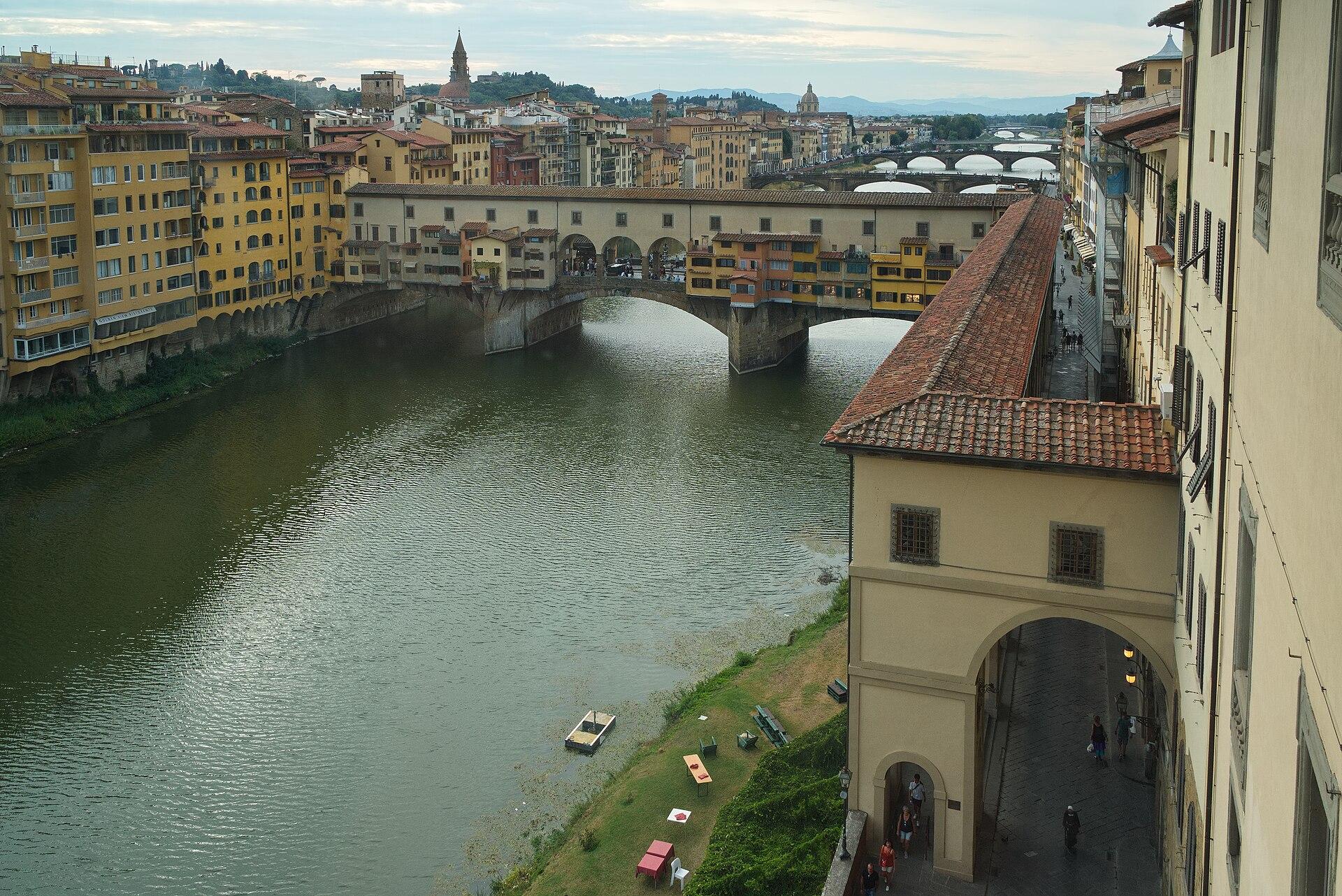
Along the side of the palace, Via della Ninna runs down to the riverside, where the bridge lined with shops begins.
Sources. Story: Musei Civici Fiorentini (Palazzo Vecchio, Quartiere di Eleonora e cappella del Bronzino); Treccani (Eleonora di Toledo) Photos: Bronzino, portrait of Eleonora di Toledo with her son Giovanni (c. 1545), Gallerie degli Uffizi, via Wikimedia Commons, public domain