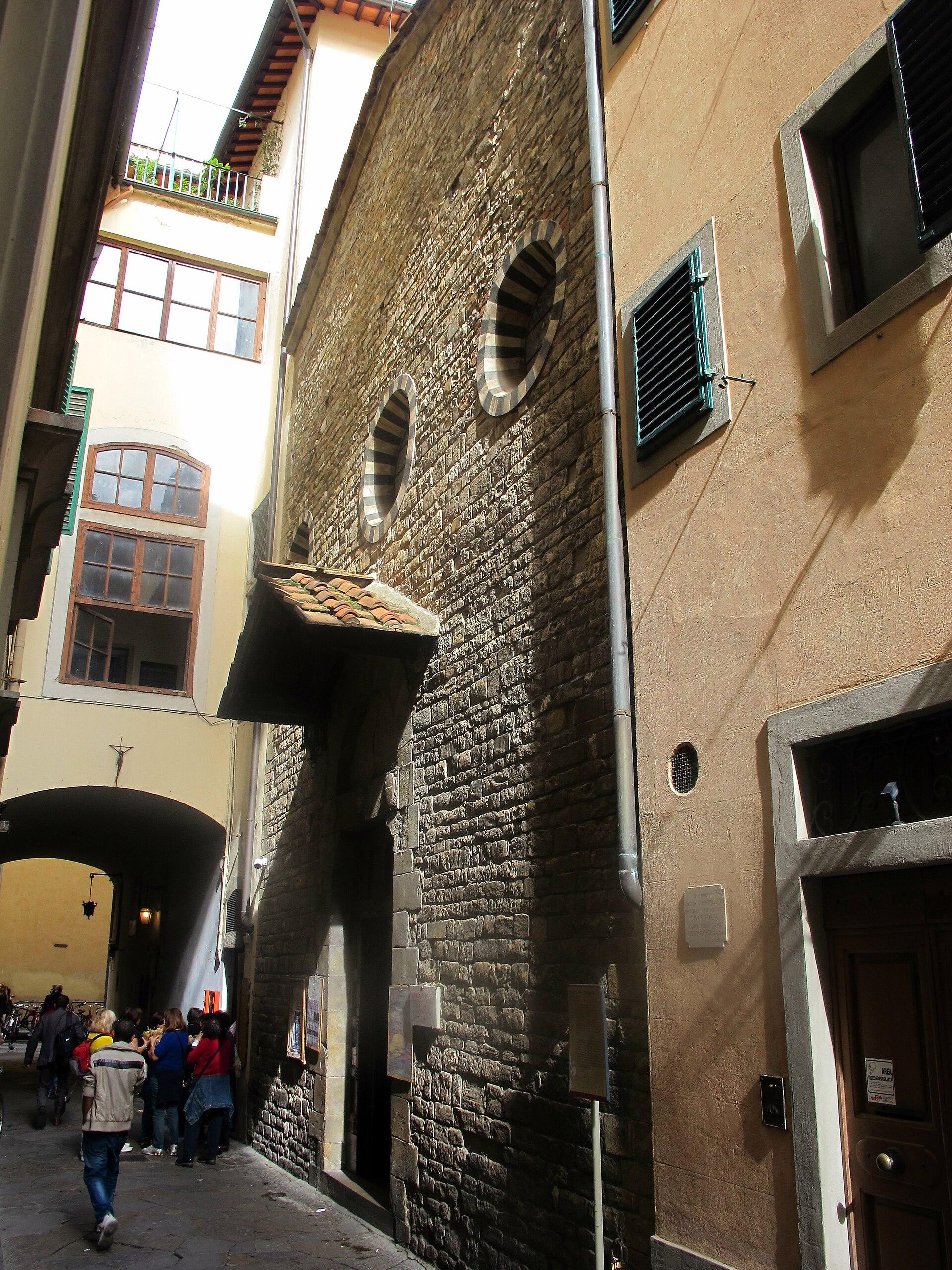
Next to the altar stands a wicker basket, and it's filled with little notes. Handwritten, in dozens of languages, left by visitors who come to ask for help with their heartache. The basket gets emptied regularly, and just as quickly it fills back up.
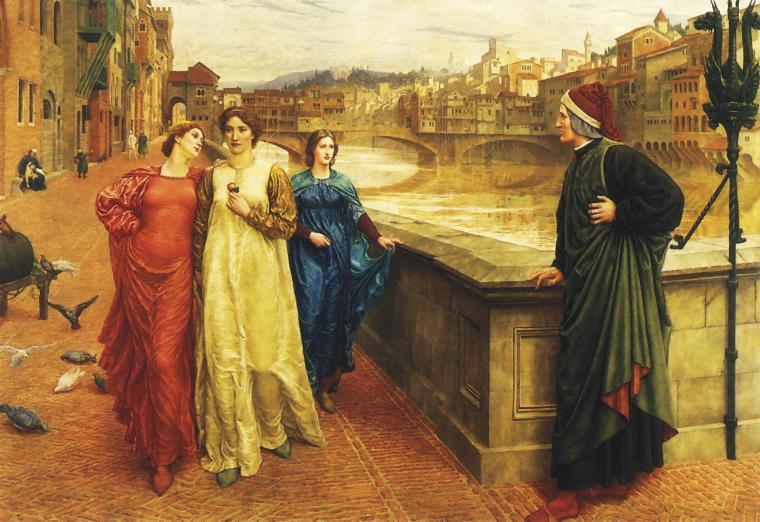
He first saw her when they were both nine years old, at a party at her father's house. Years later she greeted him in the street, and by his own account that was enough to shape his day, his work, and eventually his entire life as a poet. She married a banker, died around the age of twenty-four, and in the she is the one who guides him through paradise. The poet, by the way, is .
Opinions differ about the grave the basket sits beside. Tradition calls it Beatrice's, while scholars tend to attribute it to her nurse and assume that Beatrice herself lies with her husband's family in . The notes keep arriving, and that tells you plenty about how little the distinction matters.
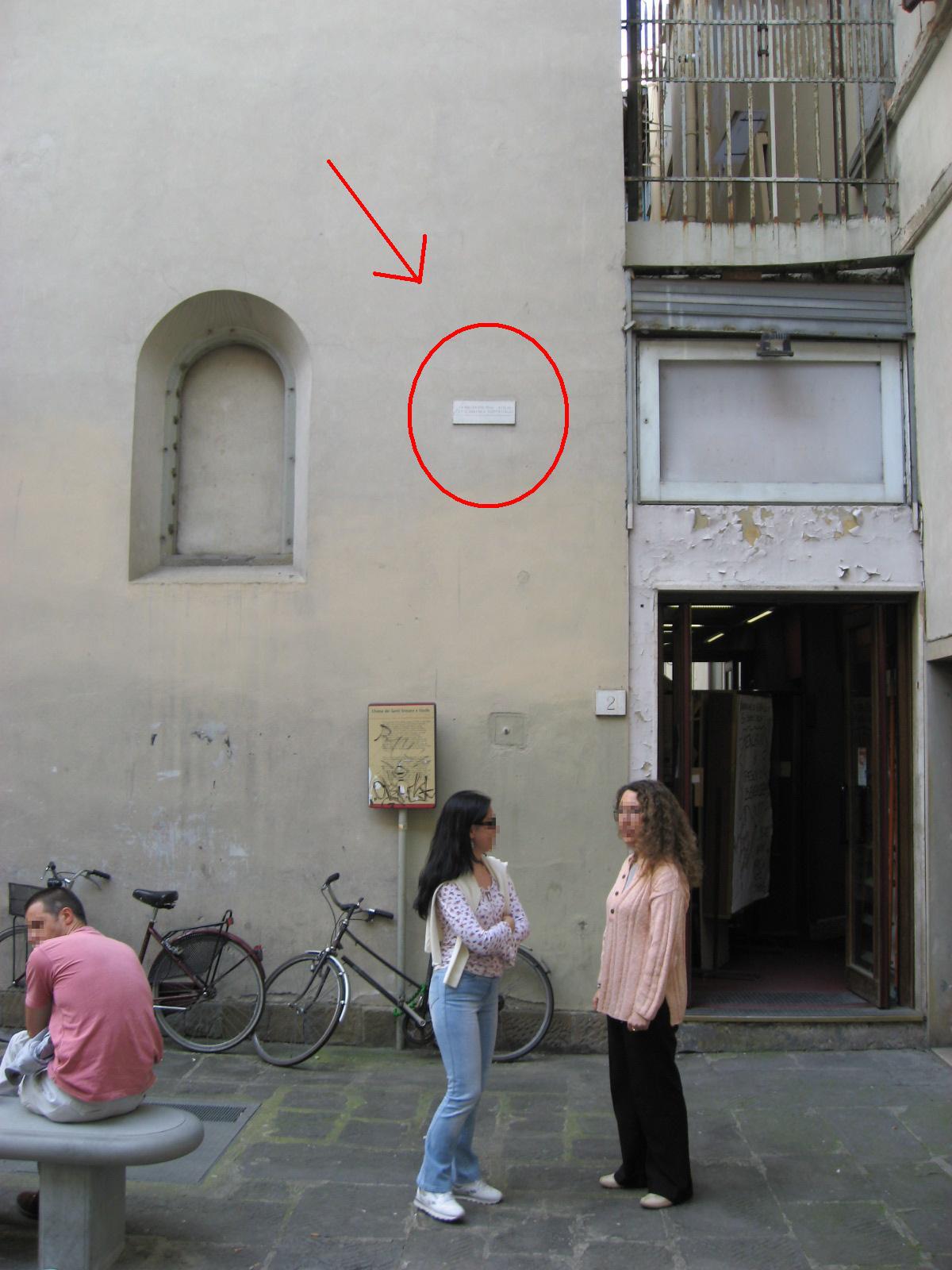
Outside we turn right, until the street opens onto a wide shopping street.
Sources. Story: Chiesa di Santa Margherita dei Cerchi, Firenze (tomb and tradition); Treccani (Beatrice Portinari, Vita Nuova) Photos: Henry Holiday, Dante and Beatrice (1883), Walker Art Gallery, via Wikimedia Commons, public domain