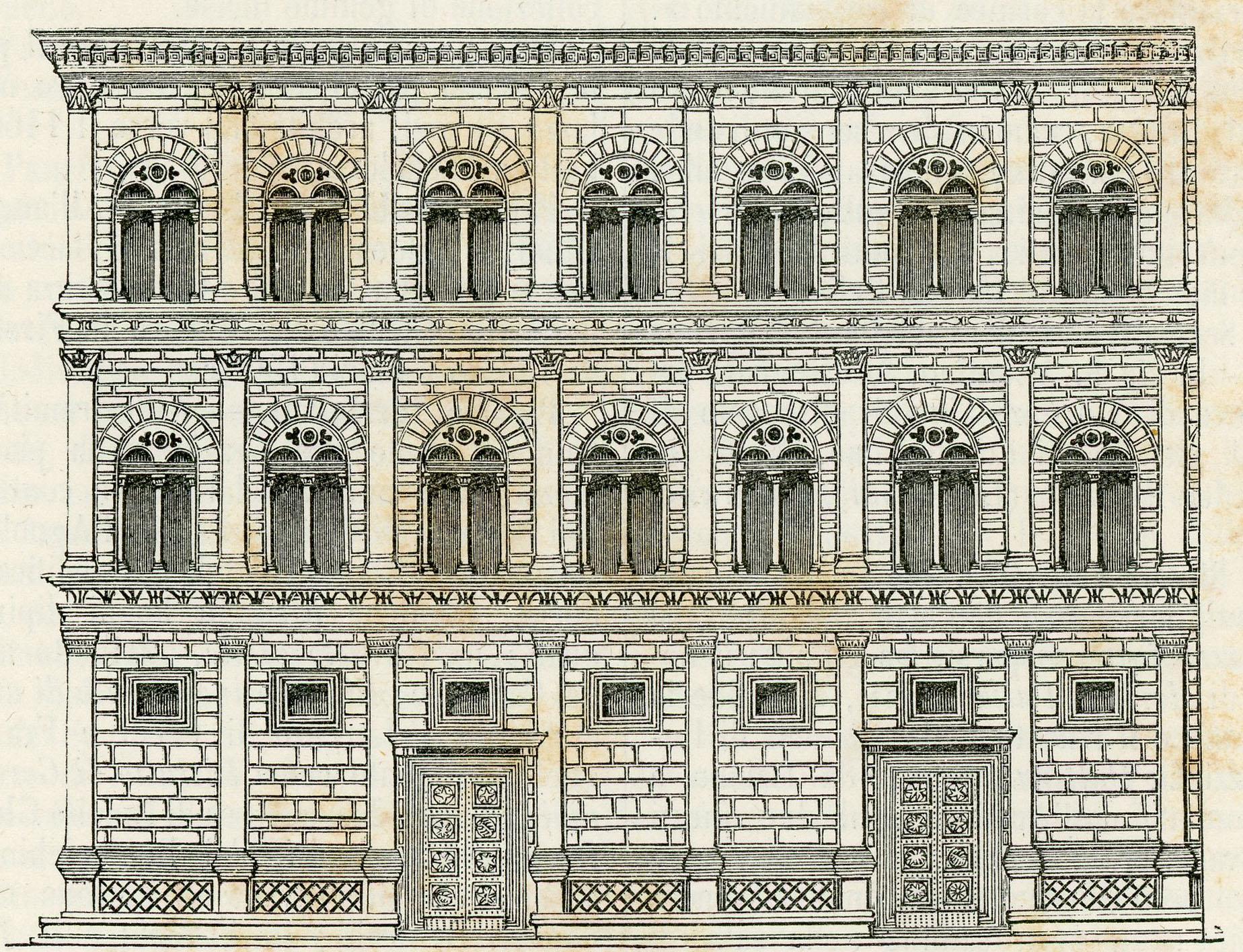
A house built like the : that was the idea here, and it has been copied across half of Europe ever since.
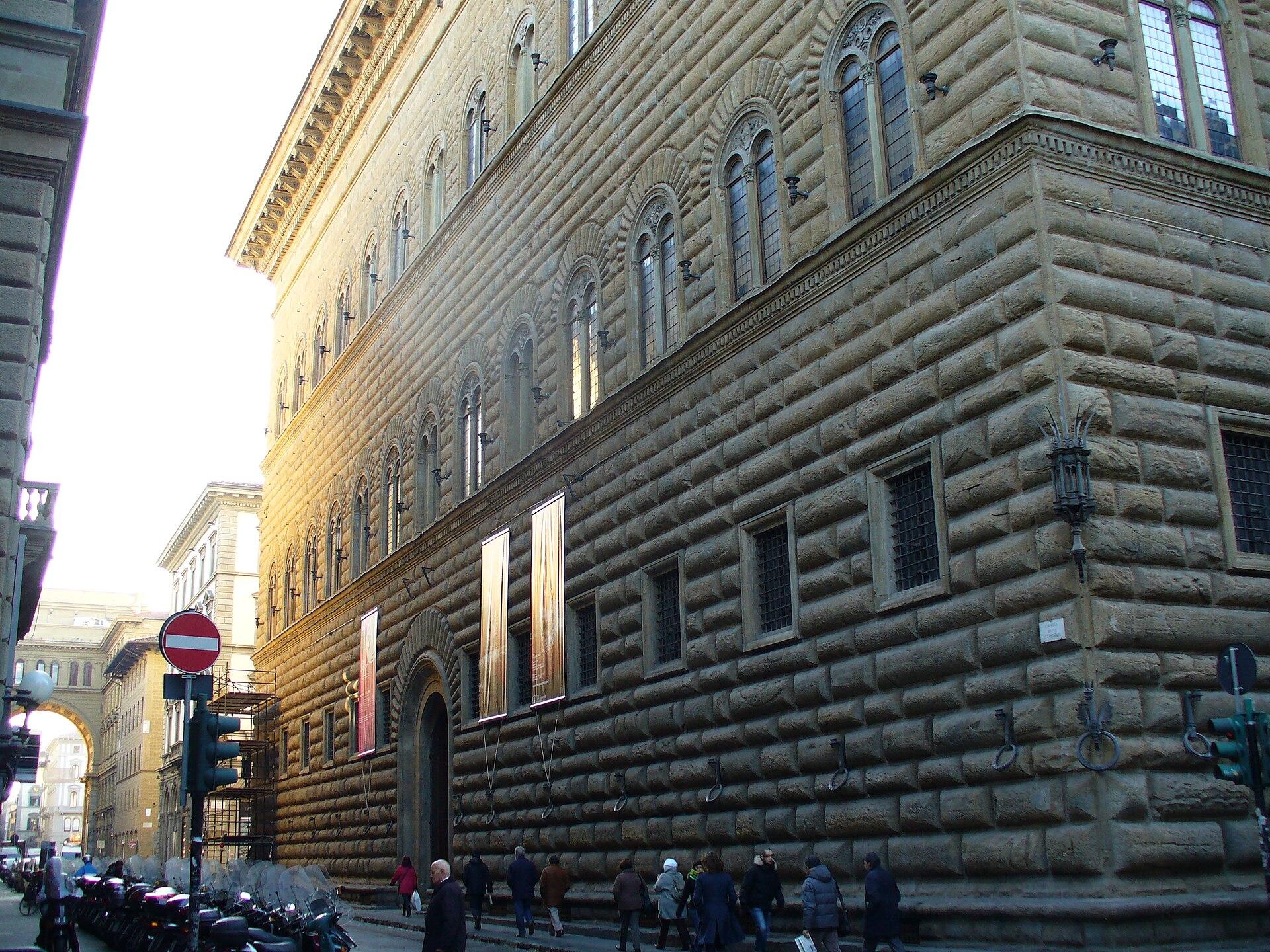
, one of the great architects and thinkers of the Renaissance, laid a grid of over this narrow facade, giving each floor a different , exactly the way the Romans stacked their theatres. For the first time, an ordinary city palace took on the structure of an ancient building.
The family owes its name to money that came from a plant. An ancestor learned in the east how to draw a deep red dye from a lichen, , and that word became the name Rucellai.
Along the bottom runs a long stone bench, where clients, business partners and beggars sat waiting, and where deals were struck by everyone who never got so much as a foot across the threshold inside.
The broad square in front of the lies at the western end of this street.
Sources. Story: Treccani (Leon Battista Alberti, Palazzo Rucellai); Comune di Firenze (Palazzo Rucellai, scheda storica) Photos: Anonymous engraver, Palazzo Rucellai (1894), via Wikimedia Commons, public domain