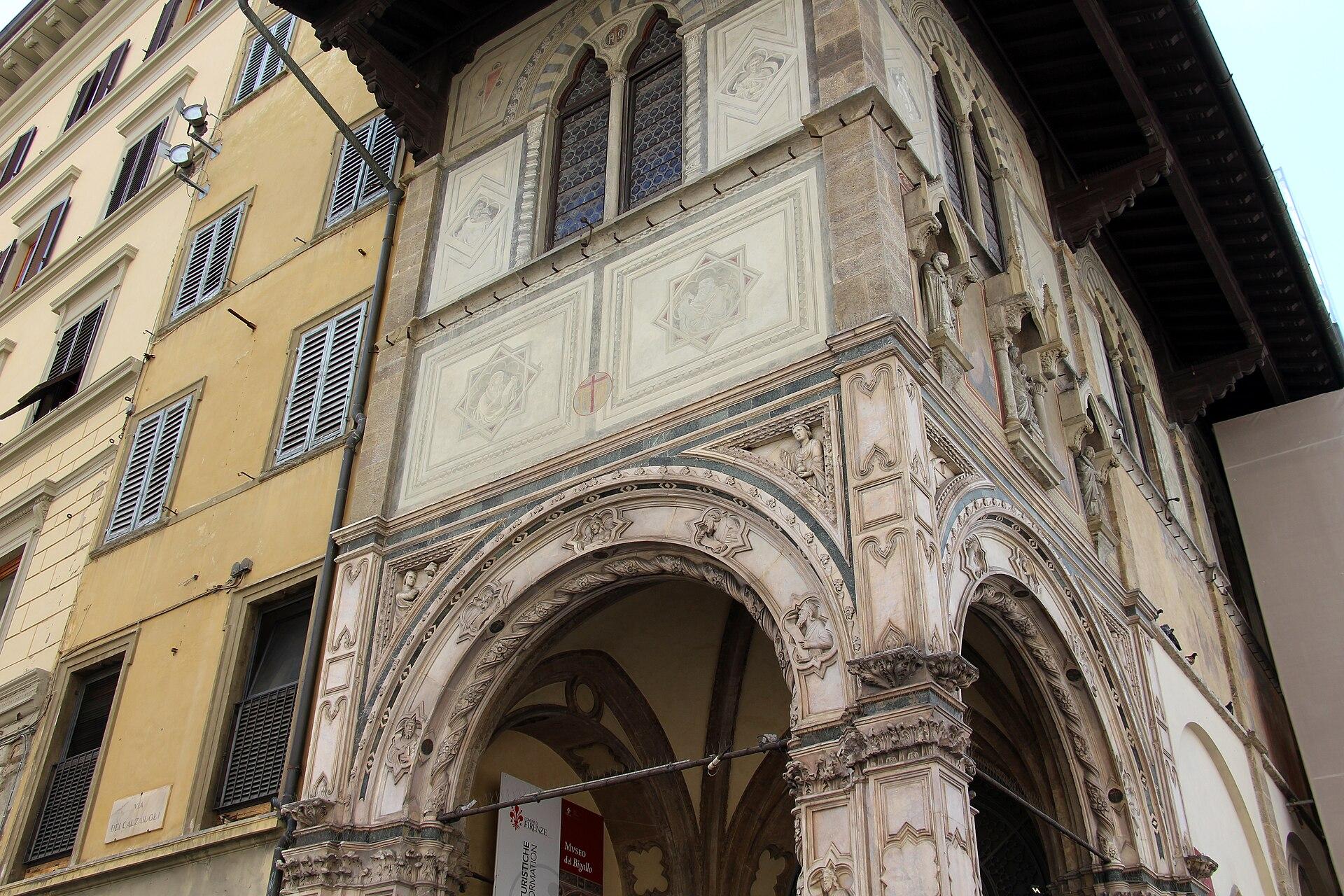
Beneath these open arches, children waited for someone to come and collect them. If you found a child on the street, you brought it here, and the Bigallo brotherhood would place it in the for three days, in plain sight of everyone who passed by.
Sometimes it worked, and a neighbour, an uncle, or a mother who had changed her mind would appear. When it didn't, the brotherhood found a foster family in the countryside and helped pay for the child's upbringing. A fresco preserved here paints that very moment: children being handed over to their foster mothers, with the administrators standing by as witnesses.
The fact that all this happened on the busiest corner of the city, between the cathedral and the shopping street, tells you something about how it was seen. Care was visible work, carried out by citizens representing their or their brotherhood, and arranged as a matter of course, much like the grain and the walls.
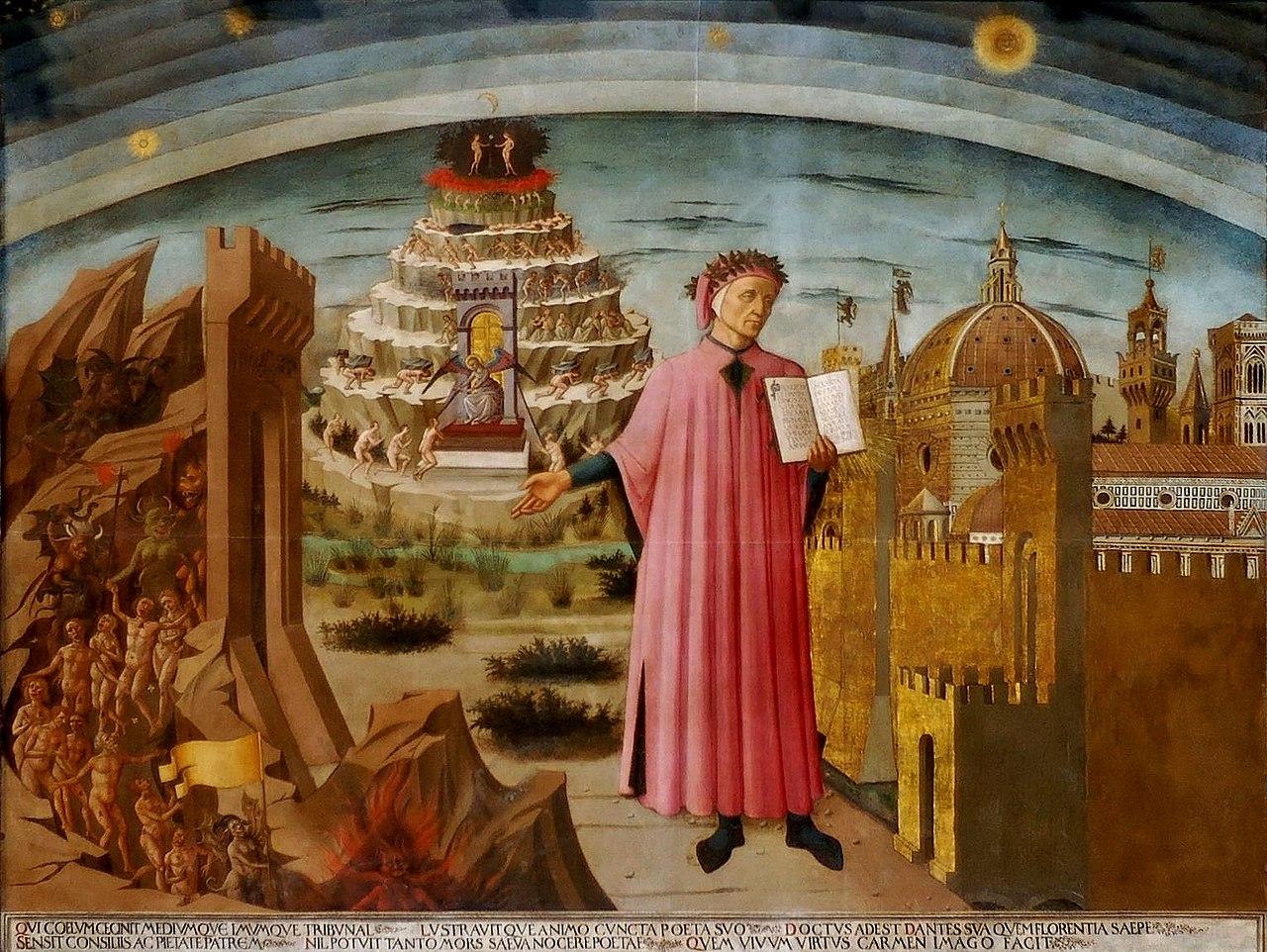
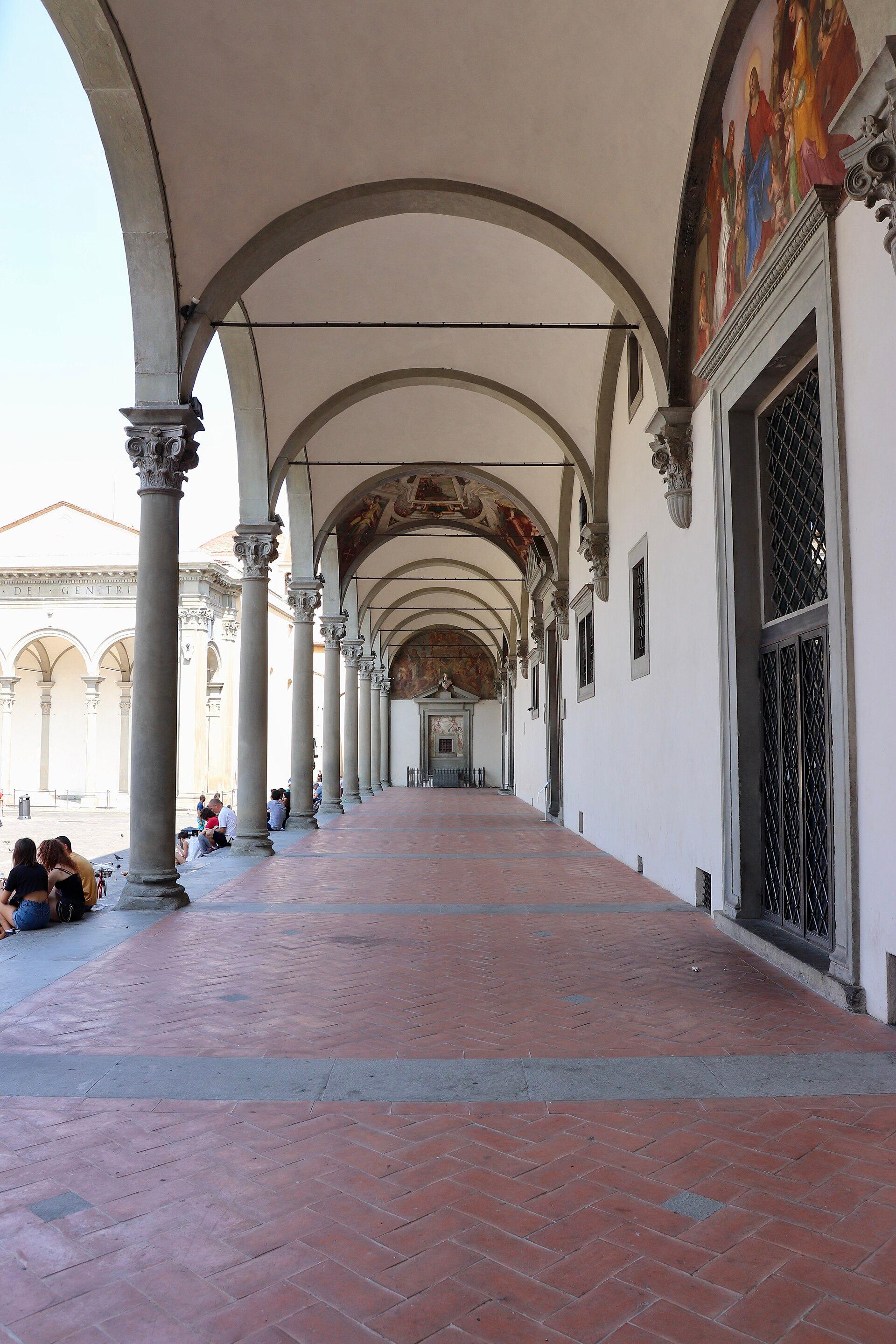
Our walk ends on this corner, and thank you for wanting to see this side of the city. If you'd like to continue, you can join our walk about Dante and Beatrice, which begins with the family of the hospital's founder, or the one past the city's icons. Piazza della Santissima Annunziata lies ten minutes to the northeast.
Sources. Story: Museo del Bigallo, Firenze (loggia and frescoes, compagnia del Bigallo); Comune di Firenze (Loggia del Bigallo, history) Photos: Loggia del Bigallo, Florence, via Wikimedia Commons, photo Fred Romero, CC BY 2.0