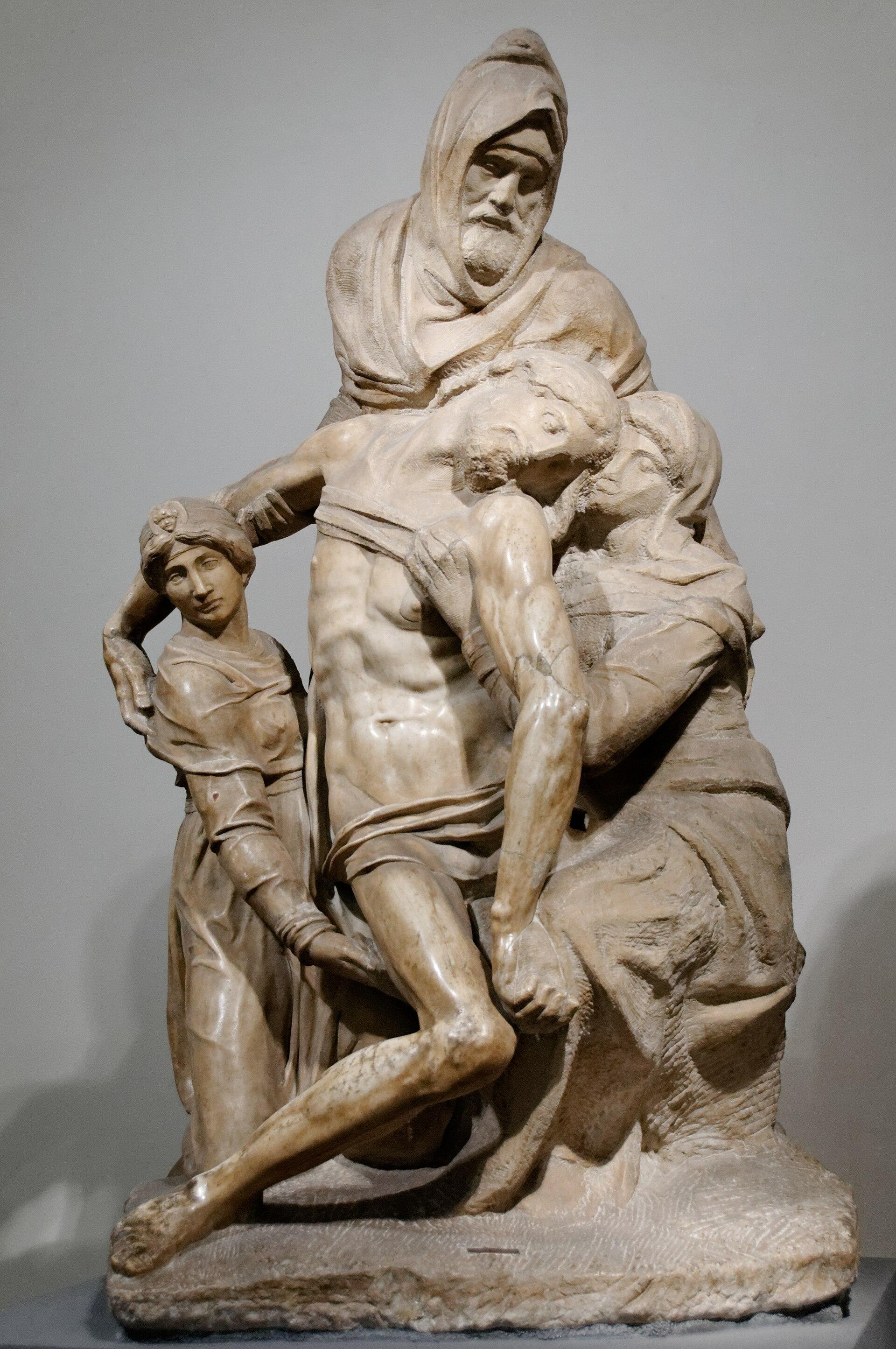
One evening, when was around eighty, he picked up a hammer and smashed the statue he had worked on for years. A servant gathered the pieces and sold them, and a pupil later put the whole thing back together.
It was meant for his own tomb: Christ being taken down from the cross, held up by three figures. For centuries the old man in the hood supporting the body has been read as a self-portrait, which means Michelangelo himself quite literally stands beneath the weight.
Why he smashed it has never been settled. His contemporary , the painter and biographer of so many Renaissance artists, writes about a vein in the marble that made the work impossible, and about a frustration that often drove him to destruction, since he left other unfinished pieces standing or broke them apart too. Christ's leg is still missing.
The statue stands in , which also holds the panels from the and the original doors of the . You need a ticket for it, usually sold together with the dome and the Baptistery.
On the south side of the square, Via del Proconsolo begins, and halfway along on the left there's a fortress-like block with battlements.
Sources. Story: Museo dell'Opera del Duomo, Firenze (Pietà Bandini); Treccani (Michelangelo Buonarroti, Pietà dell'Opera del Duomo) Photos: Michelangelo, Pietà Bandini, Museo dell'Opera del Duomo, Florence, via Wikimedia Commons, photo Marie-Lan Nguyen, CC BY 2.5