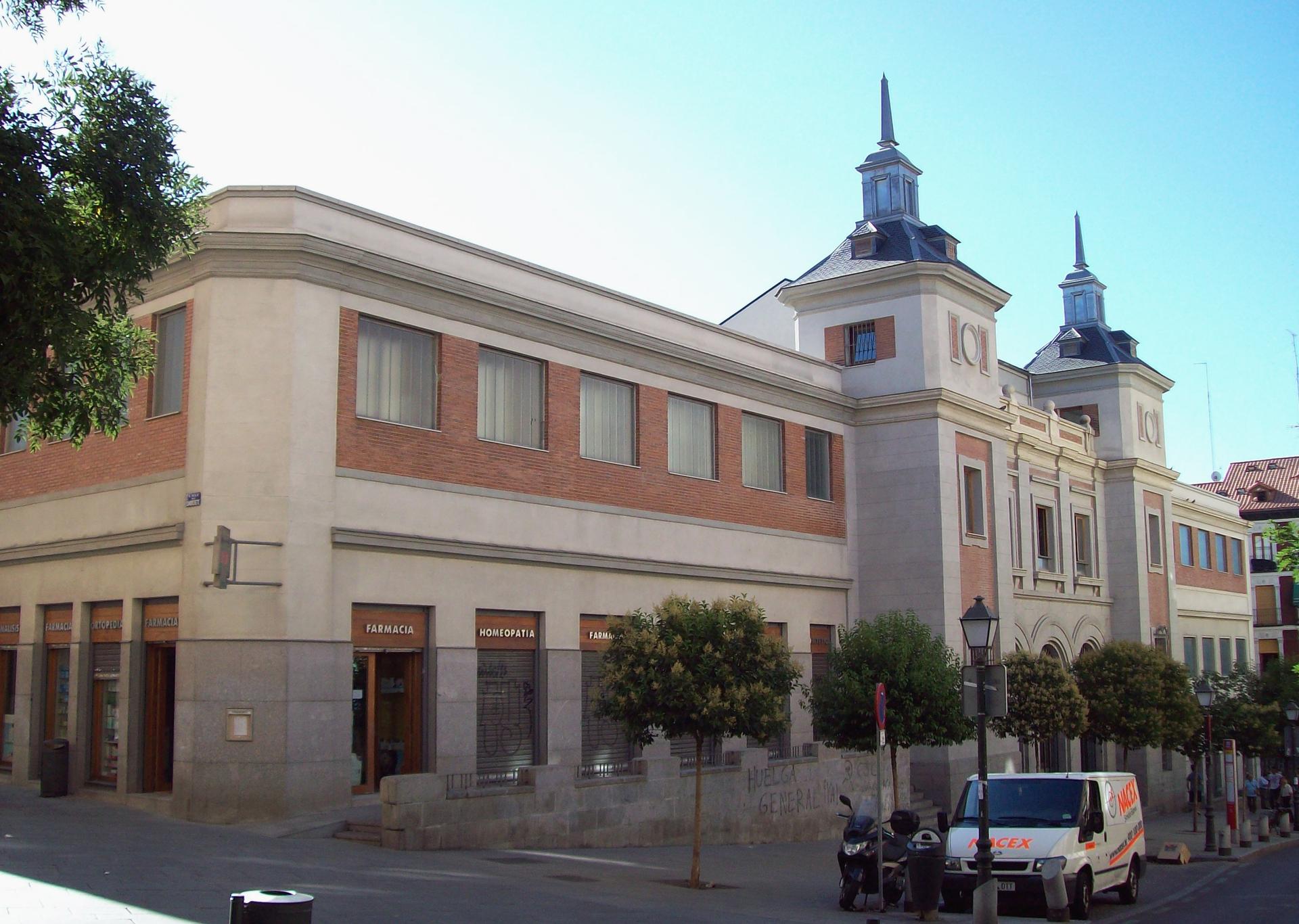
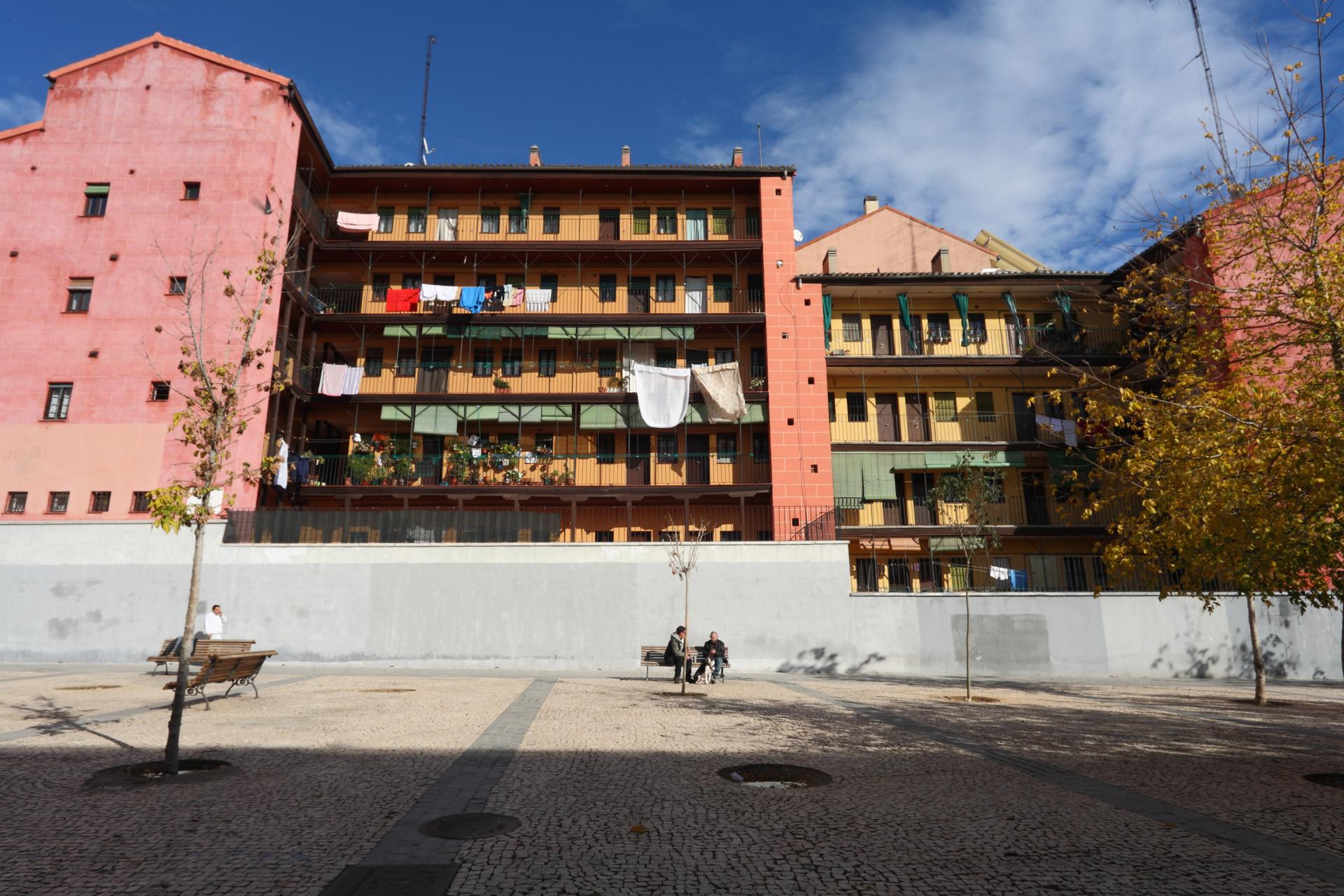
The building on the corner, with its open galleries wrapping a courtyard, is a corrala, the housing style Madrid used to put a roof over its workers. This one dates from 1839 and is the most famous still standing.
The idea is simple and harsh at once. Behind a narrow facade lies a courtyard, a staircase climbs upward, and on every floor a gallery runs past the doors of the homes, which by law could be no larger than thirty square metres. Dark, poorly ventilated and small, with the tap and the toilet out on the gallery, so that everything happening at home belonged a little to the neighbours too. Within all that poverty there was a strict pecking order, because whoever lived downstairs ranked higher than whoever lived above.
The corralas sprang up around the old slaughterhouses and the tobacco factory, where the work was, which is why this housing style stands right here. , the great nineteenth-century novelist of Madrid, described them in , and did the same in La busca. There is even a , a kind of Spanish light opera, named after one of them, , which plays out in a courtyard just like this.
From here the Calle de Mesón de Paredes runs south, towards the high brick wall of the old factory.
Sources. Story: Hispanopedia, Corrala en Corrala de Mesón de Paredes; Ayuntamiento de Madrid, esMadrid, Corrala de Tribulete. Photos: Photo of the Corrala: Javier Perez Montes, CC BY-SA 4.0 via Wikimedia Commons.