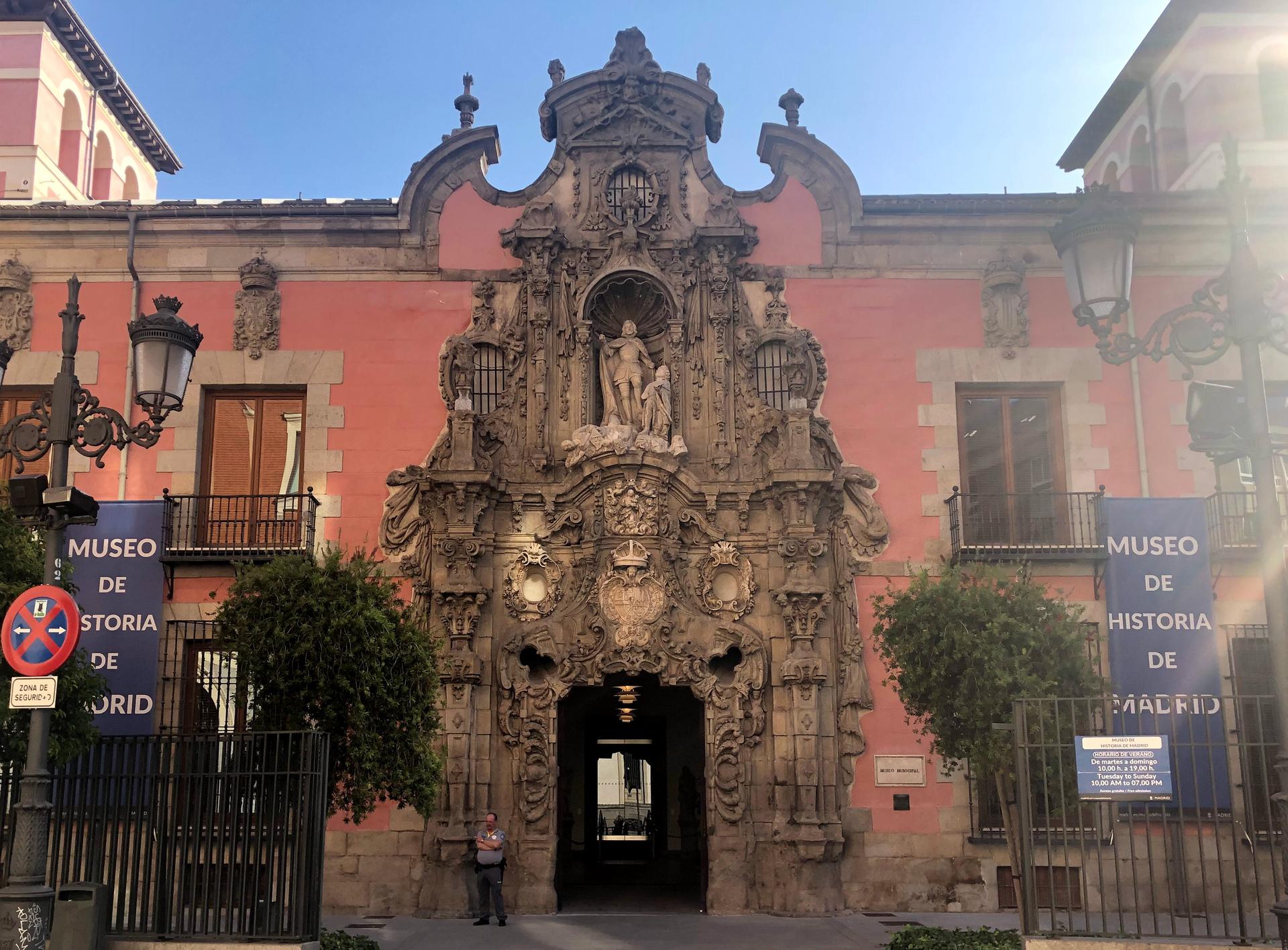
The building you're standing in front of, with its lavish stone doorway, served as an almshouse for almost two hundred years. The Real Hospicio del Ave María y San Fernando was founded in 1673 to take beggars and orphans off the streets, and in the eighteenth century the architect gave it the doorway you see today.
That doorway counts as one of the most exuberant pieces of secular Baroque in Spain, and you can tell at a glance: a sober brick facade erupting into white stone, scrolls, angels and a saint perched at the top. The rule seemed to be that the plainer the institution, the richer the door.
In 1919 it faced demolition, so the , Spain's royal academy of fine arts, had it listed as a monument, and ten years later the city museum opened its doors inside. Between 2002 and 2014 it vanished behind scaffolding for twelve years while it was renovated.
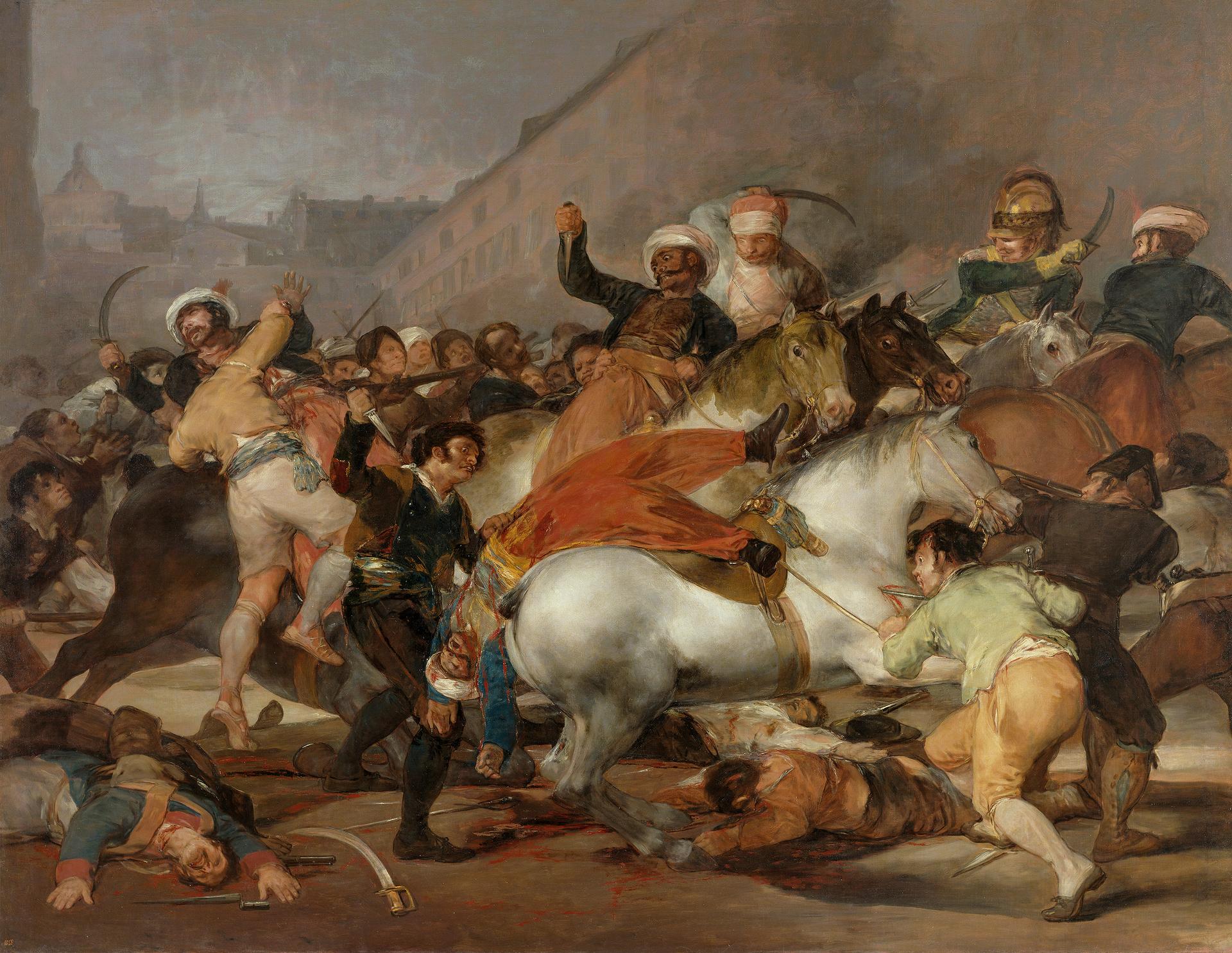
Entry is free, from Tuesday to Sunday, between ten and eight. Inside there's a second story waiting for you, about a painting that was repeatedly painted over.
Sources. Story: Hispanopedia, Museo de Historia de Madrid; Ayuntamiento de Madrid, Museo de Historia de Madrid, history of the building and the collection. Photos: Photo of the facade of the Museo de Historia de Madrid: Luis García, CC BY-SA 3.0 via Wikimedia Commons.