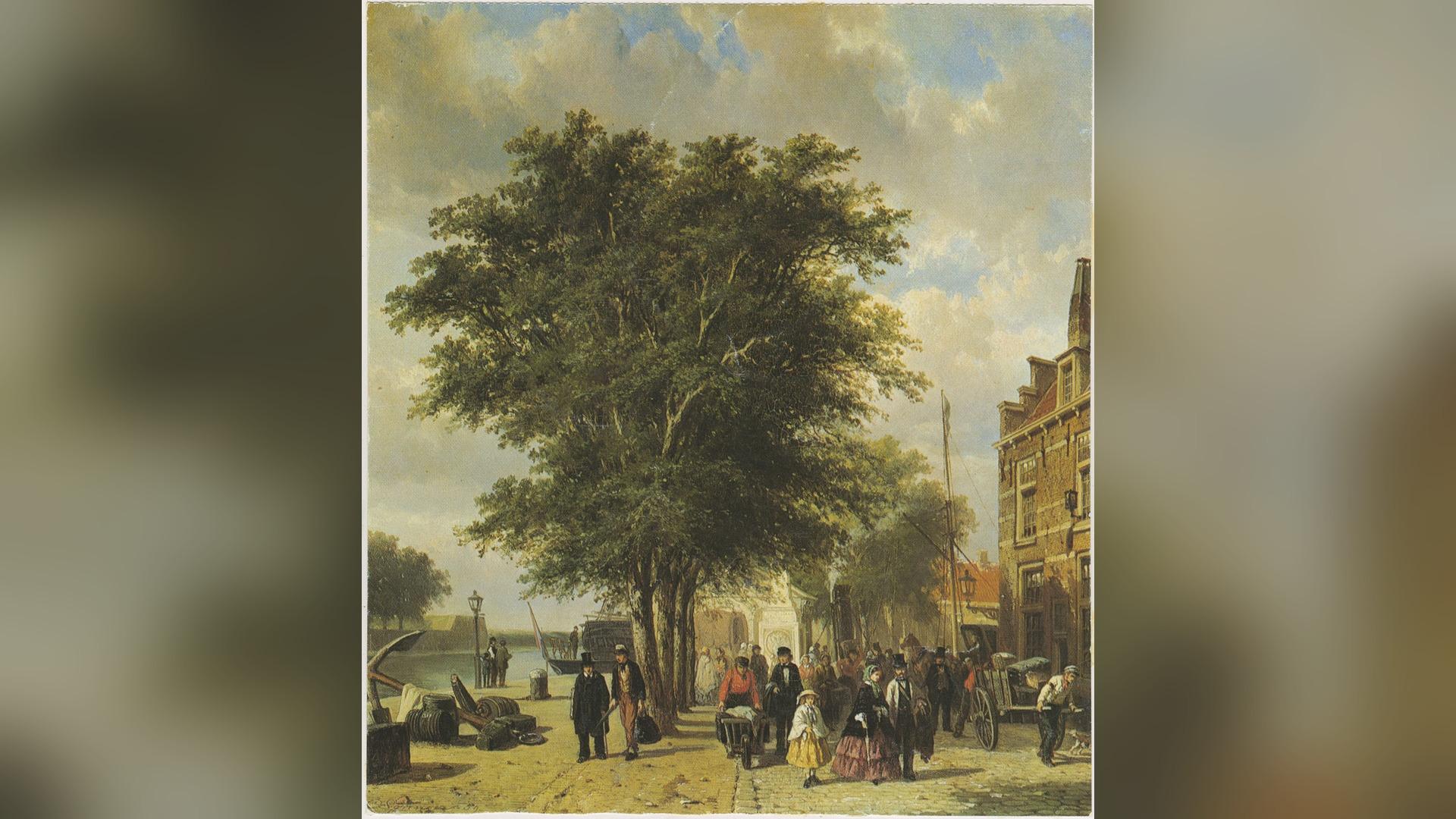
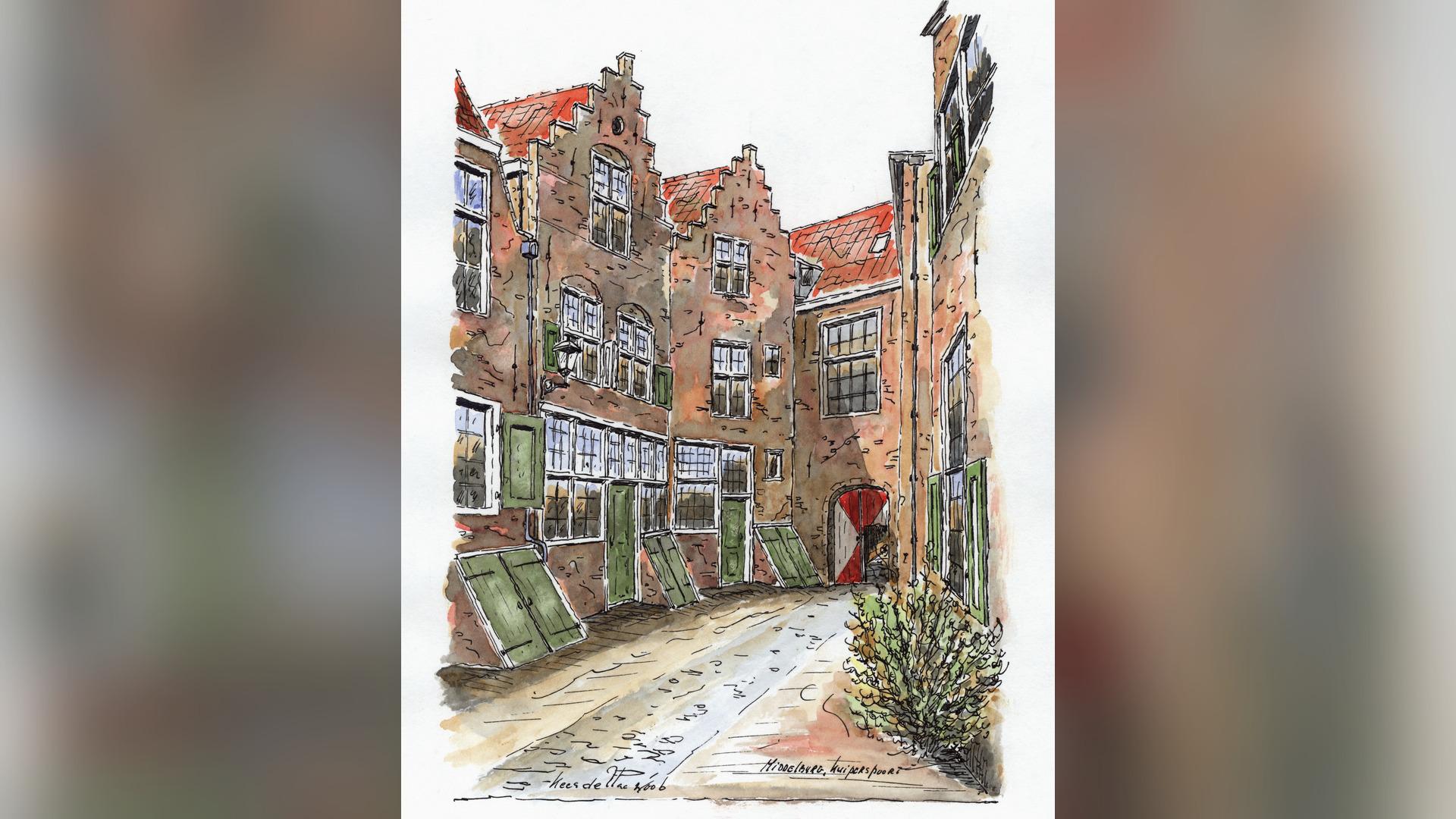
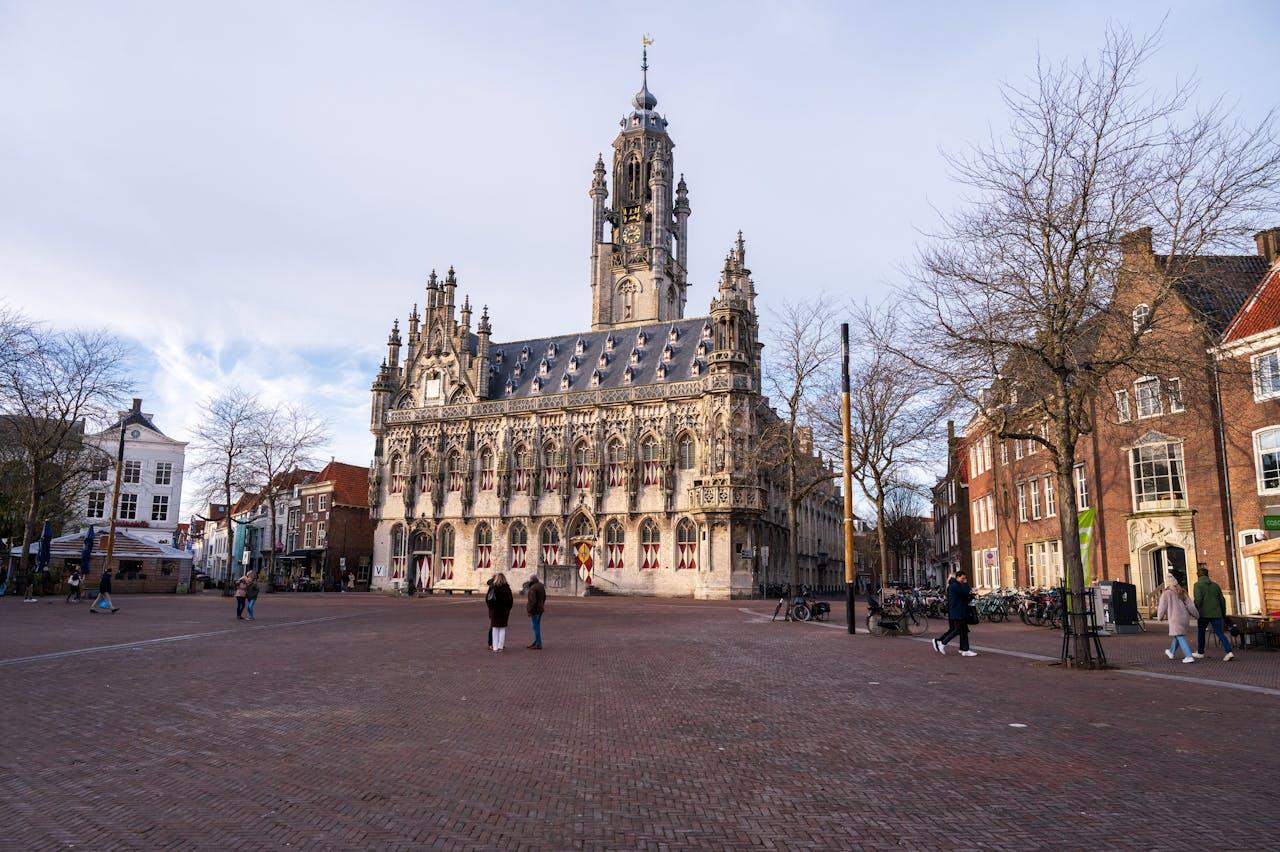
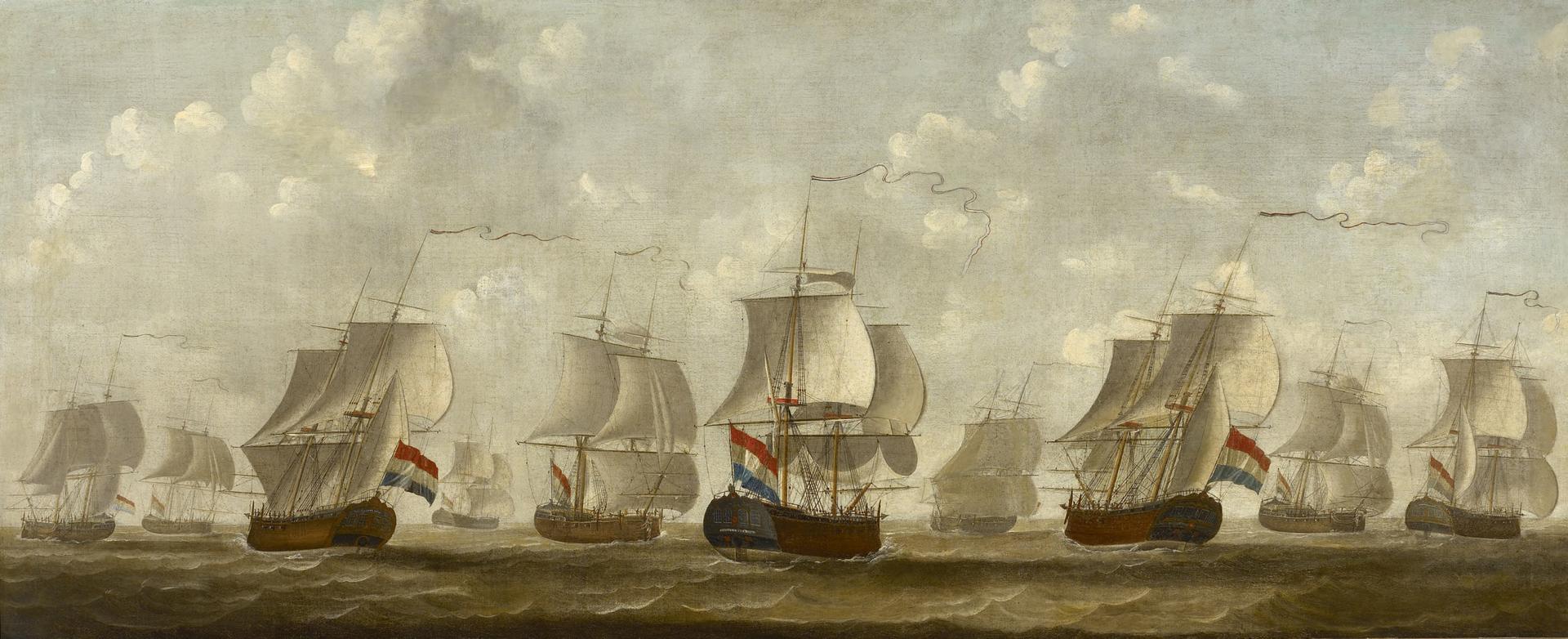
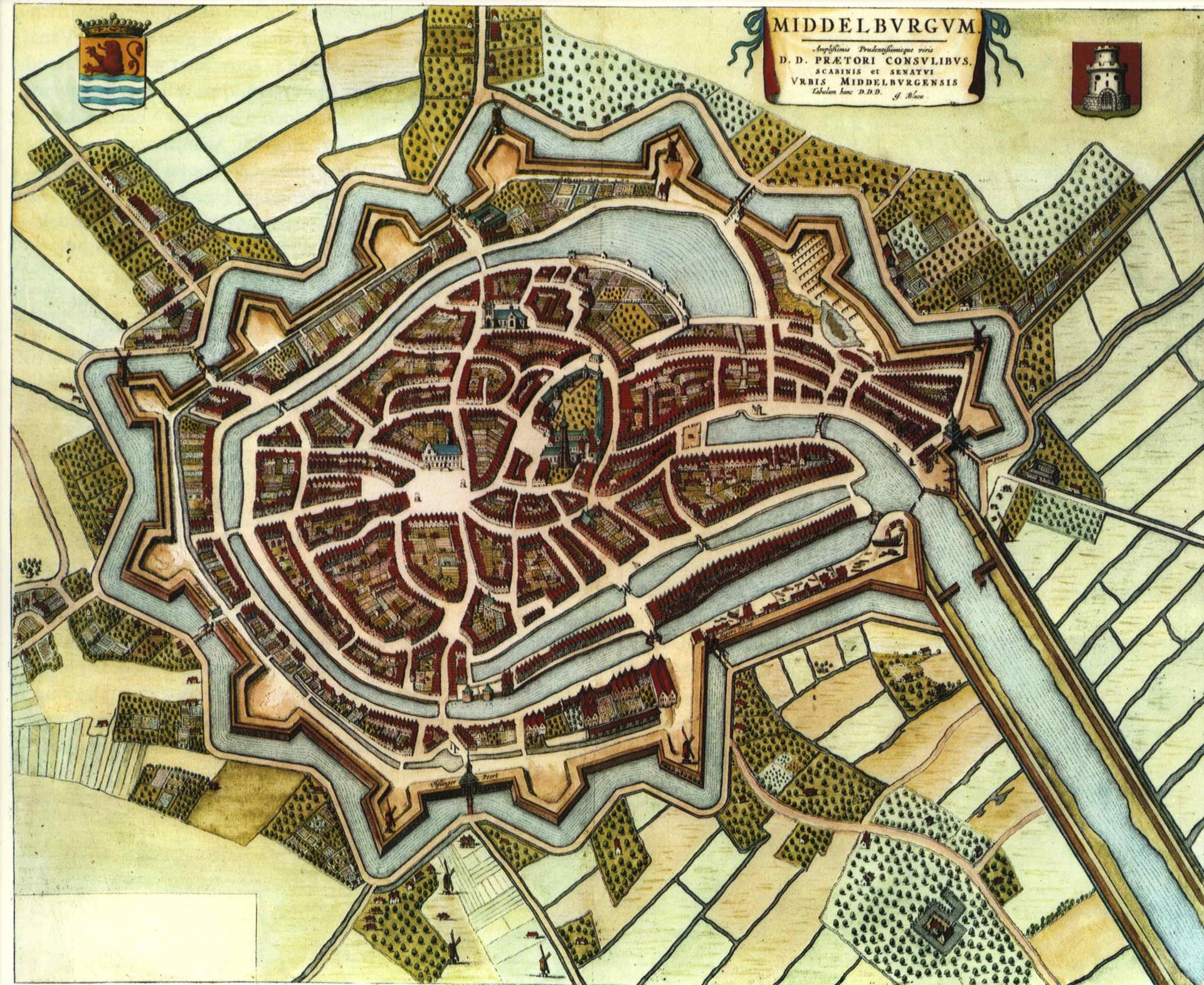
This square was once water. The shipyard of the , the MCC, stood right here. In 1740 the MCC took over the yard from the , and in 1813 the one from the , the Dutch East India Company. At the head of the site you can still find the eighteenth-century VOC building of the chief outfitting master, the man who ran the yard and lived there too. You can't see it from here, but you will at the next stop, on the Kinderdijk. Above the main entrance sits the company monogram, with the Z for the and the M for Middelburg.
This is where d'Eenigheid was built in 1760, twenty-three metres long and seven metres wide.
To turn a ship like that into a slave ship, it had to be rebuilt. We know the measurements of a sister ship from this yard, the Vigilantie: twenty-two metres long, seven metres wide, with an only a metre forty high. A person couldn't even stand up in there. During that rebuild they also fitted bulkheads, to stop the people in the hold from reaching the quarterdeck during an uprising and taking over the ship. So uprisings were expected, and planned for.
Almost everything about the voyage d'Eenigheid made in 1761 has survived. Captain Jan Menkenveld bought 326 people on the West African coast. Thirty-three died during the crossing. The rest were sold in , in what is now Guyana. The voyage earned the MCC 13,320 guilders.
On board sailed the surgeon David Henri Gallandat, whose letters we just mentioned back at the library. He kept a journal of who fell ill and who died. The first mate came from Middelburg and earned thirty-six guilders a month.
So we know the crew's names, their jobs and their wages. About the people in the hold almost nothing was recorded, except their number and their price.
Using the button below this story, you can follow the voyage of d'Eenigheid yourself.
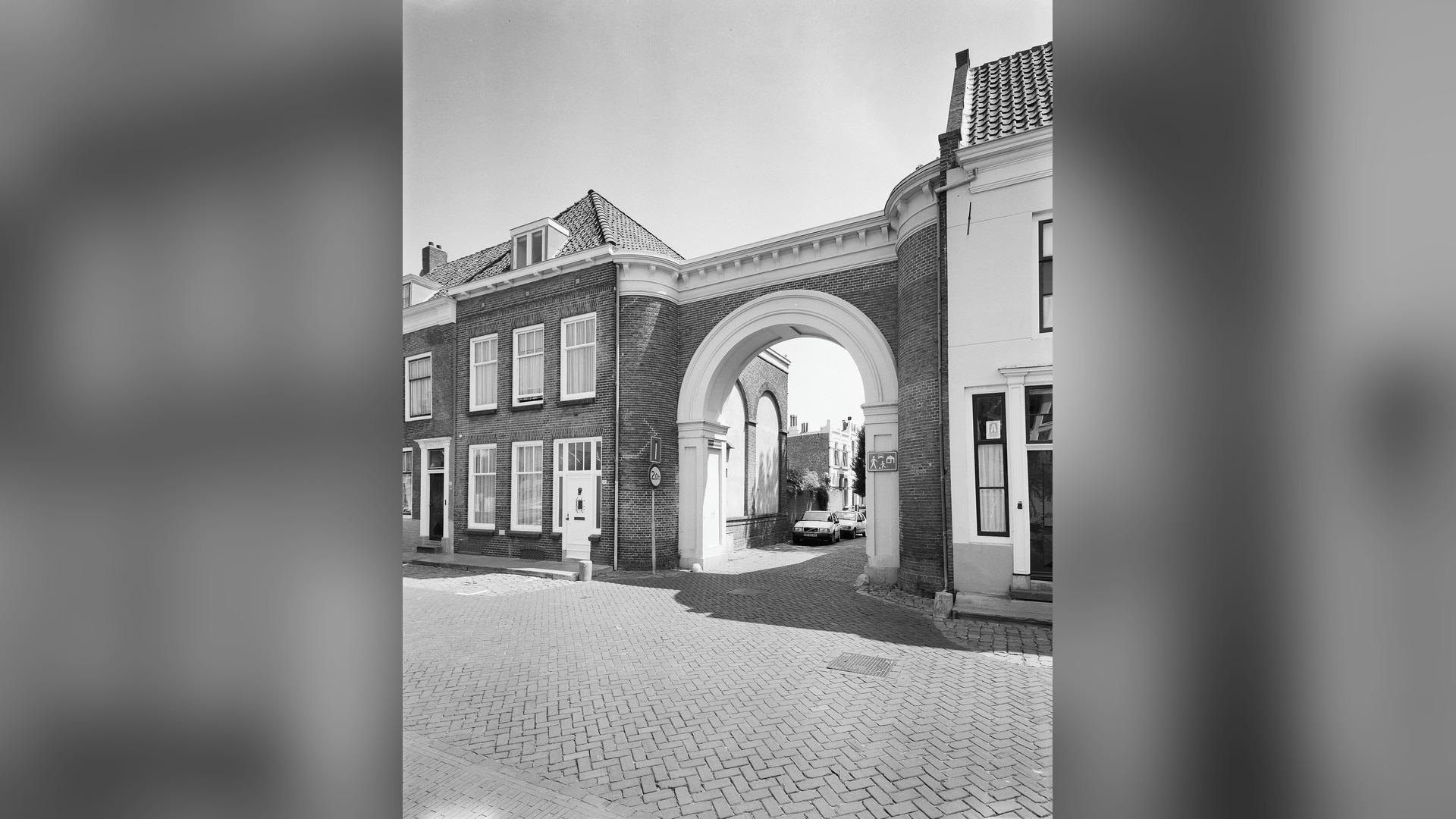
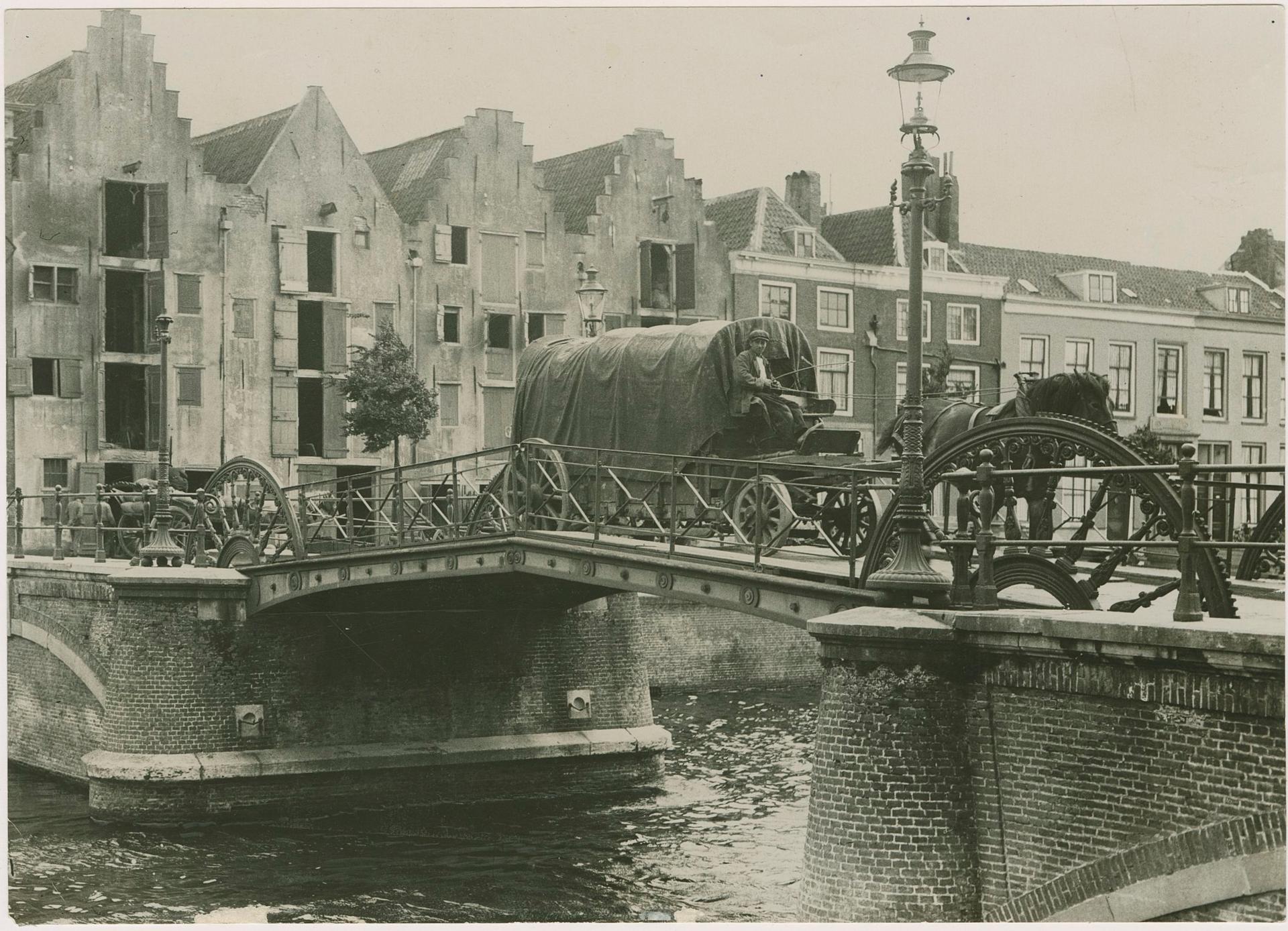
We cross the bridge and walk a hundred and thirty metres north, to the Kinderdijk. You can also keep going along the lower path and then take the little steps up to the Kinderdijk. Walk a short way to the left there, towards the warehouses.
Sources. Story: Based on the city walk Suiker, cacao en mensen by Viatours and de Drvkkery, supplemented with the archive of the Middelburgse Commercie Compagnie in the Zeeuws Archief, which has been on the UNESCO world heritage list since 2011. Photos: Gemeente Middelburg / Uit in Middelburg. Maisbaai: photo Gert Eggebeen. MCC ships: painting by Engel Hoogerheyden, collection Gemeente Middelburg. View from the Korendijk: Rijksdienst voor het Cultureel Erfgoed.