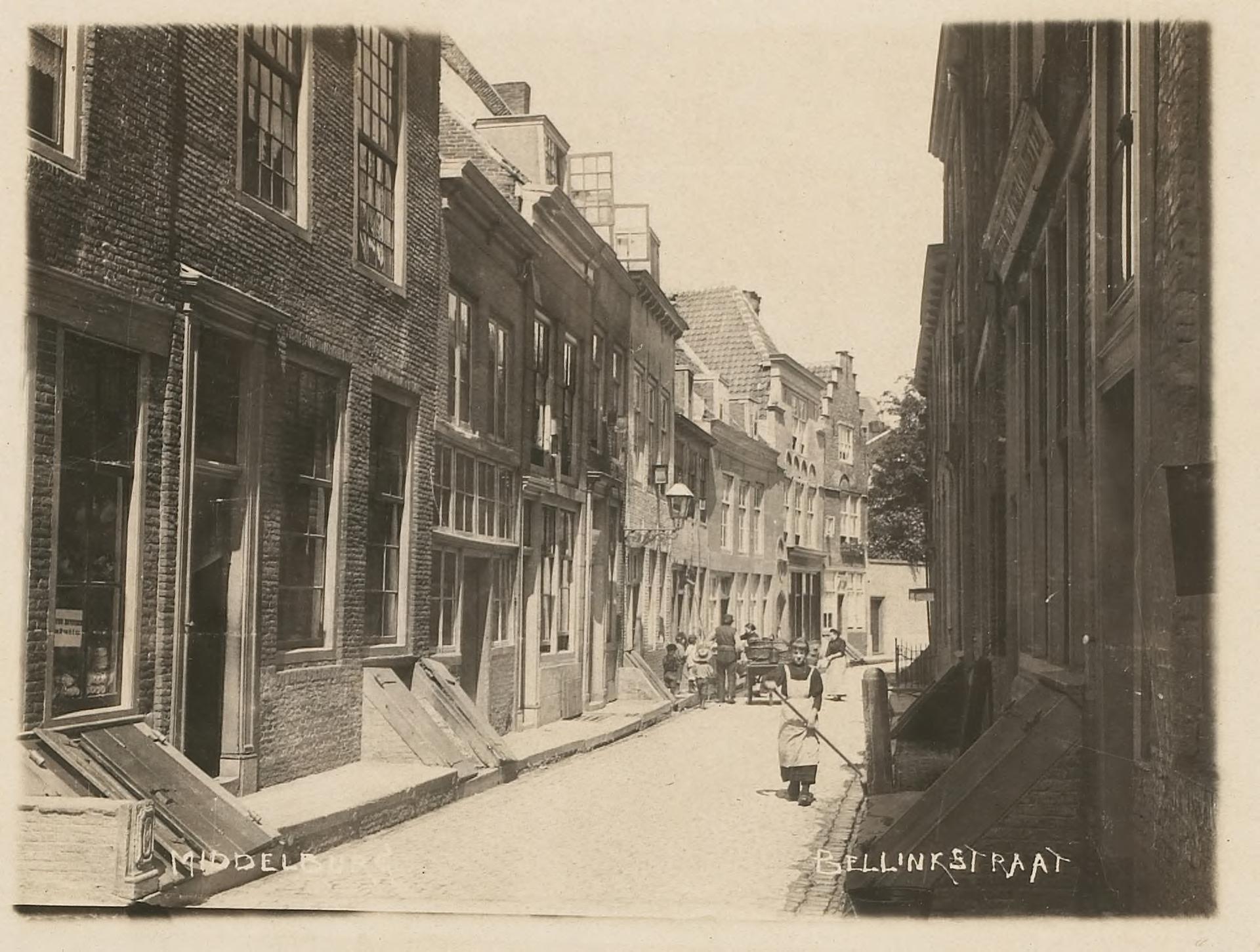
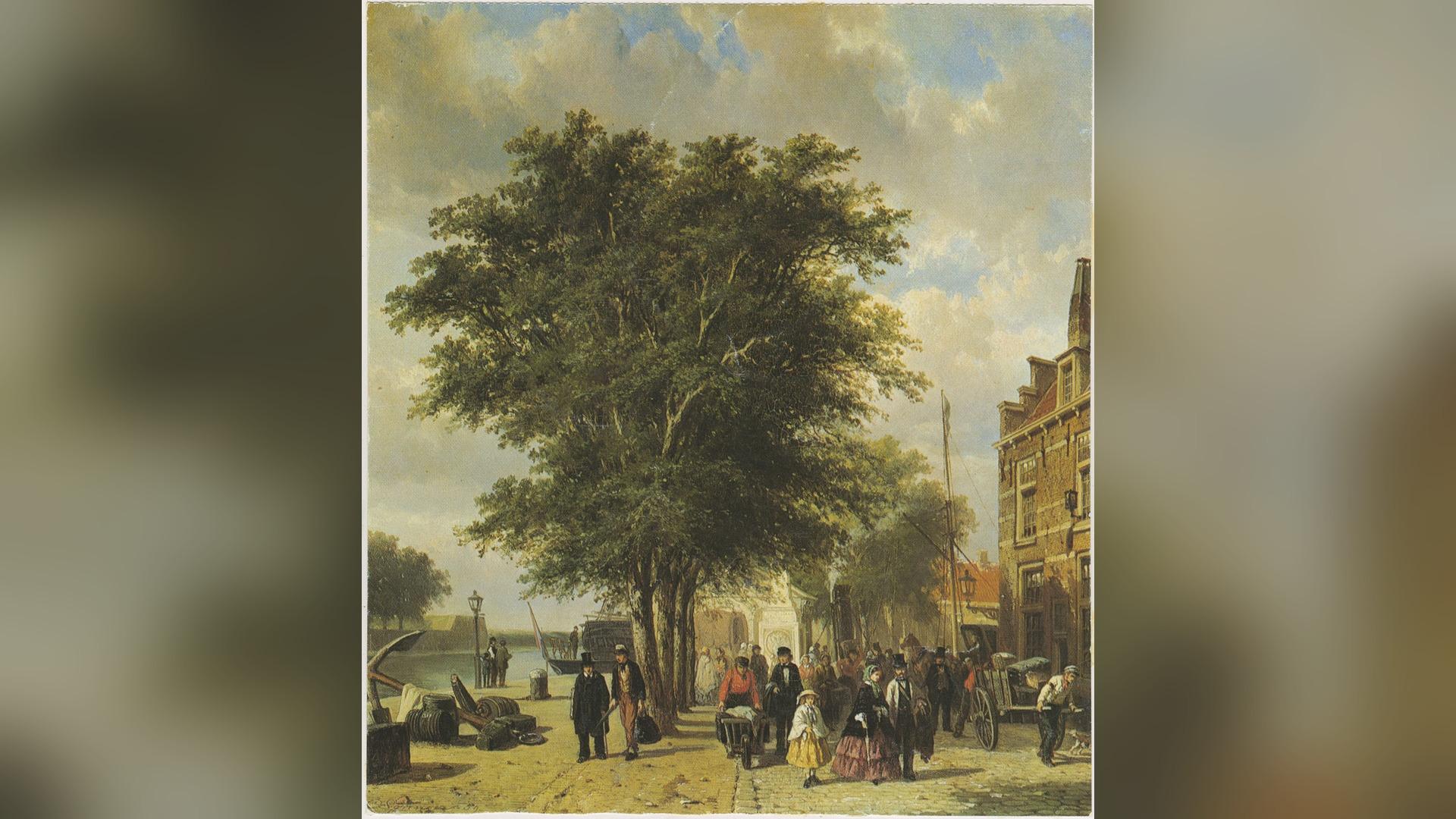
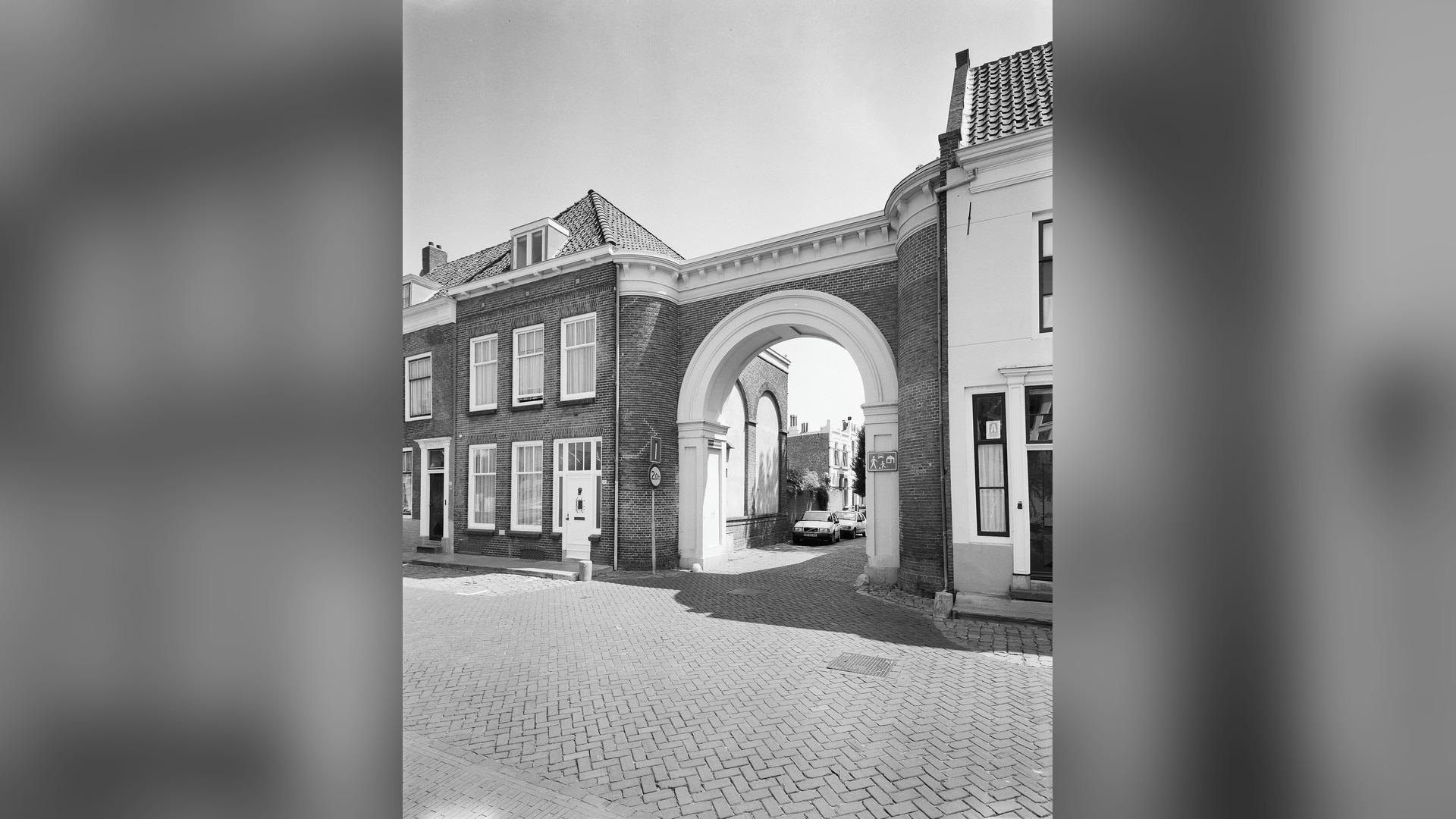
The building at number 34 was called Den Eenhoorn, and it's one of the few that still survives from the huge warehouse complex we were just talking about. Sugar, coffee and cacao were stored here, all shipped in from the plantations in the .
The facade carries the date 1722, but that means less than you'd think. In the eighteenth century it was common to give an older building a brand new front, and then you'd carve the year of that renovation onto it. So the structure behind it could easily be decades older.
It's something worth keeping in mind for the rest of our walk. Middelburg is full of dates on its facades, and they tell you when someone had the money to renovate, not when the house first went up. In plenty of places the city is older than it lets on.
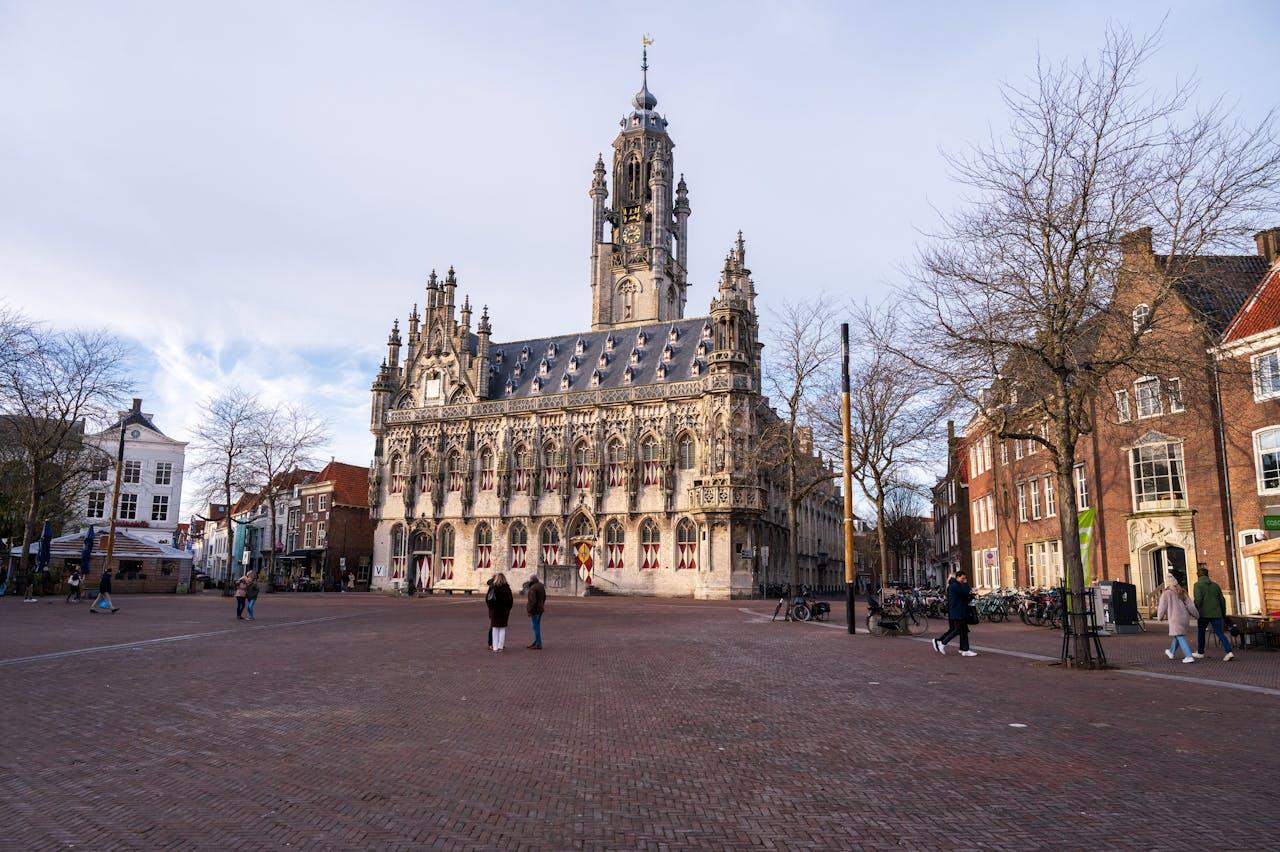
We follow the water further to the northeast, about two hundred and forty metres, until we reach an open square at the end of the harbour.
Sources. Story: Based on the city walk Suiker, cacao en mensen by Viatours and de Drvkkery. Photos: Gemeente Middelburg / Uit in Middelburg