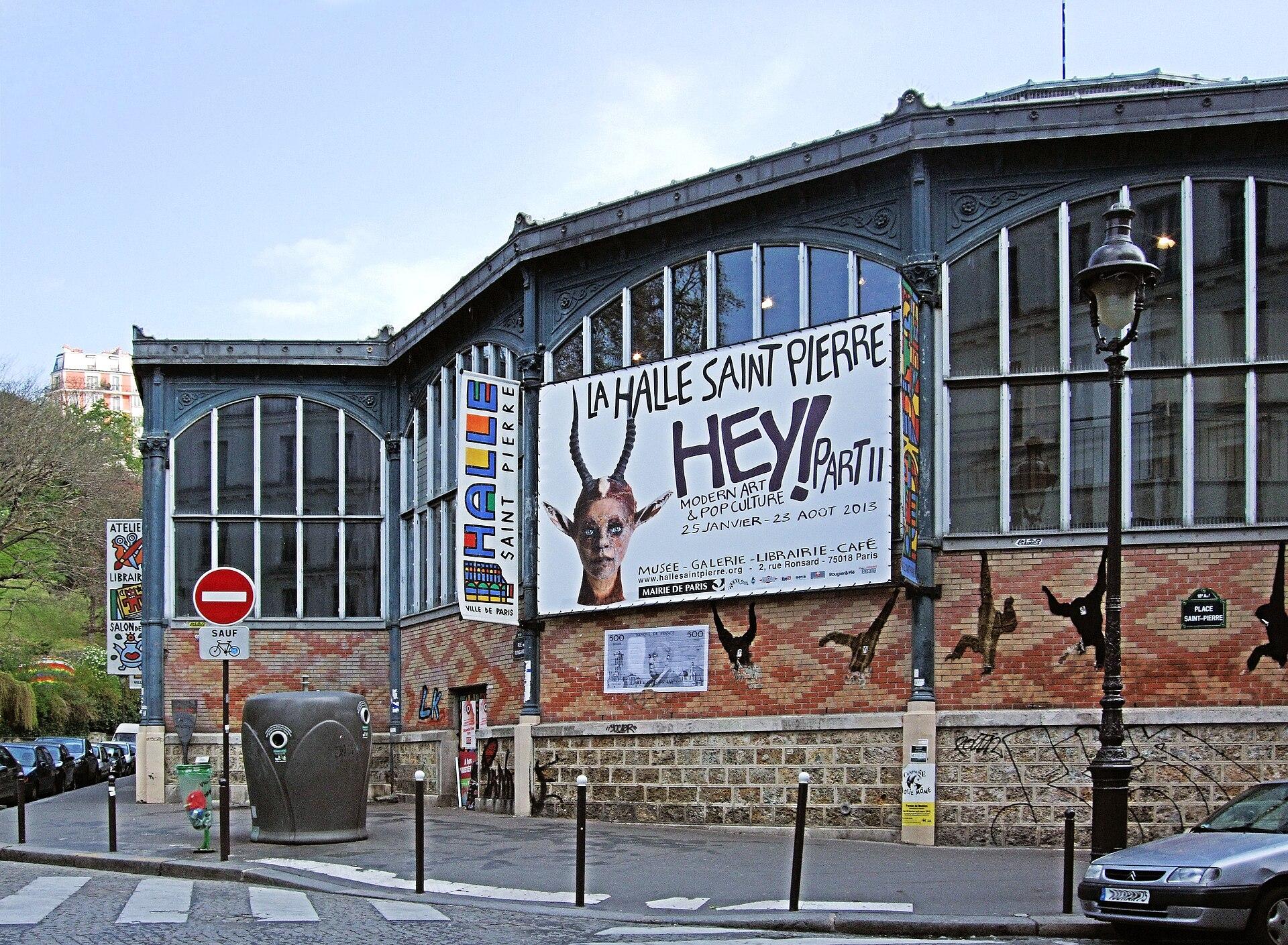
At the bottom of the steps stands an iron market hall from 1868, built in the same style as the old pavilions of , with cast-iron columns and plenty of glass. This is where the neighbourhood came for its vegetables when had only just been joined to Paris.
These days the walls hold art made by people who never once set foot inside an academy. The Halle Saint-Pierre is the Paris home of , a term the painter coined in 1945 for work by prisoners, patients and loners, made entirely outside the art world. He was convinced that something was happening there which the trained painters had lost, and he collected it with a zeal that baffled his colleagues.
The streets around here live on fabric. The Marché Saint-Pierre has been selling cloth by the metre for more than a century, and anyone in Paris who sews ends up here, four floors stacked with rolls.
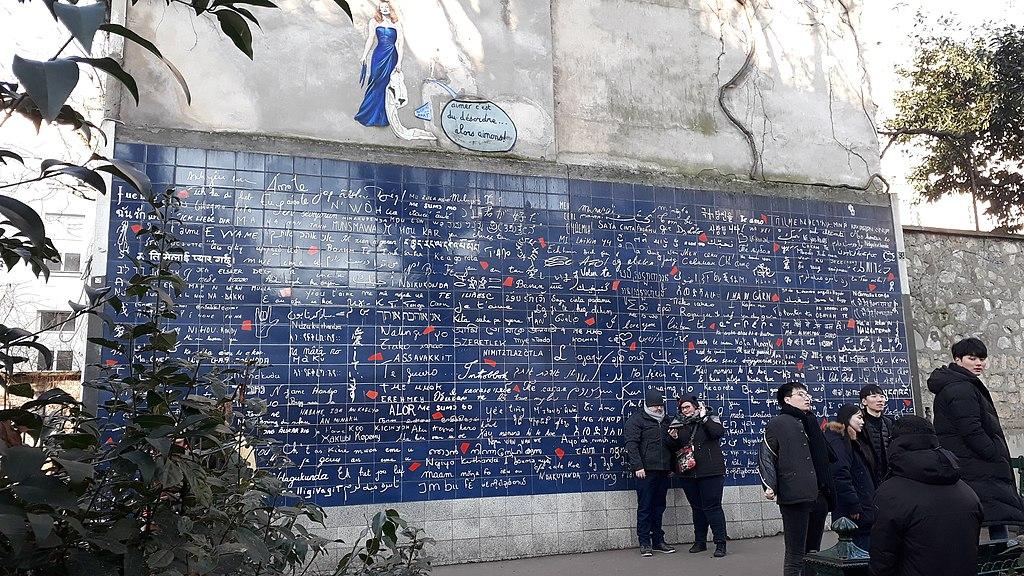
From the hall we head west, the hill at our backs, and after a few streets we reach the Place des Abbesses, where a blue wall is waiting for us in a small park.
Sources. Story: Halle Saint-Pierre, musée et galerie; Ville de Paris; Collection de l'Art Brut, Jean Dubuffet entry Photos: Jim Linwood, Halle Saint Pierre in Montmartre (2013), CC BY 2.0, via Wikimedia Commons