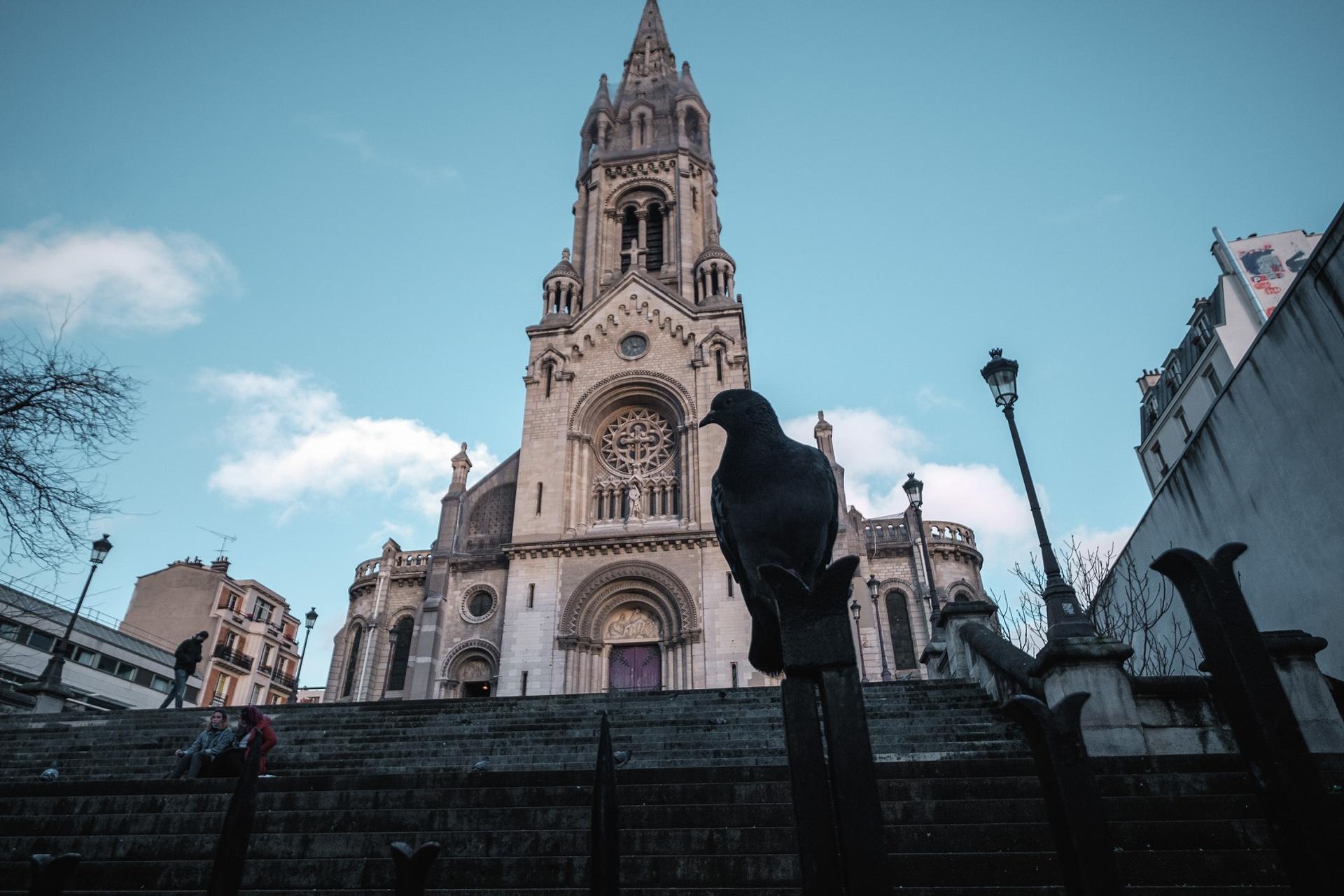
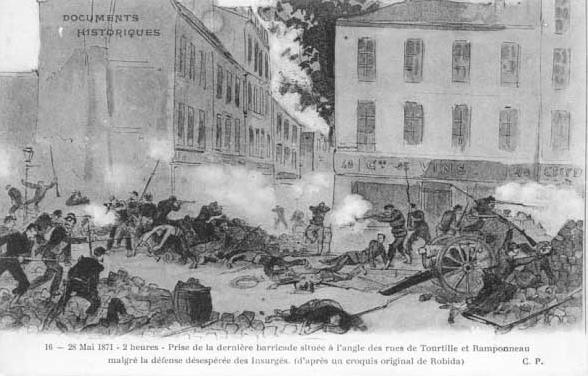
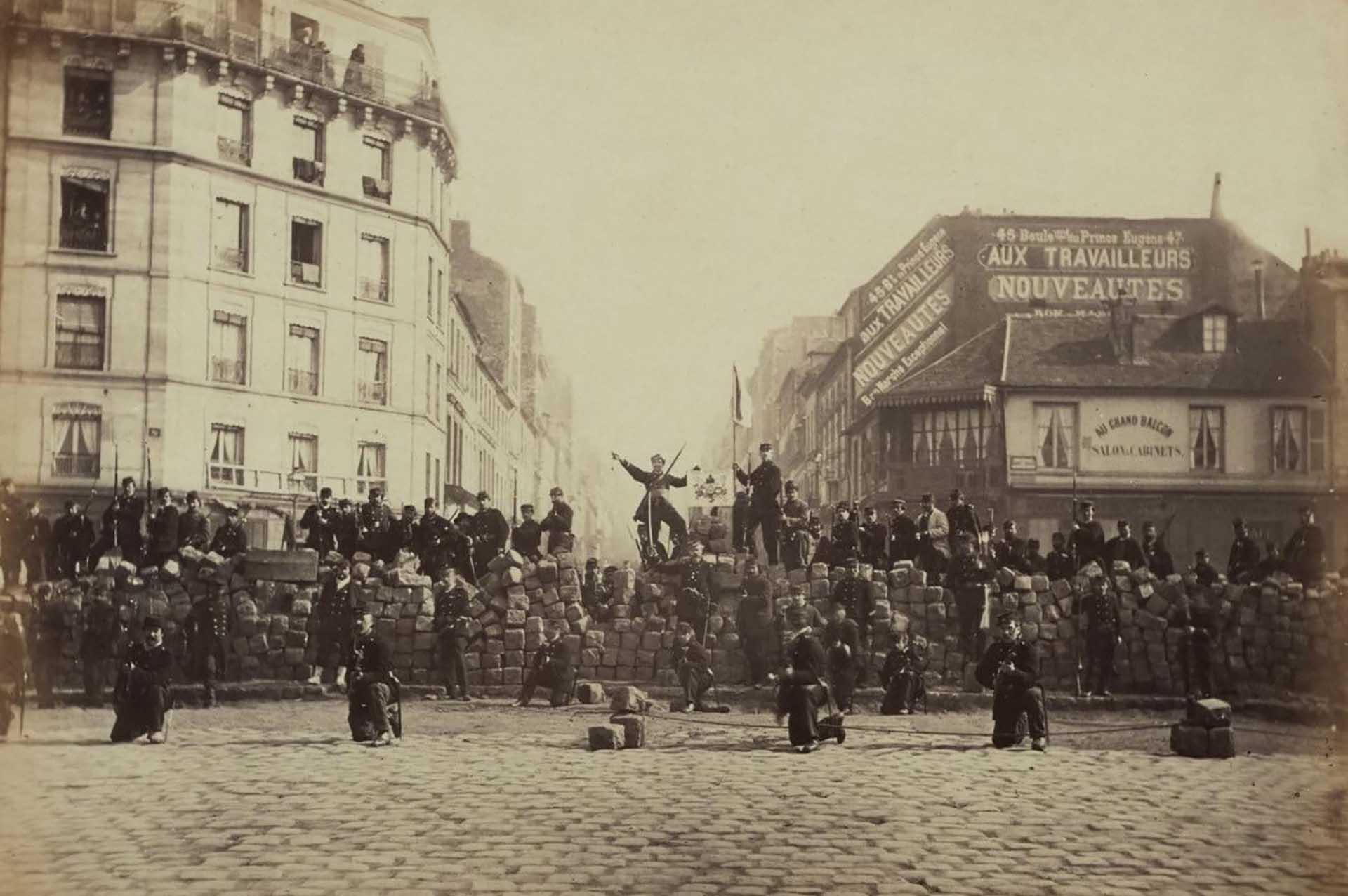
It was on this slope that the of May 1871 came to an end. The government army pushed through the city from the west, street by street, and anyone who fell back ended up here, on the last high ground still in the hands of the , the revolutionary government that had ruled Paris for just over two months.
A few hundred metres further on, along the Rue Ramponeau, stood what tradition remembers as the very last barricade. As its defenders fell or slipped away one by one, a single man stayed behind and kept firing alone, and when he too lowered his rifle, it was over. His name was never recorded. The story comes from the writer , who fought there himself and wrote it down later.
What happened that week is hard to overstate. Estimates of the dead range from six thousand to twenty thousand, almost all of them on the side of the Commune, and many died after they had surrendered. Summary executions took place in parks, in barracks, and out in the street.
As we make our way down here, we follow the route that thousands of prisoners walked on foot to .
We follow the slope down until we reach the Rue de Bagnolet.
Sources. Story: Prosper-Olivier Lissagaray, Histoire de la Commune de 1871; Archives de Paris; Musée Carnavalet Photos: Albert Robida, the last barricade of the Commune, postcard from around 1900, via Wikimedia Commons (public domain)