In 1253, , the confessor of , founded a home here for sixteen poor students of theology. He wanted them to be able to study without begging, so he built them a dormitory, a dining hall and a library. His name stuck to everything that happened on this spot afterwards.
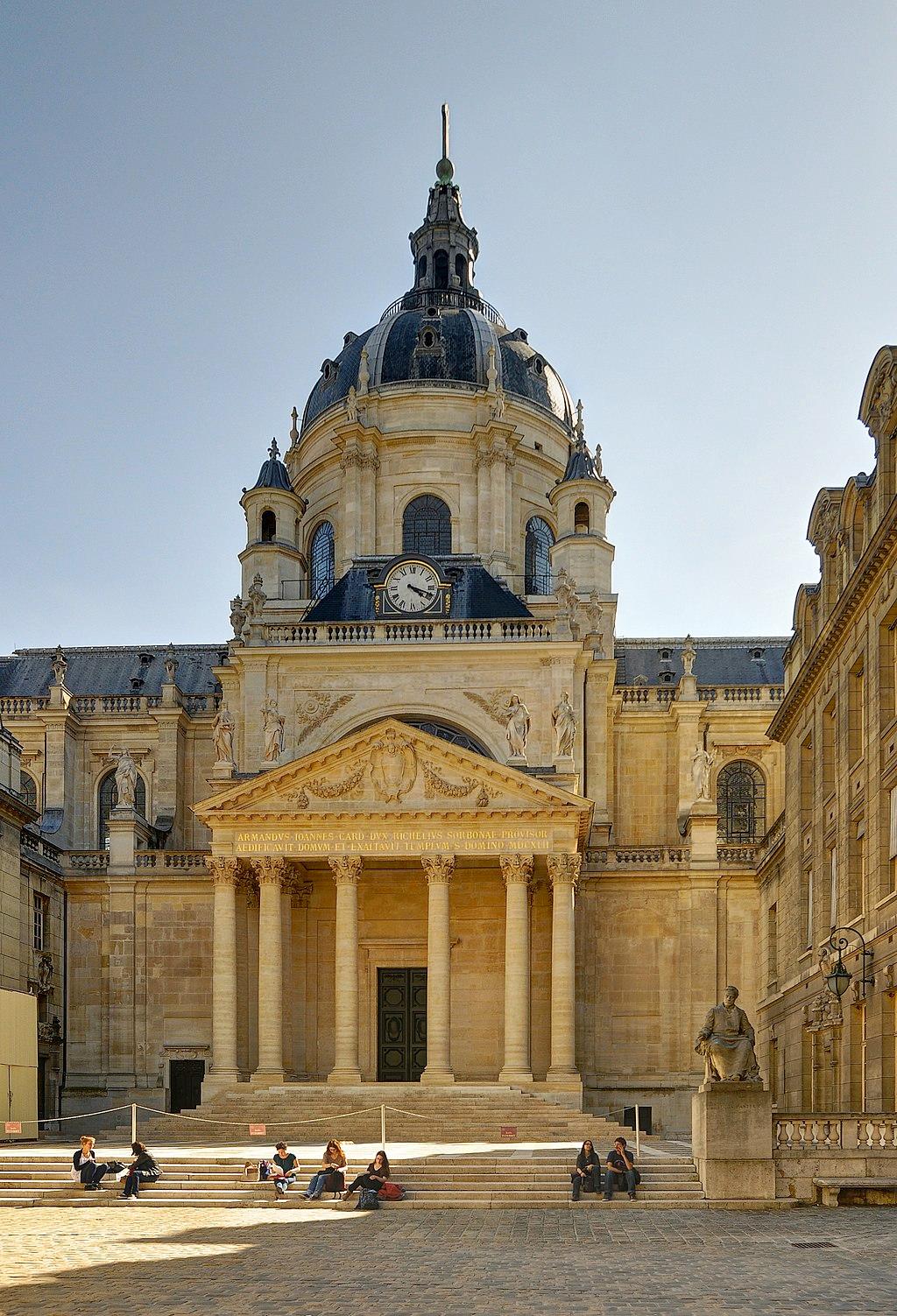
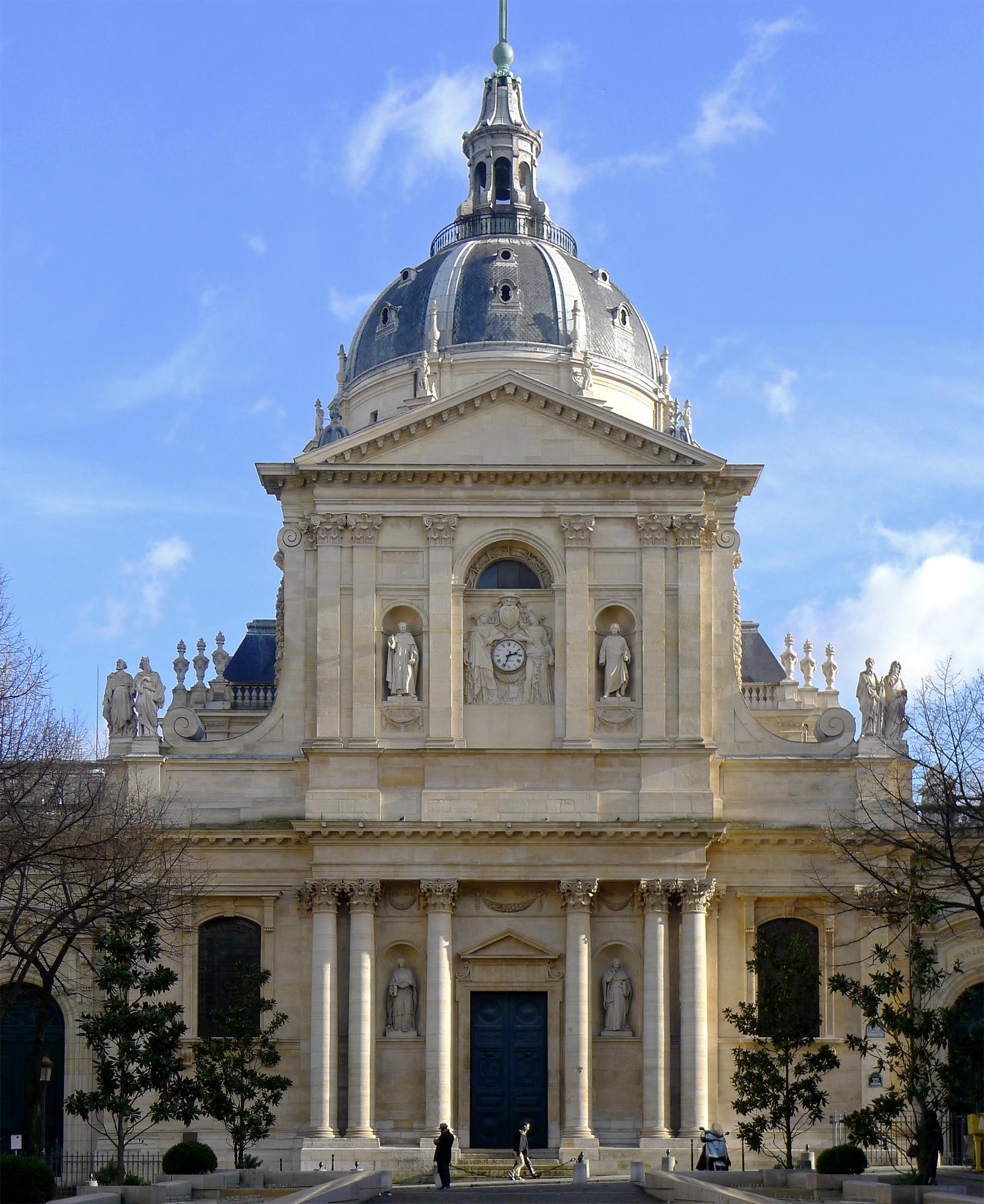
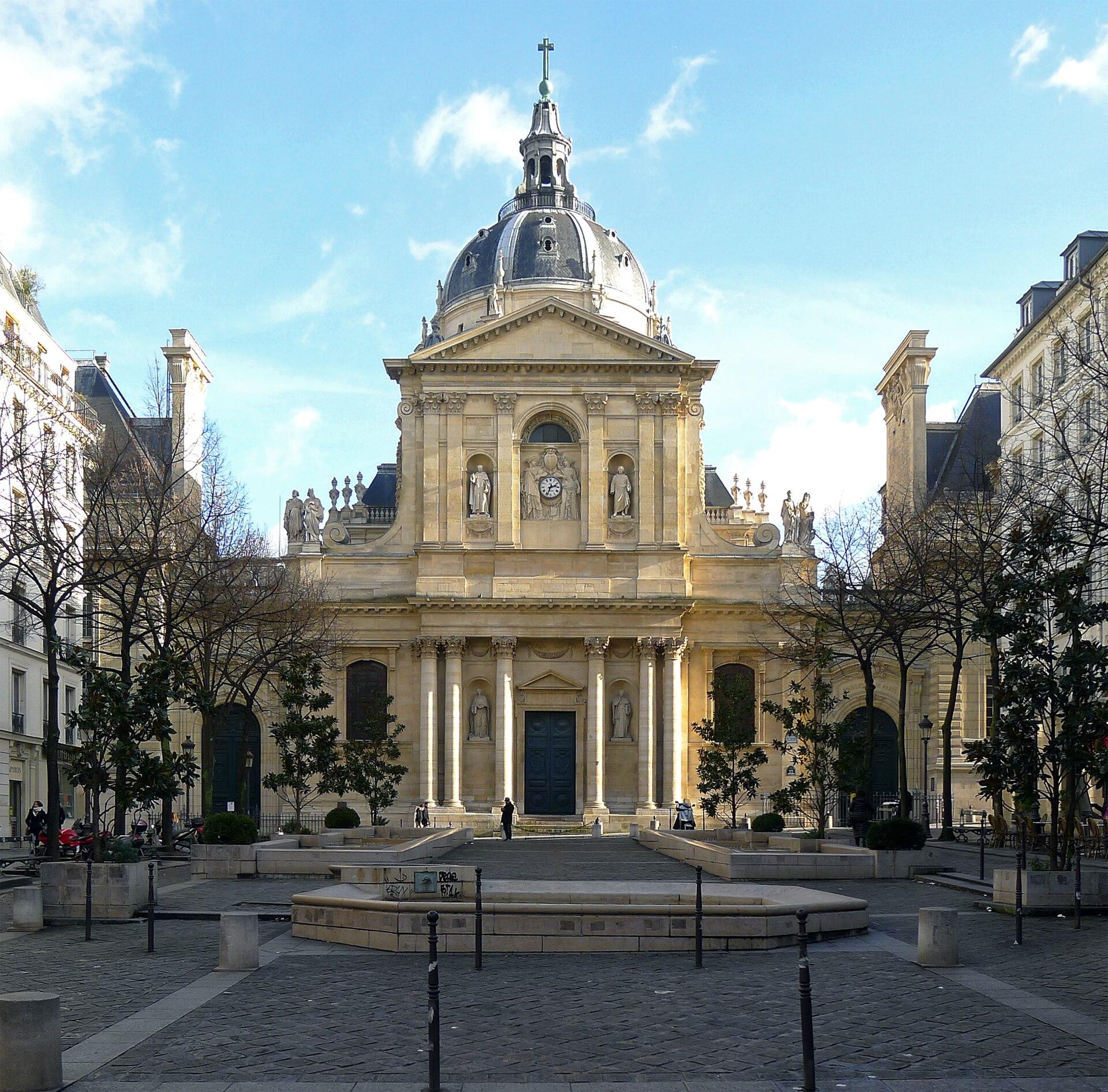
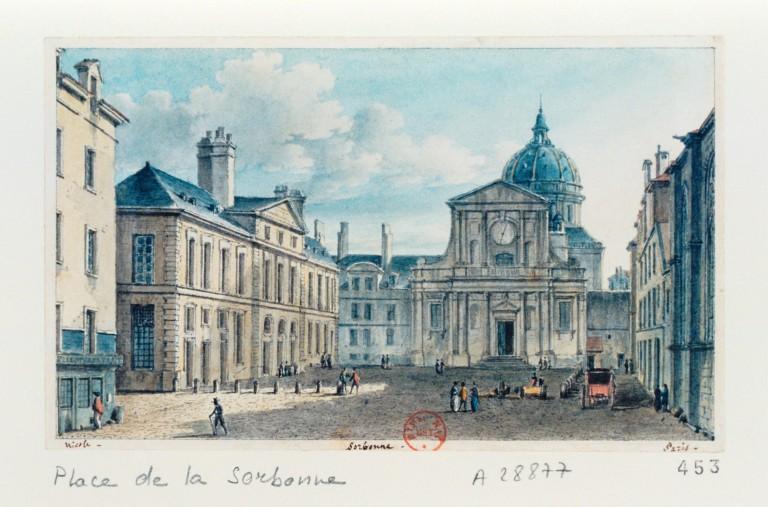
What you see now is mostly . The cardinal was rector and had the complex rebuilt in the seventeenth century, with the domed church as its centrepiece, where he also had himself buried. During , looters broke open his tomb, and someone made off with his mummified head. It surfaced a century and a half later with a collector in Brittany and was put back in 1866, with looking on.
The university itself was shut down in 1793, because the Revolution had no time for an institution that trained the church. Napoleon brought it back, and the buildings around it came at the end of the nineteenth century, when the university was expanded into the block that now covers three streets.
The domed church still stands as Richelieu wanted it, though it's rarely open, so what you mostly see of the Sorbonne is the facade and the courtyard whenever it's free to enter.
On the corner of the Rue des Écoles, wedged between two streets, stands an old building with little turrets that's older than everything around it.
Sources. Story: Sorbonne Université, histoire de l'université; Ville de Paris, patrimoine; Musée Carnavalet, Histoire de Paris Photos: Rainer Wolfsberger, chapelle de la Sorbonne (CC BY-SA), via Wikimedia Commons