At the end of the fifteenth century the built their Parisian town house here, with the little stairways and turrets you can still spot from the street. The plot they chose came with a history, because underneath lay the baths of , the Roman city that became Paris, built around the year 200 and fed by an aqueduct that carried water from twenty kilometres away.
The , the hall for the cold bath, still stands with its vault fourteen metres high, and it's one of the best preserved Roman spaces north of the Alps. Two buildings that have nothing to do with each other now make up a single museum.
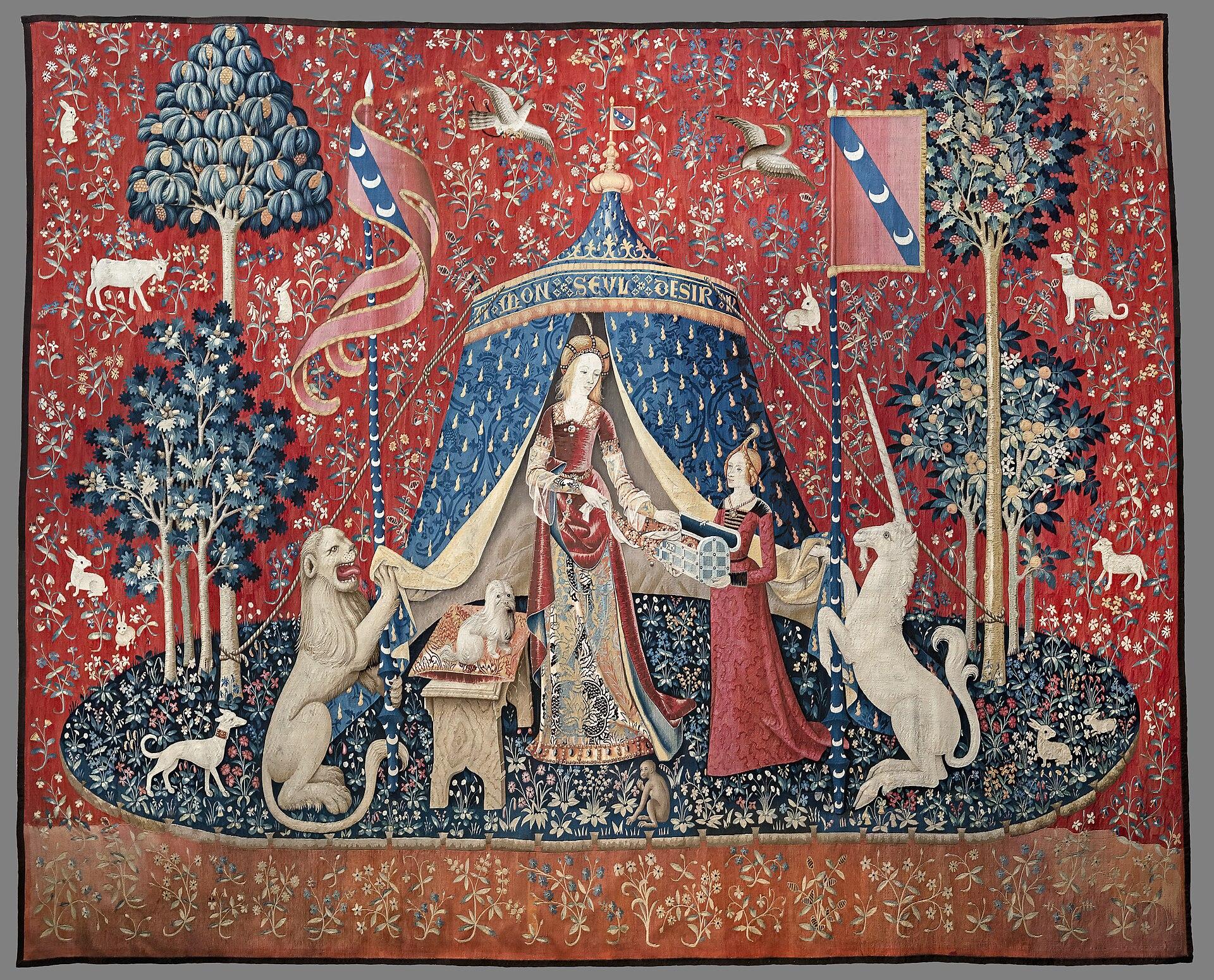
Inside hang the six tapestries of the , made around 1500 and rediscovered in a damp castle in the Creuse, where they hung against the wall slowly rotting until the writer and the heritage inspector raised the alarm. Five of them deal with the senses, while the sixth carries an inscription that people still argue about.
Here too lie the twenty-one beheaded kings from the Notre-Dame, dug up under a bank in 1977. Their story belongs to our walk across the Île de la Cité.
From the museum we cross the boulevard towards the river, heading for the green facade across from the cathedral.
Sources. Story: Musée de Cluny, musée national du Moyen Âge; Ville de Paris, patrimoine Photos: La Dame à la licorne, Mon seul désir, around 1500, collection Musée de Cluny (public domain), via Wikimedia Commons