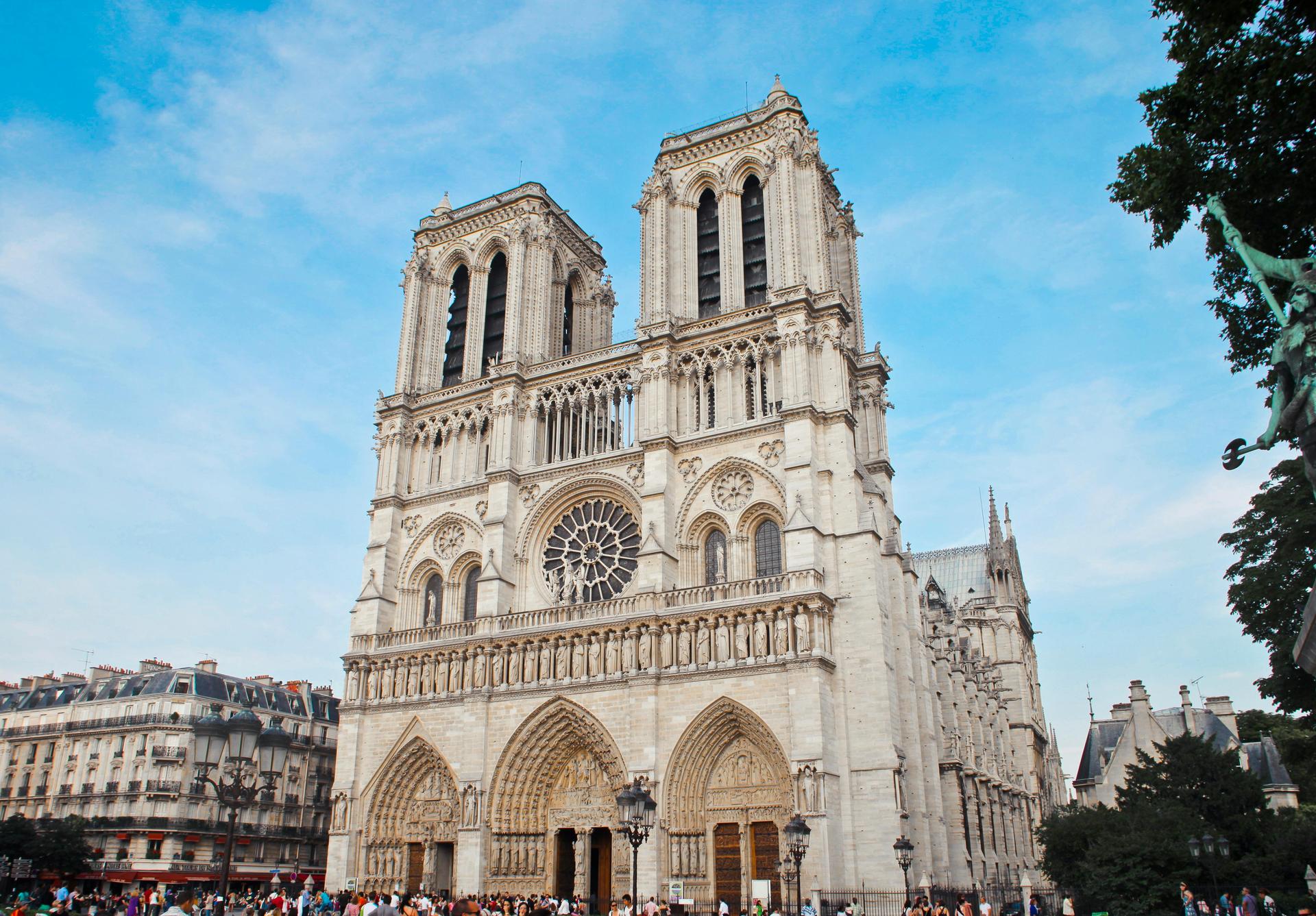
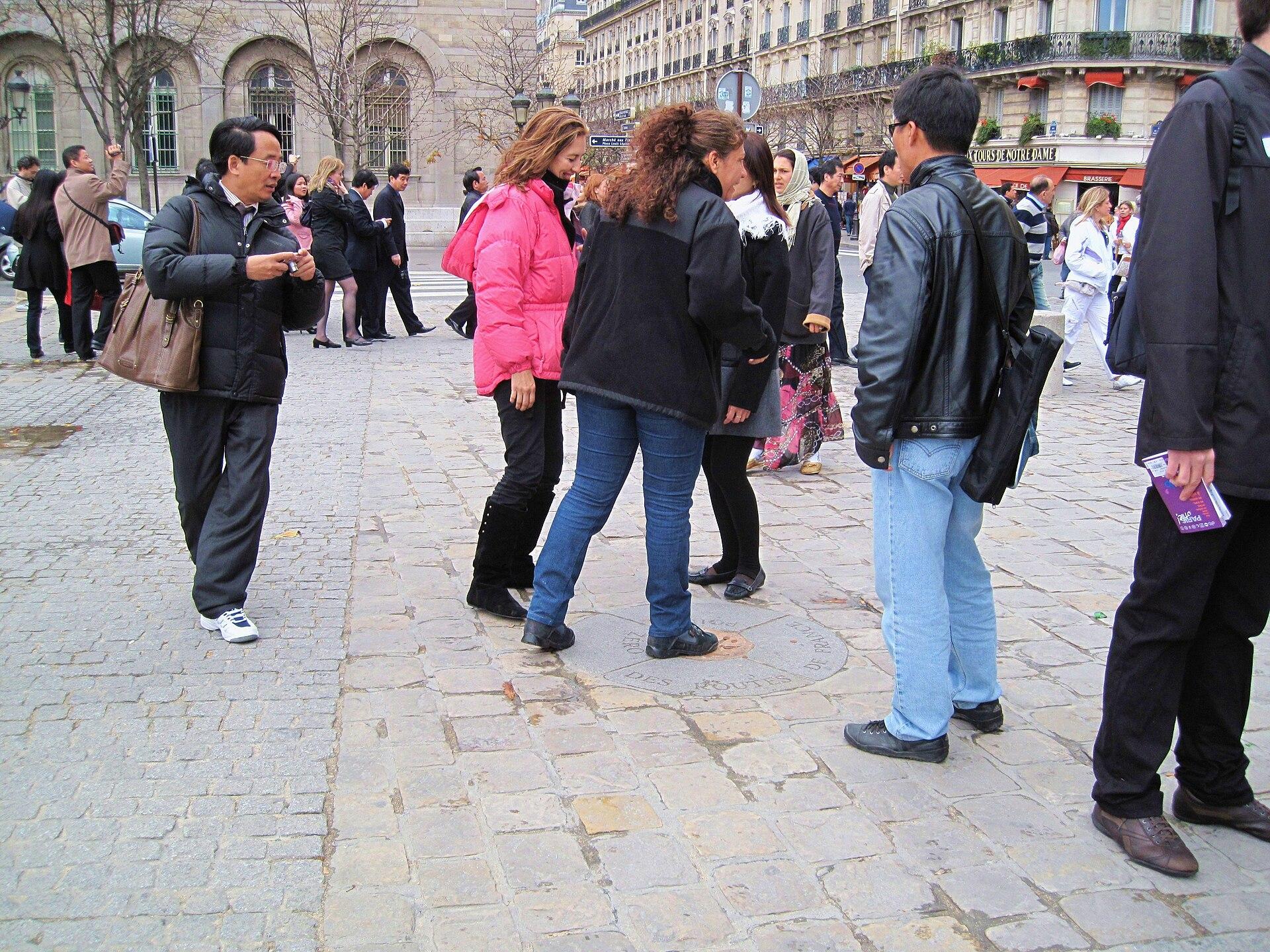
Set into the grey stone in front of the cathedral is a bronze plate with a compass rose, and every distance in France is measured from exactly this point. When a sign in Marseille tells you Paris lies just over seven hundred kilometres away, that figure was counted to this one metre of stone. The plate has been here since 1924.
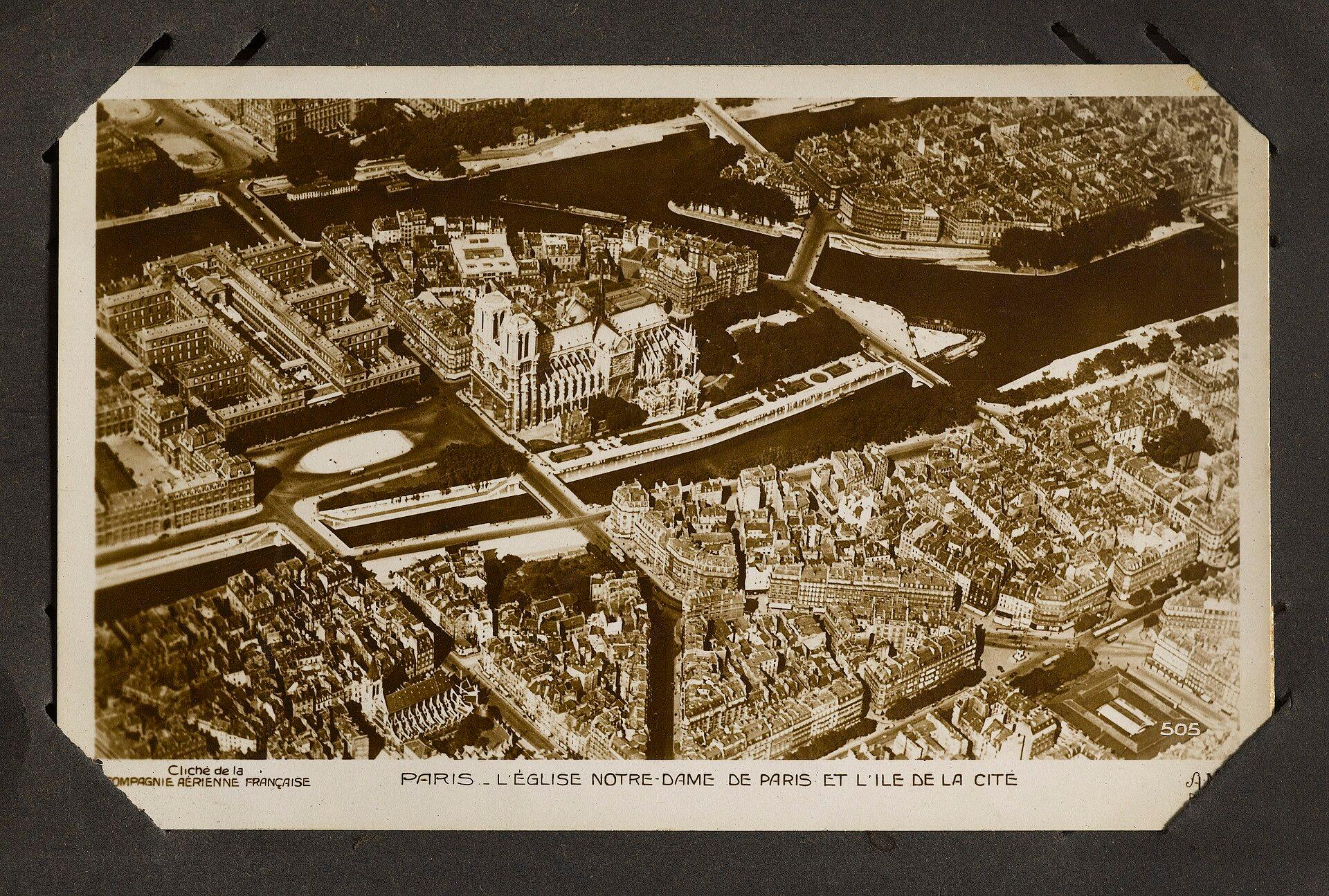
The square itself is a nineteenth-century invention. Where you now have open space, there was until the 1860s a tangle of narrow streets, little churches and houses that pressed right up against the facade, and , the man who redrew so much of Paris, made the square roughly six times bigger. Whatever survived of that vanished city went underground, where the archaeological crypt has shown it off since 1980.
High above the doorways stands a row of kings, and those are copies. The original statues were pulled from their pedestals and beheaded during , and everyone assumed they were gone for good. In 1977 construction workers digging beneath a bank in the ninth arrondissement hit twenty-one stone heads, carefully buried by someone who had clearly wanted to save them. They rest now in the , with traces of the original paint still on their faces.
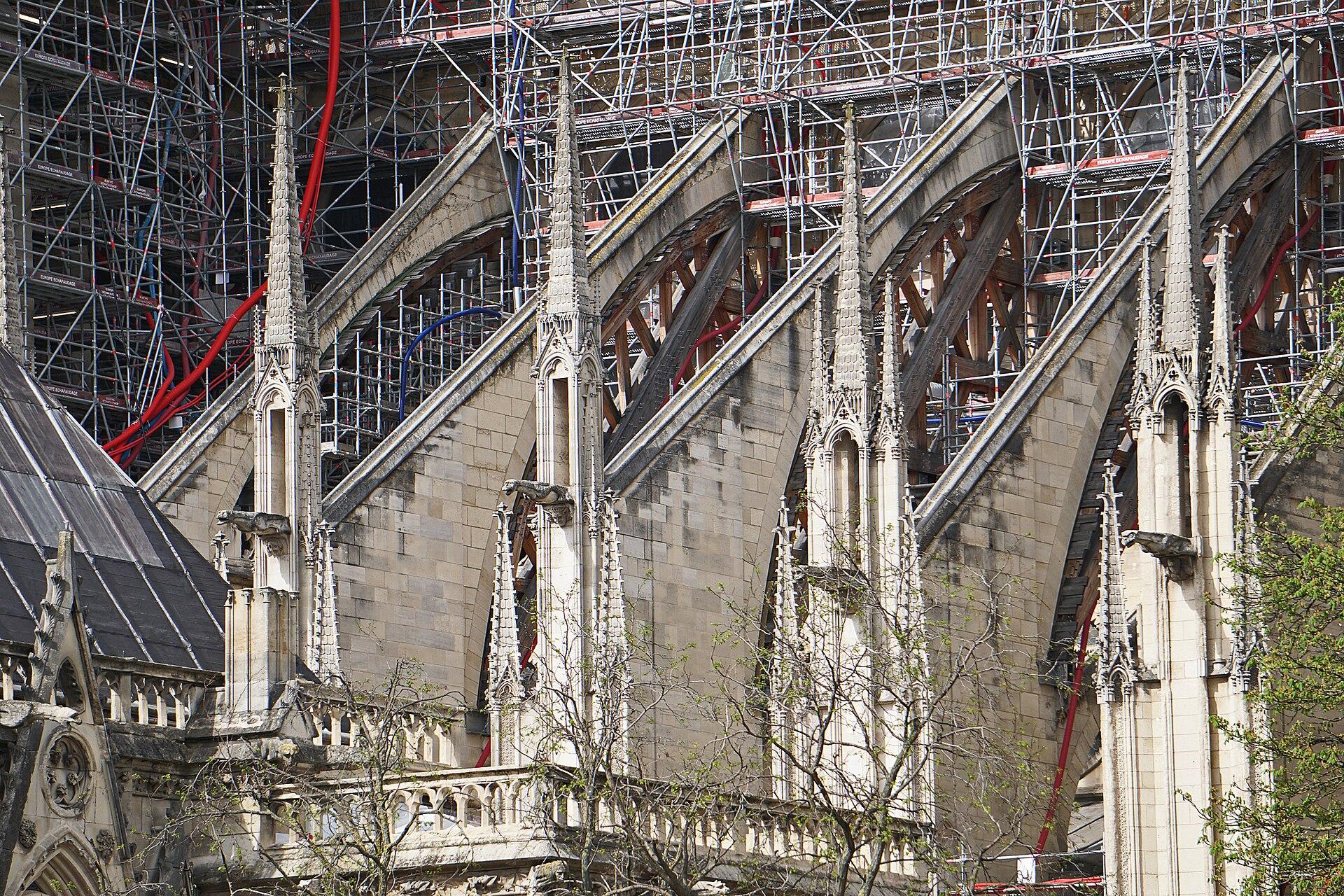
We follow the railing along the south side of the cathedral, until the building steps aside and you see the .
Sources. Story: Musée de Cluny, musée national du Moyen Âge; Crypte archéologique de l'île de la Cité (Paris Musées); Ville de Paris Photos: Jean-Pierre Bazard, Le Point Zéro des routes de France, 2009 (CC BY-SA 3.0), via Wikimedia Commons