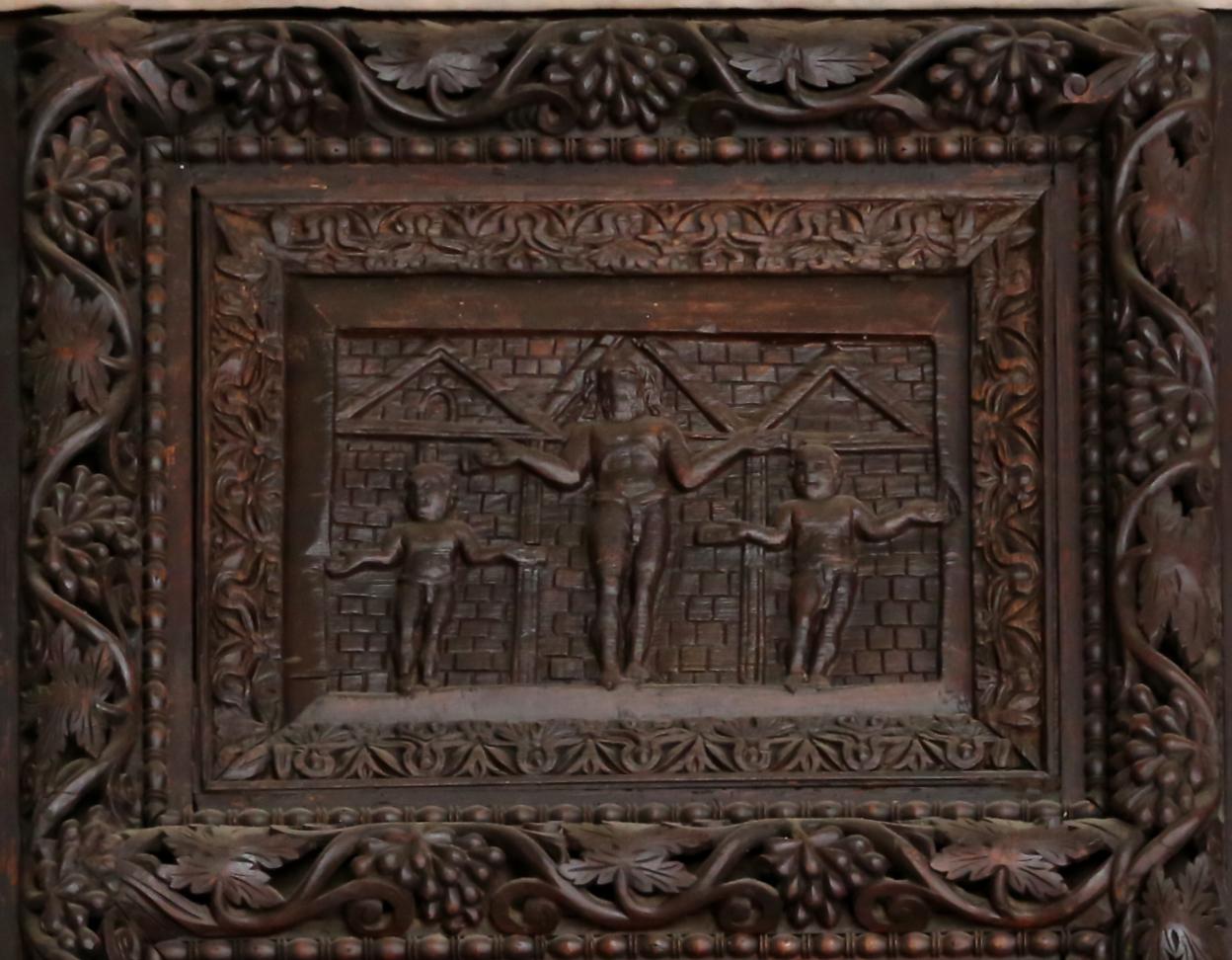
To the left of the entrance, in the porch, hangs a cypress-wood door that has been there since the building went up, with eighteen panels carved with scenes from the Bible.
The one that matters sits in the top left corner: three figures with their arms spread against a brick wall, and it's one of the oldest depictions of the crucifixion that exists. It dates from the 430s, a time when Christians still barely showed that scene at all, and the crosses themselves are almost entirely absent. The wood is nearly sixteen hundred years old and the only thing protecting it is a sheet of glass.
Inside, the nave rests on twenty-four ancient columns taken from a temple that once stood here, and the light falls through windows of translucent alabaster rather than glass, giving the whole space a warm colour that shifts as the day goes on.
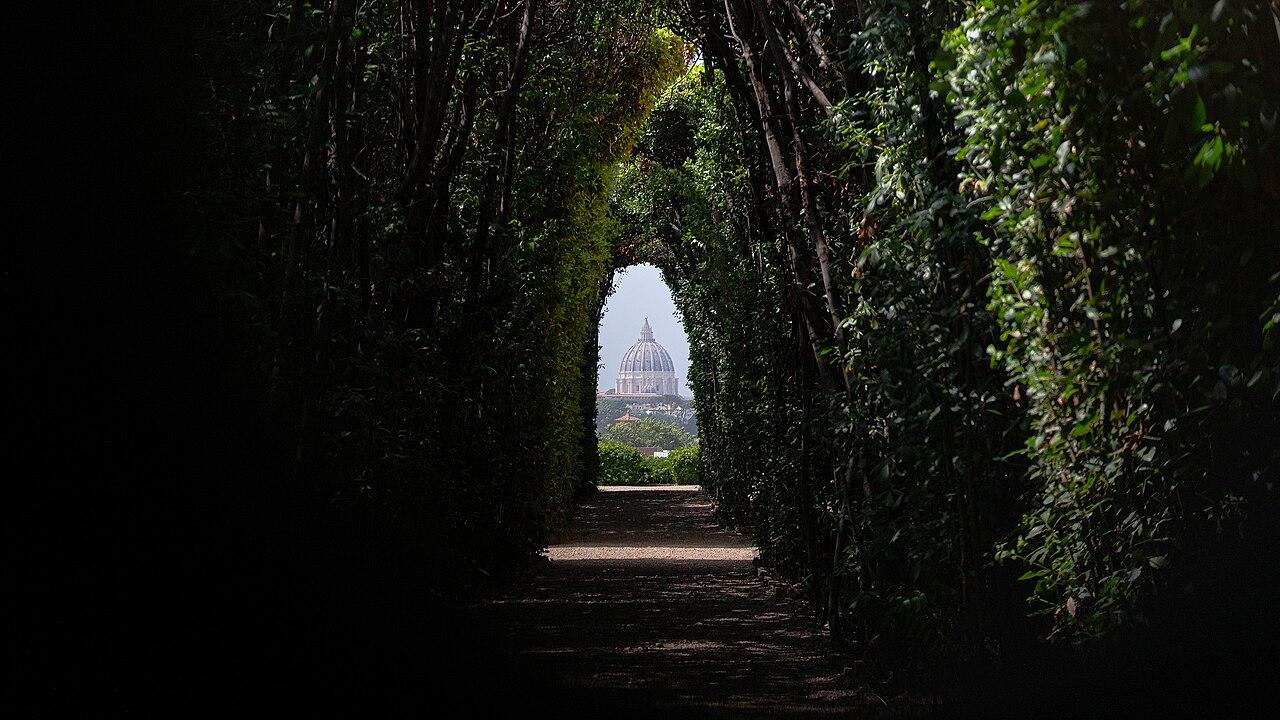
In the wall of the porch, across from the door, there's a small hole with glass over it, and behind it stands an orange tree in the cloister garden that the an friars who run the church say goes back to the tree Dominic planted here.
We follow Via di Santa Sabina further south until we reach a small square with obelisks and a decorated wall.
Sources. Story: Basilica di Santa Sabina, Ordine dei Predicatori; Treccani (porta lignea di Santa Sabina) Photos: Photo: Sailko (Wikimedia Commons, CC BY 3.0)