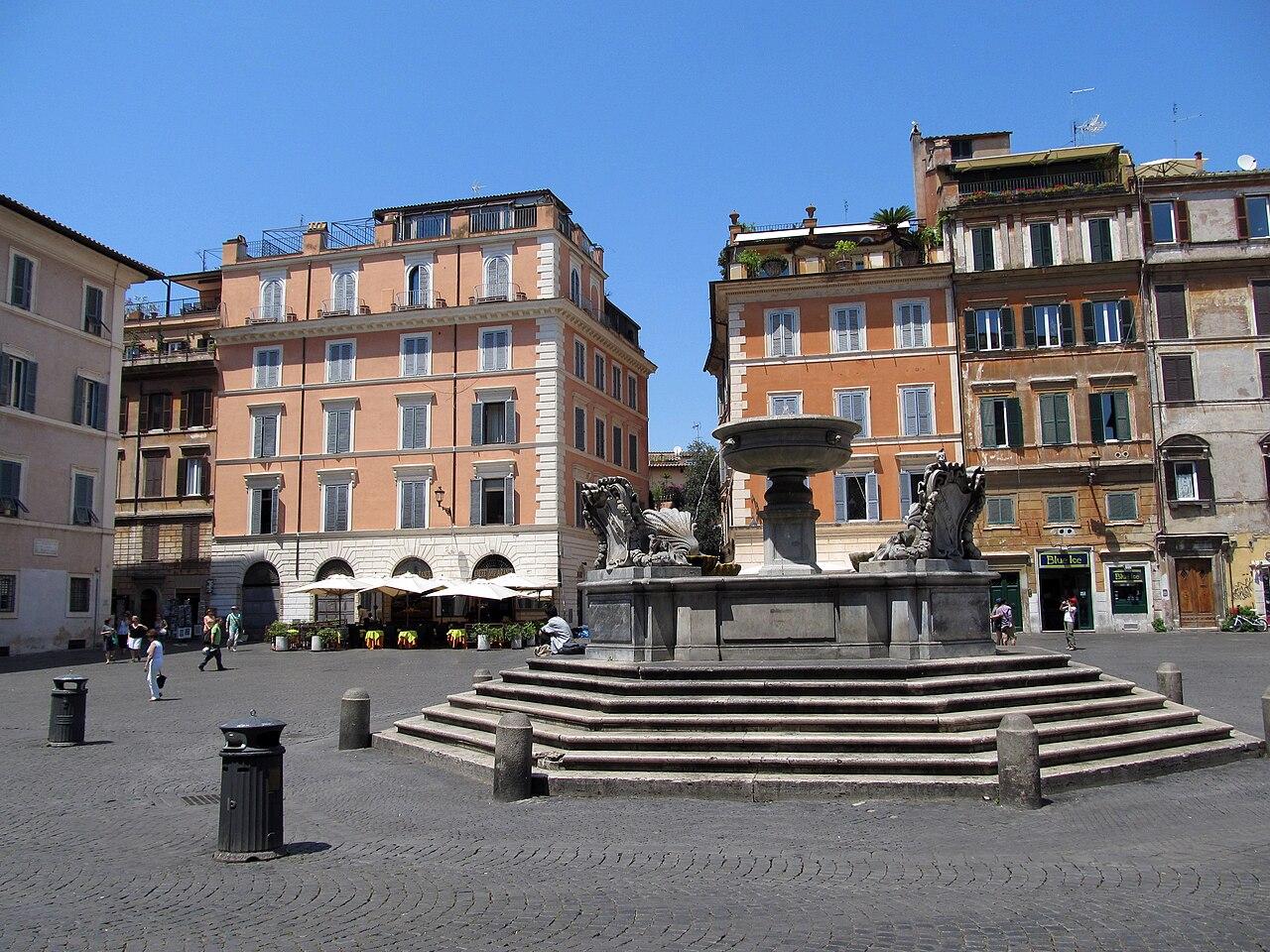
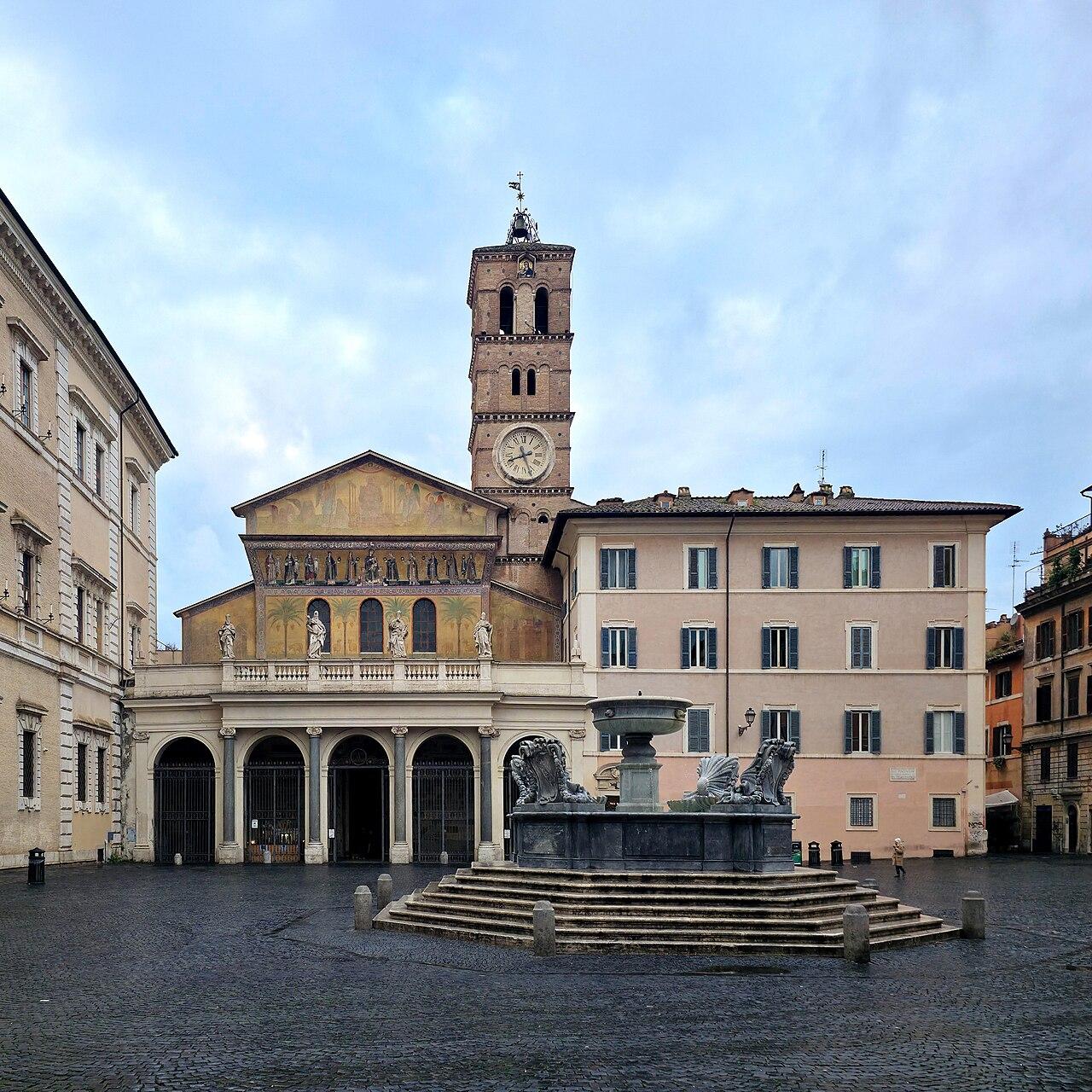
This fountain is counted among the oldest still-working fountains in Rome, with a story that reaches far back into the Middle Ages and possibly as far as the eighth century.
It has been reworked many times along the way. In the sixteenth century it moved to its present spot on the axis of the church, and at the end of the seventeenth century gave it the shape with the four shells you're looking at now.
The water comes from the , the aqueduct that had restored in 1612, which runs down here from the , the hill you can see rising above the rooftops. At the top stands the grand fountain building that Romans simply call , and if you fancy the climb you'll find one of the best views in the city.
The steps around it are nearly always full of people, and that has been the role of this square for centuries.
We take Via di San Cosimato in the southwest corner of the square and follow it to the next square, the one with the trees.
Sources. Story: Sovrintendenza Capitolina ai Beni Culturali (Fontana di Piazza Santa Maria in Trastevere); ACEA (Acqua Paola) Photos: Photo: Daryl Mitchell (Wikimedia Commons, CC BY-SA 2.0)