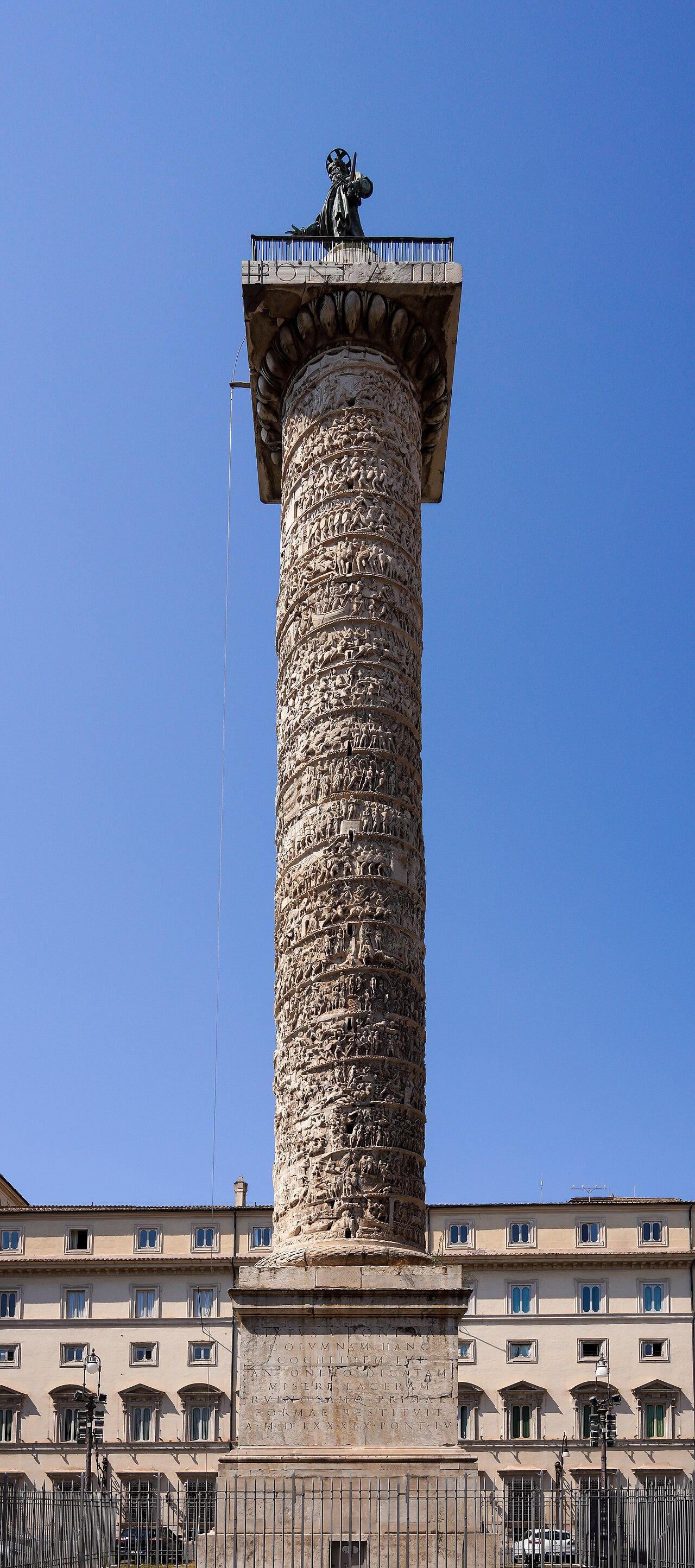
You're standing on a square that turns up on the evening news almost every night, because the palazzo on the north side is the official residence of the Italian prime minister. In the middle rises a column of nearly thirty metres, put up around the year 190 for the emperor , a philosopher who spent most of his reign on the northern frontier of the empire. The lowest coils of the relief are the ones you can actually follow, at eye level, with the burning villages and the rows of prisoners, and higher up the story becomes unreadable for anyone standing below. The emperor himself once stood on top, until replaced him with the apostle Paul at the end of the sixteenth century.
The street running past here is the Via del Corso, dead straight and a kilometre and a half long, and that length was a course. Every year at carnival they closed it off with cloth and sand, and riderless horses tore down it: small wild animals from North Africa, let loose on and driven on by the crowd until they were caught in a stretched cloth near the square with the white monument. Corsa means run. It was the busiest day of the Roman year, and in 1874 a boy went down under the hooves right in front of , and that was the end of it.
The covered gallery on the south side carries the name of , the actor whose death brought a million people out onto the streets.
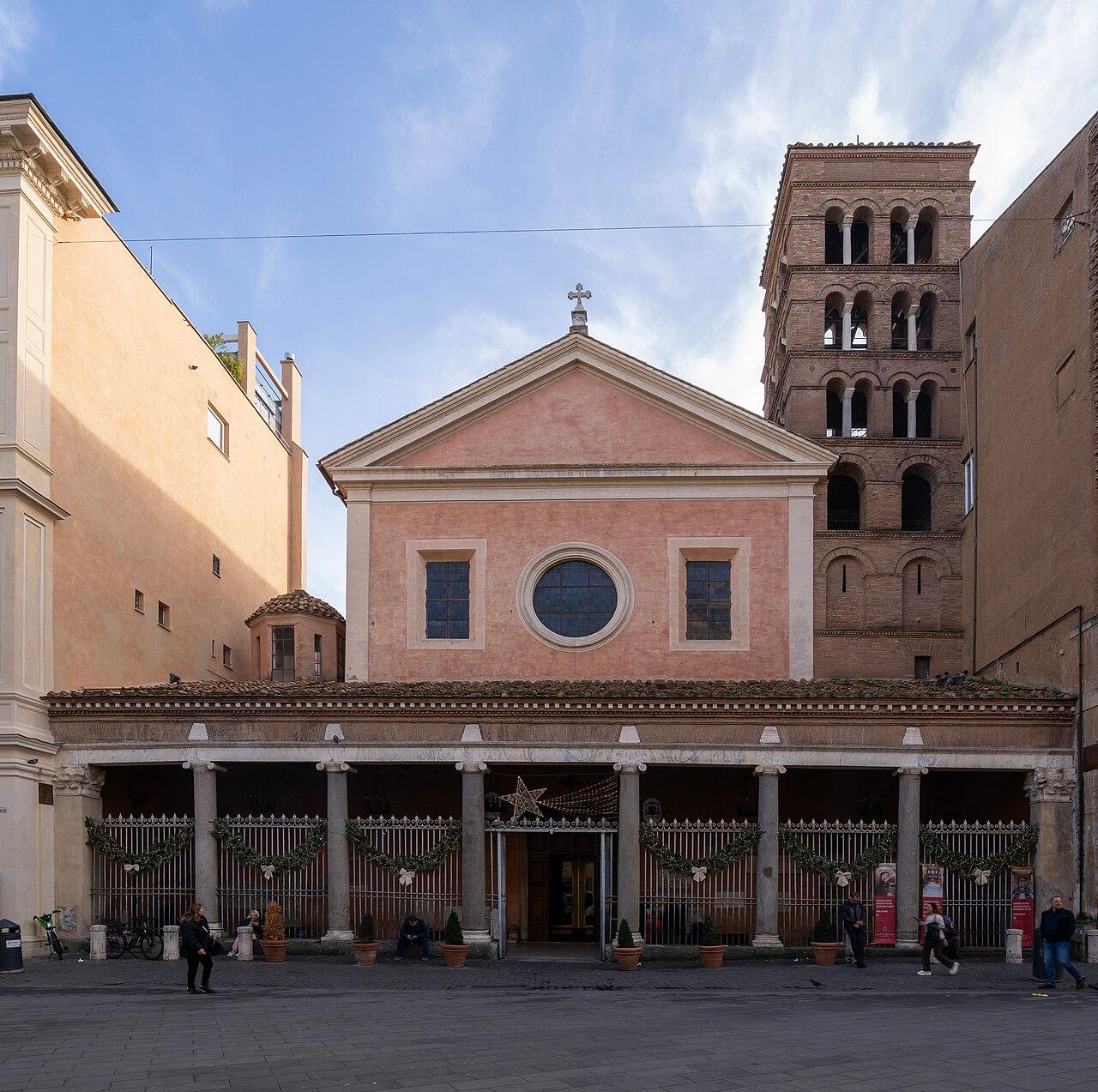
We cross the Corso and take Via dei Bergamaschi, keeping north until we reach a square with a freestanding bell tower.
Sources. Story: Sovrintendenza Capitolina ai Beni Culturali (Colonna di Marco Aurelio, corsa dei barberi); Istituto Luce Cinecittà, Alberto Sordi archive Photos: Photo 1: WikiRomaWiki (Wikimedia Commons, CC BY-SA 4.0) | Photo 2: Adam Lusch (Wikimedia Commons, CC BY-SA 2.0)