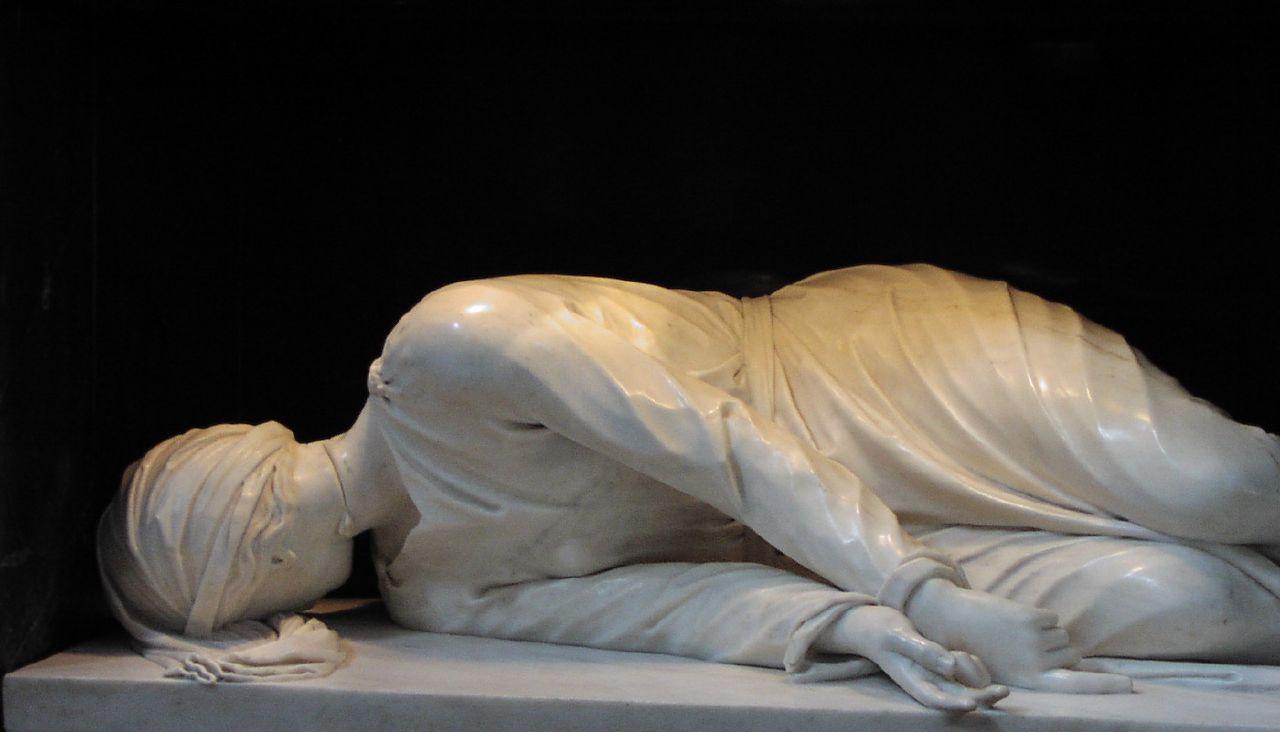
Beneath the high altar lies a woman in white marble, resting on her side, her face turned away from you, her knees slightly drawn up, and a cut across her throat.
made it in 1600, not long after the sarcophagus of had been opened. He claimed he had seen the body exactly as it lay inside and that he had carved precisely that, changing nothing. Whether he was actually there has never been confirmed, but the statue differs so sharply from everything else being made in those years that the story has stuck around.
What makes it remarkable is what you don't find in it. There's no upturned gaze, no heavenly vision, no in her hand. There's simply a woman laid down like this, and you stand beside her rather than facing her.
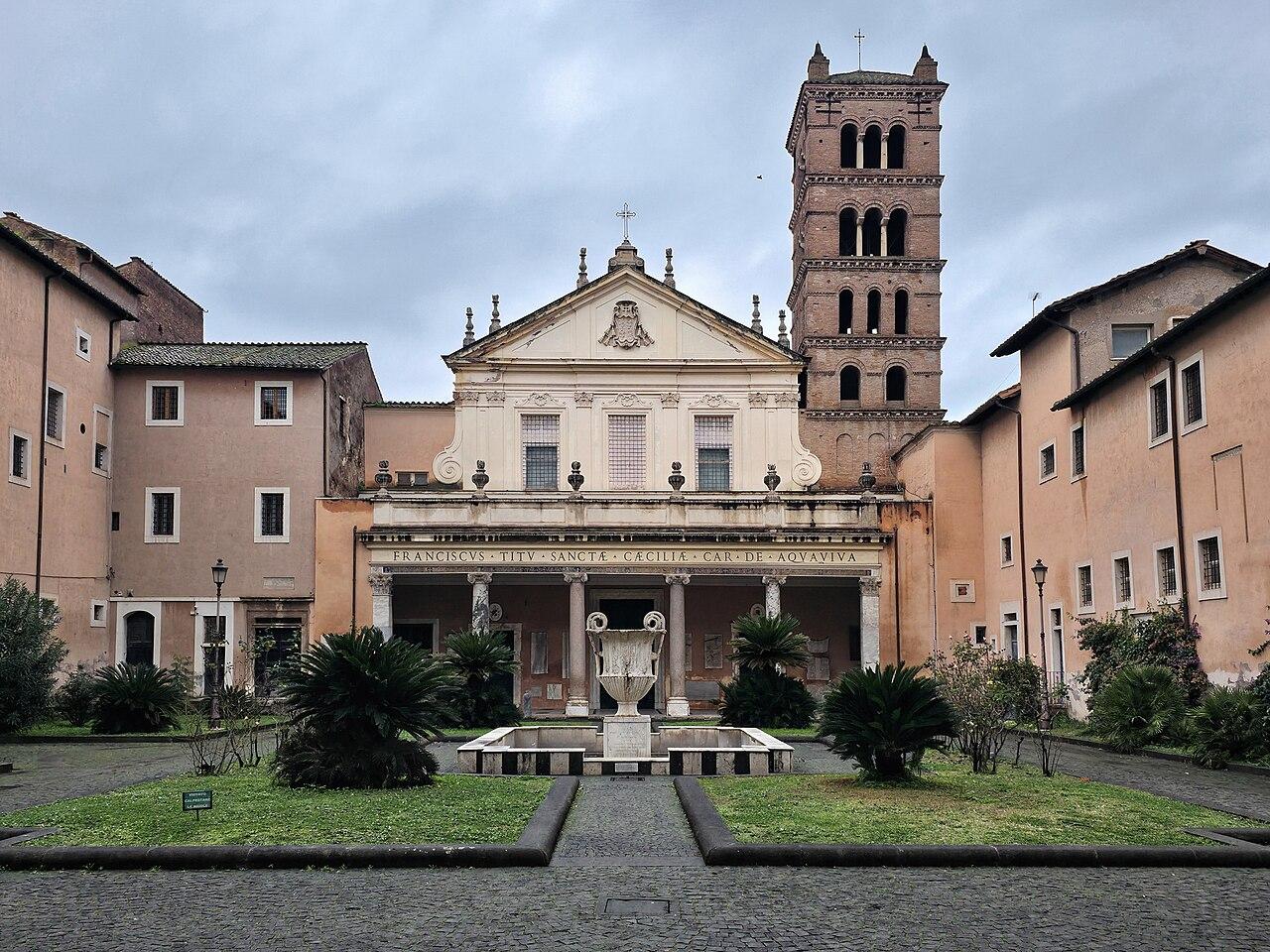
The church around it is still used by a community of nuns, which makes it quieter here than you'd expect in this neighbourhood. If you want to see more, a ticket takes you down to the remains of the Roman house beneath the floor, and at set morning hours you can view behind the nuns' choir.
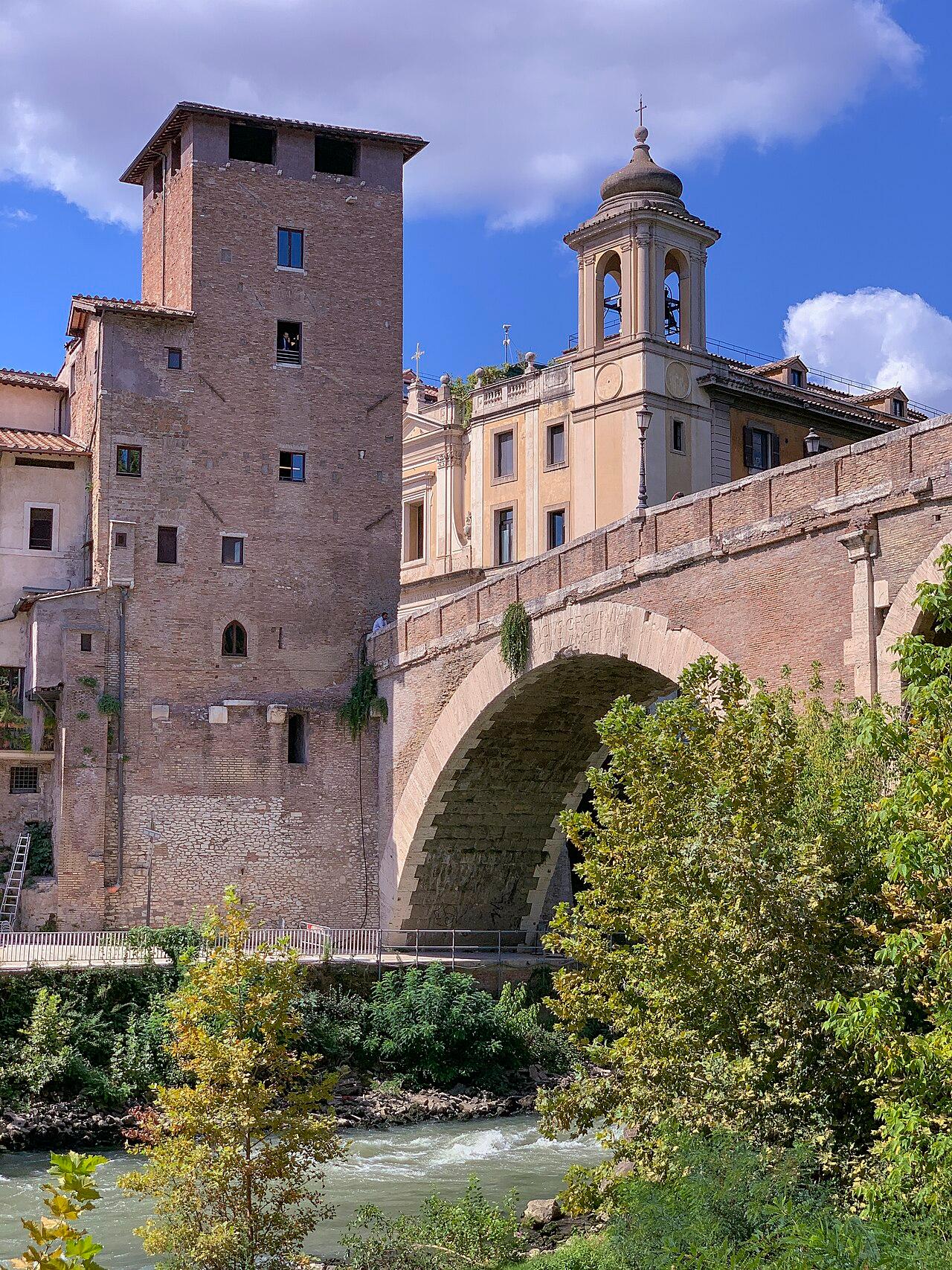
We follow Via dei Genovesi down to the river, turn left along the embankment, and cross the bridge over to the island.
Sources. Story: Basilica di Santa Cecilia in Trastevere, Vicariato di Roma; Treccani (Stefano Maderno) Photos: Photo: Sébastien Bertrand (Wikimedia Commons, CC BY 2.0)