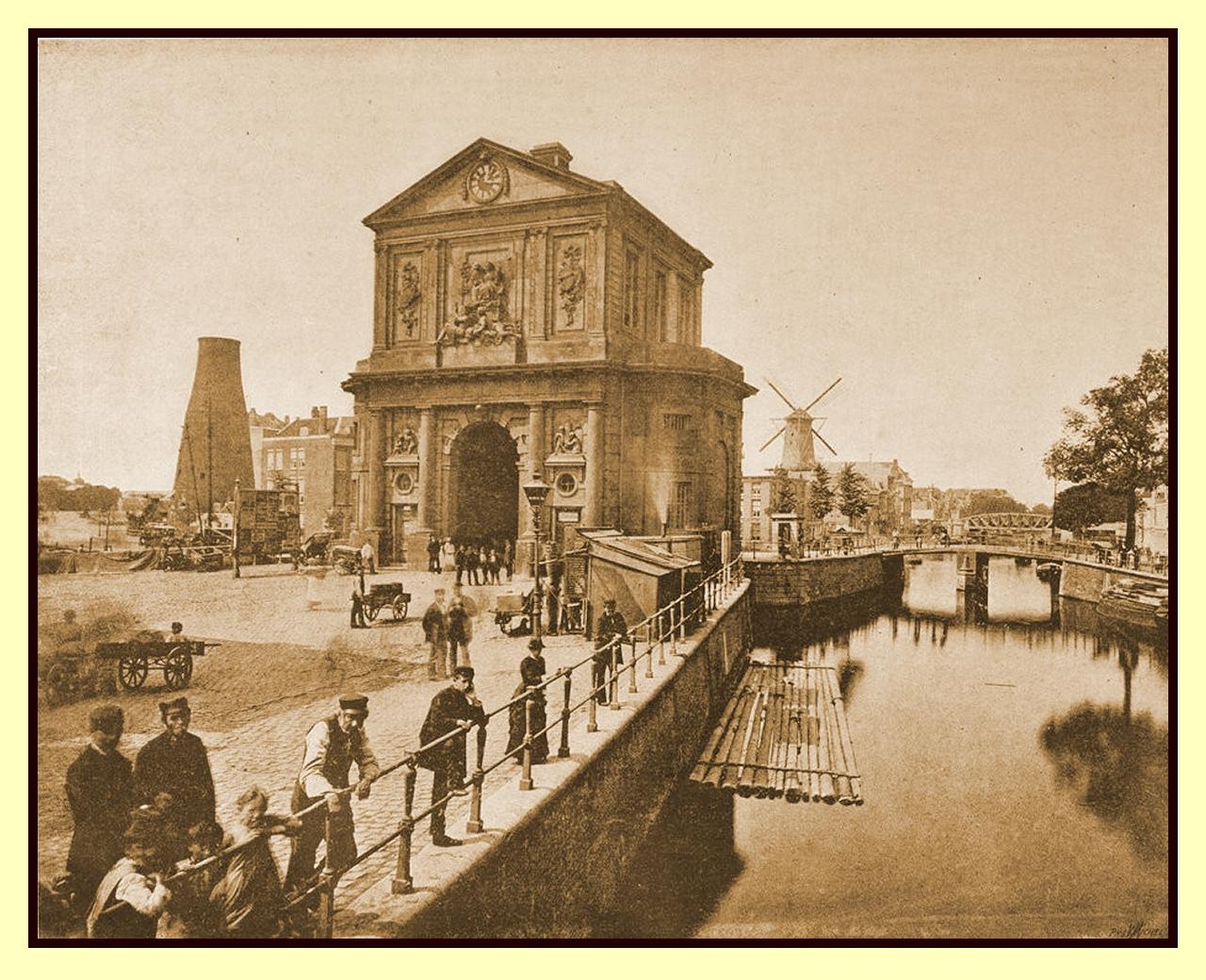
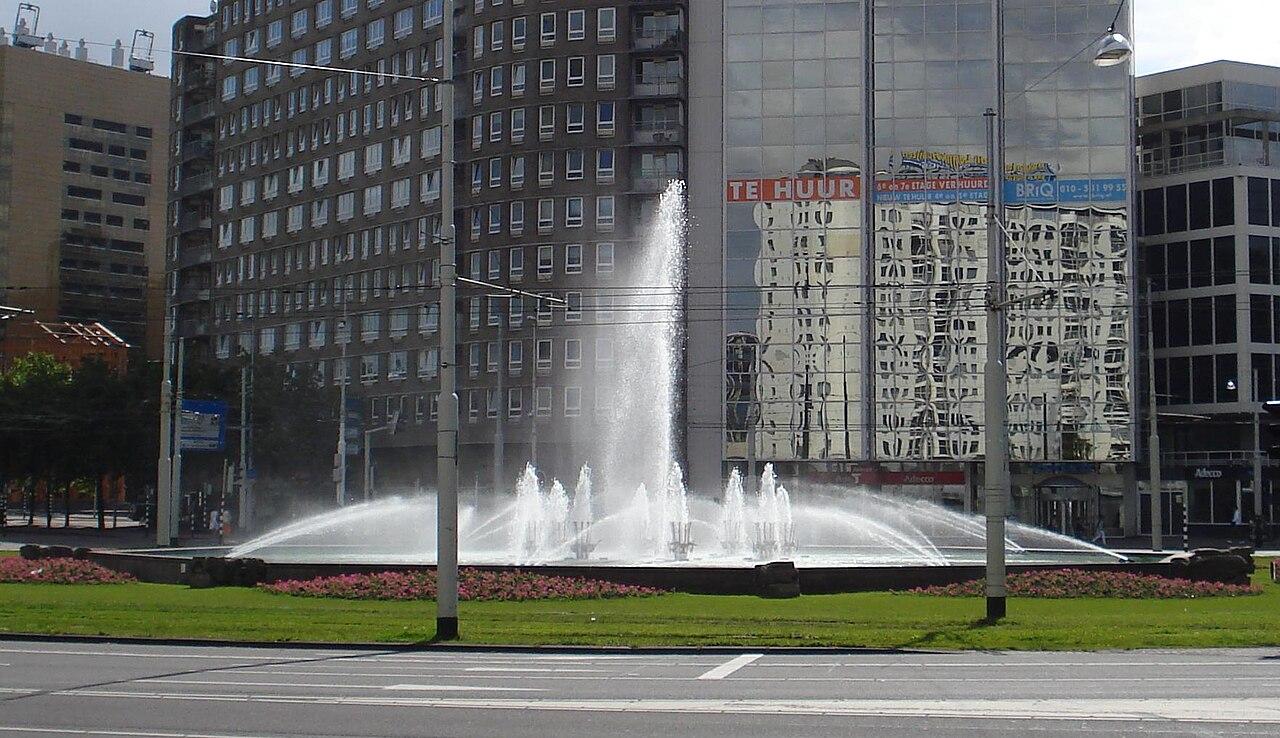
Where traffic now circles the fountain, the stood until the middle of the last century. From 1847 it was the city's most important station, with trains running to The Hague and Amsterdam.
When fell to the Germans in October 1914, hundreds of thousands of Belgians fled north, and in a single week around 23,000 of them stepped off the trains right here. Rotterdam had just over half a million people at the time, so the city grew by several percent in a matter of days, in a country that had stayed and had no idea what to do with them all.
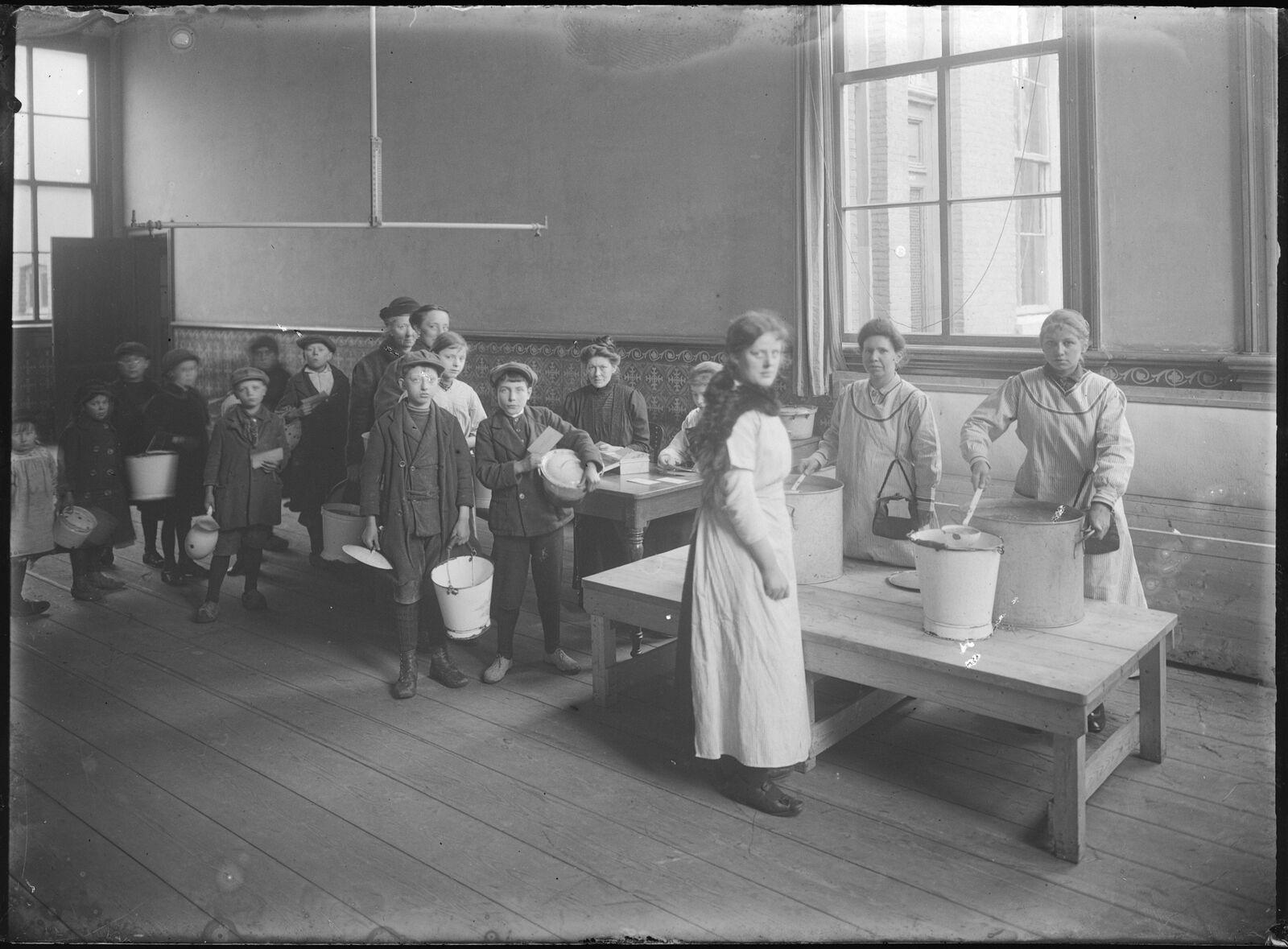
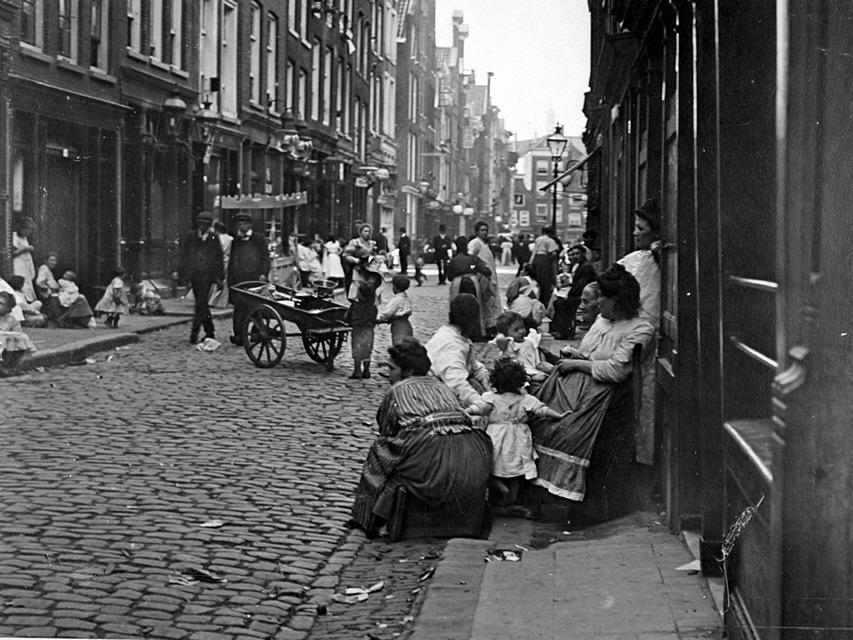
Volunteers and relief committees took them in. Around 17,000 ended up staying with private families, while the rest slept on ships and in public buildings. Little nameplates hung on the house fronts, so that relatives who had lost each other along the way could find out where their own people had ended up.
After a month, most of them went home. The five thousand who stayed received thirty cents a day, children half that, which was more than an unemployed Rotterdammer got and caused so much resentment that the amounts were brought into line in early 1916.
From here we keep heading east, following the water towards the Haagseveer.
Sources. Story: Canon van Rotterdam, the Belgian refugees of 1914. Stadsarchief Rotterdam. Photos: Stadsarchief Rotterdam