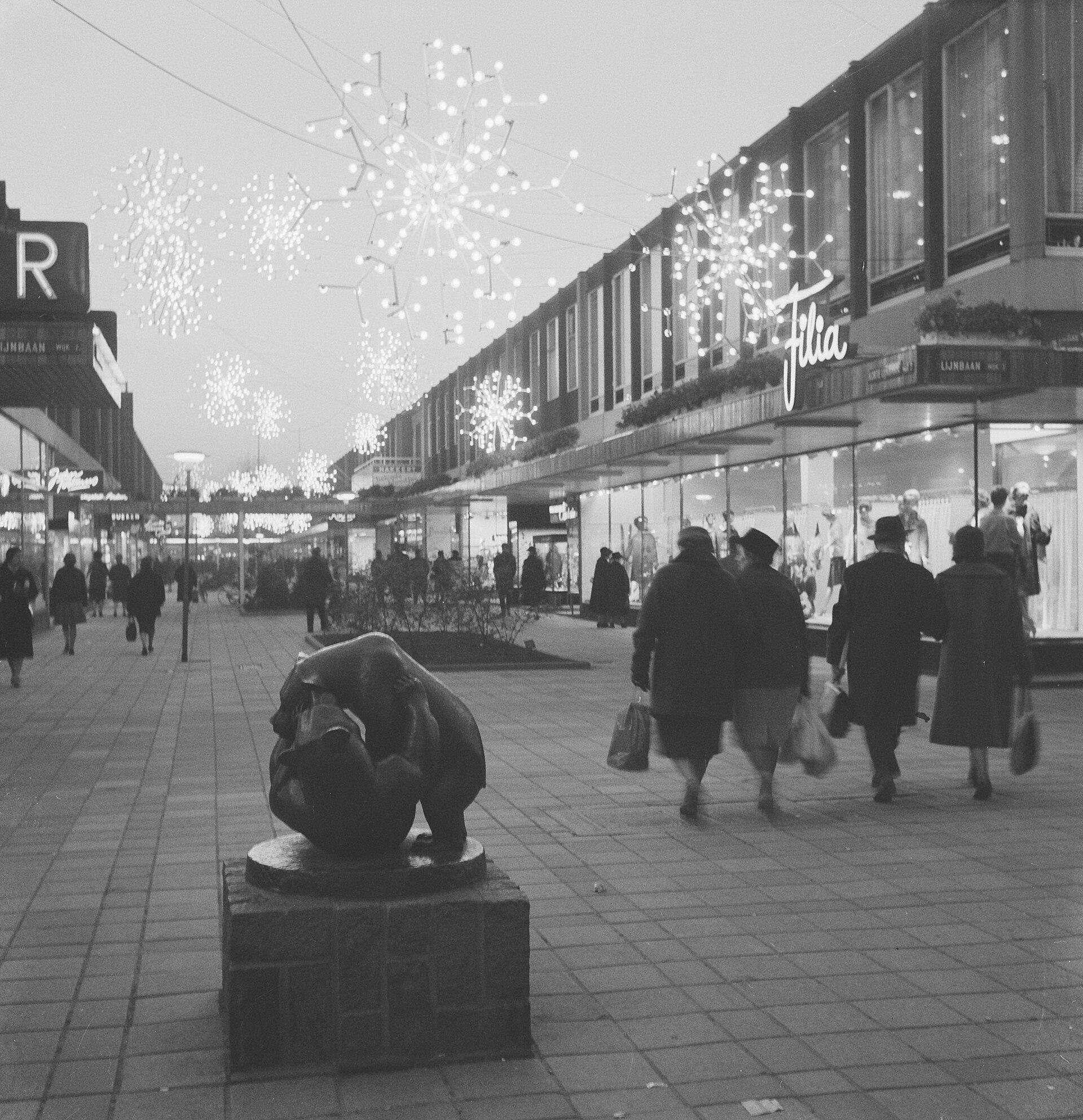
In a café somewhere around here, grew up, the boy who became the most famous cabaret performer in the country and whose songs about ordinary life were sung everywhere. A statue by the sculptor keeps his memory alive on this spot.
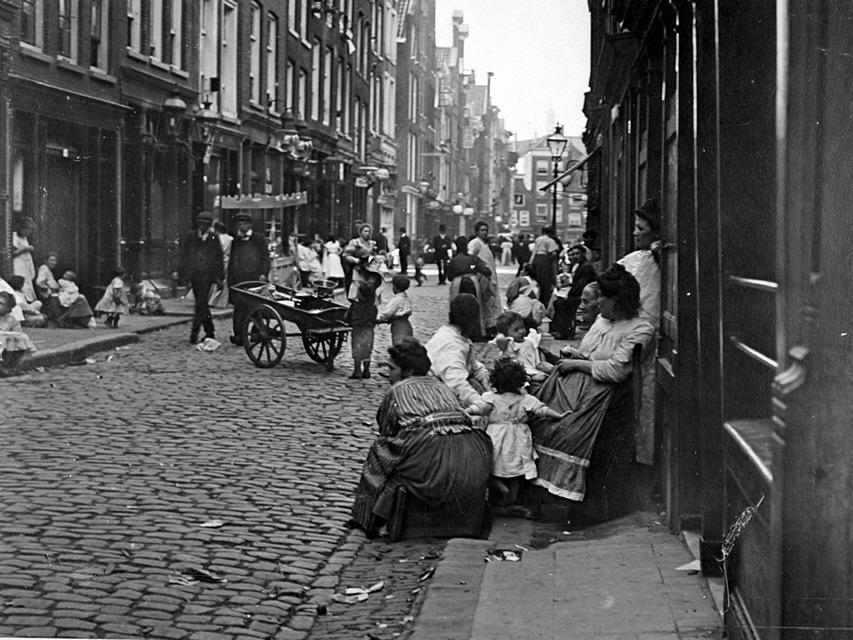
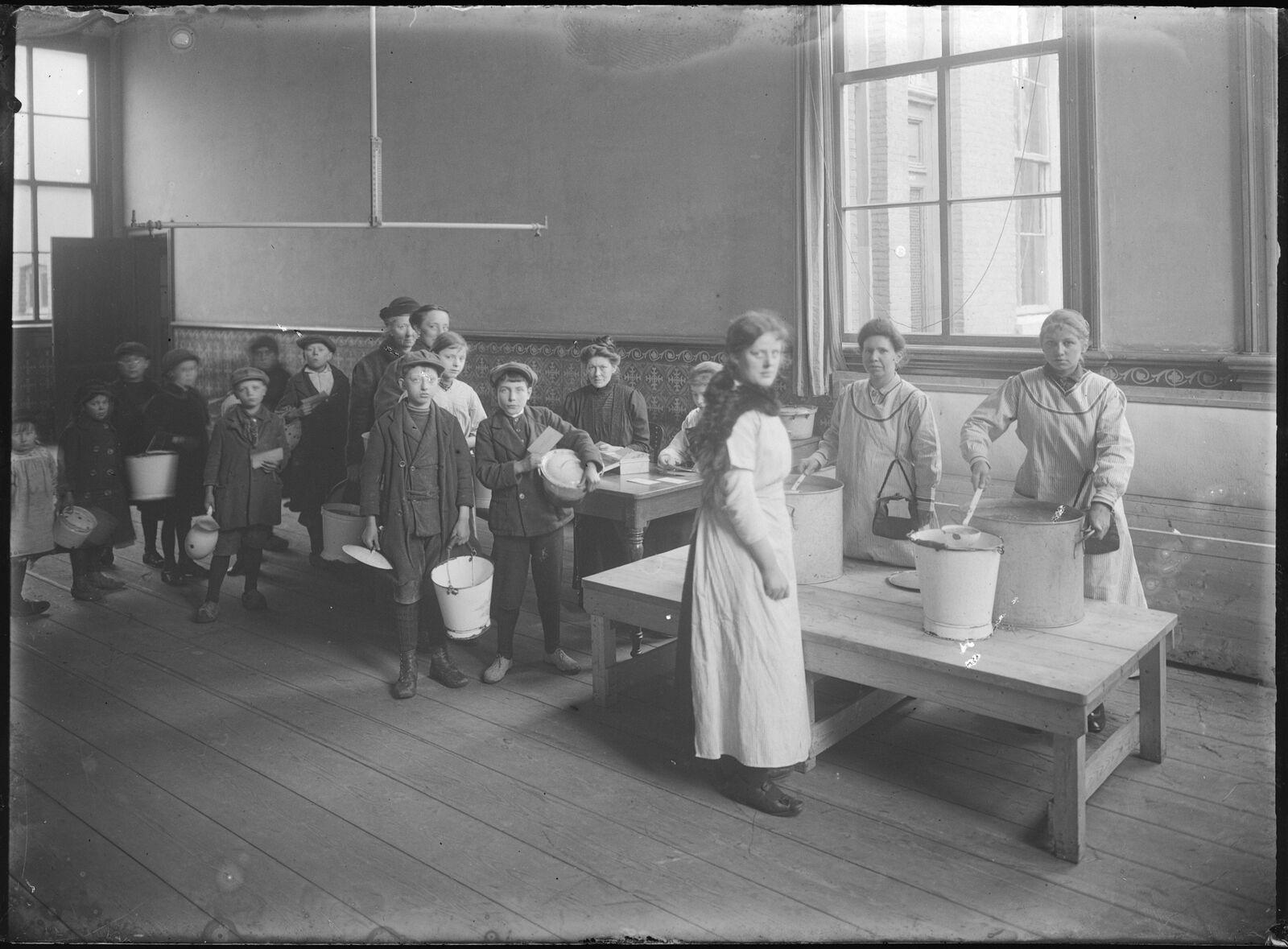
Around 1900, about 2,500 people lived between the Raamstraat and the Leeuwenstraat, packed into a maze of alleys. Many of them came from Jewish families, and the neighbourhood held synagogues, shops, cafés and variety theatres, along with poverty, overcrowding and prostitution all within the same few hundred metres. Sailors came ashore here to spend their money.
In 1909 the city decided to tear the whole district down to make room for a new town hall on the Coolsingel. The demolition started at the Hofplein and crept forward for years, street by street, while the residents moved out to new housing estates beyond the centre. In the 1930s even the street name was scrapped, as if the neighbourhood had never existed, and only after the redevelopment of the late 1970s did that name come back.
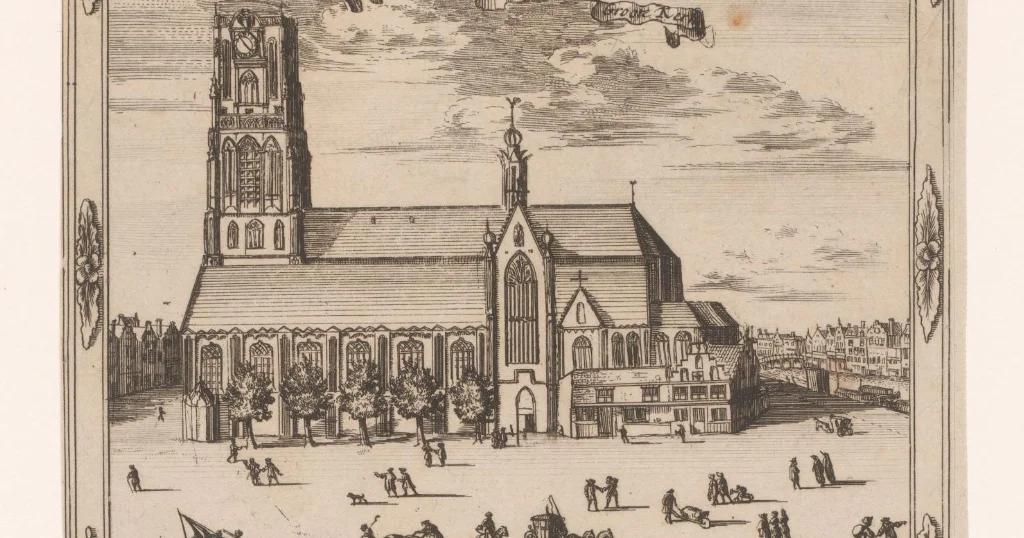
We walk back southeast towards the , the great medieval church where our walk began.
Sources. Story: Joods Erfgoed Rotterdam, de Zandstraatbuurt. Stadsarchief Rotterdam. Photos: Henri Berssenbrugge (1873-1959), Gemeente Rotterdam, CC0, via Wikimedia Commons