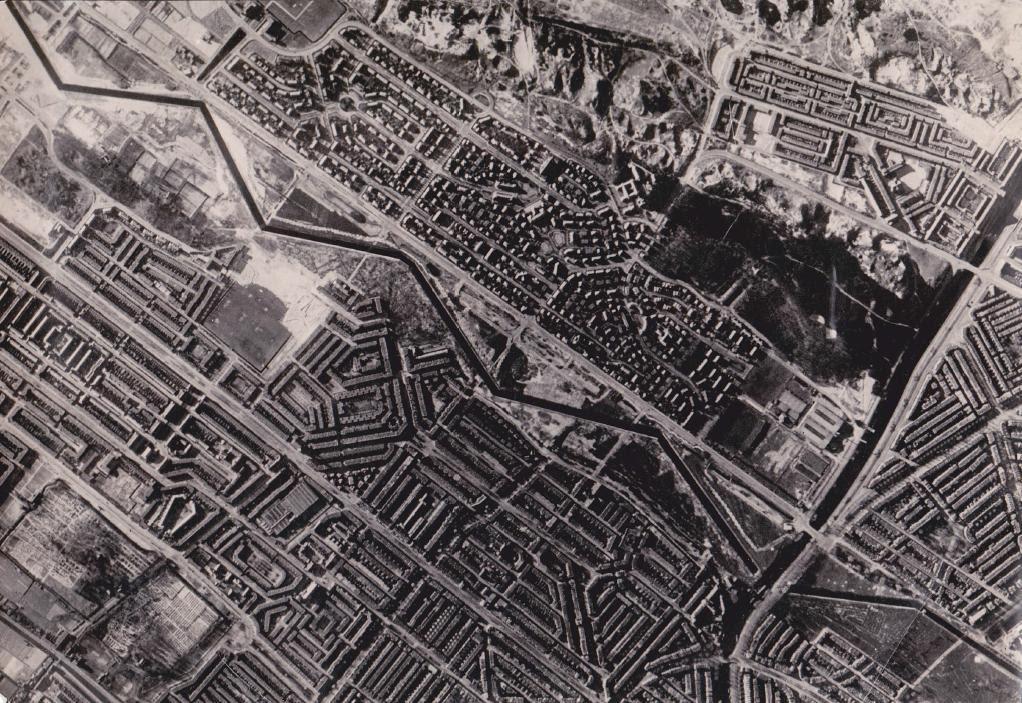
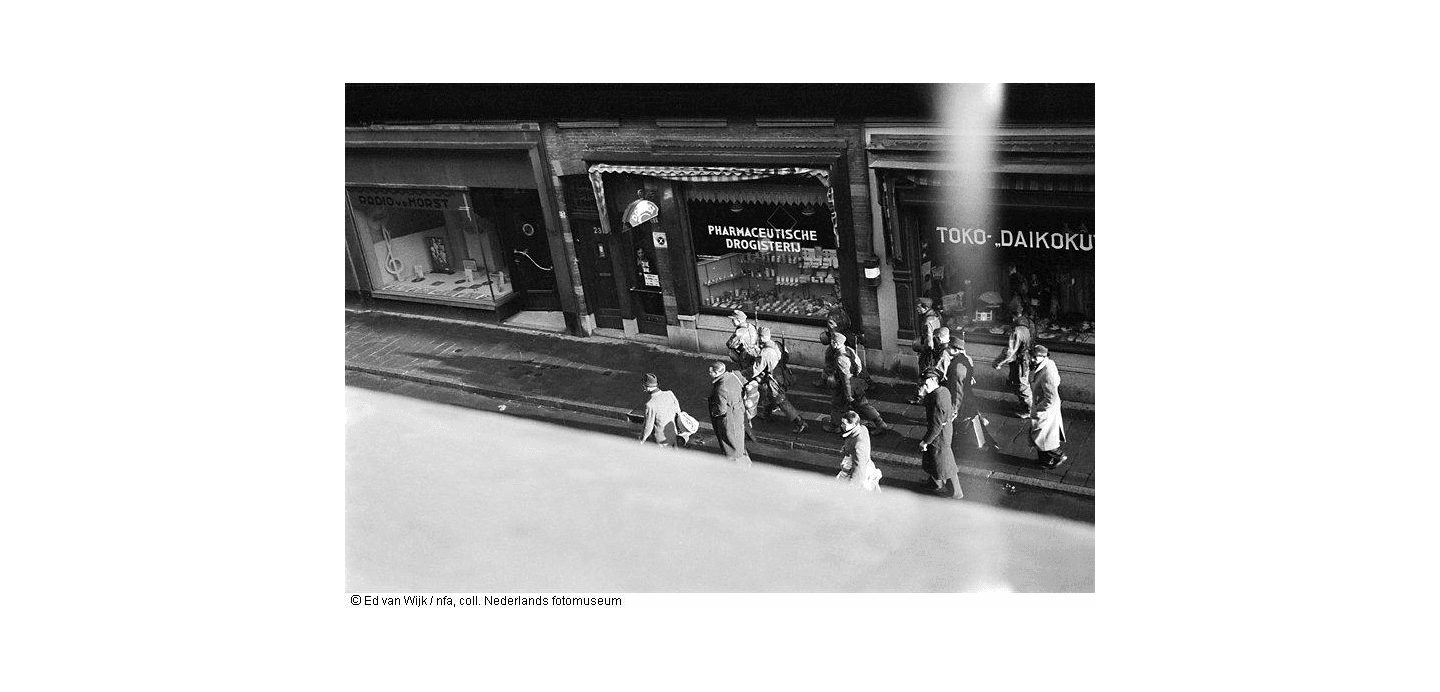
Early on the morning of 21 November 1944, the occupier sealed off The Hague. The operation was called Snowflake, and its purpose was to round up every man between seventeen and forty for forced labour in Germany.
Rotterdam had been raided two weeks earlier, and 52,000 men were taken there. That warning arrived in time. Men in The Hague vanished into crawl spaces, kitchen cupboards, attics and the hollow space above sliding doors. Of the tens of thousands the Germans had counted on, around seven thousand were caught.
Those taken were assembled at three points in the city: the , the Hague Zoo and the . From there the columns walked to the slaughterhouse grounds in , where Rhine barges lay waiting. Packed into the holds, they crossed the to Kampen and the Van Heutsz barracks, and went on to labour camps across Germany.
The days in those camps were long, the food thin and the hygiene poor. Many men fell ill and some never came back. Those who made the slow journey home after the liberation were sometimes looked at as men who had worked for the enemy.
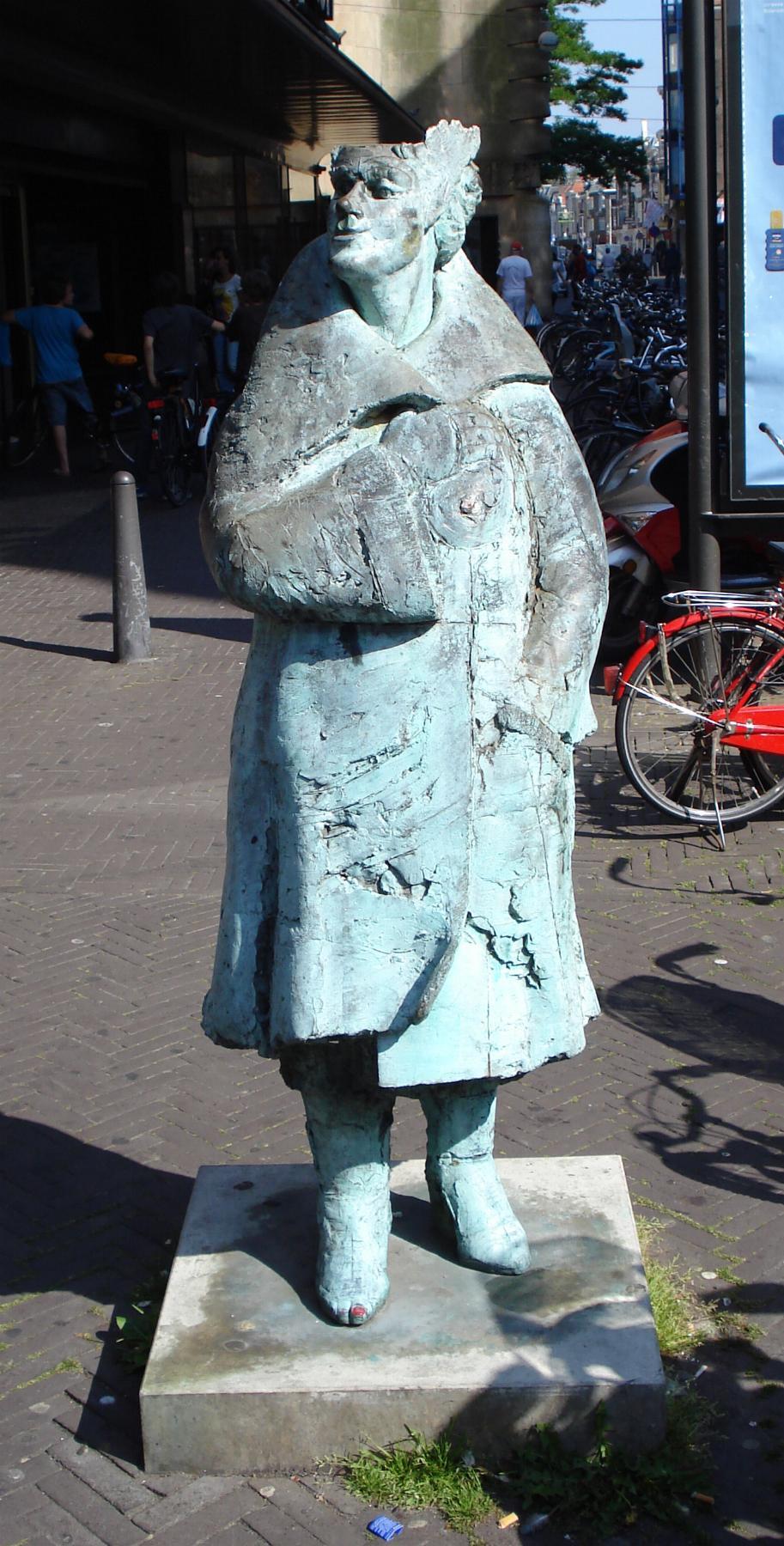
On the site of the old zoo stands the monument Dwangarbeiders, unveiled in the late nineties for the men of that morning.
Feel like walking? Our tours of The Hague start whenever you do.
Sources. Story: Haags Gemeentearchief, Verhalen van de stad: Operatie Sneeuwvlok, Den Haag 21 november 1944. https://haagsgemeentearchief.nl/ontdek-de-stad/verhalen-van-de-stad/operatie-sneeuwvlok-den-haag-21-november-1944 Photos: Illegale fotografie tijdens de Duitse bezetting, evw-98-1, Nederlands Fotomuseum