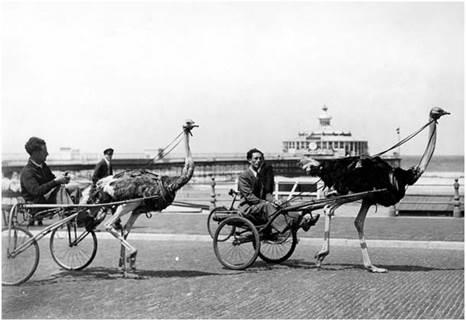
In the summer of 1935 an Italian entrepreneur arrived on the Scheveningen boulevard with a troupe of ostriches. He harnessed them to lightweight carts called sulkies and offered rides along the promenade. Children paid five cents, adults seven, and an attendant walked alongside the whole way, which was a sensible precaution with a bird that kicks.
The national press treated it as an event. The newspaper De Tijd reported that Scheveningen had gained something special again, a generous verdict for a resort that already had a pier, a and a reputation for noise.
The ostriches had a quieter predecessor. Donkeys had been carrying children along this beach since the end of the nineteenth century, and the sight of small girls in white dresses and sun hats on donkeyback belonged so completely to this coast that painted it. That canvas now hangs in the .
The donkeys outlasted the ostriches by a wide margin, and never once made the national papers.
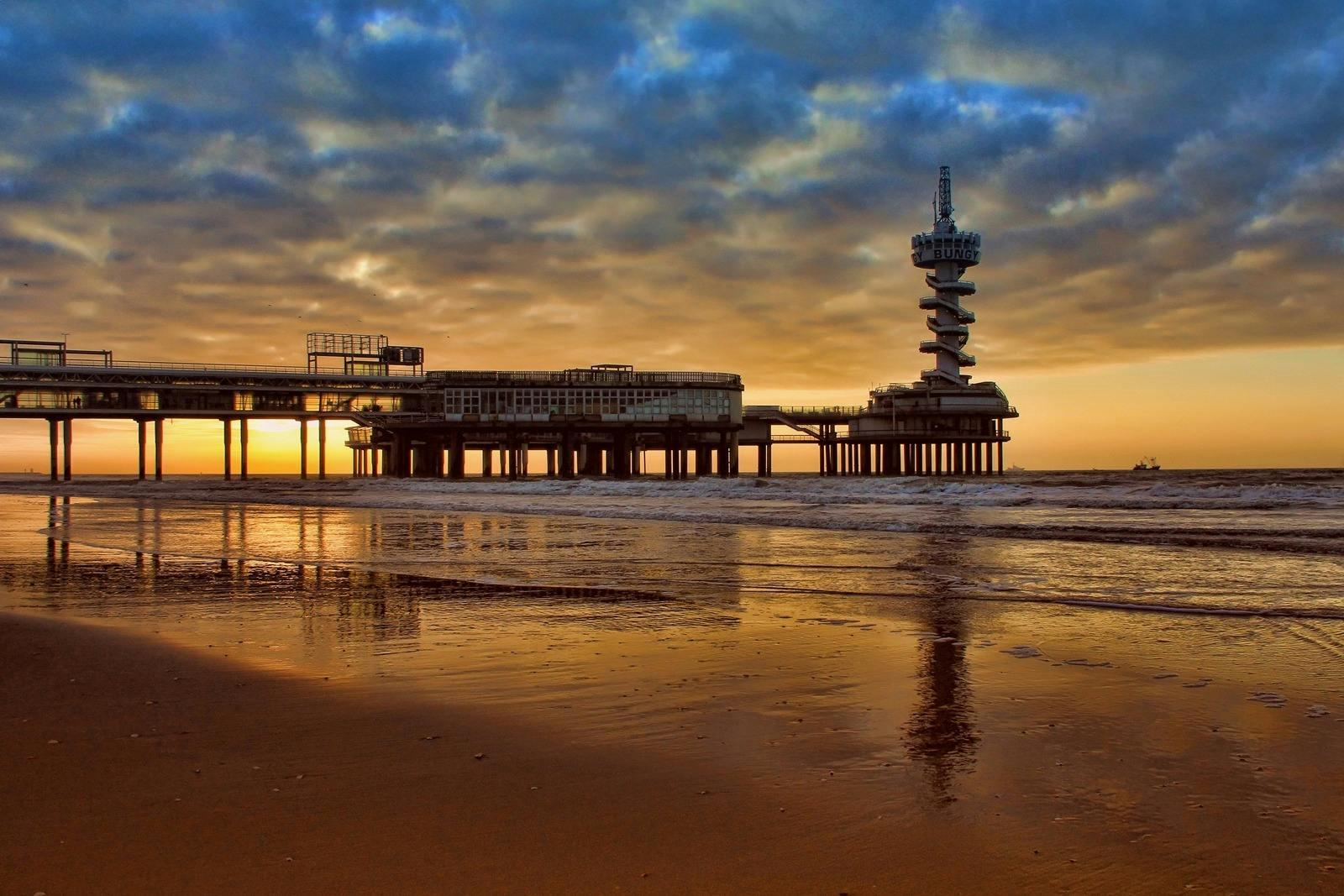
The final stop lies a few minutes to the northeast: the pier standing out over the water.

Sources. Story: Haags Gemeentearchief, krantenbank (De Tijd, 1935); Scheveningen Toen en Nu, dossier strandattracties; Rijksmuseum, Isaac Israels, ezeltje rijden op het strand. Photos: https://www.scheveningentoenennu.nl/toenennu/strandattracties/index.html Fotos https://www.archiefndr.nl/HtmlFotoDiverse/Match-a-deux.htm