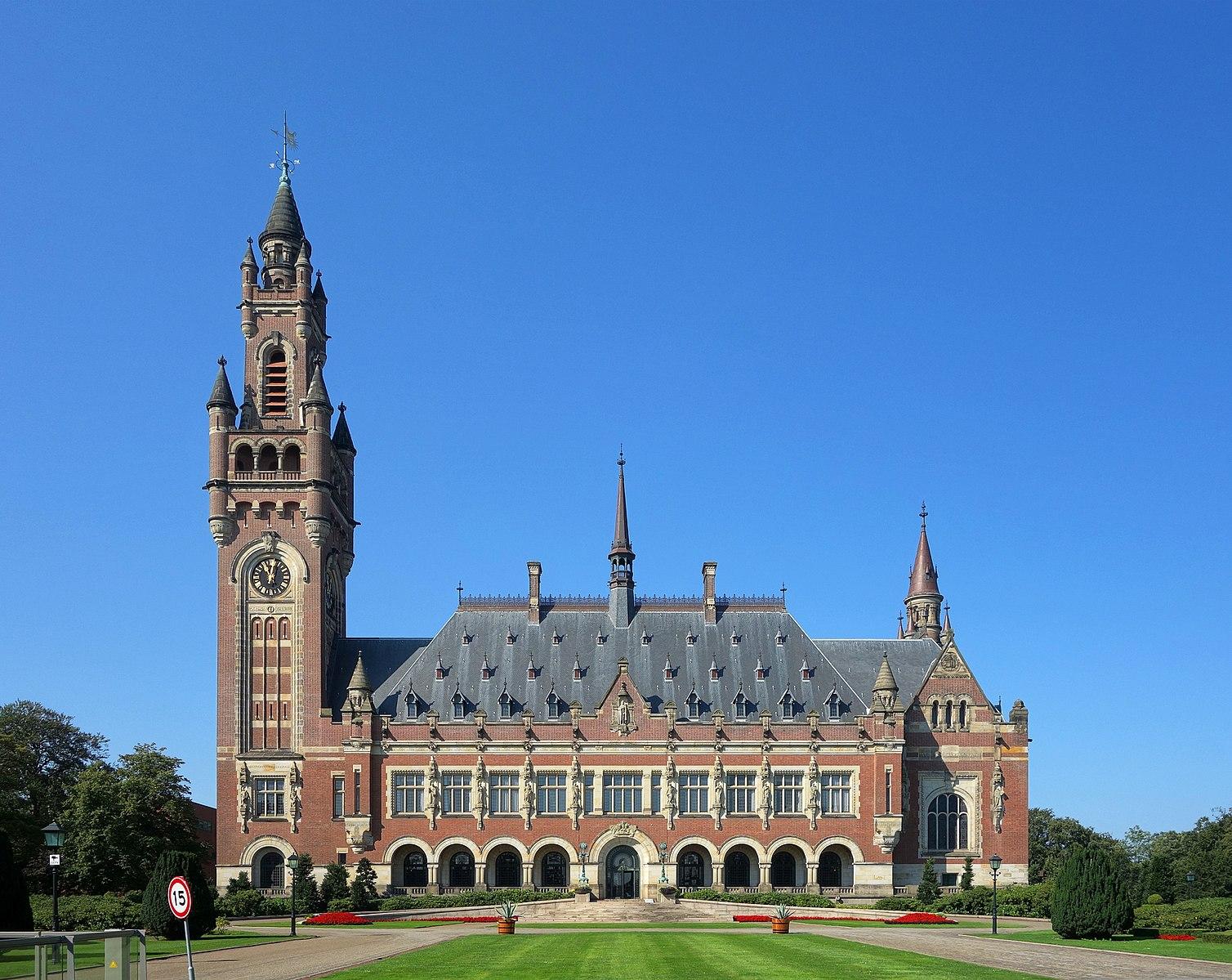
As the second drew to a close in 1907, the French envoy made a proposal. Let every participating country send building material, something typical of its own soil. That way the Peace Palace would literally be built out of the whole world.
And so it was. Germany supplied the wrought iron entrance gates, Italy the marble, Norway and Sweden granite, Brazil rosewood for the floors, Japan silk wall hangings, Turkey carpets. China sent vases from the Ming period. Switzerland gave the clock in the tower, with gilded hands. The most striking gift came from : an enormous vase of solid jasper.
The money came from the American steel magnate . The palace opened on 28 August 1913, with in attendance. Eleven months later the First World War broke out. The countries that had given the gate, the marble and the clock now faced each other across the trenches.
Today the building houses the and the , along with a library of international law that draws lawyers from across the world to The Hague. Walk across the ground floor and you walk across seventeen million pieces of mosaic.
Want to see more? One of our walking routes through The Hague shows how much world history lies out in the open in this city.
Sources. Story: Rijksdienst voor het Cultureel Erfgoed, monument register no. 333074 (description Vredespaleis); vredespaleis.nl; en.wikipedia.org/wiki/Peace_Palace (secondary) Photos: Velvet, CC BY-SA 4.0, via Wikimedia Commons