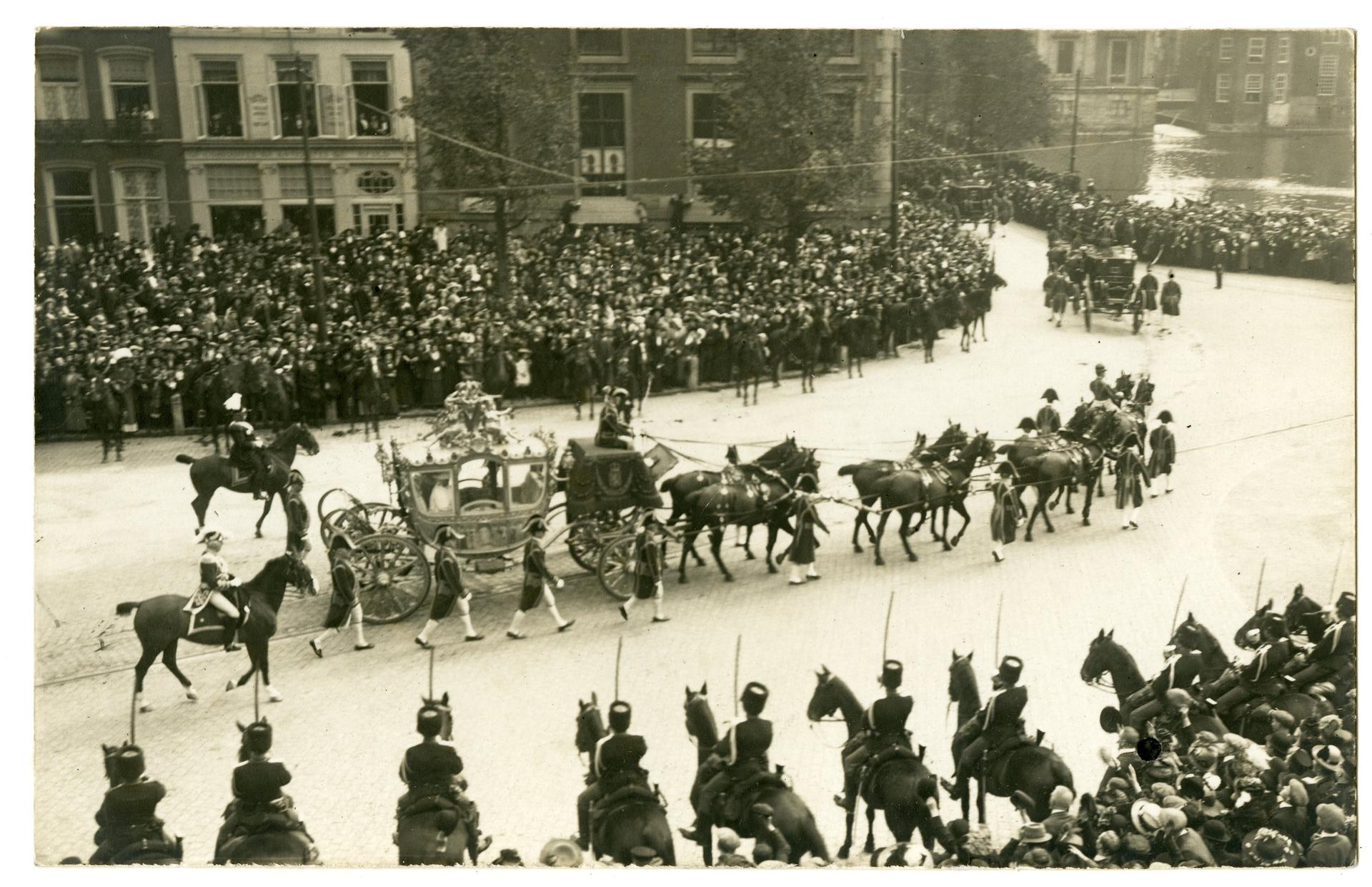
On the third Tuesday of September the king reads the speech from the throne and the finance minister holds up his briefcase. The name of the day is older than the ritual. In the eighteenth century The Hague celebrated the birthday of the , and that was called prinsjesdag. , the last , fled to England in 1795. The name stuck and later attached itself to the opening of parliament.
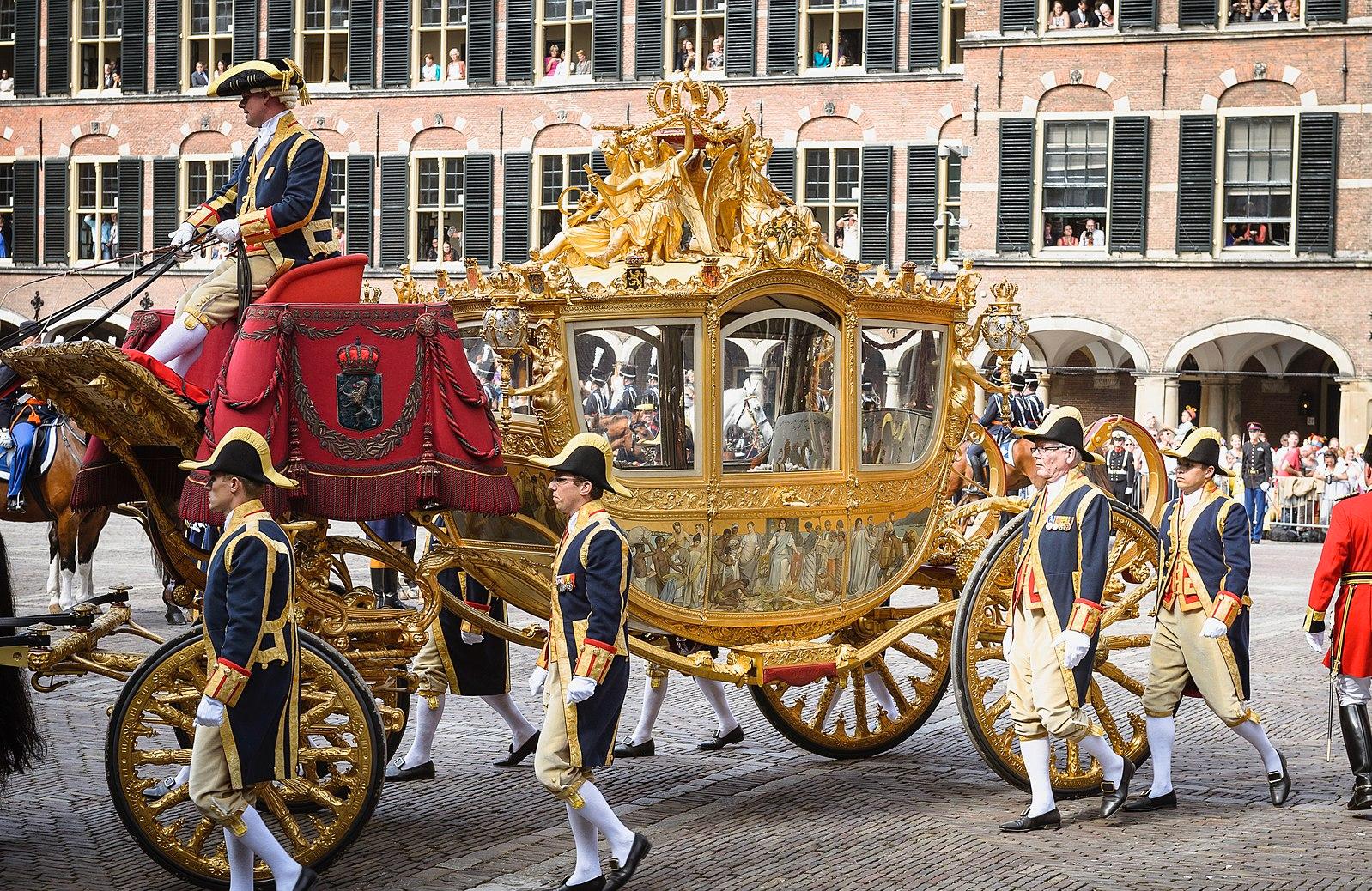
The route runs from palace to assembly hall and back, past crowds who take their places hours in advance. Hats belong to the day, worn with enough conviction that the press files a separate report on them.
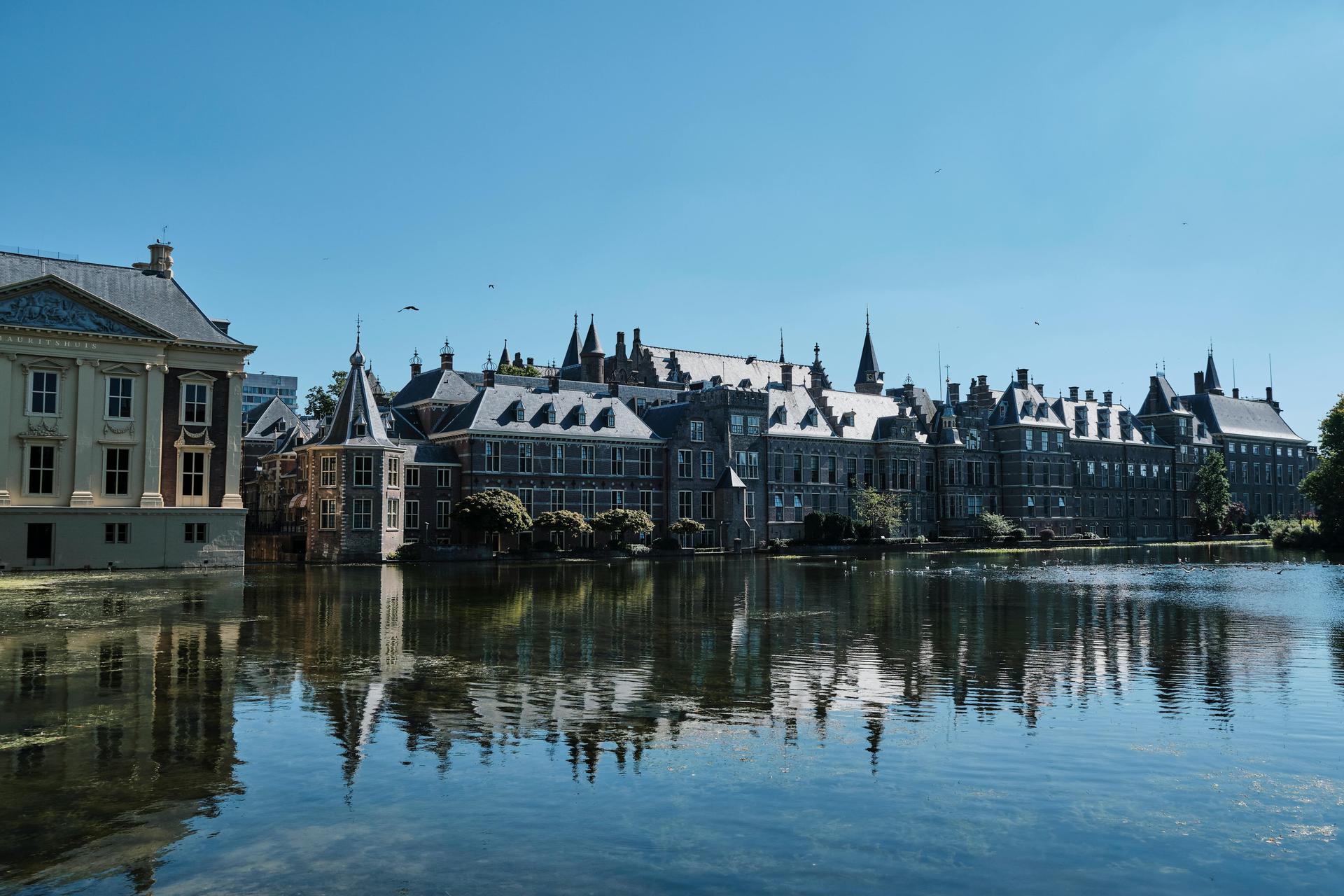
The setting shifts. For centuries the speech was read in the , and during the rebuilding of the the ceremony moved to another hall in the city. That has happened before: renovations, war and lack of space have all pushed it elsewhere.
What holds is the shape of it. A procession, a speech, a briefcase, and afterwards a balcony scene at the .
Want to see the places in this story for yourself? One of our walking routes through The Hague passes them.
Sources. Story: Rijksoverheid and the Royal House of the Netherlands on how Prinsjesdag works. The origin of the name and the eighteenth-century prinsjesdagen: Haags Gemeentearchief and Parlement.com. Photos: Source photo: 1. Minister-president Rutte from Nederland (+31), CC BY 2.0 <https://creativecommons.org/licenses/by/2.0>, via Wikimedia Commons | Rob Croes for Anefo, 2. Haags Gemeentearchief 3. Gompers uit het Haags Gemeentearchief 1934