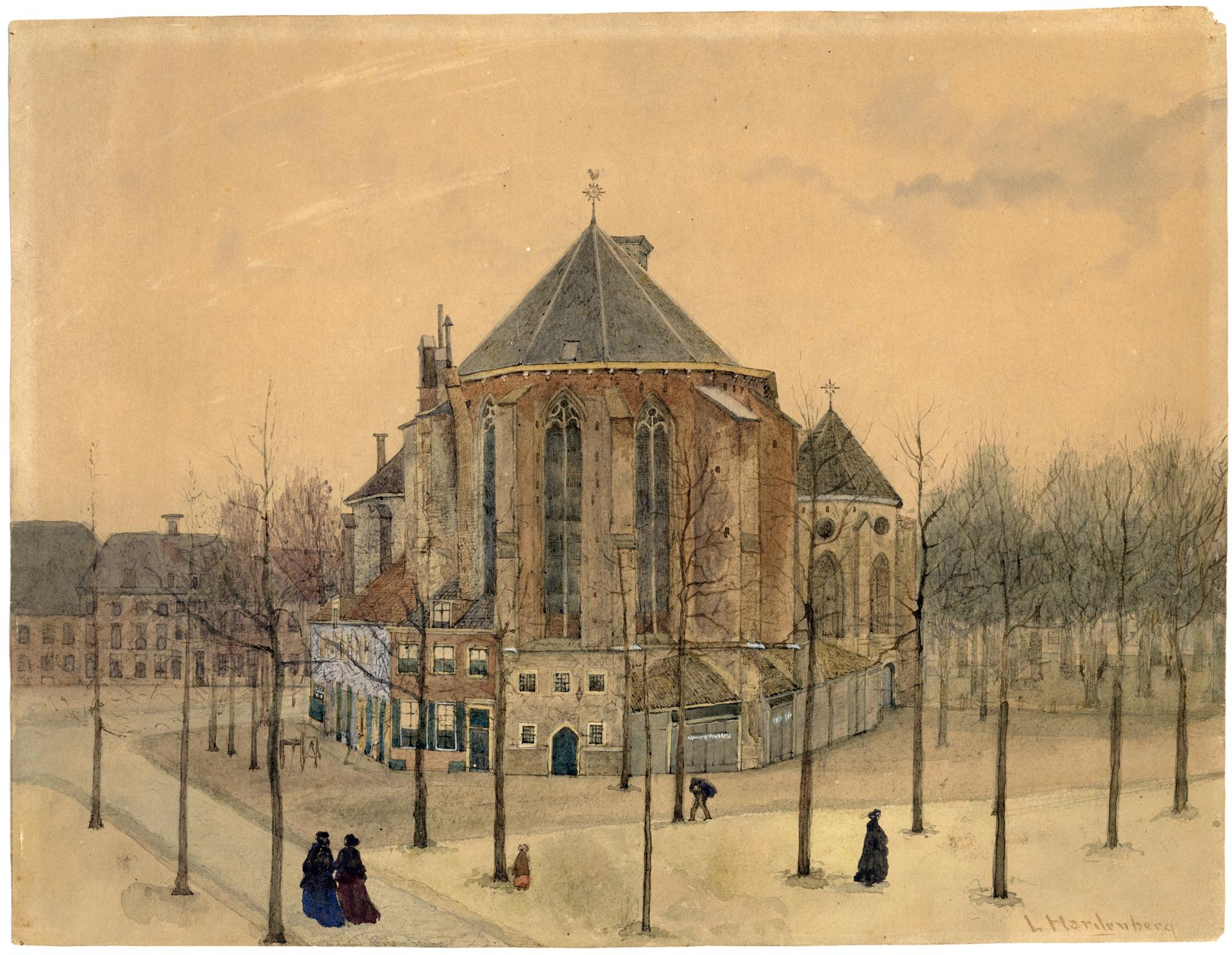
The were given this church by a city council that wanted the unrest to stop.
In August of the year the swept through the Low Countries, angry crowds forced their way into the churches here as well. After negotiations the council handed over the Jacobikerk so that the Calvinists would have a building of their own. Within a month the decision was reversed by .
Two years later came to Utrecht. Two hundred and twenty people were convicted for their part in the destruction, and sixty-five of them were executed.
After that it took another fourteen years. Utrecht had three iconoclastic outbreaks rather than one, and only in the summer of 1580 was the ban on Catholic worship read out from the city hall, shortly after that promised nobody would be persecuted for their faith.
Even then the purge stayed half-hearted. Thirteen years later the altars were still standing in twenty-seven of the fifty-seven churches in this province, and anyone who wanted to remain Catholic found their way to a .
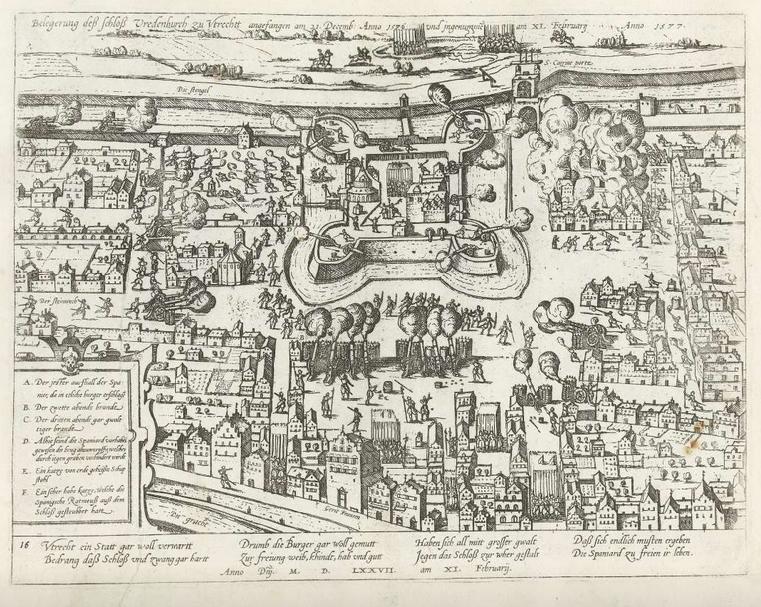
We now walk back to the Vredenburg, where this walk ends.
Sources. Story: Canon van Utrecht; Centraal Museum Utrecht; BMGN Low Countries Historical Review (recensie Een spoor van vernieling) Photos: Source photo: Het Utrechts Archief / Rijksmuseum