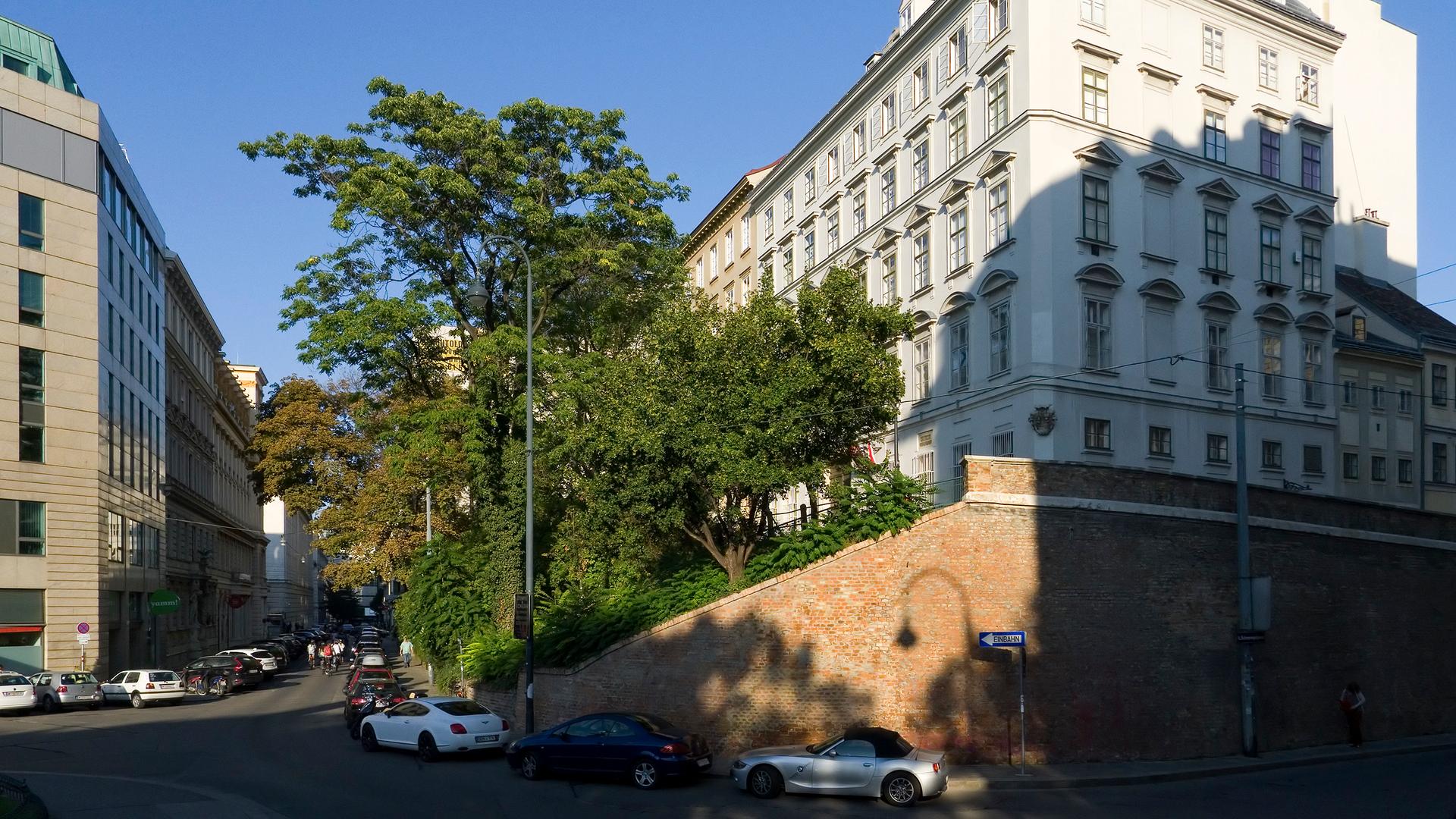
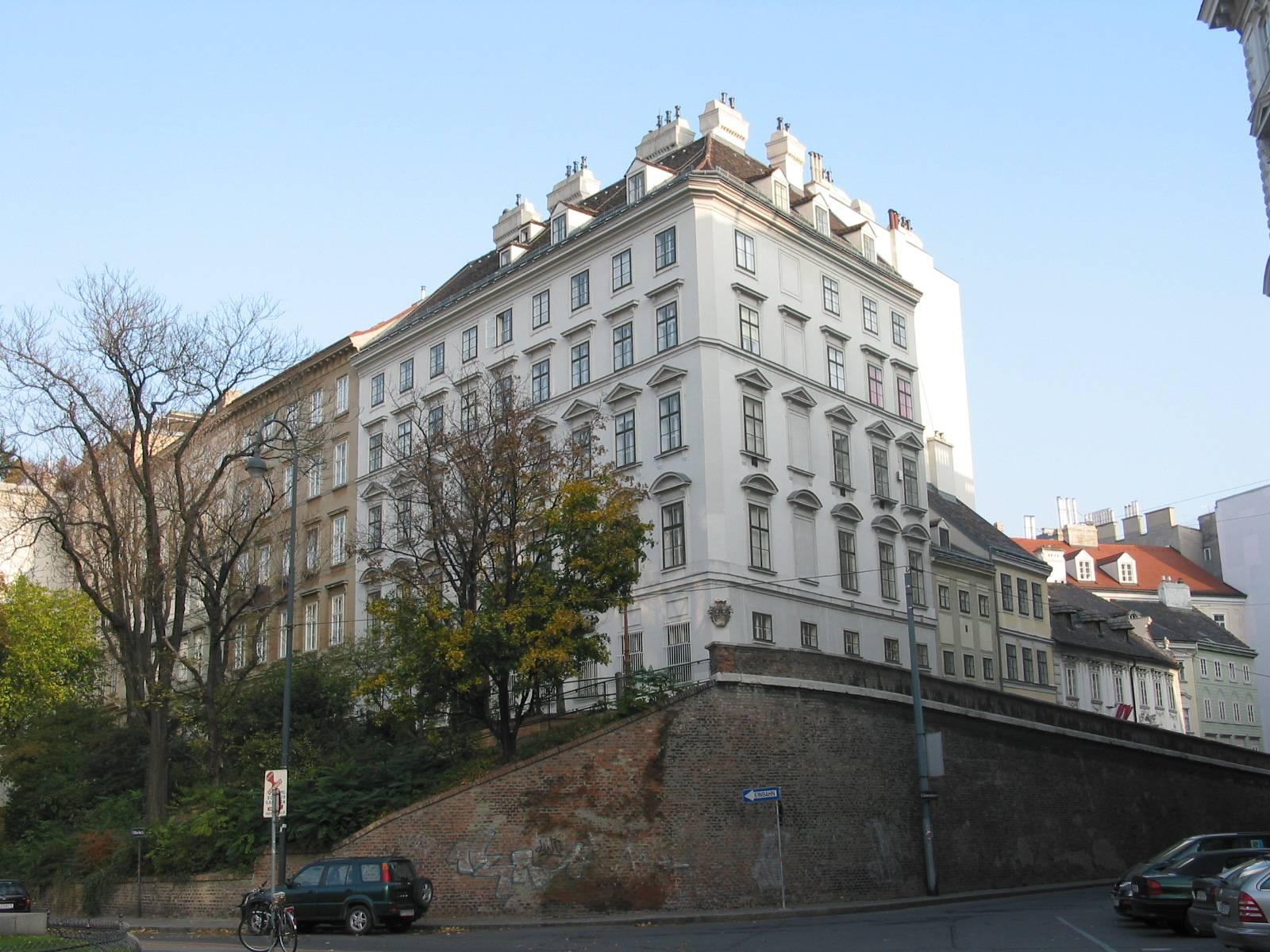
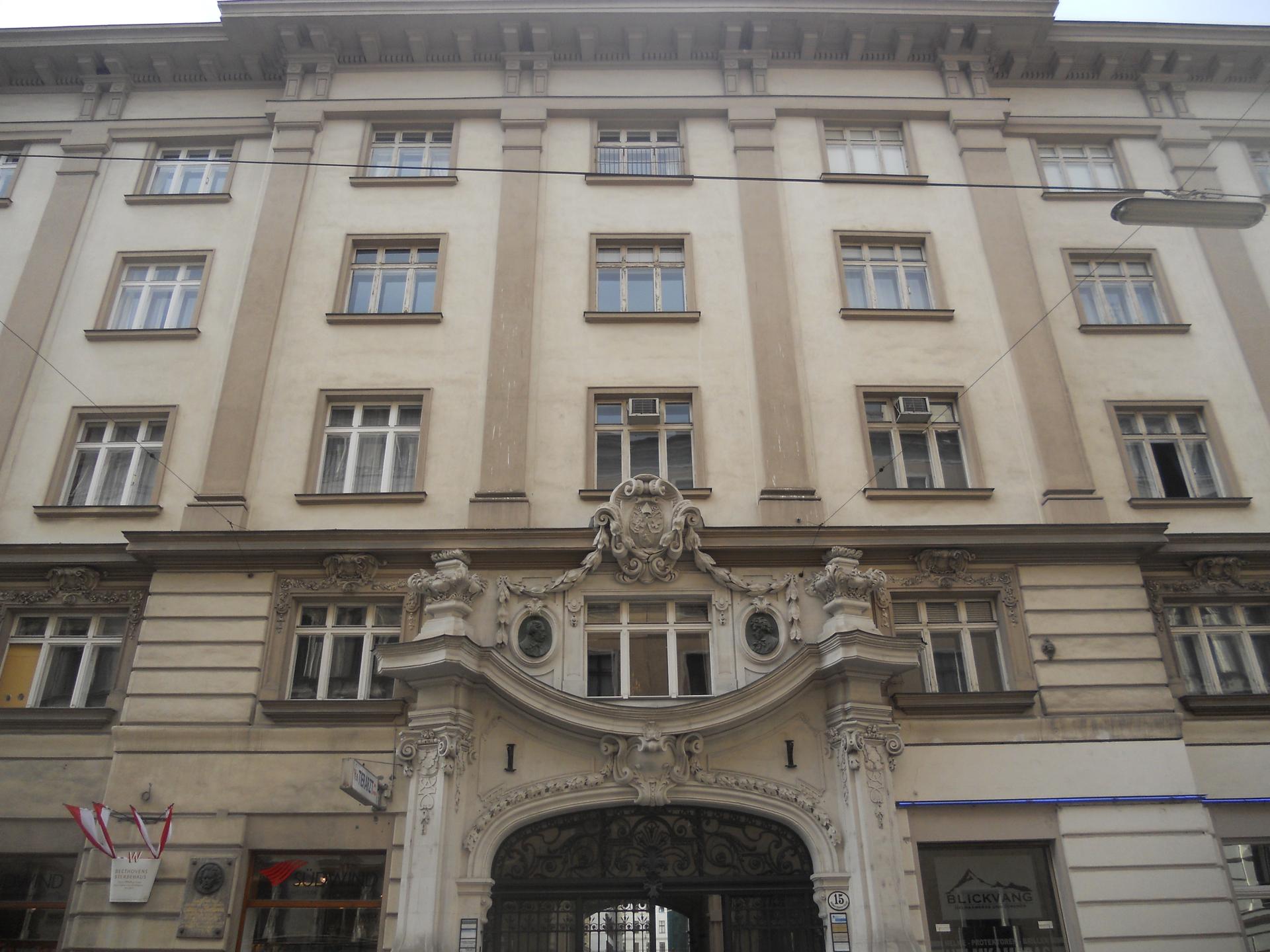
You're standing on a raised terrace, the last surviving stretch of the old city wall, and in the four-storey corner house here Beethoven once lived, looking out over the open fields where the now runs.
He lived here on and off, because he was forever packing up and leaving. Moving house was a habit with him that bordered on compulsion, with more than sixty addresses in this city, sometimes two at once, for reasons that ranged from too much noise and too little light to a landlord who'd had enough of the pounding on the piano in the middle of the night.
Baron Pasqualati, who owned this house, took a different view. When his tenant walked out yet again, he left the rooms empty and said the man would be back soon enough, and back he came, more than once.
It was in these rooms that the opera took shape, along with part of his symphonies, in the years when his hearing was failing so badly that conversations had to be written down, in little notebooks of which hundreds still survive. You can visit the apartment, four flights up, and the staircase alone tells you what it meant to climb up here every day.
We follow the Schottengasse and then the Währinger Straße into Alsergrund.
Sources. Story: Wien Geschichte Wiki, Stadt Wien; Wien Museum, Beethoven Pasqualatihaus