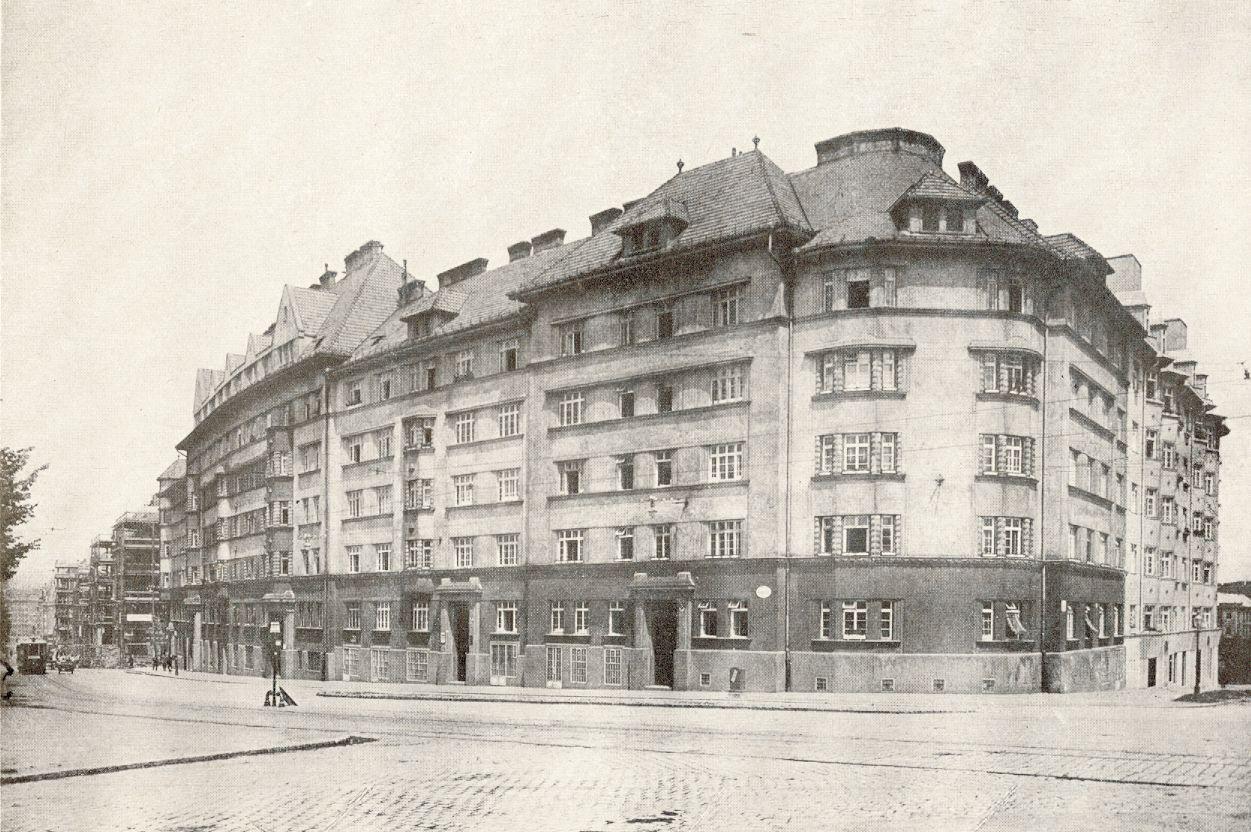
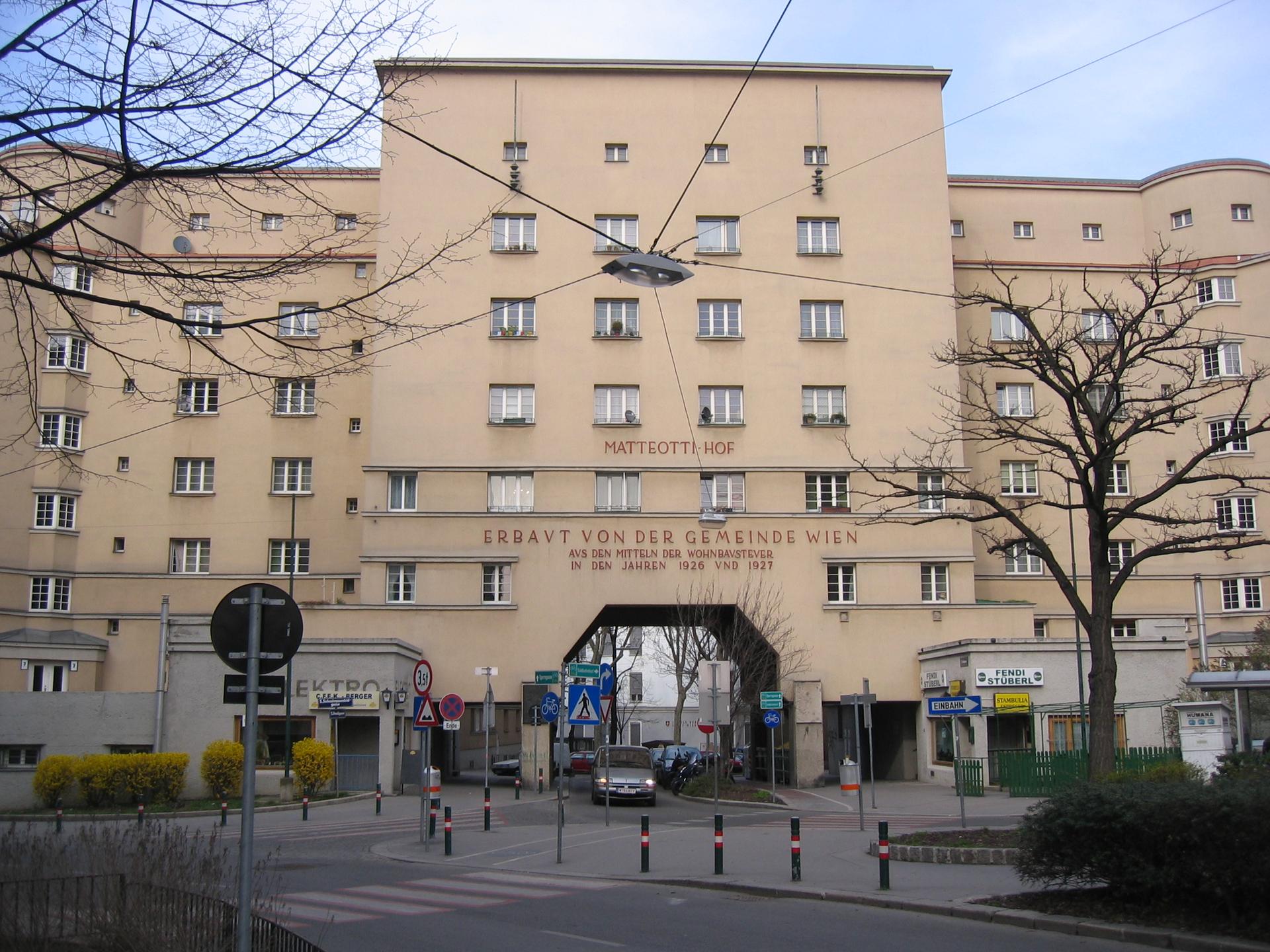
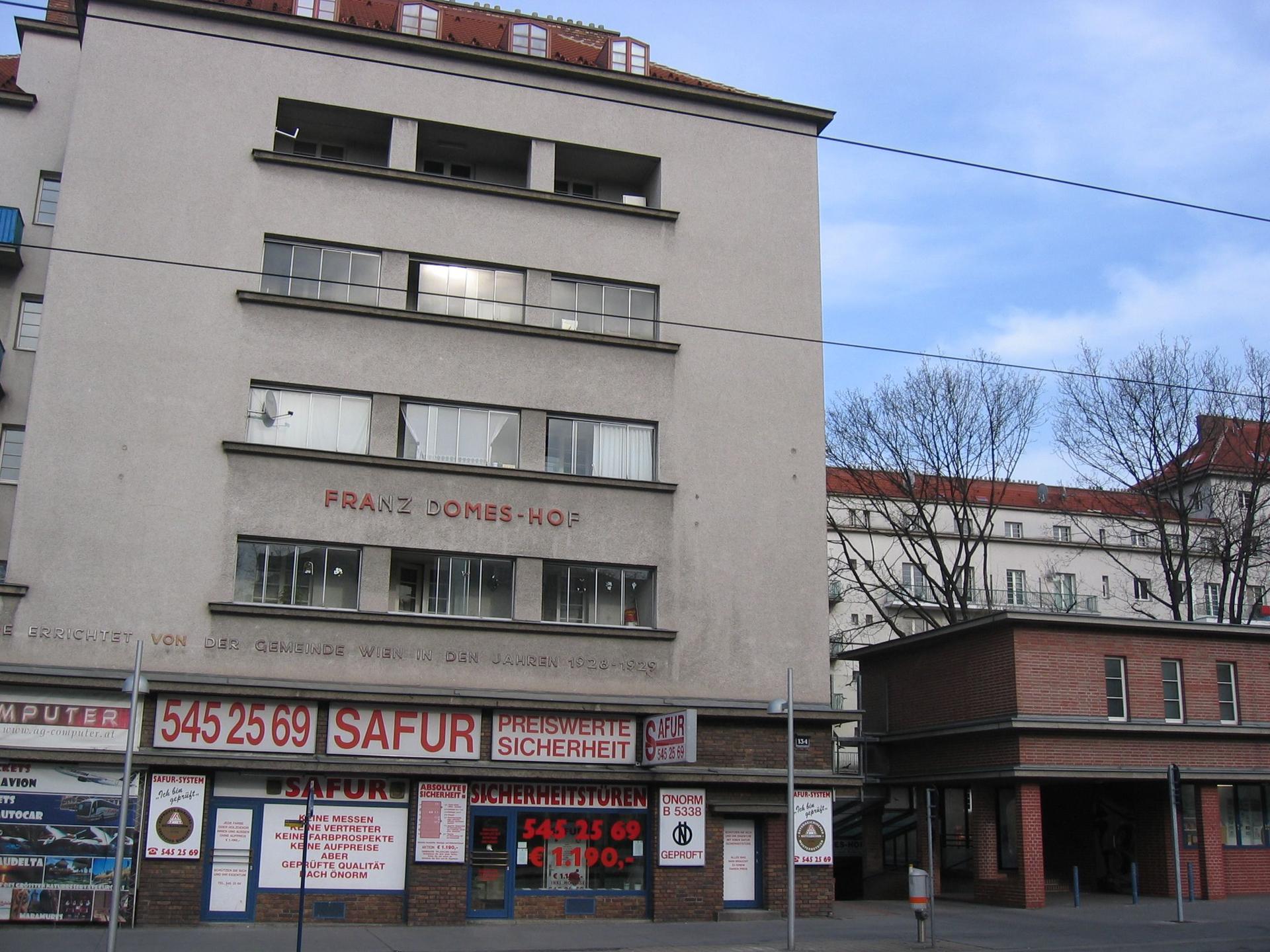
This block carries the name of Franz Domes, a trade unionist, and that choice was as deliberate as the brickwork around it, because the of this Vienna is named almost entirely after a poet, a union leader or a murdered party comrade, and whoever ended up on the facade was decided in the city council.
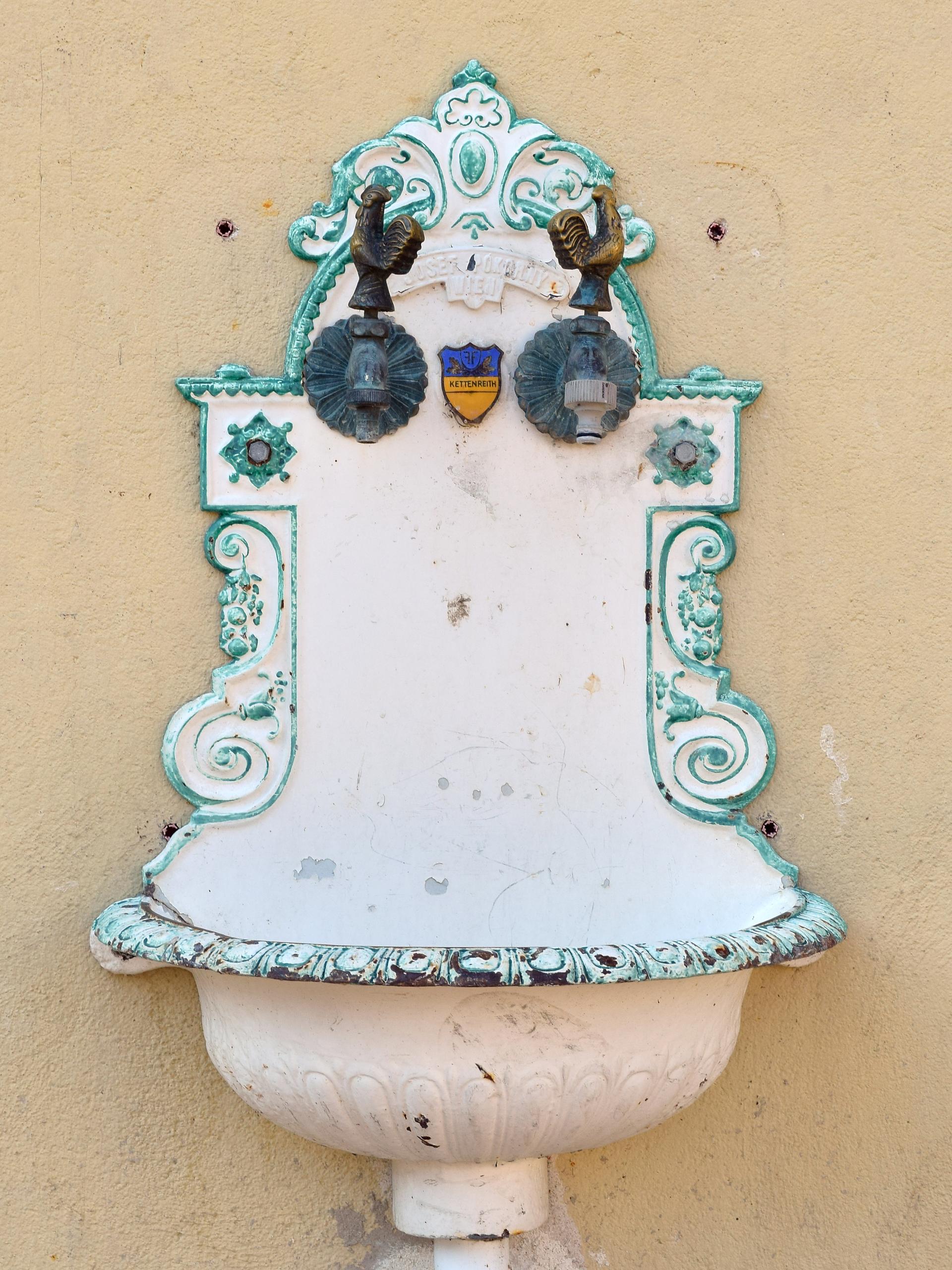
You can read the intention in the shape of it. There is a gatehouse, there are corner towers, and there is a that opens onto the street, all the language of a palace, used here for flats of around forty square metres in which a working family had its own toilet and its own tap for the first time, while in pre-war Vienna an entire floor made do with a single loo out in the corridor.
The rent sat at around a few percent of a worker's wage, because the construction had been paid for out of tax money and the rent only needed to cover the upkeep.
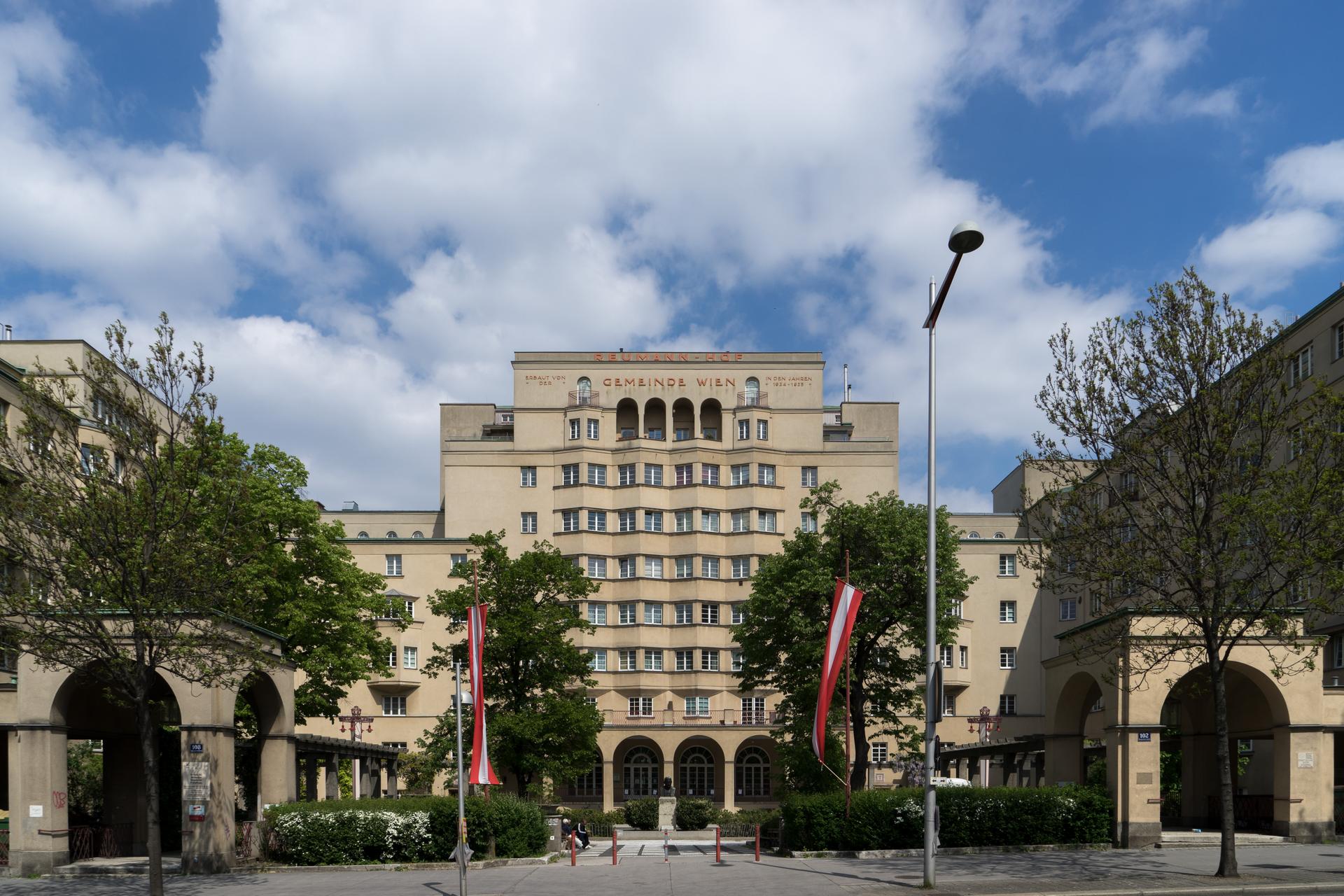
A hundred metres further along stands the block that was shown to foreign delegations.
Sources. Story: Wien Geschichte Wiki, Stadt Wien; Das Rote Wien, Weblexikon der Wiener Sozialdemokratie Photos: Franz-Domes-Hof, Buchhaendler, CC BY-SA 4.0, via Wikimedia Commons