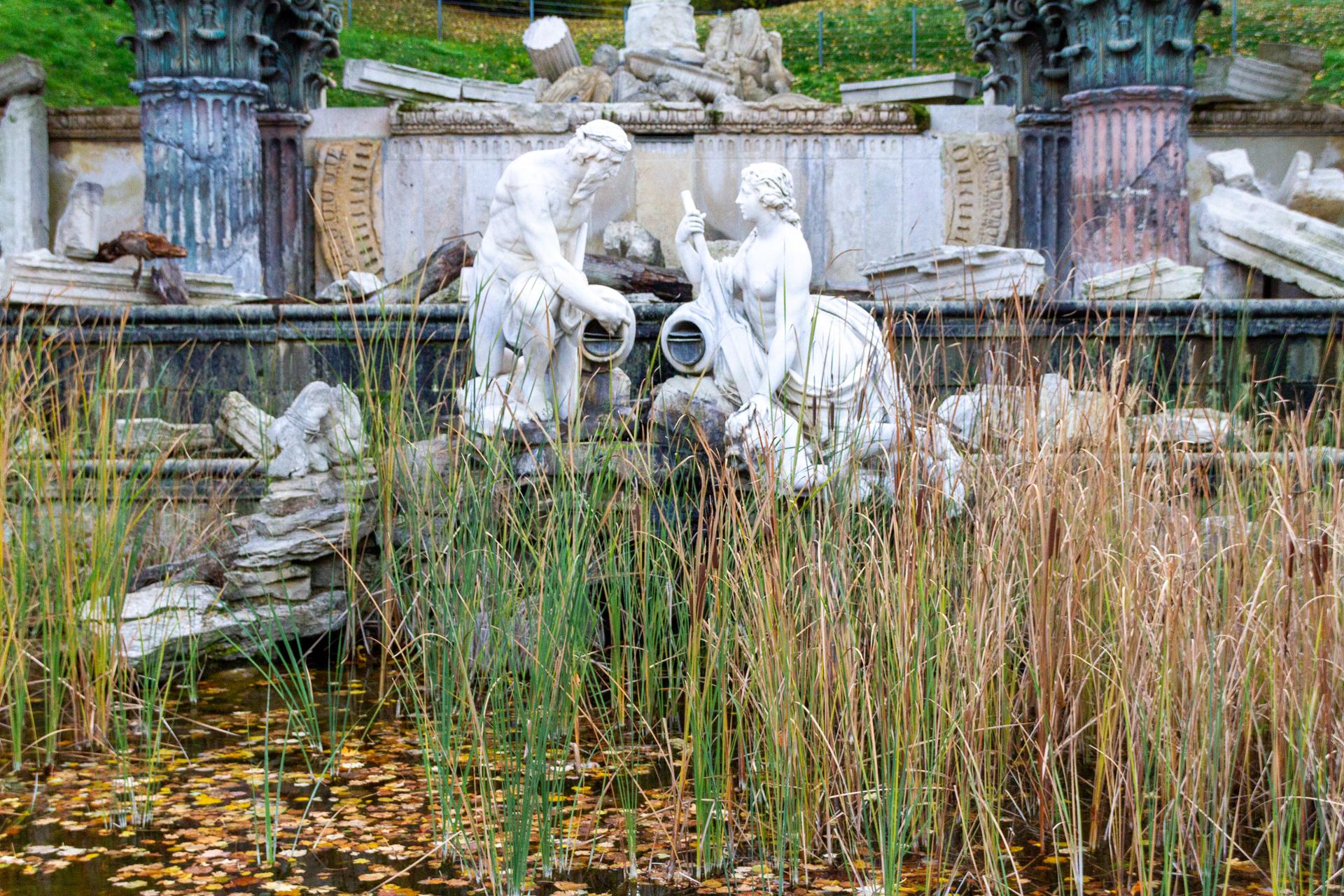
A wall that has half collapsed, columns leaning crookedly in the water, chunks of stone that look as though they have lain here for centuries: this structure went up in 1778, and that was exactly the idea.
The eighteenth century was besotted with decay. Anyone with refinement travelled to Rome, came home with prints of overgrown temples, and had something similar built in their own garden so they could muse on the impermanence of all empires. That put up such a thing within walking distance of its own palace is a thought you might want to pause on for a moment.
A hundred metres further along stands the pavilion with the spring that gives all of this its name. As the story goes, drank here while out hunting and called the water a beautiful spring, and that name stuck to the estate, to , and eventually to half a district.
And so the circle closes, because that was the very first thing we came across at the gate.
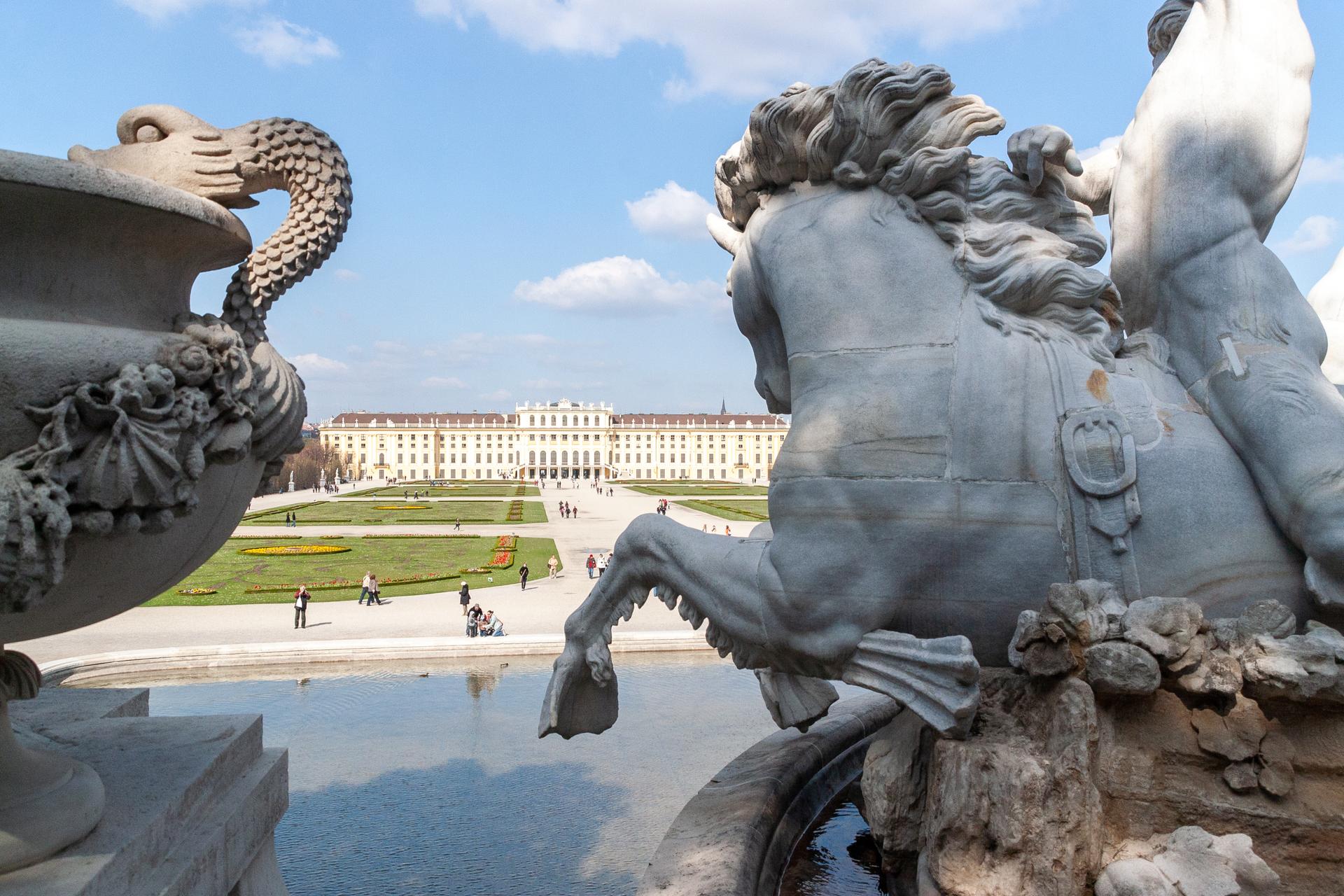
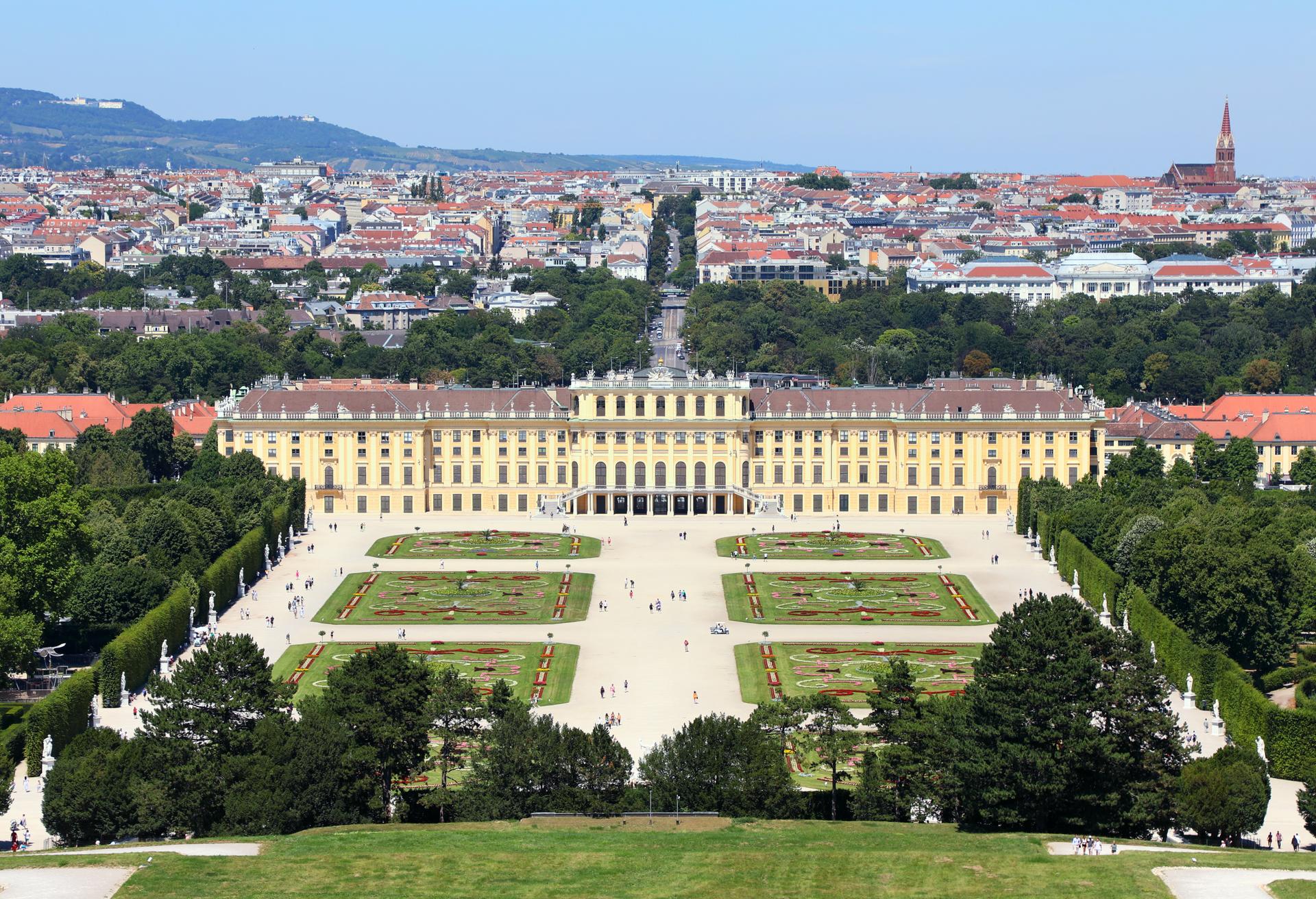
We follow the long avenue towards the palace, with its facade straight ahead of us.
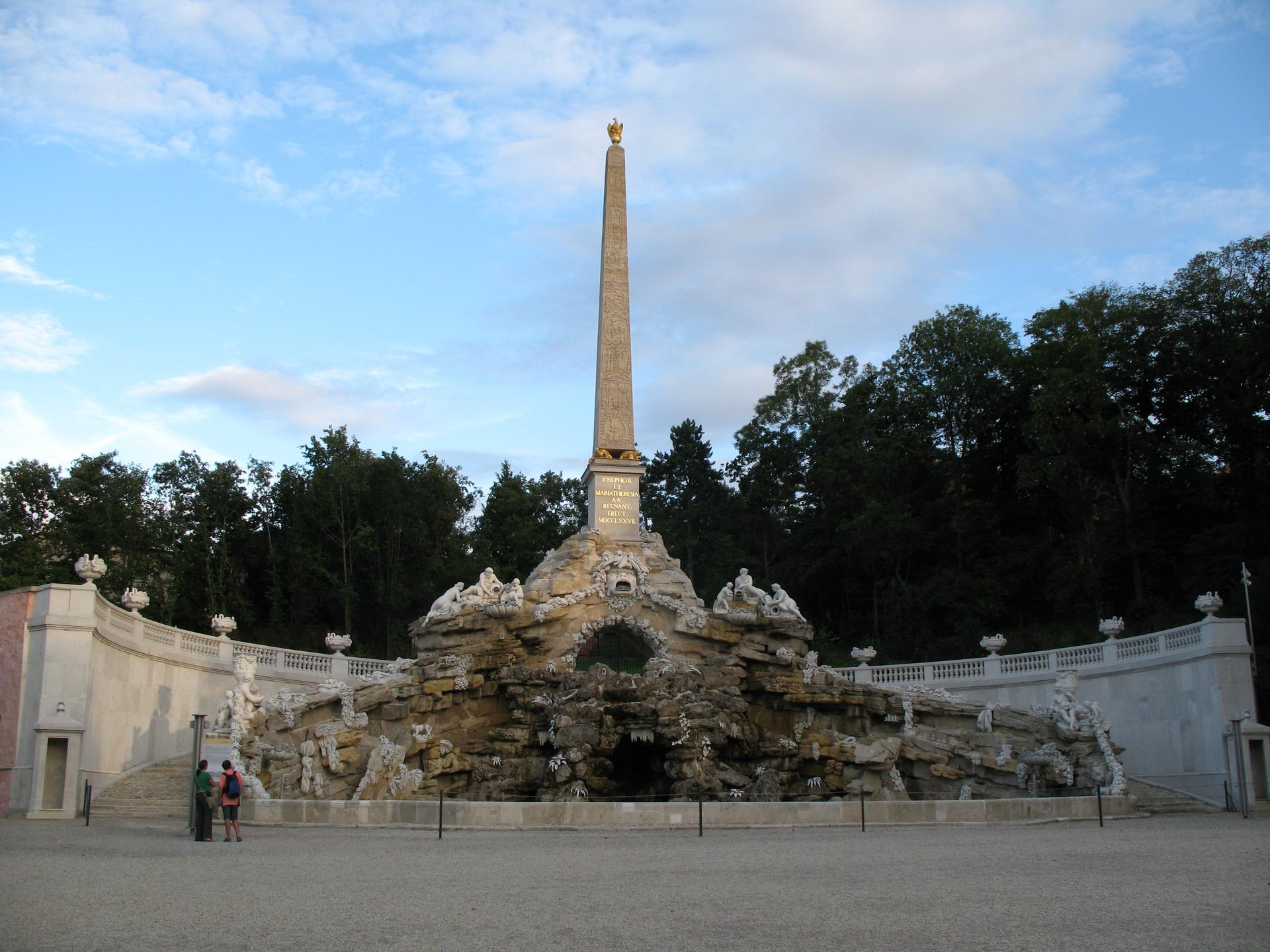
Sources. Story: Wien Geschichte Wiki, Stadt Wien; Schloss Schönbrunn Kultur- und Betriebsgesellschaft, documentation on garden buildings Photos: Römische Ruine Schönbrunn, via Wikimedia Commons