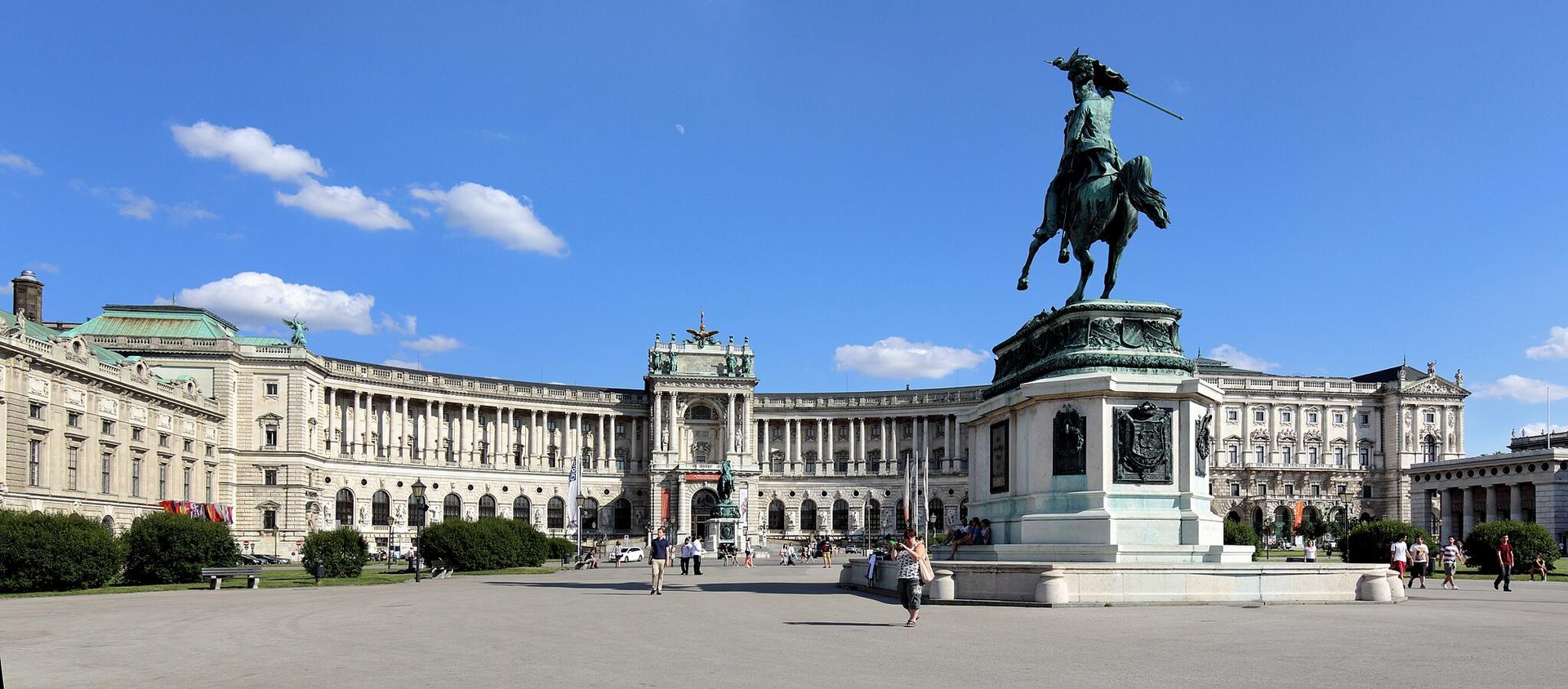
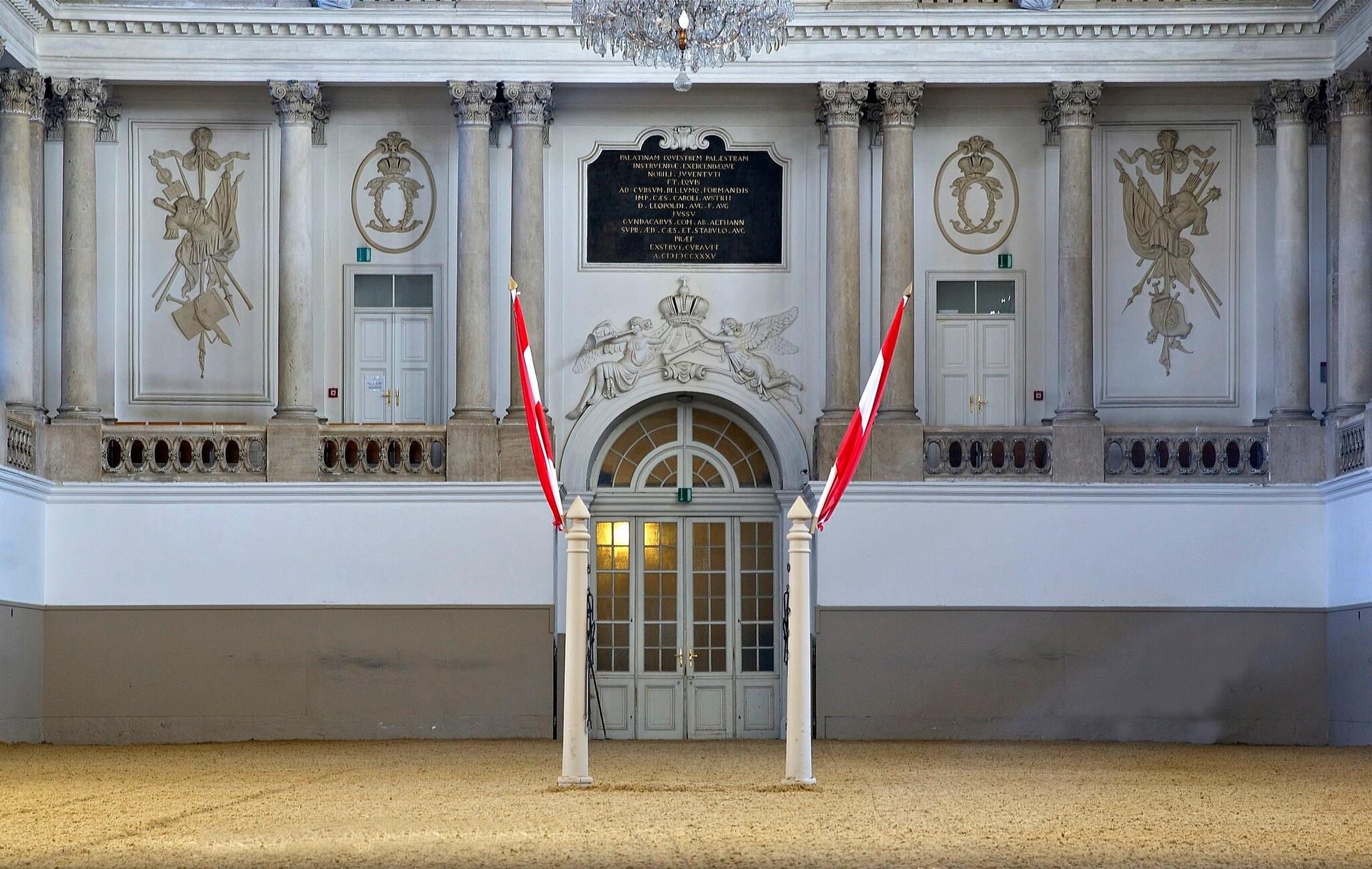
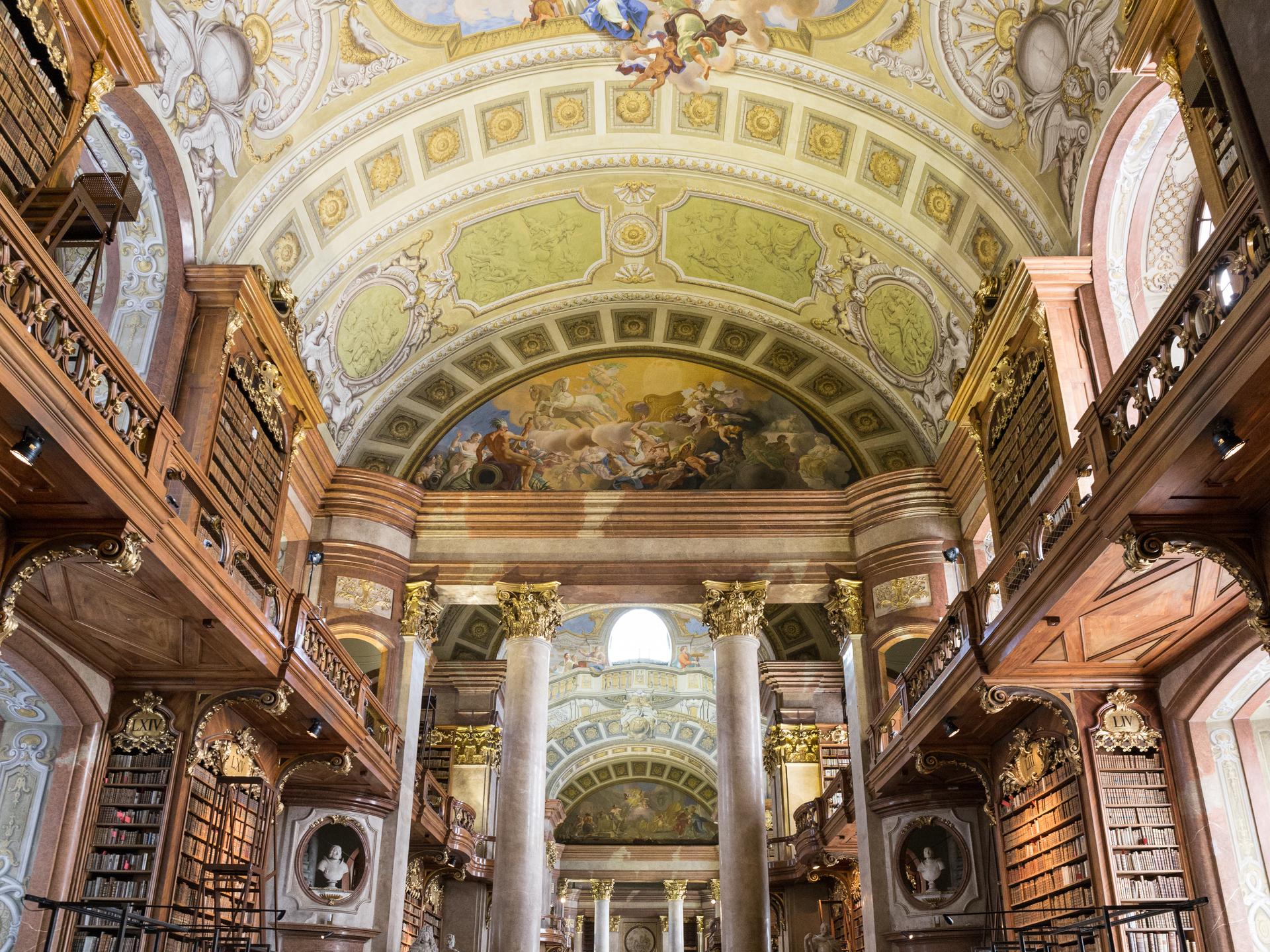
Josefsplatz. Behind the sober front on this side is the old imperial library, the , finished in 1723. Two storeys of walnut shelves, a painted dome, something like two hundred thousand volumes.
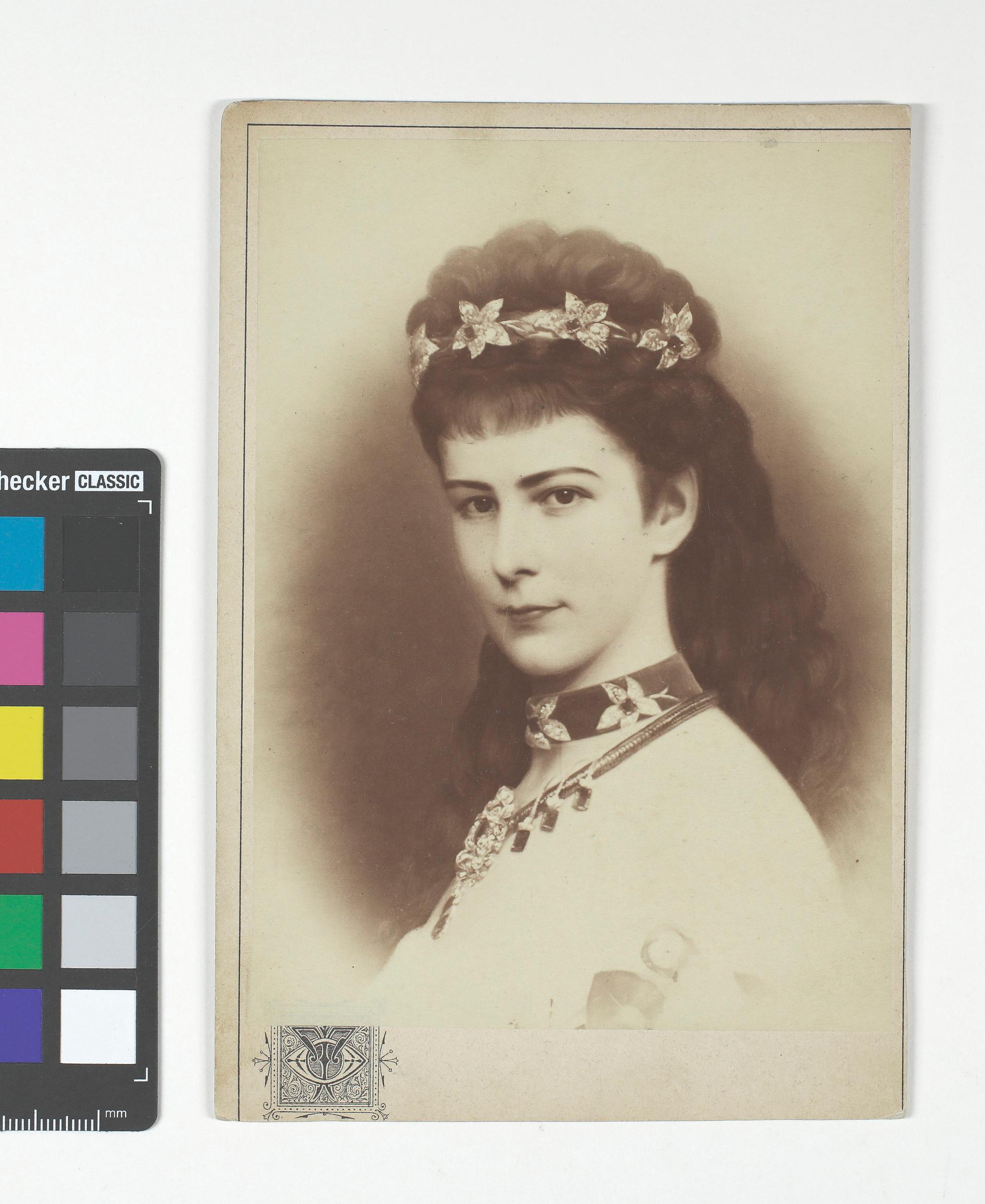
She never worked in there. But this is the right room to stand outside while we correct the record, because the hours the court wrote off as vanity went mostly on reading.
She took up modern Greek in her forties and went at it hard, with a run of young Greek readers who travelled with her and were kept going for hours at a stretch. She read the Odyssey. Her real love was . She collected his letters, defended him when that was unfashionable, and was convinced he spoke to her.
And she wrote. Hundreds of poems in his manner, sharp about the court, the emperor and herself. She published nothing. She sealed the manuscripts away, left them to the Swiss federal archive, and instructed that they be opened sixty years after her death, the proceeds going to the children of political prisoners. They reached print in 1984.
So the woman on the souvenir plates was quietly writing a bitter book about everyone who bought them.
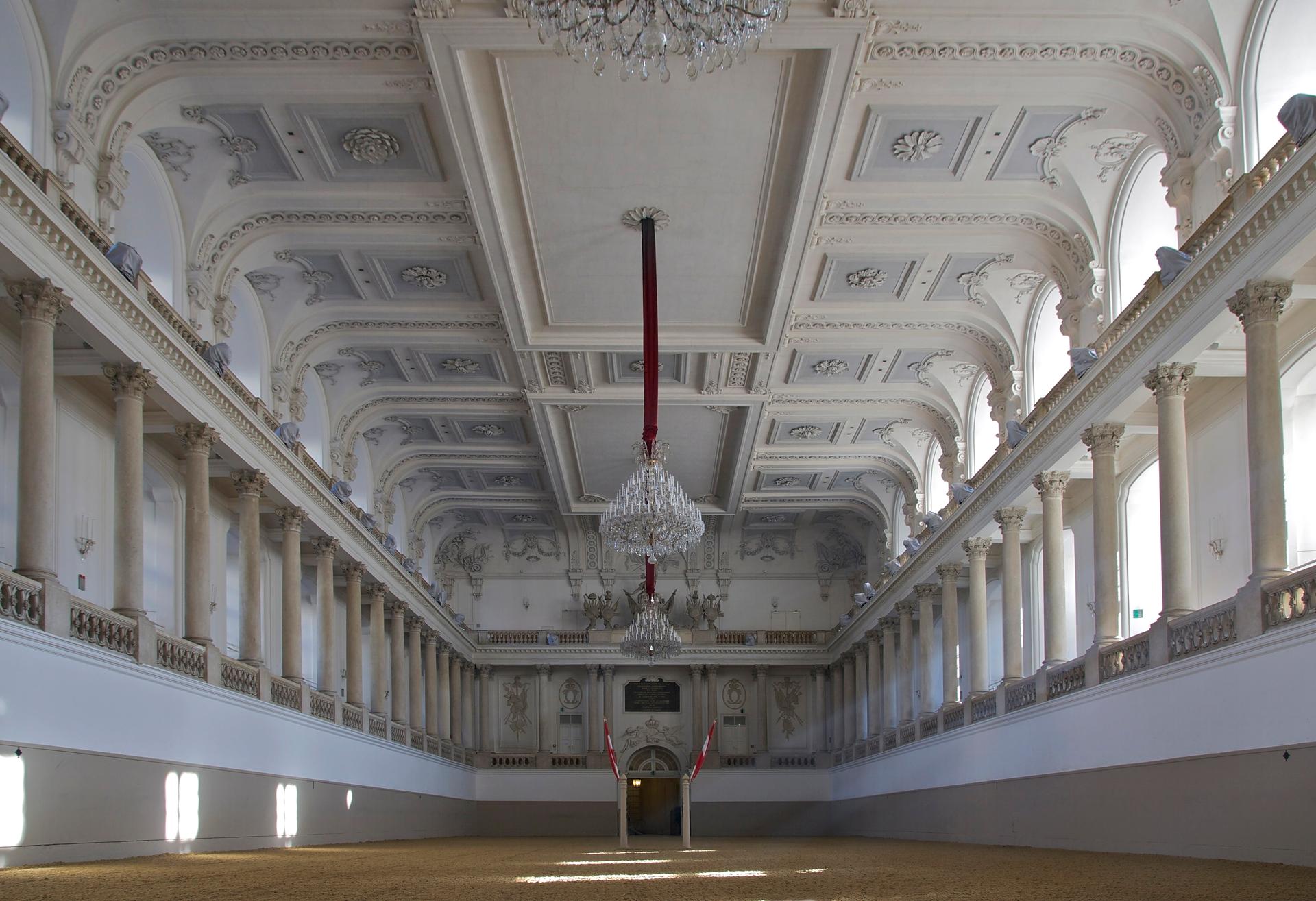
Walk into Reitschulgasse, the lane with the arches, and listen for horses.
Sources. Story: Brigitte Hamann, Elisabeth. Kaiserin wider Willen; Das poetische Tagebuch, Österreichische Akademie der Wissenschaften 1984; Empress Elisabeth of Austria, English Wikipedia; ROODS production 2026 Photos: Wien - Prunksaal der Hofbibliothek 20180506-25.jpg, Pymouss, CC BY-SA 4.0, via Wikimedia Commons, https://commons.wikimedia.org/wiki/File:Wien_-_Prunksaal_der_Hofbibliothek_20180506-25.jpg; Bookshelf Prunksaal OeNB Vienna AT matl00786ch.jpg, Matl, CC BY-SA 3.0, via Wikimedia Commons, https://commons.wikimedia.org/wiki/File:Bookshelf_Prunksaal_OeNB_Vienna_AT_matl00786ch.jpg